

Florida wrongful death lawsuit: 5 Crucial Elements
Understanding Your Rights After a Tragic Loss in Florida
A Florida wrongful death lawsuit is a civil legal action filed when someone dies due to another party’s negligence, wrongful act, or breach of duty. Here’s what you need to know:
Quick Facts About Florida Wrongful Death Lawsuits:
- Who Can File: Only the personal representative of the deceased’s estate can file on behalf of surviving family members.
- Time Limit: You have two years from the date of death to file (with rare exceptions).
- Who Benefits: Surviving spouse, children, parents, and certain dependent relatives may recover damages.
- What You Can Recover: Lost support, medical/funeral expenses, lost companionship, pain and suffering, and lost future earnings.
- Where It’s Filed: Civil court (separate from any criminal proceedings).
Losing a loved one due to someone else’s carelessness is devastating, leaving families with questions about justice and financial stability. Florida’s wrongful death statutes (Florida Statutes sections 768.16-768.26) provide a legal framework for families to seek compensation and hold responsible parties accountable after a death caused by negligence, medical malpractice, a car accident, or other wrongful acts.
However, these cases are complex. Florida law has strict rules about who can file, what damages are available, and how compensation is divided. For example, medical negligence cases have unique restrictions, and the two-year filing deadline is firm.
Understanding these laws is essential for protecting your family’s rights and securing the compensation you deserve.
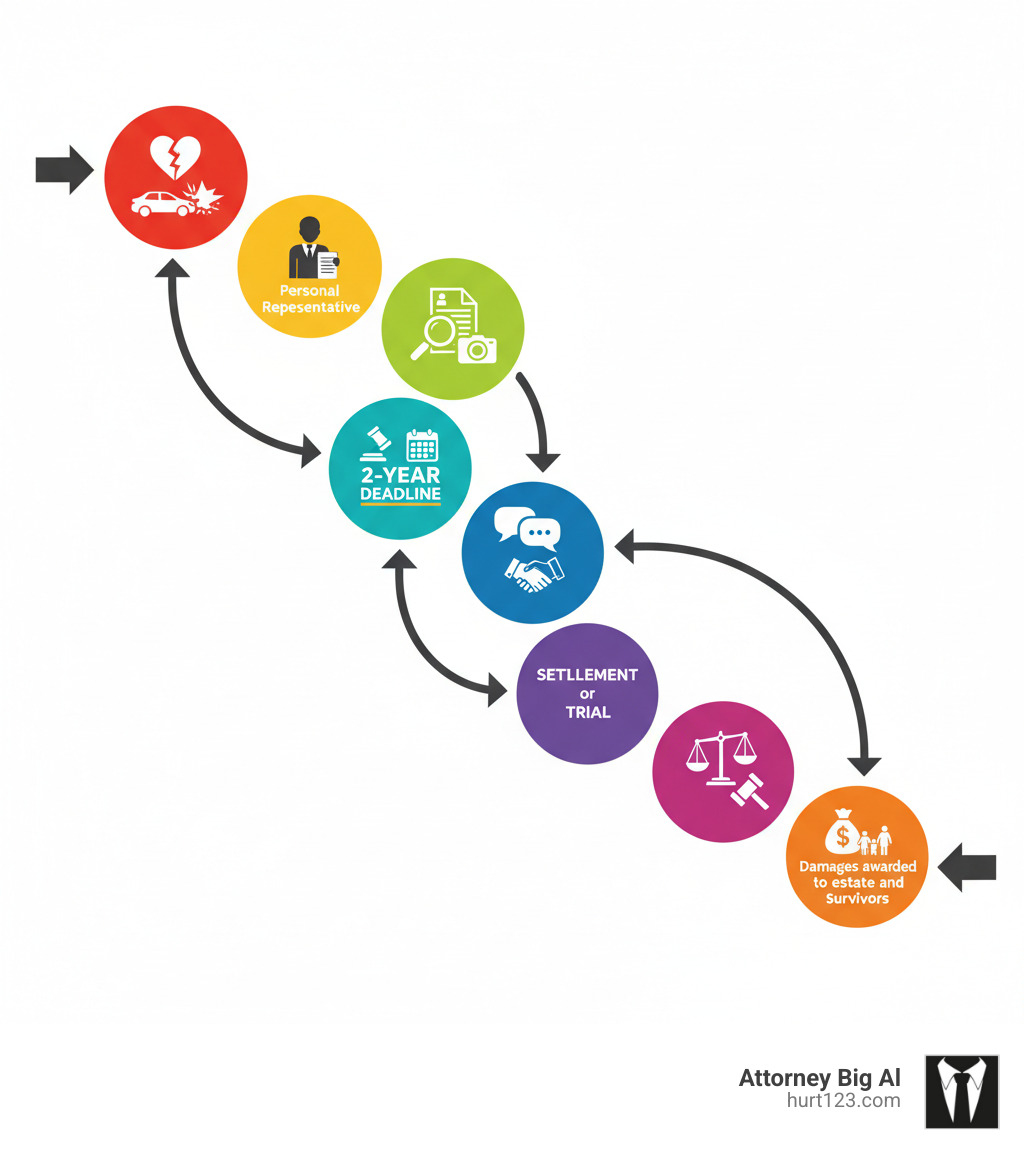
Understanding the Core Elements of a Florida Wrongful Death Lawsuit
Understanding how a Florida wrongful death lawsuit works can bring clarity during a confusing time and help you protect your family’s future. Let’s walk through what you need to know.
What Qualifies as Wrongful Death in Hollywood, FL?
Under Florida law, wrongful death occurs when a person’s death is caused by another’s wrongful act, negligence, default, or breach of contract or warranty. This legal definition from Florida Statute 768.19 is the foundation of every Florida wrongful death lawsuit in Hollywood and across the state.
- Wrongful acts include intentional actions that cause death, such as an assault. These can lead to a civil claim even if criminal charges are also filed.
- Negligence is the most common basis for these claims. It occurs when someone fails to use reasonable care, directly causing a death. Examples include a distracted driver, a property owner ignoring a hazard, or a doctor making a fatal error.
- Breach of contract or warranty applies when a death results from a failure to meet a contractual obligation or a violated product warranty.
In Hollywood and South Florida, wrongful death claims often arise from car accidents due to speeding, distracted driving, or drunk driving. Drunk driving cases are especially tragic as they are entirely preventable. Other common causes include medical malpractice, workplace incidents, defective products, and premises liability (deaths from unsafe property conditions).
A wrongful death claim is a civil case seeking compensation for your family’s losses and is separate from any criminal prosecution.
Who Can File and Who Benefits from a Claim in Miami?

Florida law is specific about who can bring a claim. Unlike in some states, Florida requires that only the personal representative of the deceased’s estate can file a Florida wrongful death lawsuit. This person, often named in a will or appointed by a Miami probate court, acts on behalf of the estate and all survivors.
While the personal representative files the suit, the compensation is for the survivors. Florida law identifies specific beneficiaries, including:
- The surviving spouse.
- Children under 25 (treated as minors for these claims).
- Adult children (if there is no surviving spouse).
- Parents of a deceased minor child, or of an adult child if there are no other survivors.
- Dependent blood relatives or adopted siblings.
How damages are divided depends on each survivor’s relationship to the deceased and their level of financial or emotional loss. Family situations in a diverse city like Miami can be complex. Issues like divorce, remarriage, and adopted children have specific rules affecting eligibility. A wrongful death lawyer can help steer these nuances to ensure every eligible family member is properly represented.
Distinguishing Civil vs. Criminal Cases in Fort Lauderdale
A civil wrongful death lawsuit is separate from any criminal charges, especially in a city like Fort Lauderdale where both may proceed at the same time.
- A Wrongful Death Lawsuit (Civil Case): Filed by the personal representative to get financial compensation for the family’s losses. The standard of proof is a preponderance of the evidence (meaning it’s more likely than not that the defendant was at fault). The outcome is a monetary award (damages).
- A Homicide Case (Criminal Case): Filed by the state prosecutor to punish a violation of the law. The standard of proof is beyond a reasonable doubt, a much higher burden. The outcome is a penalty like fines or imprisonment, not compensation for the family.
For example, if a drunk driver causes a fatal crash in Fort Lauderdale, they may face criminal charges from the state. Simultaneously, the victim’s family can file a civil wrongful death lawsuit against that driver. The two cases are independent. A defendant can be found not guilty in criminal court but still be held liable for damages in the civil case. A Fort Lauderdale wrongful death lawyer can help your family pursue civil justice regardless of the outcome of any criminal proceedings.
Recoverable Damages in a Florida Wrongful Death Lawsuit

While no amount of money can replace a loved one, Florida law allows families to seek compensation for their economic and emotional losses. Damages are divided into two categories.
Damages for Survivors:
This compensation goes directly to family members for their personal losses.
- Lost Support and Services: The value of financial contributions and household help the deceased would have provided.
- Loss of Companionship and Protection: For a surviving spouse.
- Mental Pain and Suffering: Available to a surviving spouse, minor children, and parents of a minor child. (Note: In medical negligence cases, adult children and parents of adult children generally cannot recover for pain and suffering).
- Medical and Funeral Expenses: Reimbursement for any survivor who paid these costs.
Damages for the Estate:
This compensates the estate for losses the deceased person incurred.
- Lost Earnings: Income the deceased would have earned between the time of injury and death.
- Prospective Net Accumulations: The value of savings and assets the deceased would have likely accumulated over their lifetime. This is available if there is a surviving spouse or children.
- Medical and Funeral Expenses: Costs paid by the estate.
Calculating these damages is a complex process that involves analyzing the deceased’s earning capacity and life expectancy. Our complete guide on wrongful death lawsuits provides more detail on this process.
Critical Deadlines: The Statute of Limitations for a Florida Wrongful Death Lawsuit

Time is critical when filing a Florida wrongful death lawsuit. The statute of limitations sets a strict deadline for filing. In Florida, the personal representative generally has only two years from the date of death to file the claim.
If you miss this deadline, the court will almost certainly dismiss your case, and you will lose your right to seek compensation. The main exception to this rule is for deaths caused by murder or manslaughter, where a lawsuit can be filed at any time.
Two years may seem like a long time, but investigating a case, gathering evidence, and preparing a lawsuit takes months. It is crucial to act quickly to protect your family’s rights. Handling a wrongful death claim properly from the start is the best way to ensure you don’t miss this vital deadline.
Why Legal Guidance is Crucial for Your Claim in Boca Raton
Navigating a Florida wrongful death lawsuit while grieving is an overwhelming challenge. The legal process is intricate, with strict deadlines and rules. This is why experienced legal guidance is essential for families in cities like Boca Raton.
Securing the Compensation Your Family Deserves

A wrongful death case involves far more than just filing paperwork. It requires identifying all eligible beneficiaries and a precise calculation of damages—both economic and emotional—which often requires analysis from financial professionals to determine the full lifetime value of your loss.
Families also face the challenge of dealing with insurance companies, whose goal is to minimize payouts. They often make lowball offers to grieving families who are in a vulnerable position. Without a strong advocate, you risk accepting far less than you deserve.
We understand what families are going through. We specialize in representing victims of negligence and have the resources to stand up to major insurance companies. Our goal is to handle the legal burden so you can focus on healing.
Our approach includes:
- Conducting a thorough investigation to build the strongest possible case.
- Identifying all liable parties who share responsibility for the death.
- Accurately calculating all economic and non-economic damages.
- Handling all negotiations with insurance companies to protect you from their tactics.
- Preparing to take your case to trial if a fair settlement cannot be reached.
This is about holding negligent parties accountable and seeking justice for your family. Whether you’re in Boca Raton, Hollywood, Fort Lauderdale, or Miami, we are here to provide the support and representation you need. Having a team that understands the process from investigation to trial can make the difference in securing your family’s future.
Learn more from a Hollywood personal injury attorney
