

What Is the No Pay No Play Law in Florida?
Florida’s no pay no play rule is embedded within the state’s tort exemption framework under FL § 627.737(1)-(2). The concept is straightforward: if you do not "pay" for required insurance, you cannot fully "play" when collecting damages after a crash. About a dozen states have enacted no pay, no play laws limiting uninsured drivers from suing for noneconomic damages such as pain and suffering. Florida’s version works through its serious-injury threshold, which controls access to non-economic damages for all drivers but creates a particularly steep barrier for those without coverage because they also forfeit PIP benefits and access to their own uninsured motorist policy.
How the Serious-Injury Threshold Works
Under FL § 627.737(2), a plaintiff may only recover damages for pain, suffering, mental anguish, and inconvenience if the injury consists in whole or in part of one of four categories:
- Significant and permanent loss of an important bodily function
- Permanent injury within a reasonable degree of medical probability, other than scarring or disfigurement
- Significant and permanent scarring or disfigurement
- Death
These categories are statutory gates that every plaintiff must pass through to access non-economic damages. If your injuries do not meet at least one of these criteria, the court may dismiss your pain and suffering claim entirely, regardless of who caused the crash.
💡 Pro Tip: Document every medical visit, diagnosis, and treatment recommendation from day one. Thorough medical records are often the strongest evidence for meeting Florida’s serious-injury threshold under § 627.737(2).
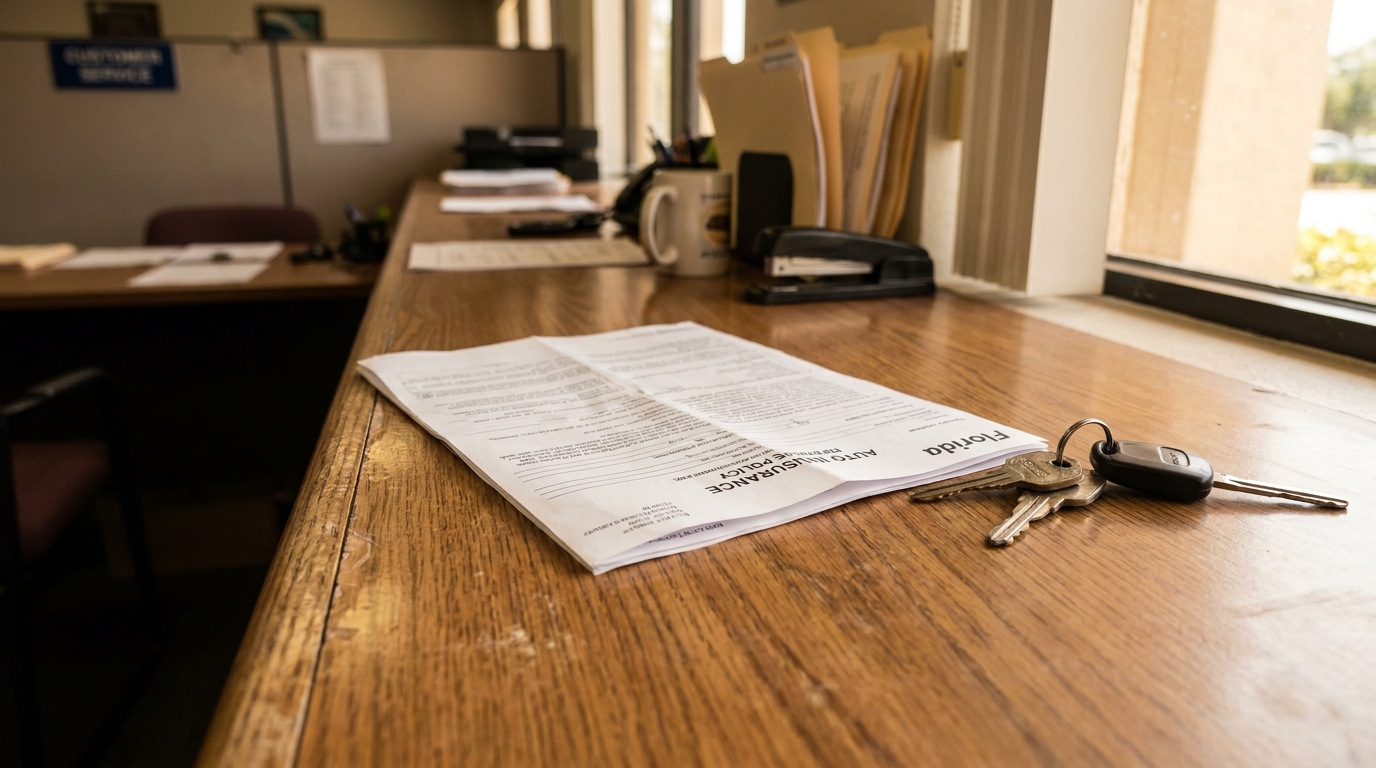
What Happens If You Have No Insurance but the Other Driver Was at Fault?
Even when the other driver caused the crash, being uninsured changes the legal landscape of your claim. Your right to recover economic damages like medical bills and lost wages generally remains intact. However, your ability to collect non-economic damages faces serious obstacles. Without your own policy, you have no PIP benefits to cover initial medical expenses and lost wages, and no uninsured motorist coverage to pursue if the at-fault driver is underinsured or uninsured themselves.
The Procedural Hurdle That Can End Your Claim
Florida law gives the at-fault driver’s defense team a powerful procedural tool to challenge your non-economic damages before trial. Under FL § 627.737(3), a defendant may file an appropriate motion with the court, and the court shall, on a one-time basis only, 30 days before the date set for trial or the pretrial hearing (whichever is first), examine the pleadings and evidence to ascertain whether the plaintiff will be able to submit some evidence meeting the serious-injury threshold under subsection (2). If the court finds that the plaintiff will not be able to submit such evidence, it shall dismiss the plaintiff’s claim without prejudice.
💡 Pro Tip: If you were uninsured at the time of your crash, consult with a Florida auto accident attorney as early as possible. Building a strong evidentiary record for the serious-injury threshold takes time, and waiting can weaken your position.
Florida’s Mandatory Insurance Requirements and Enforcement
Florida law currently requires every motor vehicle owner to carry at least $10,000 in Personal Injury Protection (PIP) and $10,000 in property damage liability insurance. While multiple bills have been introduced in the Florida Legislature to replace PIP with mandatory bodily injury liability coverage, HB 1181 was introduced during the 2025 session proposing to repeal mandatory PIP and replace it with mandatory bodily injury liability coverage effective July 1, 2026, but the bill was never enacted. The Senate companion (SB 1256) was never advanced, and a subsequent 2026 attempt (SB 522 / HB 769) also died in committee on March 13, 2026. As of June 2026, Florida’s PIP system remains fully in effect and unchanged; drivers are still required to carry the statutory minimum $10,000 PIP and $10,000 property damage liability. Florida does not currently require bodily injury liability coverage. In 2023, Florida ranked among the highest nationally with approximately 21% of drivers lacking insurance, compared to a national average of roughly 15%.
| Metric | Florida | National |
|---|---|---|
| Uninsured motorist rate (2023) | 20.6% | 15.4% |
| Required PIP coverage | $10,000 | Varies by state |
| Required property damage liability | $10,000 | Varies by state |
| Required bodily injury liability | Not currently compulsory (proposals to require it in 2025, 2026 were not enacted) | Required in most states |
Penalties for Driving Without Insurance
If you fail to maintain required coverage, Florida will suspend your driving privileges. Under FL § 324.0221(2)-(3), the Department of Highway Safety and Motor Vehicles shall suspend the registration and driver license of any owner who did not maintain required security. Reinstatement fees escalate with each violation: $150 for the first reinstatement, $250 for the second, and $500 for each subsequent reinstatement within three years. Insurers must report policy cancellations and nonrenewals to the department within 10 days, making it difficult to fly under the radar.
💡 Pro Tip: If your insurance lapsed before your accident, gather documentation showing when and why it lapsed. In some circumstances, this context may be relevant to your legal strategy.
How Florida’s No Pay No Play Rule Compares to Other States
Various states implement no pay, no play laws differently. Some states bar only noneconomic damages for uninsured drivers, while others go further. Louisiana requires uninsured motorists to pay the first $100,000 in bodily injury costs and the first $100,000 in property damage out of pocket before recovering from an at-fault driver, under the updated No Pay, No Play law (LA R.S. 32:866) effective August 1, 2025. New Jersey bars both economic and noneconomic damages for uninsured and drunk drivers. Florida’s version operates through its serious-injury threshold rather than an outright statutory ban, which means recovery of non-economic damages remains technically possible but practically difficult for uninsured drivers.
Additional Restrictions on Damage Recovery in Florida Auto Cases
Florida’s statutory framework includes several other provisions that limit damage recovery. Under FL § 627.737(4), no punitive damages may be claimed against an automobile liability insurer for damages in excess of policy limits.
Vehicle Owner Liability for Uninsured Permissive Users
If someone borrows a vehicle and causes an accident while uninsured, the vehicle owner’s exposure is capped. Under FL § 324.021(9)(b)3, when a permissive user is uninsured or carries less than $500,000 in combined coverage, the owner is liable for up to an additional $500,000 in economic damages only. Non-economic damages are excluded from this owner-liability provision.
💡 Pro Tip: Even if you were uninsured, you may still have access to certain economic damage claims. Do not assume your case is worthless without speaking to an attorney who understands how Florida’s uninsured and underinsured motorist coverage laws interact with your specific facts.
Steps to Protect Your Rights After a No Insurance Car Crash in Florida
Being uninsured does not mean you should give up on your claim, but it does mean you need to act strategically. Focus on these steps:
- Seek medical treatment immediately and follow all prescribed care plans
- Preserve all evidence from the scene, including photos, witness contacts, and the police report
- Avoid giving recorded statements to the at-fault driver’s insurer without legal guidance
- Keep detailed records of every expense related to your injuries
The strength of your case will depend on the specific facts, the severity of your injuries, and the evidence you can present. Having a Florida auto accident attorney review your situation can help you understand which damages may still be available.
💡 Pro Tip: Florida’s mandatory insurance requirements under FL § 627.733 mean that if you let your coverage lapse, you may also face license and registration suspension under FL § 324.0221. Addressing your insurance status promptly after an accident can prevent additional legal complications.
Frequently Asked Questions
1. Can I still sue the at-fault driver if I had no insurance in Florida?
Can an uninsured driver file a lawsuit in Florida?
Yes, you generally retain the right to file a lawsuit against the at-fault driver for economic damages such as medical bills and lost wages. However, under FL § 627.737(2), your ability to recover non-economic damages like pain and suffering depends on whether your injuries meet the serious-injury threshold. Being uninsured does not bar a lawsuit, but it creates significant limitations on what you can recover.
2. What qualifies as a "serious injury" under Florida’s threshold?
How does Florida define the serious-injury threshold?
FL § 627.737(2) defines four qualifying categories: significant and permanent loss of an important bodily function, permanent injury within a reasonable degree of medical probability (other than scarring or disfigurement), significant and permanent scarring or disfigurement, or death. Your medical evidence must support that your injury falls within at least one of these categories. Courts evaluate this case-by-case, and the burden of proof rests on the plaintiff.
3. What happens if you have no insurance but the other driver was at fault and I have minor injuries?
Are minor injuries covered under no pay no play?
If your injuries do not meet the serious-injury threshold under FL § 627.737(2), you may be limited to recovering only economic damages. A defendant may file an appropriate motion under FL § 627.737(3), and the court shall, on a one-time basis only, 30 days before the date set for trial or the pretrial hearing (whichever is first), examine the pleadings and evidence to determine whether the plaintiff will be able to submit some evidence meeting the threshold. If the court finds the plaintiff will not be able to submit such evidence, it shall dismiss the plaintiff’s claim without prejudice. Minor soft-tissue injuries frequently fall below this bar.
4. Will I face penalties for driving without insurance in Florida?
What are the consequences of no insurance in Florida?
Yes, under FL § 324.0221(2)-(3), the state may suspend both your driver license and vehicle registration after providing due notice and an opportunity to be heard. Reinstatement fees start at $150 for the first offense and increase to $500 for subsequent violations within three years. These administrative penalties are separate from any civil claims arising out of the accident.
5. Does Florida require bodily injury liability insurance?
Is bodily injury coverage mandatory in Florida?
No, Florida’s compulsory auto insurance laws do not currently require bodily injury liability coverage. While multiple bills have been introduced in the Florida Legislature to replace PIP with mandatory bodily injury liability coverage, HB 1181 was introduced during the 2025 session proposing to repeal mandatory PIP and replace it with mandatory bodily injury liability coverage effective July 1, 2026, but the bill was never enacted. The Senate companion (SB 1256) was never advanced, and a subsequent 2026 attempt (SB 522 / HB 769) also died in committee on March 13, 2026. As of June 2026, Florida’s PIP system remains fully in effect and unchanged; drivers are still required to carry the statutory minimum $10,000 PIP and $10,000 property damage liability. Under the current system, only PIP and property damage liability coverage are mandatory, which is one reason Florida has one of the highest uninsured motorist rates in the country.
Protecting Your Claim Starts With Understanding the Law
Florida’s no pay no play rule creates real barriers for uninsured drivers seeking full compensation after an accident, but it does not eliminate every avenue for recovery. Economic damages may still be available, and in cases involving severe injuries, the serious-injury threshold under FL § 627.737(2) can potentially be met with strong medical evidence. Understanding where you stand legally is the critical first step toward protecting your rights.
If you were injured in a Florida car accident and need guidance on how your insurance status may affect your claim, Attorney Big Al at 1-800-HURT-123 is ready to review your case. Call 1-800-487-8123 or contact us now to take the first step toward understanding your legal options.
