
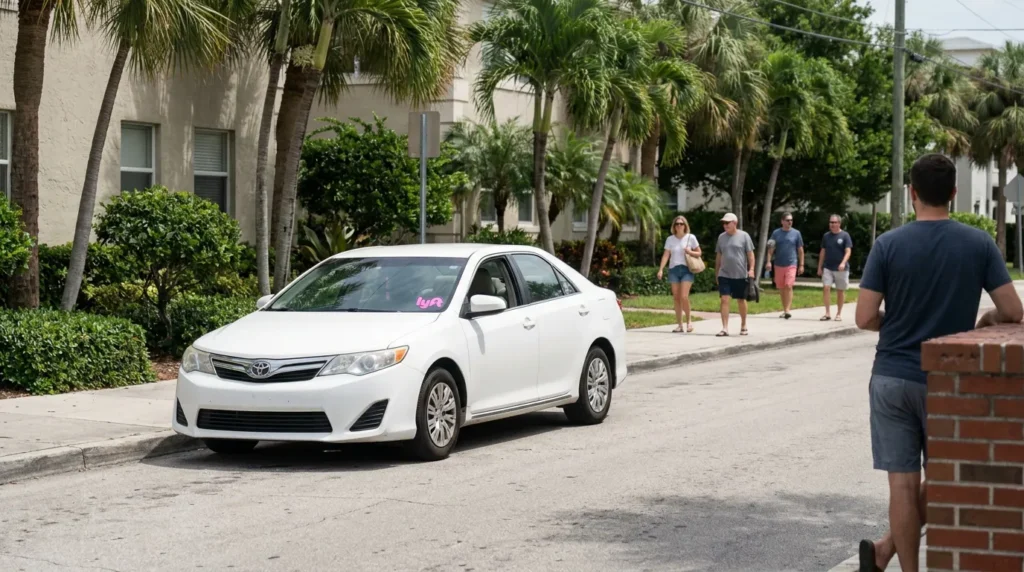
Florida Rideshare Crashes: Understanding Who Foots the Bill
Key Takeaways: In Florida, who pays a Lyft accident claim during an active ride depends on which insurance period applies. When a passenger is aboard (Period 3), Lyft’s $1 million commercial policy generally becomes the primary source of recovery under Fla. Stat. § 627.748(7), because personal auto insurers can exclude coverage during that phase. Evidence such as driver log-on data, the Lyft app trip log, and the Long Form crash report (which documents proof of insurance) confirms the active ride and responsible insurer. Florida’s modified comparative fault rule under Fla. Stat. § 768.81 reduces your recovery if you share blame and bars recovery if you are more than 50 percent at fault. More than one party may be liable, and settling with one does not automatically end claims against others.
When a Lyft crash happens while a passenger is in the car, Lyft’s $1 million commercial policy generally becomes the primary source of recovery, not the driver’s personal auto insurance. Florida law treats an active ride (Period 3) differently from when a driver is logged on and waiting. If you were hurt as a passenger, motorist, pedestrian, or cyclist, knowing which policy applies is the first step toward fair recovery.
If you were recently injured, reach out to Attorney Big Al at 1-800-HURT-123 for guidance, call 1-800-487-8123, or use the firm’s online case review form.
The Three Insurance Periods That Decide Coverage
Florida law divides a rideshare trip into distinct phases, and the active phase carries the strongest protection. A driver may be offline, logged on and waiting, or engaged in a prearranged ride that begins when the driver accepts a request and continues until the passenger exits. Each phase triggers different coverage, which is why exact timing matters in a Lyft accident claim Florida residents pursue.
During an active ride, Florida sets mandatory insurance requirements Lyft must satisfy. Under Fla. Stat. § 627.748(7), a Transportation Network Company must maintain primary coverage with substantial minimum limits while a passenger is in the vehicle. Review the statutory framework in Florida’s insurance code chapter, which explains why the $1 million policy applies when someone is actively aboard.
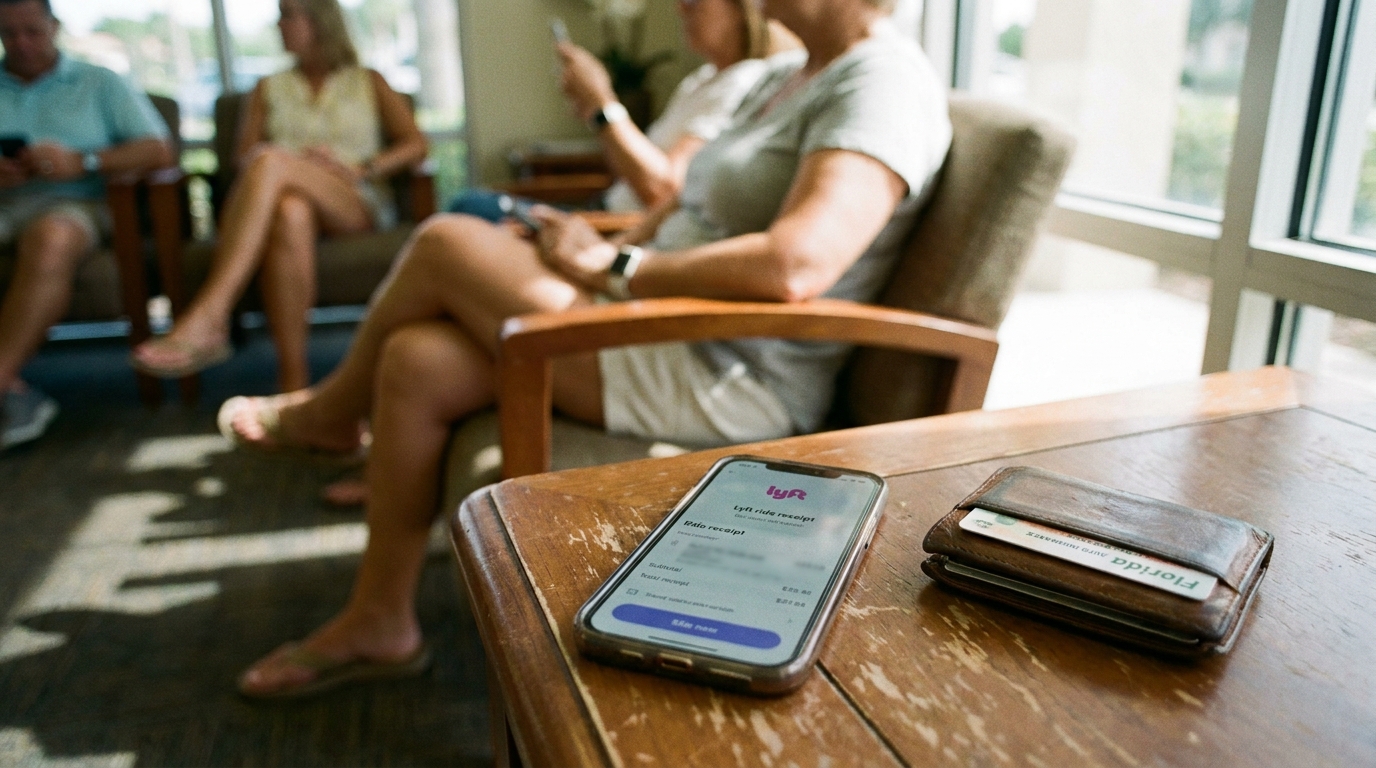
💡 Pro Tip: Save your Lyft trip receipt and in-app ride history immediately after a crash. This digital record confirms you were in an active ride, supporting the argument that Lyft’s commercial policy should respond.
Why Lyft’s $1 Million Policy Takes Over During an Active Ride
A Lyft passenger injured during an active ride generally cannot rely on the driver’s personal auto policy, because Florida law lets personal insurers exclude that coverage. Under Fla. Stat. § 627.748(8)(b)(1), an insurer may exclude all coverage, including bodily injury liability, personal injury protection, uninsured motorist, and property damage, while a driver is logged on or providing a prearranged ride. That exclusion is why the Florida rideshare insurance conversation shifts toward Lyft’s commercial policy.
Florida law requires drivers be warned about this coverage gap. Under Fla. Stat. § 627.748(8)(a), a TNC must disclose in writing the types and limits of coverage it provides and caution drivers that their personal policy might not cover them during a prearranged ride. For injured passengers, this reinforces why the question of who pays a Lyft accident in Florida points to the company’s insurer.
Even where a personal insurer steps in by mistake, Florida provides a mechanism to shift the cost. Under Fla. Stat. § 627.748(8)(c)(2), an automobile insurer that defends or pays an excluded claim has a right of contribution against insurers covering the same driver under TNC requirements. This underscores that the commercial insurer carries primary responsibility during an active Lyft ride.
| Ride Phase | Typical Primary Coverage | Statutory Basis |
|---|---|---|
| Driver offline | Personal auto policy | Fla. Stat. Ch. 627 |
| Logged on, waiting | Limited TNC contingent coverage | Fla. Stat. § 627.748(7) |
| Active ride (passenger aboard) | Lyft commercial policy up to $1 million | Fla. Stat. § 627.748(7) |
How Florida Comparative Fault Shapes Your Lyft Accident Lawsuit
Florida follows a modified comparative fault rule that can significantly affect your recovery in a lyft accident lawsuit. Under Fla. Stat. § 768.81(6), any party found greater than 50 percent at fault for their own harm may not recover damages. Fault is apportioned among all responsible parties, including the Lyft driver, another motorist, or the injured claimant.
When you are partly responsible, your recovery is reduced rather than eliminated, provided your share does not exceed 50 percent. Under Fla. Stat. § 768.81(2), contributory fault diminishes the award proportionately but does not bar recovery. Review the current comparative fault statute in Florida’s apportionment of damages law, which courts apply to allocate blame.
Florida apportions damages by percentage rather than holding one party responsible for the whole loss. Under Fla. Stat. § 768.81(3), a court enters judgment against each liable party based on that party’s percentage of fault. Defendants may shift blame to someone not named in the suit, and under Fla. Stat. § 768.81(3)(a) must plead and prove a nonparty’s fault by a preponderance of the evidence.
💡 Pro Tip: Avoid giving recorded statements to any insurer before speaking with counsel. Adjusters often use comparative fault arguments to assign you a larger share of blame, shrinking your recovery.
The Evidence That Determines Who Pays
The most important evidence is often the timeline showing when the driver was logged on. While app and driver records are often critical to establish timing, Fla. Stat. § 627.748(8) does not include a subsection that requires TNCs to immediately disclose precise log-on/log-off times in 12‑hour windows upon request; § 627.748(8) addresses written disclosures to drivers, personal insurer exclusion rights, and contribution rights between insurers. This data, when available from the TNC’s records, helps pinpoint which insurance period was active and which policy applies.
Official crash documentation creates a written record of involved insurers. Under Fla. Stat. § 316.066(1)(a), a law enforcement officer must complete a Long Form crash report when a collision causes death, injury, or complaints of pain. Separately, Fla. Stat. § 316.066(1)(d) requires each party to provide proof of insurance to the officer, which must be documented in the crash report (applicable to both long-form and short-form reports). This helps confirm whether Lyft’s commercial policy or a personal policy applies.
Key documents that strengthen a claim include:
- The Lyft app trip log and driver log-on and log-off times
- The Long Form Florida Traffic Crash Report documenting proof of insurance
- Medical records tying your injuries to the crash
- Photos of the scene, vehicles, and visible injuries
💡 Pro Tip: Request medical evaluation even if you feel fine. Documented, prompt treatment supports medical causation and counters arguments that your injuries came from something else.
Building a Strong Lyft Accident Claim
A solid claim rests on the classic negligence framework of duty, breach, causation, and damages. Florida’s negligence provisions in Chapter 768 govern fault-based liability for rideshare crashes and allow recovery for personal injury, wrongful death, or property damage. Establishing each element with clear documentation separates well-supported claims from contested ones.
Identifying Every Responsible Party
More than one party may share liability in an active-ride crash, and Florida allows you to pursue each. Fault may rest with the Lyft driver, a third-party motorist, or multiple actors, and § 768.81 apportions responsibility among them. Our discussion of an Uber and Lyft rideshare claim walks through common scenarios injured riders face.
Preserving Your Right to Pursue Multiple Insurers
Settling with one at-fault party does not always end your case. Under Fla. Stat. § 768.041, a release or covenant not to sue given to one tortfeasor does not discharge other parties who may be liable for the same tort. This means you may still pursue another responsible driver or insurer after resolving one portion of your claim.
Understanding the Limits of Employer Liability
Florida draws a boundary around traditional employer rideshare liability, but Lyft sits under a separate framework. Fla. Stat. § 768.091(1) limits employer liability for commuting ridesharing arrangements, though it does not apply to employer-owned vehicles or acts within employment scope. Because Lyft operates as a TNC, the § 627.748 framework generally governs its obligations.
💡 Pro Tip: Keep a simple written log of your symptoms, missed workdays, and out-of-pocket costs. This ongoing record documents both economic losses and pain and suffering.
Frequently Asked Questions
-
Who pays if I was a passenger injured during an active Lyft ride?
In most active-ride situations, Lyft’s commercial policy is the primary payer. Under Florida’s no-fault system, your personal injury protection generally applies first to initial medical bills, and if you do not own a vehicle the TNC’s policy must supply that PIP. Because Fla. Stat. § 627.748(8)(b)(1) allows the driver’s personal insurer to exclude coverage during a prearranged ride, the TNC liability coverage required by § 627.748(7) generally responds for the balance of your claim.
-
Can I still recover if I was partly at fault?
You may recover as long as you are not more than 50 percent responsible. Under Fla. Stat. § 768.81(6), a party more than half at fault cannot recover, while § 768.81(2) reduces damages for a smaller share of fault.
-
How do I prove the ride was active at the time of the crash?
The driver’s log-on timeline is usually decisive. While a TNC’s trip logs and driver app records are usually decisive, Fla. Stat. § 627.748(8) does not contain a subsection (d) requiring a TNC to provide log-on/log-off times; the crash report under § 316.066 documents required proof of insurance and the TNC’s records typically confirm timing.
-
What if more than one driver caused the crash?
Florida can hold several parties responsible for their proportionate share. Under Fla. Stat. § 768.81(3), judgment is entered against each liable party based on its percentage of fault, so you may pursue multiple insurers.
-
Does settling with one party close my whole case?
Not necessarily. Fla. Stat. § 768.041 provides that releasing one tortfeasor does not automatically discharge others liable for the same tort, though outcomes depend on specific release language and facts.
Protecting Your Right to Recover After a Florida Rideshare Crash
Determining who pays a Lyft accident claim during an active ride in Florida comes down to timing, insurance periods, and careful fault analysis. When a passenger is aboard, Lyft’s commercial policy generally serves as the primary source of recovery, while comparative fault under Fla. Stat. § 768.81 shapes the final amount. Because these cases turn on precise facts, strong documentation and understanding Florida rideshare liability make a meaningful difference. Learn more about handling Auto Accidents in Florida through the firm’s vehicle accident injury representation.
You do not have to sort out competing insurers on your own. Connect with Attorney Big Al at 1-800-HURT-123 to discuss your options, call 1-800-487-8123, or start your free case evaluation online so you can focus on healing while your rights are protected.
