
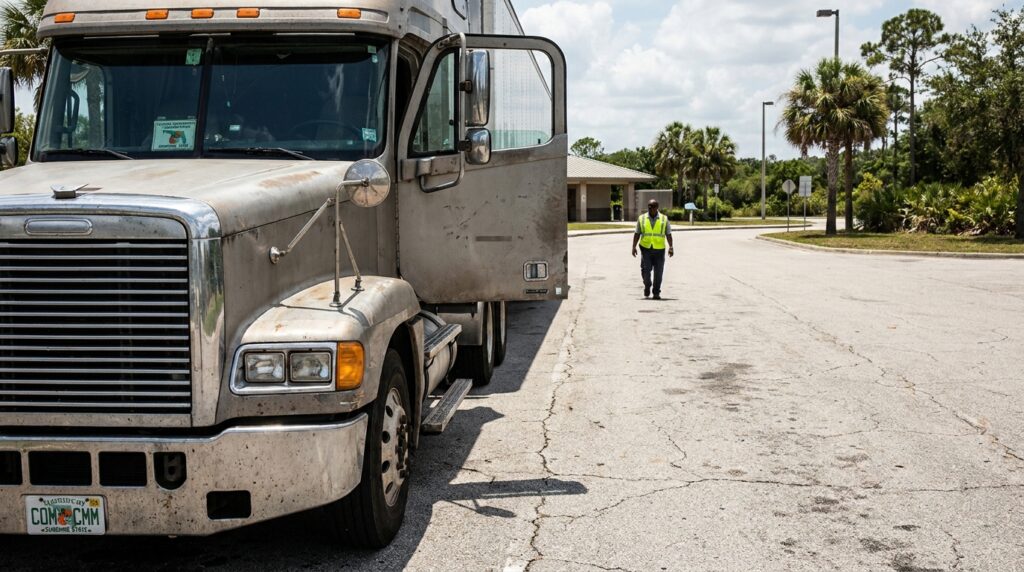
Understanding Florida’s Tough Stance on Impaired Commercial Drivers
Key Takeaways: When a drunk truck driver causes a crash in Florida, criminal and civil cases run parallel. Commercial drivers face a 0.04 BAC limit, half the standard, and even trace alcohol triggers immediate out-of-service orders and CDL disqualification. Criminal penalties range from misdemeanors for property damage to second-degree felonies for fatal DUI manslaughter. Civil claims allow victims to recover damages, with impairment evidence strengthening negligence proof and enabling claims against trucking companies. Florida permits uncapped punitive damages when drivers were intoxicated. Strict filing deadlines require prompt legal consultation.
When a drunk truck driver causes a crash in Florida, the consequences unfold on two separate tracks: a criminal case brought by the state and a civil claim that injured victims can pursue for compensation. Florida treats impaired commercial drivers far more harshly than ordinary motorists, and that strict legal framework can work in favor of victims seeking accountability.
If you or a loved one suffered serious injuries in an alcohol-related truck crash, reach out to Attorney Big Al at 1-800-HURT-123 for guidance on your rights, call 1-800-487-8123 to speak with our team, or request a free case review to learn how Florida law may apply to your situation.
Why Truck Drivers Face a Stricter Alcohol Standard
Florida holds commercial truck drivers to a much stricter alcohol standard than regular drivers because of the catastrophic damage a loaded tractor-trailer can inflict. Under Florida law, a commercial truck driver may not operate a commercial motor vehicle with any measurable alcohol in their body. Detectable alcohol below 0.04% triggers an immediate 24-hour out-of-service order, while a BAC of 0.04% or higher subjects a CDL holder to license disqualification penalties.
The governing provisions, found in Fla. Stat. § 322.62(1) and § 322.62(2)(b), make clear that even modest alcohol amounts can trigger serious administrative penalties. For more on how impairment factors into commercial trucking cases, the legal resource library on alcohol and drug use by truck drivers offers helpful background.
💡 Pro Tip: Write down everything you observed at the scene, slurred speech, alcohol odor, erratic driving, to support your claim later.
The Criminal Penalties a Drunk Trucker May Face
The criminal penalties for DUI in Florida escalate sharply depending on the harm caused and the driver’s history. These criminal outcomes are separate from any money damages a victim may recover.
Here is how Florida structures certain DUI consequences:
| Conduct | Classification | Notable Consequence |
|---|---|---|
| Causing property damage or minor injury | First-degree misdemeanor | Criminal liability under Fla. Stat. § 316.193(3)(c)1 |
| Causing serious bodily injury | Third-degree felony | Criminal liability under § 316.193(3)(c)2 |
| Third DUI within 10 years | Third-degree felony | Ignition interlock for at least 2 years |
| Causing a death | Second-degree felony (DUI manslaughter) | Mandatory minimum 4 years imprisonment |
A DUI driver who causes serious bodily injury commits a third-degree felony. A third DUI offense within 10 years is also a third-degree felony, with mandatory ignition interlock for at least 2 years.
DUI manslaughter carries the most severe outcomes. A DUI driver who causes death commits a second-degree felony with a mandatory minimum 4-year sentence. This elevates to a first-degree felony if the driver knew a crash occurred and failed to render aid. Enhanced penalties apply at higher alcohol levels, a BAL of 0.15 or higher results in fines between $1,000 and $2,000 for a first conviction and imprisonment up to 9 months.
How Impairment Affects a Commercial Driver’s License
A DUI arrest triggers immediate administrative consequences for a commercial driver’s license, often before any criminal trial begins. When arrested, law enforcement places the driver out of service and issues a 10-day temporary permit for non-commercial vehicles only.
The disqualification periods can be lengthy. A commercial truck driver convicted of DUI faces a mandatory minimum 1-year disqualification from operating any commercial motor vehicle. This applies whether the driver was in a commercial or personal vehicle. If the DUI involves hazardous materials transport, disqualification is at least 3 years, and a second qualifying offense results in permanent CDL disqualification. These rules, set out in Fla. Stat. § 322.61 and § 322.64, underscore how seriously Florida treats impaired commercial drivers.
💡 Pro Tip: Administrative and criminal cases generate separate records. Request both, as each may contain evidence useful to your civil claim.
Building Your Civil Claim After a DUI Truck Crash
While criminal penalties punish the driver, only a civil claim puts compensation in the hands of injured victims. Impairment evidence can strengthen negligence, causation, and damages proof. Chemical testing often plays a central role.
Florida law grants law enforcement authority to conduct chemical testing of commercial truck drivers when there is reasonable cause to believe the driver had alcohol or controlled substances in their body. A commercial truck driver involved in a crash who is unconscious or physically unable to refuse is deemed to have consented to blood testing. This implied-consent rule, codified at Fla. Stat. § 322.63(3)(b), makes securing objective impairment proof easier.
Liability frequently extends beyond the driver. Trucking companies, maintenance contractors, and other parties may share responsibility. To understand potentially responsible parties, see our discussion of who can be held liable after a truck crash in Florida.
Negligent hiring is one common avenue. Trucking companies can face civil liability for negligently hiring drivers with known DUI histories. However, Florida creates a presumption against negligent hiring if the employer conducted proper background investigation before hiring, including criminal background checks, reference checks, and license record reviews. For victims, investigating whether the company performed due diligence under Fla. Stat. § 768.096(1) is critical.
💡 Pro Tip: Driver logs, electronic control module data, and toxicology results disappear quickly. Send a preservation letter early.
Why a Drunk Driving Accident Attorney Focuses on Damages
A drunk driving accident attorney builds a damages case around the unique advantages Florida grants to victims of intoxicated drivers. When impairment is involved, available compensation may expand beyond ordinary negligence claims.
Victims of drunk truck driver crashes in Florida may be entitled to punitive damages if conduct rises to gross negligence, meaning conduct so reckless it constituted conscious disregard for others’ safety. Trucking companies can also be liable for punitive damages if officers or managers knowingly condoned the driver’s dangerous conduct, or if the company’s own gross negligence contributed to harm. These standards live in Fla. Stat. § 768.72.
Intoxication removes the usual ceiling on punitive awards. Florida law provides a powerful advantage: statutory caps on punitive damages do not apply when the defendant was under the influence to the extent normal faculties were impaired, or had a BAC of 0.08% or higher. This exception appears in Fla. Stat. § 768.736. You can explore the broader damages landscape through the chapter on Florida negligence and damages law.
Several compensation categories may be available:
- Past and future medical expenses tied to the collision
- Lost wages and diminished earning capacity
- Pain, suffering, and emotional distress
- Punitive damages in cases of gross negligence or intoxication
Comparative fault can still affect recovery. Florida follows modified comparative fault, and under 2023 reform, if a victim is more than 50% at fault, they cannot recover damages. In DUI truck crashes, the drunk driver will almost certainly bear overwhelming fault, making victim bars unlikely, but defense attorneys may still attempt to assign some fault.
Work With a Trusted Truck Accident Attorney in Florida
Choosing the right advocate can shape how effectively your claim moves forward. A firm with extensive experience handling impaired-driver cases understands how to gather toxicology evidence, FMCSA records, and corporate hiring files before they vanish. If you were hurt in or near Hollywood, our team of dedicated truck accident lawyers in Florida is ready to help.
💡 Pro Tip: Florida personal injury claims face strict filing deadlines. Speaking with a lawyer early helps avoid missing critical timelines.
Frequently Asked Questions
1. Is a drunk truck driver automatically liable for my injuries?
Not automatically, but impairment is strong negligence evidence. You must still prove the driver’s conduct caused your injuries and damages. A DUI arrest or conviction can support your civil claim, though the proceedings remain legally separate.
2. Can I sue the trucking company and not just the driver?
In many cases, yes. Employers may face liability for negligent hiring, supervision, or their own gross negligence under Fla. Stat. § 768.096 and § 768.72. Whether claims apply depends on whether the company performed proper background investigation and how it managed the driver.
3. What makes punitive damages available in these cases?
Punitive damages may apply when conduct amounts to gross negligence or intoxication. Under Fla. Stat. § 768.736, usual caps do not apply when a defendant was impaired by alcohol or had a BAC of 0.08% or higher.
4. Does it matter that the trucker was below 0.08?
Yes, because commercial drivers face a stricter standard. Commercial truck drivers are held to a 0.04 BAC limit, half the 0.08 standard. Even trace alcohol can violate Fla. Stat. § 322.62 and support recklessness findings.
5. How long do I have to file a claim?
Florida sets strict deadlines with limited exceptions. Tolling or discovery rules may extend deadlines in certain circumstances but do not apply automatically. Consulting counsel promptly is the safest approach.
Taking the Next Step After a Drunk Driving Truck Collision
A drunk driving truck collision in Florida triggers overlapping criminal, administrative, and civil consequences, and the civil track is where injured victims pursue compensation. From stricter 0.04 BAC limits for commercial drivers to uncapped punitive damages against intoxicated defendants, Florida law offers meaningful tools for those harmed by impaired truckers. Every claim depends on its own facts, evidence, and timing.
If an impaired truck driver upended your life, let a trusted advocate help you fight for accountability. Connect with Attorney Big Al at 1-800-HURT-123 today, call 1-800-487-8123 for a free consultation, or reach out through our contact page to get started on your truck accident claim.
