
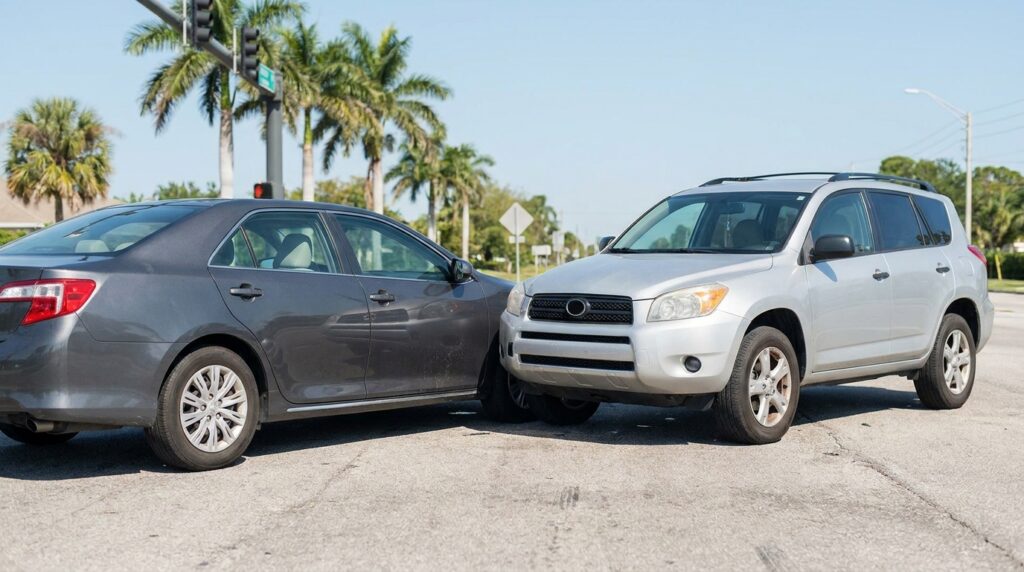
Understanding Side-Impact Crashes on Florida Roads
Key Takeaways: A T-bone car accident occurs when the front of one vehicle strikes another’s side, forming a "T" shape. These crashes typically happen at Florida intersections when drivers fail to yield, run red lights, or ignore stop signs. Because vehicle sides offer minimal protection, occupants on the struck side often suffer brain trauma, fractures, and internal injuries. Florida’s right-of-way statutes determine fault, as violations directly identify the at-fault driver. Under Florida’s comparative fault system, recovery may be reduced by the plaintiff’s share of blame, and those found more than 50% at fault may be barred from recovery. Strict filing deadlines apply, making early consultation essential to protecting your rights.
A T-bone car accident is among the most dangerous intersection collisions, occurring when one vehicle’s front strikes another’s side, forming a "T" shape. These broadside or side-impact collisions frequently happen at intersections when drivers fail to yield, run red lights, or ignore stop signs. Because vehicle sides offer minimal protection compared to front or rear areas, occupants on the struck side face serious harm. Understanding how these crashes happen and determining responsibility is crucial to protecting your rights.
If you or a loved one was injured in a broadside crash, reach out to Attorney Big Al at 1-800-HURT-123 by calling 1-800-487-8123 or visiting our online case review page to discuss your options.
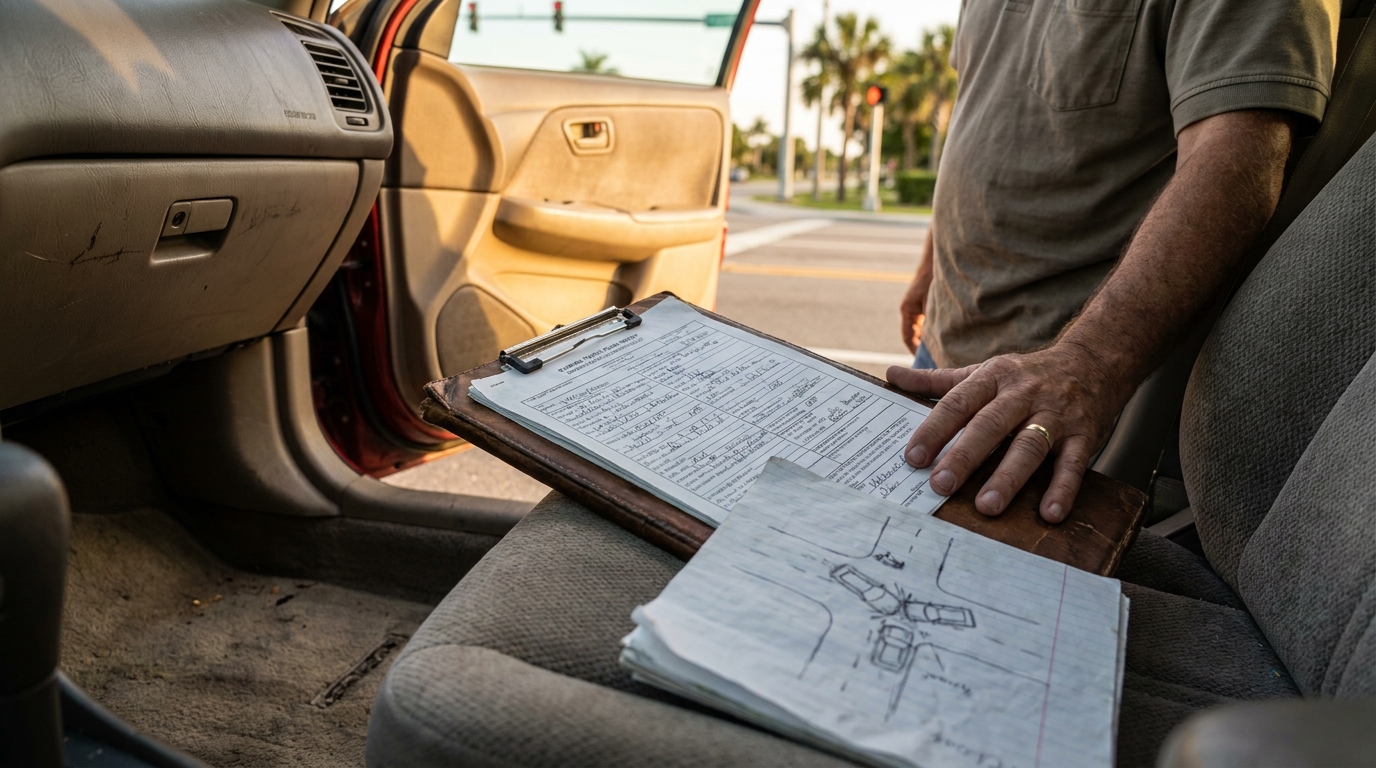
What Causes a T Bone Car Accident in Florida?
Most T-bone crashes result from drivers entering intersections without legal right-of-way. Common causes include running red lights, rolling through stop signs, misjudging oncoming traffic during left turns, or inattention. Driver distraction, speeding, and impairment increase the likelihood of wrongful intersection entry, often resulting in violent crashes that catch other drivers off guard.
Impact direction significantly affects crash severity. Unlike rear-end collisions where bumpers absorb force, side-impact crashes transfer energy directly into the passenger compartment. The source material on car accident injuries notes that impact direction substantially affects injury types, explaining why intersection accidents in Florida produce more severe outcomes than many collision types.
💡 Pro Tip: If able after a crash, photograph both vehicles’ positions before they’re moved. Impact angle and final positions help establish which driver entered the intersection unlawfully.
Right-of-Way Laws That Determine Fault
Florida’s right-of-way statutes are central to determining T-bone crash fault. These laws establish clear intersection behavior rules, and violations often identify the at-fault party. Because liability typically hinges on right-of-way, these statutes form the foundation of most intersection collision claims.
Yielding at Open Intersections
Drivers approaching intersections must yield to vehicles already in them. Under Chapter 316 of the Florida Statutes, Fla. Stat. § 316.121 requires drivers approaching intersections to yield to vehicles entering from different highways. When two vehicles enter simultaneously from different roads, the left driver yields to the right driver. Violations are a common broadside collision cause and constitute noncriminal moving traffic infractions.
Stop Signs, Yield Signs, and Four-Way Stops
Drivers at stop signs must completely stop and yield before proceeding. Under Fla. Stat. § 316.123, after stopping, drivers must yield to vehicles already in intersections or approaching closely enough to constitute immediate hazards. At four-way stops, the first vehicle to stop proceeds first; when multiple vehicles arrive simultaneously, left drivers yield to right drivers. If a driver passes a yield sign without stopping and collides with another vehicle, that collision is prima facie evidence of failure to yield, though this presumption may be rebutted.
Traffic Signals and Crosswalks
Drivers at signalized intersections must stop and remain stopped when required. Under Fla. Stat. § 316.130(7)(a), drivers at intersections with traffic control signals must stop before crosswalks and remain stopped to allow pedestrians with permitted signals to cross. Failure to observe intersection signals, including red lights, frequently causes broadside collisions.
💡 Pro Tip: Many Florida intersections have nearby traffic cameras, business surveillance, or doorbell cameras. Ask your attorney to send preservation requests quickly before footage is overwritten.
Common Injuries From Broadside Collisions
Side-impact crashes often produce serious injuries due to impact location. Occupants on the impacted side absorb much energy, causing severe trauma even at moderate speeds. According to guidance on common car accident injuries, injuries classify as either impact injuries, where the body strikes the car, or penetrating injuries, where objects enter the body. Both frequently occur in T-bone collisions.
Head and brain trauma are among the most concerning outcomes. When thrown sideways, the head can strike the steering wheel, windshield, or side window, causing concussions and brain damage. Other common injuries include broken ribs, pelvic fractures, spinal damage, and internal organ injuries. Because some symptoms appear later, prompt medical evaluation is essential.
Common Florida broadside crash injuries include:
- Concussions and traumatic brain injuries from striking interior surfaces
- Rib, pelvic, and spinal fractures from lateral force
- Internal bleeding and organ damage
- Soft tissue injuries to neck, back, and shoulders
💡 Pro Tip: Keep a daily journal of symptoms, missed workdays, and how injuries affect your routine. This documentation supports economic and non-economic damages claims.
How Florida’s Comparative Fault System Affects Your Claim
Florida applies a comparative fault framework that can reduce an injured person’s recovery. Historically, Florida followed pure comparative negligence, where a claimant’s fault reduces damages proportionately but doesn’t bar recovery. Contributory fault reduces economic and noneconomic damages attributable to that fault.
Florida’s tort statutes abolished joint and several liability for negligence actions. Under Chapter 768 of the Florida Statutes, Fla. Stat. § 768.81(3) directs courts to enter judgment against each party based on their fault percentage. The statute defines "negligence action" broadly to include civil actions based on negligence, strict liability, products liability, and similar theories. Following Florida’s 2023 tort reform changes for causes accruing on or after March 24, 2023, plaintiffs found more than 50% at fault may be barred from recovery, making precise fault allocation crucial. Defendants may allocate fault to nonparties by pleading and proving their negligence at trial.
| Fault Scenario | General Effect on Recovery |
|---|---|
| Plaintiff 0% at fault | May recover full damages, subject to proof |
| Plaintiff partially at fault, 50% or less | Recovery generally reduced by their percentage |
| Plaintiff more than 50% at fault | May be barred from recovery under current law |
Because fault is often disputed in T-bone cases, both drivers may blame each other. Understanding what occurs when both drivers share blame in a Florida crash helps, since outcomes depend on responsibility apportionment. Comparative negligence is a tort principle courts use to reduce damages by the plaintiff’s fault share.
💡 Pro Tip: Avoid apologizing or speculating about fault at the scene or to insurance adjusters. Casual statements can be used to argue you share greater responsibility.
Deadlines for Filing a Florida Crash Claim
Florida sets firm time limits for car accident lawsuits, and missing them can end claims entirely. Under the 2018 statute version, Fla. Stat. § 95.11(3)(a) required negligence-based personal injury actions be filed within four years. Florida’s 2023 tort reform shortened this to two years for negligence causes accruing on or after March 24, 2023, while earlier claims generally remain under the prior four-year period. For wrongful death actions from fatal broadside collisions, Fla. Stat. § 95.11(5)(e) provided a two-year limitations period. The applicable deadline depends on when the crash occurred.
Certain exceptions may extend these deadlines, but courts interpret them narrowly. Tolling and discovery-related exceptions don’t apply automatically and may only be available in limited circumstances. Civil statutes of limitations differ from administrative or government claim deadlines, which can be shorter and follow separate procedures.
If unsure about your situation, speaking with a knowledgeable auto accident lawyer in Florida helps you understand which deadline applies and what evidence to preserve.
Frequently Asked Questions
1. What is a T-bone accident in simple terms?
A T-bone accident is a side-impact collision where one vehicle’s front strikes another’s side. These crashes most often happen at intersections when drivers fail to yield, run signals, or ignore stop signs, leaving minimal protection for occupants on the struck side.
2. Who is usually at fault in a broadside crash in Florida?
Fault typically falls on the driver who violated right-of-way rules. Drivers who ran red lights, rolled stop signs, or passed yield signs without stopping may be presumed responsible, though both drivers’ conduct is examined under Florida’s comparative fault system.
3. Can I still recover damages if I was partly at fault?
Often yes, but recovery may be reduced by your fault share. Under current Florida law, plaintiffs found more than 50% at fault may be barred from recovery, so fault apportionment significantly affects outcomes.
4. How long do I have to file a claim after a T-bone crash?
Deadlines depend on claim type and crash date. Negligence-based injury claims followed a four-year period before Florida’s 2023 reform shortened it to two years for claims accruing on or after March 24, 2023, while wrongful death claims followed a two-year period.
5. What should I do right after an intersection collision?
Seek medical attention, document the scene, and report the crash as required. Prompt evaluation protects both your health and claim, since some side-impact injuries may not be immediately obvious.
Taking the Next Step After a Side-Impact Crash
A T-bone car accident can leave you with serious injuries, mounting bills, and difficult questions about responsibility. Florida’s right-of-way statutes, comparative fault rules, and filing deadlines all shape how intersection collision claims unfold. Understanding these principles helps protect your rights, preserve evidence, and avoid common pitfalls insurers may use against you.
When ready to discuss your side-impact crash, reach out to Attorney Big Al at 1-800-HURT-123 for guidance. Call 1-800-487-8123 today or request a review through our confidential contact form to take the next step toward pursuing the recovery you may be owed.
