

Key Takeaways: Florida is a no-fault state, but being uninsured does not automatically bar you from recovering damages when another driver causes your crash. You lose access to PIP benefits for medical bills and lost wages. However, you may still file a claim against the at-fault driver’s liability insurance for bodily injury and property damage. Florida’s modified comparative fault rule under FL § 768.81 allows recovery as long as you are not more than 50 percent at fault. Penalties for driving uninsured include license suspension and reinstatement fees up to $500. Speaking with an attorney promptly can help protect your compensation rights.
If you were hurt in a car crash without insurance, you may feel like you have no options. Many assume driving without coverage bars any claim. That assumption is understandable but inaccurate under Florida law. While you face real consequences for lacking required coverage, your insurance status and the at-fault driver’s liability are separate legal questions. An uninsured driver accident claim in Florida can still move forward when someone else caused the collision.
If you were injured in a crash and need guidance on your next steps, Attorney Big Al at 1-800-HURT-123 is ready to help. Call 1-800-487-8123 or reach out online to discuss your situation today.
Florida’s No-Fault System and Why PIP Matters
Florida operates as a no-fault state, meaning each driver turns to their own auto insurance provider to cover initial medical expenses and lost wages after a crash, regardless of who caused it. This system revolves around Personal Injury Protection (PIP). Under FL § 627.733, every registered motor vehicle owner must carry a minimum of $10,000 in PIP coverage.
PIP pays 80 percent of medical bills, 60 percent of lost wages, and a $5,000 death benefit, all subject to the $10,000 policy limit. Initial treatment must be received within 14 days of the accident to qualify. These benefits apply regardless of fault.
When you drive without PIP, you forfeit this entire no-fault safety net. You cannot tap into your own insurer for initial medical costs. However, this does not erase your legal right to pursue the person who caused your injuries.
💡 Pro Tip: Even if you lack insurance, seek medical attention within 14 days of a crash. Prompt treatment creates a documented medical record that strengthens any future claim against the at-fault driver.
Penalties for Driving Uninsured in Florida
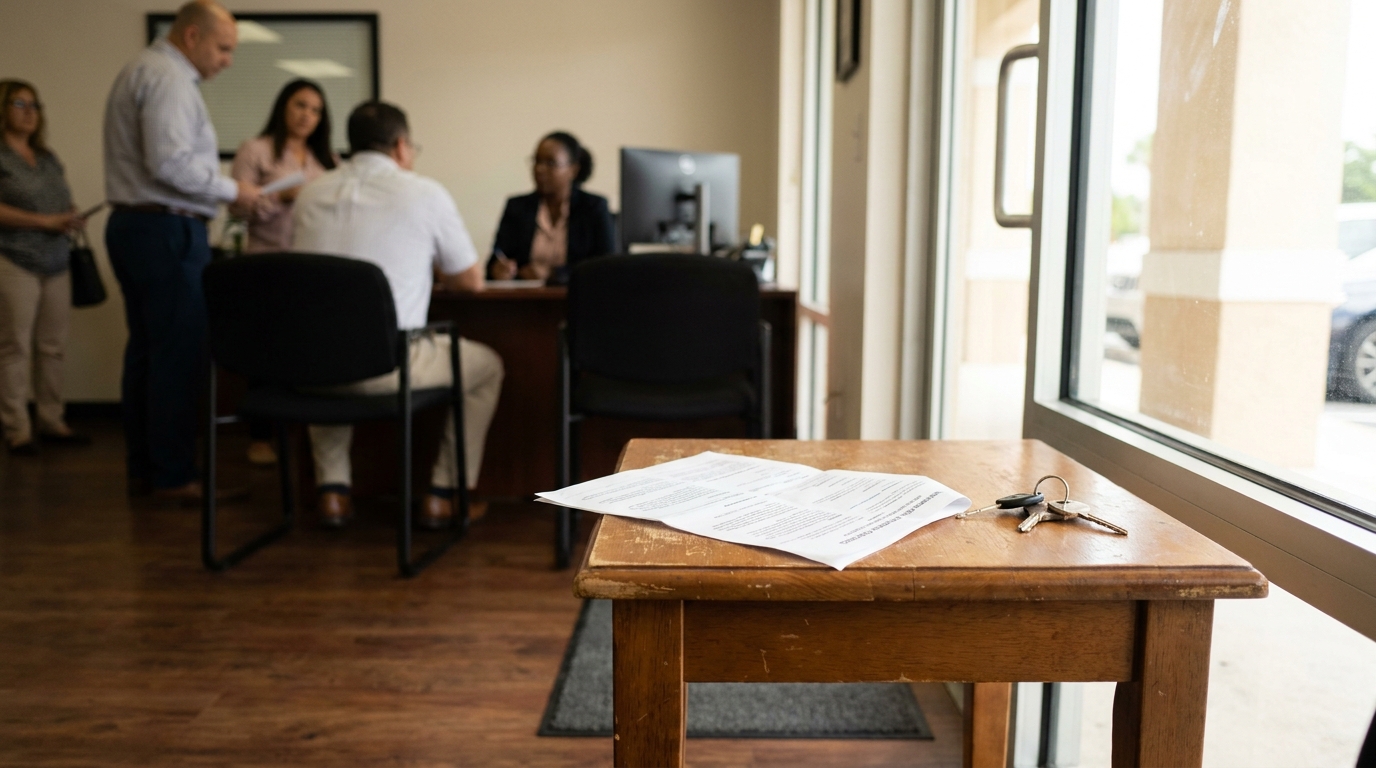
Florida law imposes serious consequences on drivers who fail to maintain required insurance coverage. Before registering a vehicle, you must show proof of at least $10,000 in PIP and $10,000 in Property Damage Liability. Under FL § 324.0221(2)-(3), the Department of Highway Safety and Motor Vehicles shall suspend the registration and driver license of any owner who did not maintain required coverage.
Reinstatement fees escalate with each offense:
| Offense | Reinstatement Fee |
|---|---|
| First reinstatement | $150 |
| Second reinstatement (within 3 years) | $250 |
| Third or subsequent (within 3 years) | $500 |
Florida requires continuous coverage throughout the entire registration period, even if your vehicle is not being driven. If you plan to stop driving, surrender your license plate before canceling insurance. These administrative consequences exist independently from accident-related claims and apply under Florida’s financial responsibility laws.
💡 Pro Tip: If your license was suspended due to a lapse in coverage, address the reinstatement process promptly. A valid license strengthens your position when negotiating a claim or filing a lawsuit.
How an Uninsured Driver Can Still Recover Damages
Filing a Claim Against the At-Fault Driver’s Liability Insurance
Being uninsured does not make you "at fault" for a crash someone else caused. Your insurance status is a regulatory matter. Fault is determined by the collision facts. Under FL § 324.151(1)(a), a motor vehicle liability policy must insure the policyholder against loss from liability for damage arising out of vehicle ownership, maintenance, or use. If the other driver carried liability coverage, you may file a claim directly against their insurer.
Florida law protects third-party claimants like you. FL § 324.151(1)(c) states that satisfaction by the insured of a judgment shall not be a condition precedent to the insurer’s duty to make payment. You do not have to wait for the at-fault driver to personally pay a judgment before their insurance company steps in.
Bodily Injury and Property Damage Claims
An uninsured claimant in Florida can pursue both bodily injury and property damage claims against the at-fault driver. Under FL § 324.022(1), every motor vehicle owner must maintain the ability to respond in damages for property damage of at least $10,000 per crash. If the at-fault driver carries this required coverage, you may submit your property damage claim directly to their insurer.
For bodily injury claims, the analysis depends on whether the at-fault driver carried Bodily Injury Liability coverage. Florida does not require standard passenger vehicles to carry BIL insurance as a condition of registration under [Chapter 627]. FL § 324.023, however, requires proof of BIL coverage (at $100,000/$300,000 limits) for drivers convicted of or who pled guilty/nolo contendere to DUI under s. 316.193 after October 1, 2007. The broader financial responsibility framework in Chapter 324 may require proof of BIL coverage after certain at-fault crashes involving bodily injury or death, though that obligation arises from other provisions in Chapter 324 rather than § 324.023 alone. If the at-fault driver has no BIL policy, your Florida car crash recovery without insurance becomes more difficult, potentially requiring a direct lawsuit.
💡 Pro Tip: Document everything at the scene. Photos of vehicle damage, witness contact information, and the other driver’s insurance details are critical when you do not have your own insurer advocating on your behalf.
Florida’s Modified Comparative Fault Rule
Florida’s modified comparative fault standard directly affects what happens if you have no insurance but the other driver was at fault. Under FL § 768.81(6), any party found to be more than 50 percent at fault for their own harm is barred from recovering any damages. If you are not more than 50 percent at fault, you can still recover, but your award is reduced by your percentage of fault.
Your lack of insurance is not a fault determination in itself. Courts assess fault based on driving conduct that caused the crash, not whether a party carried valid coverage. For example, if the other driver ran a red light and struck your vehicle, your failure to maintain PIP does not shift crash-related fault to you.
However, insurance companies may attempt to use your uninsured status as leverage during negotiations. This is where having a Florida auto accident attorney for uninsured drivers can make a meaningful difference in protecting your rights.
What You Lose Without PIP
The most significant disadvantage of being uninsured is the loss of your PIP benefits. Without PIP, you have no first-party coverage for:
- 80 percent of reasonable and necessary medical expenses (up to $10,000)
- 60 percent of lost wages
- A $5,000 death benefit in fatal injury cases
This means your only path to compensation runs through the at-fault driver’s coverage or a personal lawsuit. If the at-fault driver is also uninsured or underinsured, your options narrow considerably. As one in five Florida drivers reportedly lacks insurance, this scenario is more common than many realize.
💡 Pro Tip: If the at-fault driver has limited or no insurance, explore whether any household member’s Uninsured/Underinsured Motorist policy may apply to your situation. An attorney can help identify all possible sources of recovery.
Named Excluded Drivers Face Similar Challenges
If you were listed as a "named excluded driver" on a household auto policy, Florida law treats you similarly to an uninsured driver. Under FL § 627.747(1)(a)-(e) and (3), a private passenger motor vehicle policy may exclude PIP, bodily injury liability, property damage liability, and uninsured motorist coverage for a named excluded driver. That excluded driver must independently establish financial responsibility under Chapter 324.
Some people believe they have coverage through a family member’s policy when they actually do not. If you were excluded from a household policy and involved in a crash caused by another driver, you would need to pursue the at-fault driver’s insurer directly.
Frequently Asked Questions
1. Can I sue the at-fault driver if I was driving without insurance in Florida?
Yes, in many cases you can. Your insurance status does not determine who caused the crash. If the other driver’s negligence led to your injuries, you may pursue a Florida auto accident liability claim against that driver or their insurer. However, you will not have PIP benefits to cover initial medical expenses while your claim proceeds.
2. Will my lack of insurance reduce my settlement in a Florida comparative fault car accident?
Not directly. Florida’s comparative fault analysis under FL § 768.81 focuses on driving conduct, not insurance status. Your recovery may be reduced only if you are found partially at fault for the crash itself. An insurer may try to use your uninsured status as a negotiation tactic, but it is not a legal basis for reducing damages.
3. What if the at-fault driver does not have Bodily Injury Liability insurance?
Florida does not require BIL coverage for standard passenger vehicles as a condition of initial registration. FL § 324.023 specifically requires proof of BIL coverage (at $100,000/$300,000 limits) for drivers convicted of or who pled guilty/nolo contendere to DUI under s. 316.193 after October 1, 2007. If the at-fault driver lacks this coverage, you may need to file a personal lawsuit to recover bodily injury damages. Collecting on a judgment against an individual without sufficient assets can be difficult.
4. How long do I have to file a claim after a Florida car accident?
Florida imposes statutory deadlines for filing personal injury and property damage claims. These deadlines vary depending on claim type and parties involved. Because courts generally interpret extensions narrowly, contacting an attorney promptly helps ensure you do not lose your right to pursue compensation.
💡 Pro Tip: Do not assume you have unlimited time to act. Florida’s statutes of limitations begin running from the date of the crash in most cases, and certain claims against government entities may have shorter deadlines.
5. What happens if you have no insurance but the other driver was at fault and they refuse to cooperate?
You still have legal options. The at-fault driver’s liability insurer has a duty to respond to valid claims under FL § 324.151(1)(c), regardless of whether the at-fault driver personally cooperates. If necessary, you may file a lawsuit and pursue the claim through the court system.
Protect Your Right to Recover After a Florida Crash
Driving without insurance in Florida carries real penalties, but it does not erase your right to seek compensation when another driver causes your injuries. You may lose access to PIP benefits, face license suspension, and encounter resistance from insurance adjusters. Yet Florida law still allows you to pursue the at-fault driver’s liability coverage for both bodily injury and property damage. The key is acting quickly, documenting your injuries thoroughly, and understanding the legal landscape.
If you were hurt in a crash and need help navigating your claim, Attorney Big Al at 1-800-HURT-123 has extensive experience fighting for injured Floridians. Call 1-800-487-8123 today or contact us now for a conversation about your case.
