
Miami motor vehicle accident attorney: 3 Top Proven Tips 2025
Why Miami’s Dangerous Roads Make Legal Representation Essential
When you’re hurt in a crash, finding the right Miami motor vehicle accident attorney can mean the difference between financial recovery and devastating debt. Here’s what you need to know immediately:
Key Services a Miami Motor Vehicle Accident Attorney Provides:
– Prove fault using accident reconstruction and evidence collection
– Steer Florida’s no-fault PIP system and serious injury thresholds
– Maximize compensation for medical bills, lost wages, and pain and suffering
– Handle insurance negotiations while you focus on recovery
– Meet critical deadlines like Florida’s 4-year statute of limitations
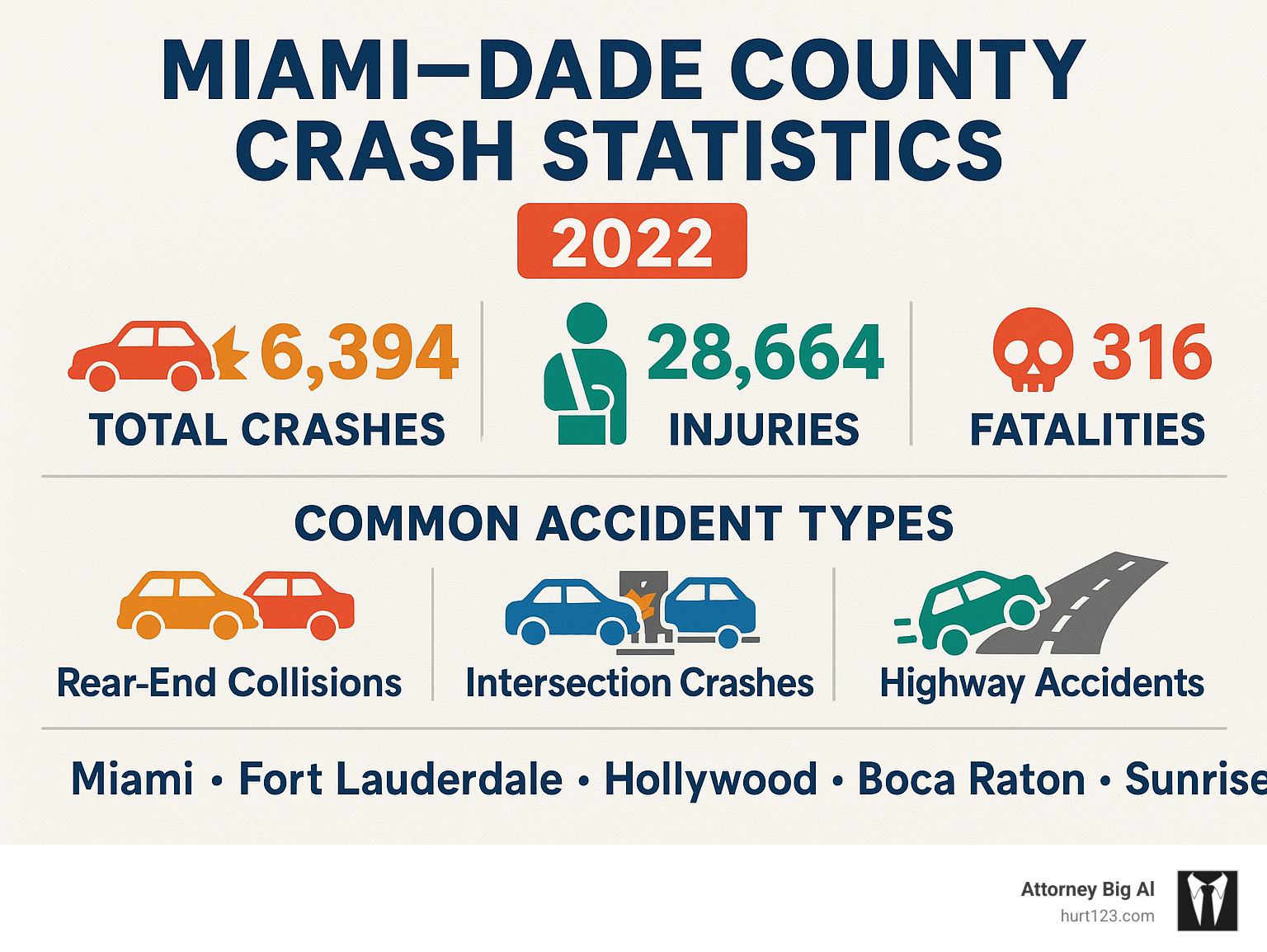
Miami’s roads are among the deadliest in America. In 2022 alone, Miami-Dade County recorded 63,394 car crashes resulting in 28,664 injuries and 316 fatalities. That’s roughly 200 crashes per day in just one county.
The statistics are sobering. Nearly half of all motor vehicle accidents in Miami result in personal injuries. Miami-Dade County leads Florida in both total accidents and traffic deaths. Four of the top five deadliest highways in the United States run through Florida, with Miami’s stretch of US-1 being the most dangerous – recording over 1,079 deaths in the last decade.
“In a split second, a car accident can change the course of your life and those of your loved ones,” as one local attorney puts it. With Florida’s complex no-fault insurance laws, comparative negligence rules, and aggressive insurance company tactics, having skilled legal representation isn’t just helpful – it’s essential for protecting your rights and financial future.
Miami motor vehicle accident attorney terms at a glance:
– Miami personal injury law firm
– miami rideshare accident lawyer
– attorney car accident
Understanding Crash Risks in Miami, Fort Lauderdale, Hollywood, Boca Raton & Sunrise
Living in South Florida means navigating some of the most challenging driving conditions in America. Between Miami’s busy downtown corridors and Fort Lauderdale’s tourist-heavy beach routes, our region faces a unique perfect storm of factors that make accidents almost inevitable.
Think about it: we have over 6 million residents sharing the roads with four times as many tourists every year. That’s a lot of unfamiliar drivers trying to figure out where they’re going while locals rush to work. Add frequent afternoon thunderstorms that can turn highways into slip-and-slide zones, plus roads that weren’t designed for today’s traffic volume, and you start to understand why crashes happen so often here.
The statistics paint a sobering picture. Florida recorded 300,750 motor vehicle crashes statewide in 2020, with more than half resulting in personal injuries. When you break that down, it means someone gets hurt in a car accident every few minutes somewhere in our state.
Speeding is a major culprit across our region. In 2021 alone, excessive speed caused 17,797 collisions in Florida, killing 211 people and causing 509 incapacitating injuries. We see this constantly on busy roads like I-95 through Hollywood and the Palmetto Expressway near Sunrise.
Distracted driving is even worse. Whether it’s texting, GPS navigation, or just trying to find that perfect restaurant, distracted drivers contributed to 155,406 crashes statewide, killing 344 people and injuring 48,189 others. That’s more than 400 crashes every single day caused by drivers not paying attention.
Red-light running is particularly dangerous at South Florida intersections. According to scientific research on red-light fatalities, running red lights caused 1,109 deaths nationwide in 2021. Miami drivers have developed a reputation for treating yellow lights as suggestions rather than warnings, leading to devastating T-bone crashes.
DUI crashes remain a persistent problem, especially in areas with active nightlife like Miami Beach and downtown Fort Lauderdale. Weather-related accidents spike during our intense summer storms when visibility drops to almost zero. And let’s be honest – tourism traffic creates chaos when visitors unfamiliar with our roads suddenly realize they need to change three lanes to make their exit.
The Deadliest Roads You Drive Daily
If you commute anywhere in South Florida, chances are you’re using some of America’s most dangerous roadways every day. It’s not exactly the kind of distinction we want, but understanding these risks can help you stay safer.
US Highway 1 through Miami holds the grim title of America’s deadliest highway. Over the past decade, this stretch has recorded more than 1,079 motor vehicle-related deaths. The combination of heavy tourist traffic, multiple lanes, countless intersections, and drivers unfamiliar with the area creates constant hazards.
Interstate 95 is equally treacherous, earning the distinction of being the most dangerous highway in the United States. In 2019 alone, I-95 saw 285 fatal accidents. The Miami section is particularly brutal due to heavy congestion mixed with drivers who think the speed limit is just a suggestion.
State Road 826 (the Palmetto Expressway) sees frequent chain-reaction crashes, especially during rush hour when stop-and-go traffic suddenly becomes high-speed collisions. One moment you’re crawling along at 10 mph, the next you’re doing 70 – until someone doesn’t notice traffic has stopped again.
The Florida Turnpike rounds out our list of high-risk corridors. While it’s supposed to be a faster route, the mix of local commuters and long-distance travelers creates unpredictable driving patterns.
Local intersections can be just as dangerous as highways. Busy crossroads throughout Boca Raton and Sunrise see frequent T-bone collisions from red-light running. When you mix local traffic patterns with tourists using GPS navigation, accidents become almost inevitable.
Common Injuries Across South Florida
The high speeds and heavy traffic across our region unfortunately lead to severe injuries when crashes occur. As a Miami motor vehicle accident attorney will tell you, understanding these common injuries helps explain why proper legal representation is so important.
Traumatic brain injuries (TBI) are devastatingly common in high-speed collisions, especially on highways like I-95. These injuries can cost up to $3 million to treat over a lifetime and often result in permanent changes to personality, memory, and cognitive function. Even seemingly minor concussions can have lasting effects that don’t show up immediately.
Spinal cord injuries are another serious consequence of major crashes. Whether it’s a rear-end collision that causes herniated discs or a rollover accident that damages the spine, these injuries frequently require multiple surgeries and extensive rehabilitation. We’ve seen cases where settlements range from $685,000 for neck surgery cases to over $3.4 million for severe spinal injuries that require lifelong care.
Fractures and broken bones might seem straightforward, but they’re often more complex than people realize. T-bone accidents at intersections frequently cause multiple fractures that require extensive surgery and rehabilitation. Complex fractures can lead to permanent impairment and chronic pain.
Don’t underestimate whiplash and soft tissue injuries either. Even minor fender-benders can cause chronic pain and mobility issues that last for years. These injuries are often dismissed by insurance companies, but they can significantly impact your quality of life and ability to work.
Wrongful death cases are tragically common on South Florida’s dangerous roads. In 2022, Miami-Dade County alone saw 316 fatalities from motor vehicle accidents. These devastating losses require experienced legal representation to ensure families receive fair compensation during an already difficult time.
The average cost of treating disabling car accident injuries is $155,000, while fatal injuries carry an economic cost of $1,778,000. These numbers show why having proper insurance coverage and legal representation is so crucial after any serious accident.
Why You Need a Miami Motor Vehicle Accident Attorney After a Crash
After a crash in Miami, Fort Lauderdale, or anywhere in South Florida, you might think you can handle the insurance claim yourself. That’s exactly what insurance companies are counting on. Florida’s legal system is designed to be confusing, and insurance companies use every trick in the book to minimize what they pay you.
Here’s the reality: Florida’s no-fault insurance system sets traps for accident victims at every turn. Your Personal Injury Protection (PIP) coverage sounds helpful until you realize it only pays 80% of medical expenses and 60% of lost wages up to a measly $10,000 limit. Even worse, if your injuries don’t meet the “emergency medical condition” threshold, you’re stuck with just $2,500 in coverage. That won’t even cover a single ambulance ride in Miami.
The serious injury threshold is another hurdle designed to keep money in insurance company pockets. Unless your injuries result in permanent disability, significant scarring, or death, you can’t pursue a claim against the at-fault driver for pain and suffering. Insurance companies will argue that your broken bones or herniated discs don’t meet this threshold, even when you’re facing months of painful recovery.
Comparative fault rules in Florida mean insurance companies will try to blame you for the accident, even when their driver ran a red light or was texting. If they can convince someone you were 30% at fault, your compensation gets cut by 30%. Without a Miami motor vehicle accident attorney fighting back, they’ll often succeed in shifting blame unfairly.
Time is not on your side either. Florida’s statute of limitations gives you four years to file a lawsuit, but critical evidence disappears much faster. Surveillance footage gets deleted within weeks, witnesses forget details, and skid marks fade after the next rainstorm. Meanwhile, insurance companies are building their defense from day one.
Insurance tactics get more aggressive every year. They’ll offer quick settlements before you know the full extent of your injuries, pressure you to give recorded statements without a lawyer present, and delay payments hoping you’ll get desperate and accept less. They have teams of adjusters and lawyers whose only job is to pay you as little as possible.
When you’re dealing with trial preparation, the playing field becomes even more uneven. Insurance companies have unlimited resources and experienced defense attorneys. Going up against them without proper legal representation is like bringing a water gun to a firefight.
How a Miami motor vehicle accident attorney Proves Fault
Building a strong case starts with evidence collection that goes far beyond what police officers do at the scene. We immediately dispatch investigators to photograph skid marks, debris patterns, and damage to all vehicles before anything gets moved or cleaned up. These details often tell a different story than what’s in the police report.
Police reports provide a starting point, but they’re not the final word on what happened. Officers arrive after the fact and sometimes get details wrong or miss important factors that contributed to the crash. We review these reports carefully and investigate any inconsistencies or gaps in the officer’s findings.
Accident reconstruction becomes crucial in serious cases, especially when fault is disputed. We work with engineers who can analyze the physics of the crash – how fast each vehicle was traveling, where the impact occurred, and what the drivers should have seen before the collision. This scientific approach often reveals facts that weren’t obvious at first glance.
Medical records do more than document your injuries – they help prove the crash caused your current health problems. We ensure every doctor’s visit, diagnostic test, and treatment is properly recorded and clearly linked to the accident. This creates an unbreakable chain showing how the other driver’s negligence led to your pain and suffering.
Witness statements require quick action because people’s memories fade and they become harder to locate over time. We interview witnesses independently, often uncovering details they didn’t think to mention to police. Sometimes a witness noticed the other driver was on their phone or seemed impaired – details that can make or break your case.
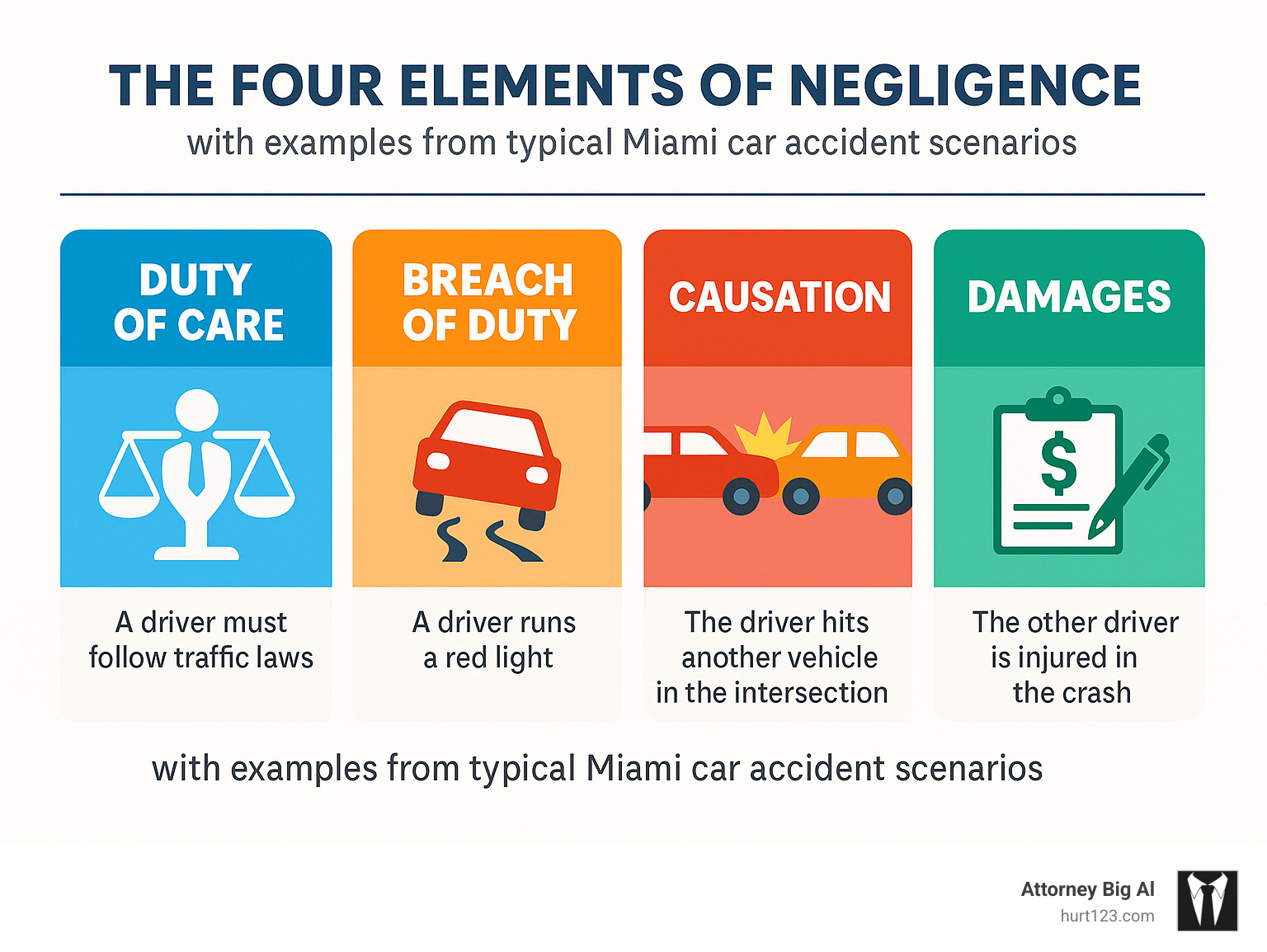
Proving negligence requires establishing four key elements that work together like pieces of a puzzle. Duty means every driver has a responsibility to operate their vehicle safely and follow traffic laws. Breach occurs when they fail in that duty – by speeding, running red lights, or driving distracted. Causation connects their breach directly to your accident, and damages quantify the harm you suffered as a result.
Maximizing Damages with a Miami motor vehicle accident attorney
Insurance companies love to focus only on your immediate medical bills and a few weeks of lost wages. That’s because they know the real costs of a serious accident extend far beyond what’s obvious right after the crash. A skilled attorney understands how to identify and document all your economic losses, including future medical expenses that could continue for years.
Non-economic damages for pain and suffering often represent the largest portion of your compensation, but they’re also the hardest to calculate. There’s no receipt for the sleepless nights, the anxiety about driving again, or the activities you can no longer enjoy with your family. We document how your injuries have changed your daily life and present that story in a way that resonates with insurance adjusters and juries.
Punitive damages become available when the other driver’s conduct was particularly reckless – like drunk driving or extreme road rage. While Florida caps these damages, they can still add substantial value to your case while sending a message that dangerous behavior has serious consequences.
Future care costs are often the most overlooked aspect of accident claims. A traumatic brain injury might require decades of therapy and specialized care. Spinal cord injuries could necessitate home modifications, wheelchair-accessible vehicles, and round-the-clock assistance. We work with medical professionals to develop comprehensive life care plans that account for your needs over your entire lifetime.
The difference between handling a claim yourself and working with a Miami motor vehicle accident attorney often means the difference between a few thousand dollars and a settlement that truly covers your losses. For more detailed information about maximizing your claim, visit More info about car accident claims.
Step-by-Step Action Plan After a Collision in Miami, Fort Lauderdale, Hollywood, Boca Raton & Sunrise
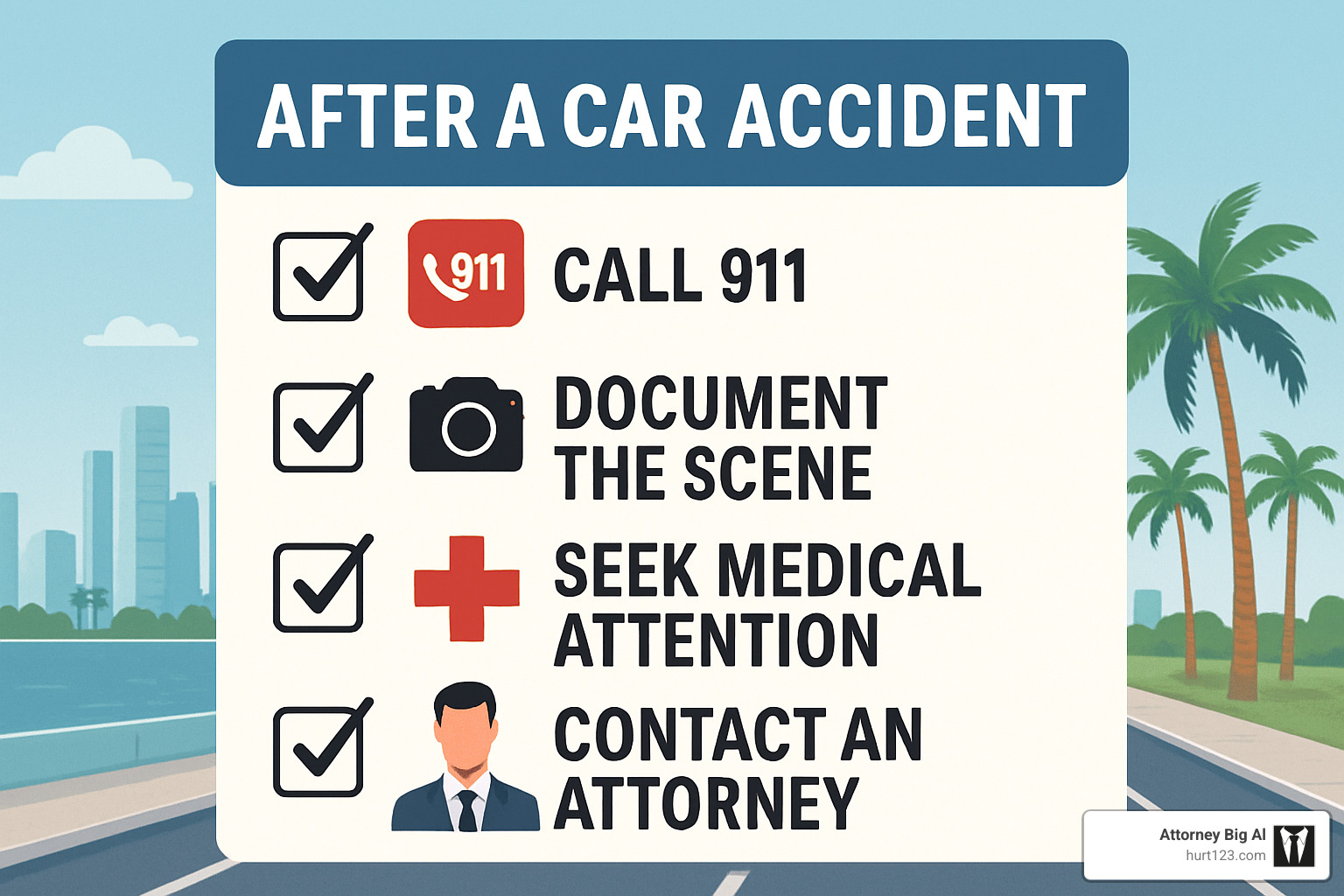
When metal meets metal on South Florida’s busy roads, your next few minutes can make or break your case. Whether you’re on I-95 in Fort Lauderdale or navigating Hollywood’s congested intersections, knowing exactly what to do protects both your safety and your legal rights.
The chaos after a crash can overwhelm anyone. Your heart’s pounding, your mind’s racing, and you might be hurt without even realizing it. That’s why having a clear action plan matters so much. The steps you take now will determine whether your Miami motor vehicle accident attorney can build a strong case later.
Your safety comes first, always. Check yourself and your passengers for injuries before anything else. If someone’s seriously hurt, don’t try to move them – you could make their injuries worse. Turn on your hazard lights immediately and set up flares or reflective triangles if you have them. This isn’t the time to worry about traffic – protecting lives matters more than keeping cars moving.
Call 911 right away, even if the accident seems minor. Florida law requires reporting any crash involving injury, death, or property damage over $500. More importantly, what looks like a small fender-bender might have caused hidden injuries that won’t show up for hours or days. The adrenaline rushing through your system can mask serious pain and injury symptoms.
Document everything while it’s fresh. Pull out your phone and start taking pictures from every angle you can safely reach. Capture all the vehicles involved, the accident scene, any skid marks or debris, and the road conditions. Record a quick video while walking around and describing what you see – your future self will thank you for these details.
Weather matters more than you might think. Was it raining? Sunny but with glare? Note the time of day and any factors that might have contributed to the crash. These details help establish the full picture of what happened.
Get everyone’s information – driver’s license numbers, insurance details, and vehicle registration from all parties involved. Hand over your information too, but here’s where you need to be careful. Don’t discuss who was at fault, and resist the urge to apologize. Saying “I’m sorry” might just be good manners to you, but insurance companies can twist it into an admission of guilt later.
Florida’s 14-day rule could save you thousands. You must seek medical treatment within 14 days of your accident to qualify for your full PIP benefits. Skip this deadline, and you might only get $2,500 instead of the full $10,000 coverage. Even if you feel fine now, see a doctor anyway. Concussions, soft tissue injuries, and internal bleeding don’t always announce themselves immediately.
Contact your insurance company within 24 hours to report the accident. Stick to the basic facts of what happened without speculating about fault. Your policy requires prompt reporting, and delays can give insurers excuses to deny coverage.
City-Specific Reporting Hotlines & Resources
Getting your crash report shouldn’t feel like solving a puzzle, but each South Florida jurisdiction has its own system. In Miami, call (305) 603-6477 or visit the police station at 400 NW 2nd Avenue to request your crash report. You’ll have to wait 60 days before the report becomes available – that’s when it transitions from restricted to public record.
Fort Lauderdale, Hollywood, and Sunrise fall under Broward County’s system. Contact the Broward Sheriff’s Office or your local police department directly. Many Broward cities now offer online reporting systems for minor accidents, which can save you a trip downtown.
Boca Raton residents should work through the Palm Beach County Sheriff’s Office or contact Boca Raton Police directly. Each department has slightly different procedures, so calling ahead saves time and frustration.
After that initial 60-day waiting period, you can also get crash reports through the Florida Department of Highway Safety and Motor Vehicles website for a small fee. This online system often proves faster than dealing with local departments.
Preserving Evidence for Your Miami motor vehicle accident attorney
Modern cars are basically computers on wheels, and they’re secretly documenting everything that happens. Your vehicle’s event data recorder – think of it as a black box like airplanes have – captures your speed, braking patterns, and steering inputs in the seconds before impact. This data can prove whether someone was speeding or failed to brake, but here’s the catch: it gets overwritten eventually.
Skid marks and debris patterns paint a picture of exactly how your accident unfolded. These physical clues show impact angles, speeds, and who was where when everything went wrong. Unfortunately, road crews clean up debris quickly, and Florida’s frequent rain showers can wash away skid marks within hours.
Surveillance cameras are everywhere in South Florida – gas stations, shopping centers, traffic intersections, and residential security systems. The problem? Most systems automatically delete footage after just a few days or weeks to save storage space. That’s why experienced attorneys immediately send preservation letters to prevent this crucial evidence from disappearing.
Your medical timeline tells the story of your injuries from day one. Every doctor’s visit, every test, every treatment creates a paper trail connecting your injuries directly to the accident. Insurance companies love to argue that your back pain or headaches came from something else entirely. Proper medical documentation makes their job much harder.
The evidence that wins cases often vanishes within days of an accident. That’s why connecting with a qualified attorney quickly gives you the best chance of preserving the proof you’ll need later.
Navigating Insurance & Compensation Across South Florida
Understanding Florida’s insurance system can feel like trying to solve a puzzle while you’re still recovering from your accident. The state’s no-fault system was designed to help accident victims get quick medical care, but it often falls short when you’re dealing with serious injuries.
Your Personal Injury Protection (PIP) benefits should cover 80% of your medical expenses and 60% of your lost wages up to your policy limits. The catch? You must see a doctor within 14 days of your accident, and you need to meet Florida’s “emergency medical condition” threshold to access the full benefits. Miss that threshold, and you’re stuck with just $2,500 in coverage – barely enough to cover an emergency room visit.
Here’s the reality: Florida’s minimum $10,000 PIP coverage doesn’t stretch far when you’re facing serious injuries. A single night in the hospital can cost more than that. This is where having a Miami motor vehicle accident attorney becomes invaluable – we know how to steer these limitations and find additional sources of compensation.
Settlement negotiations with insurance companies are rarely straightforward. Adjusters have one job: pay out as little as possible. They’ll question your medical treatment, dispute your injuries, and try to blame you for the accident. They know most people don’t understand their rights, and they take advantage of that knowledge gap.
The good news? Even if you’re partially at fault, you can still recover compensation under Florida’s comparative negligence rules. We’ve helped clients who were speeding still recover substantial damages because the other driver ran a red light or was texting while driving.
For the latest crash data and trends in our area, you can check the Latest research on Florida crash dashboard.
Fault, PIP, and Pure Comparative Negligence Explained
Florida’s comparative negligence system might sound complicated, but it’s actually designed to be fair. Even if you made a mistake that contributed to your accident, you can still recover damages based on the other driver’s share of responsibility.
To prove negligence, we need to establish four key elements: duty, breach, causation, and damages. Every driver has a duty to operate their vehicle safely. When someone violates traffic laws or drives carelessly, they’ve breached that duty. If their breach caused your accident and you suffered actual losses, you have a valid claim.
Let’s say you were going 5 mph over the speed limit when another driver ran a red light and hit you. The insurance company might try to blame you for speeding, but running a red light is far more serious than minor speeding. In this scenario, you might be found 10% at fault while the other driver is 90% responsible. If your total damages are $100,000, you’d still recover $90,000.
PIP benefits work differently than third-party claims. Your PIP coverage pays quickly regardless of fault, but it’s limited to your policy amounts and doesn’t include compensation for pain and suffering. Third-party claims take longer to resolve but can provide full compensation for all your losses, including the physical and emotional impact of your injuries.
The key difference is that PIP covers only specific percentages of your medical bills and lost wages, while a successful third-party claim covers 100% of your proven damages up to available insurance limits. This is why pursuing both types of claims is often necessary for serious injuries.
What If the At-Fault Driver Is Uninsured or Underinsured?
Unfortunately, dealing with uninsured or underinsured drivers is common in South Florida. Despite Florida’s mandatory insurance laws, many drivers either carry no insurance or buy only the minimum coverage required by law.
When this happens, your own Uninsured Motorist (UM) coverage becomes your safety net. This coverage essentially steps into the shoes of the missing insurance company. If you have multiple vehicles on your policy, you may be able to “stack” your UM coverage, combining the limits from each vehicle to increase your available compensation.
Underinsured Motorist (UIM) coverage works similarly but applies when the at-fault driver has some insurance – just not enough to cover your damages. For example, if your damages total $150,000 but the other driver only has $25,000 in coverage, your UIM coverage can help bridge that gap.
We sometimes pursue the personal assets of uninsured drivers, but this approach has limitations. Many people who drive without insurance don’t have significant assets to pursue. However, if the driver owns a home, business, or other valuable property, a lawsuit might be worthwhile.
Rideshare accidents present unique challenges. Companies like Uber and Lyft provide different levels of coverage depending on what the driver was doing when the accident occurred. The coverage is highest when passengers are in the vehicle, but even when drivers are just logged into the app, there’s usually some coverage available.
The bottom line is this: your own insurance coverage often determines how well you’re protected. We always recommend carrying substantial UM/UIM coverage because you can’t control whether other drivers have adequate insurance.
Choosing the Right Accident Lawyer in Miami, Sunrise, Hollywood, Fort Lauderdale & Boca Raton
Finding the right Miami motor vehicle accident attorney after a crash can feel overwhelming when you’re already dealing with injuries and insurance hassles. But this decision is crucial – it can literally mean the difference between getting fair compensation and being left with crushing medical debt.
The truth is, not all personal injury attorneys are created equal. Some have the resources and determination to take on major insurance companies, while others prefer quick settlements that benefit them more than their clients. Here’s how to tell the difference.
Track record speaks louder than flashy advertising. Look for attorneys who can point to real results in cases similar to yours. At Attorney Big Al, we’ve recovered millions for our clients, including settlements ranging from $525,000 for car accidents to over $2.2 million for serious injury cases. These aren’t just numbers – they represent real families who got the compensation they needed to rebuild their lives.
Resources matter when you’re up against insurance giants. Insurance companies have teams of lawyers and unlimited budgets to fight your claim. You need an attorney with the financial strength to match them. We advance all case expenses and have the resources to take cases to trial when necessary. This isn’t just about having deep pockets – it’s about being willing to invest in your case because we believe in it.
Communication should never be a struggle. You shouldn’t have to fight just to talk to your own attorney. We maintain an open-door policy and keep clients informed throughout the process. When you call, you’ll get real answers from real people who know your case.
Trial readiness changes everything. Here’s something insurance companies don’t want you to know: they keep lists of attorneys who actually go to trial versus those who always settle. Guess which group gets better settlement offers? We’re not afraid of the courtroom, and insurance companies know it.
Contingency fees protect you. Reputable personal injury attorneys offer free consultations and work on contingency – you pay nothing unless we win your case. This aligns our interests with yours completely.
For more guidance on selecting the right representation, visit More info about finding the right attorney.
Red Flags When Interviewing a Miami motor vehicle accident attorney
Some warning signs should make you think twice before hiring an attorney, no matter how convincing their marketing might be.
Unrealistic promises are a dead giveaway. Run from any attorney who guarantees specific settlement amounts or promises your case will be resolved in 30 days. Every case is different, and ethical attorneys know they can’t predict outcomes with certainty. What they can promise is hard work and honest communication.
Lack of trial readiness weakens your position. Ask how many cases the attorney has actually tried to verdict in the past year. Some attorneys build their entire practice around settling cases quickly rather than fighting for maximum value. Insurance companies know exactly who these attorneys are and adjust their offers accordingly.
Poor communication during consultation predicts future problems. If the attorney or their staff are difficult to reach during your initial consultation, communication won’t magically improve after you hire them. Pay attention to how long it takes them to return calls and whether they actually listen to your concerns.
High-pressure tactics suggest desperation. Reputable attorneys will give you time to make an informed decision. Be suspicious of anyone who pressures you to sign immediately or uses scare tactics about “limited time offers.”
Vague fee structures hide problems. Make sure you understand exactly what percentage the attorney will take and what expenses you might be responsible for. Everything should be clearly explained in writing before you sign anything.
Questions to Ask Before You Sign
Before you commit to any attorney, get clear answers to these essential questions. Don’t be shy about asking – any good attorney will appreciate your thoroughness.
“How long do you expect my case to take?” While every case is different, experienced attorneys can provide general timelines based on similar cases they’ve handled. Be wary of attorneys who can’t give you any timeframe or who promise unrealistically quick resolutions.
“Will you personally handle my case or delegate it to associates?” There’s nothing wrong with having associates work on your case, but you should know who will actually be doing the work. Make sure you’re comfortable with the entire team, not just the attorney you meet initially.
“What types of specialists do you typically use?” Complex cases often require accident reconstruction specialists, medical professionals, or economists to prove damages. Attorneys who regularly handle serious cases should have established relationships with qualified specialists.
“Do you advance case expenses or do I pay them upfront?” Most personal injury attorneys advance expenses like filing fees, specialist costs, and investigation expenses, then recover them from any settlement or verdict. You shouldn’t have to pay these costs out of pocket while your case is pending.
“How often will you update me on my case?” Establish clear expectations for communication frequency and methods. Some clients prefer weekly calls, others want updates only when something significant happens. Find an attorney whose communication style matches your needs.
Frequently Asked Questions about Miami Motor Vehicle Accident Attorneys
What is Florida’s statute of limitations for car accident lawsuits?
If you’ve been hurt in a crash, you’re probably wondering how long you have to take legal action. The good news is that Florida gives you four years from the date of your accident to file a personal injury lawsuit. That might seem like plenty of time, but don’t let this deadline fool you into waiting.
There’s a crucial exception you need to know about. If you’ve lost a loved one in a motor vehicle accident, wrongful death cases have a much shorter deadline – just two years from the date of death. This compressed timeframe makes it essential to contact a Miami motor vehicle accident attorney immediately after a fatal crash.
Florida courts sometimes apply what’s called the “findy rule” in rare situations where injuries don’t show up right away. However, judges use this exception very sparingly, so it’s risky to count on it. The smartest approach is to assume the standard four-year clock starts ticking the moment your accident happens.
While you have four years to file a lawsuit, other important deadlines come much sooner. You must report the accident to the DMV within 10 days, seek medical treatment within 14 days to keep your PIP benefits, and notify your insurance company promptly. Missing these shorter deadlines can hurt your case even if you’re still within the four-year window.
Property damage claims also follow the four-year rule, but it’s usually better to handle these quickly while evidence is fresh and witnesses remember what happened.
Can I recover compensation if I was partly at fault?
This is one of the most common concerns we hear, and here’s the encouraging answer: Yes, you can still recover compensation even if you share some blame for the accident. Florida uses what’s called a “pure comparative negligence” system, which is actually quite fair to accident victims.
Here’s how it works in real life. Let’s say you were going five miles over the speed limit when another driver ran a red light and slammed into you. A jury might decide you’re 20% responsible for the crash (due to speeding) while the other driver is 80% at fault (for running the light). If your total damages come to $100,000, you’d still recover $80,000 – just reduced by your 20% share of responsibility.
This system is much more forgiving than some other states. In “contributory negligence” states, even 1% fault on your part would completely bar you from recovering anything. In “modified comparative negligence” states, you can’t recover if you’re found more than 50% at fault.
The challenge comes when insurance companies try to shift as much blame as possible onto you to reduce their payout. They might claim you were texting, not wearing a seatbelt, or driving aggressively – even when these factors didn’t actually cause the accident. This is where having an experienced attorney becomes invaluable for protecting your recovery.
Don’t let worries about partial fault stop you from seeking compensation. Even if you made a mistake, the other driver’s negligence likely played the bigger role in causing your injuries.
How much does hiring a motor vehicle accident lawyer cost?
Here’s something that surprises many people: hiring a personal injury attorney costs you nothing upfront. At Attorney Big Al, like most personal injury firms, we work on what’s called a contingency fee basis. Simply put, you don’t pay us a dime unless we win your case.
When we do recover compensation for you, we take an agreed-upon percentage as our fee. Typical contingency percentages range from 33% to 40%, depending on how complex your case is and whether it settles quickly or requires going to trial. Cases that need more work naturally have higher percentages to reflect the additional effort involved.
Case expenses are separate from attorney fees and cover things like getting your medical records, hiring accident reconstruction specialists, court filing fees, and taking depositions. The good news is we advance all these costs upfront and only recover them if we win your case.
We offer free consultations where we evaluate your case at no cost. We only take on cases where we believe we can recover meaningful compensation for you. This fee structure means our success is directly tied to yours – we only get paid when you get paid.
This system makes quality legal representation available to everyone, regardless of their financial situation. You shouldn’t have to worry about legal bills when you’re already dealing with medical expenses and lost wages from your accident. The contingency fee structure levels the playing field, giving you the same quality representation that insurance companies have on their side.
Conclusion
After a motor vehicle accident in South Florida, you’re facing more than just physical injuries and property damage. You’re up against Florida’s complex no-fault insurance system, aggressive adjusters trained to minimize payouts, and strict deadlines that can cost you thousands if missed.
With Miami-Dade County seeing over 200 crashes every single day and highways like US-1 claiming more than 1,000 lives in the past decade, the question isn’t whether you need legal help – it’s whether you can afford to go without it.
At Attorney Big Al, we’ve seen how insurance companies treat unrepresented accident victims versus those with strong legal advocates. The difference in settlement offers can be staggering. We’ve recovered millions for clients across Miami, Fort Lauderdale, Hollywood, Boca Raton, and Sunrise because we have the resources and determination to fight major insurance companies on equal footing.
Our commitment is simple: You pay nothing unless we win your case. No upfront fees, no surprise bills, no financial risk to you. We advance all case expenses and only get paid when you do. This isn’t just good business – it’s the right thing to do when someone’s world has been turned upside down by someone else’s negligence.
Time is working against you right now. Florida’s 14-day rule for PIP benefits, the four-year statute of limitations, and evidence that disappears daily all mean that waiting can cost you dearly. Skid marks fade, witnesses forget details, and surveillance footage gets deleted while you’re trying to decide what to do.
Don’t let insurance companies take advantage of your situation. They’re counting on you not knowing your rights, not understanding the true value of your claim, and not having the resources to fight back. That’s exactly why you need a Miami motor vehicle accident attorney who does.
Your free consultation with us costs nothing but could be worth everything. We’ll evaluate your case, explain your options, and give you the honest assessment you need to make informed decisions about your future.
For more information about our car accident legal services, visit More info about car accident lawyer services.
The road to recovery starts with a single phone call. Contact Attorney Big Al today and let us handle the legal fight while you focus on getting your life back on track.
