
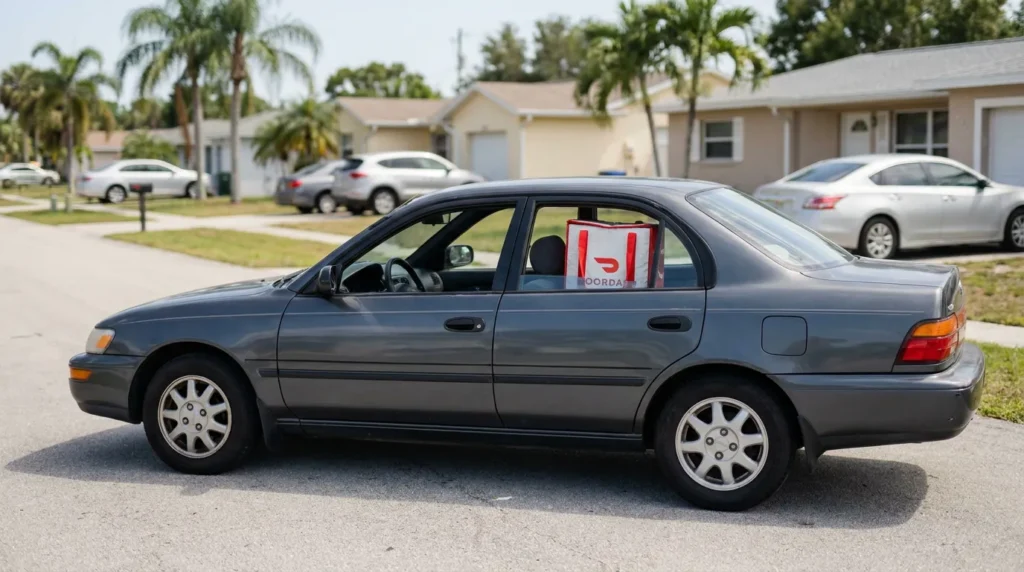
Understanding the Coverage Layers Behind a Florida DoorDash Crash
Key Takeaways: DoorDash’s $1 million policy is generally a third-party liability layer that applies while a Dasher is on an active delivery and sits in excess above the driver’s personal auto policy. When the app is on but no order is accepted, coverage may be limited or contingent, so the driver’s status at impact largely determines what is available. Florida’s no-fault system comes first, with PIP providing up to $10,000 under Fla. Stat. § 627.736(1) and requiring initial care within 14 days. Because state minimum limits under Fla. Stat. § 324.022(1) are low and many personal policies exclude commercial delivery use, the platform’s layer becomes important in serious collisions. Negligence and wrongful death claims generally must be filed within two years for causes accruing on or after March 24, 2023 under Fla. Stat. § 95.11(5), while policy disputes with an insurer may run five years. Prompt medical care, documentation of the driver’s active order screen, and caution with recorded statements help preserve available coverage.
DoorDash’s $1 million policy is generally a third-party liability policy that applies while a Dasher is actively on a delivery, meaning the driver has accepted an order and is en route to pick it up or drop it off. It is described as excess coverage that responds above the driver’s personal auto policy and generally covers injuries and damage to third parties rather than the Dasher’s own vehicle. When the app is open but no delivery is accepted, coverage typically shrinks or may not apply, which is why the moment of impact can matter enormously in any doordash accident settlement.
If you were hurt by a delivery driver in Broward County, Attorney Big Al at 1-800-HURT-123 can help you identify which coverage layer may apply. Call 1-800-487-8123 or contact us now to discuss your options.
Why Florida Law Divides Delivery Coverage Into Tiers
Florida’s statutory framework for app-based driving builds coverage around driver status, not vehicle ownership. Under Fla. Stat. § 627.748(7), transportation network companies must carry tiered insurance that changes depending on whether the app is on and whether a ride is engaged. Though this statute governs passenger transport and does not regulate food-delivery platforms, gig delivery companies generally structure their voluntary coverage using similar logic, which is why DoorDash’s largest limits attach only during the active delivery window.
The result is doordash auto policy tiers that injured persons must untangle after a crash. A Dasher driving with the app closed is covered only by personal insurance. A Dasher who has accepted an order and is carrying food triggers the $1 million third-party liability layer, subject to the policy’s terms.
| Driver Status at Impact | Coverage Generally Available |
|---|---|
| App off, personal errand | Driver’s personal auto policy only |
| App on, no order accepted | Limited or contingent coverage |
| Order accepted, en route | Personal policy plus platform third-party liability |
| Delivery in progress | Highest platform liability layer available |
How Florida’s No-Fault System Comes First
Before anyone reaches DoorDash’s third-party liability coverage, Florida’s no-fault system controls the first layer of medical payments. Under Fla. Stat. § 627.736(1), a qualifying policy must provide Personal Injury Protection up to $10,000 in combined medical and disability benefits and $5,000 in death benefits. This modest floor can be exhausted within days of hospitalization.
Timing is unforgiving. Florida’s no-fault PIP benefits statute requires that medical benefits are payable only if the injured person receives initial services within 14 days after the accident from a qualifying provider such as a physician, hospital, or emergency responder. PIP generally pays 80% of reasonable, medically necessary expenses and 60% of lost income. Benefits may be capped at $2,500 unless a provider determines the injured person had an emergency medical condition. Missing the 14-day window can complicate the entire claim.
Who Can Actually Claim PIP Benefits
PIP coverage extends beyond vehicle owners. Fla. Stat. § 627.736(1) extends benefits to the named insured, relatives residing in the household, permissive operators, passengers, and certain persons struck by the vehicle. The last category generally applies to Florida residents who do not own a vehicle requiring security and are not covered by a household policy. This can matter for pedestrians and cyclists hit by a Dasher, while non-residents struck as pedestrians usually have no Florida PIP claim and pursue liability coverage directly.
💡 Pro Tip: Tell every treating provider that the crash involved a delivery driver working an active order. That notation may later support timeline questions an adjuster could raise about doordash third party liability.
Why the Driver’s Personal Policy Is Rarely Enough
Florida’s minimum financial responsibility requirements are strikingly low. The state’s financial responsibility requirements under Fla. Stat. § 324.022(1) require owners to maintain the ability to respond in damages of $10,000 for property damage, alternatively satisfied by a combined single-limit policy of at least $30,000. Florida does not generally require ordinary private vehicle owners to carry bodily injury liability coverage unless a triggering event applies, so a Dasher may carry only PIP and property damage liability.
Many personal auto policies also exclude commercial delivery use outright. Gig delivery platform coverage is often designed to fill these gaps, similar to how Florida’s peer-to-peer car-sharing statute addresses coverage during sharing periods, but the specific policy language controls.
Deadlines That Can End a DoorDash Accident Settlement
Under Fla. Stat. § 95.11(5)(a), an action founded on negligence generally must be brought within two years. That is the usual legal basis for a crash claim against a Dasher or the platform. Missing the deadline can bar recovery regardless of available coverage.
The two-year rule reflects a 2023 legislative change applying to causes of action accruing on or after March 24, 2023. Older crashes generally remain subject to the prior four-year period. Courts interpret tolling and discovery exceptions narrowly.
Different Claims, Different Clocks
Not every claim shares the same deadline.
- Negligence claims against the driver or platform: generally two years under Fla. Stat. § 95.11(5)(a)
- Wrongful death: generally two years from date of death under Fla. Stat. § 95.11(5)(e)
- Contract-based disputes with an insurer: generally five years under Fla. Stat. § 95.11(2)(b)
These distinctions can be outcome-determinative. A family pursuing full limits after a fatal crash faces the wrongful death filing period, which runs from the date of death rather than the crash, while policy benefit disputes may run longer. If you are unsure which clock governs, consult a lawyer early.
How Fault Allocation Shapes What You Recover
Florida classifies these cases as negligence actions with consequences. Fla. Stat. § 768.81(1) defines "negligence action" broadly to include civil damages claims based on negligence, strict liability, products liability, professional malpractice, or breach of warranty. Under the modified comparative negligence standard adopted in 2023, a claimant found more than 50% at fault may recover nothing.
Insurers frequently argue the injured party shares responsibility. Comparative fault arguments in a doordash insurance claim in Florida often focus on speed, lane position, or distraction. Preserving evidence early, photographs, dashcam footage, witness information, can affect how a court or adjuster views these arguments.
💡 Pro Tip: Screenshot everything the driver shows you at the scene, including the active order screen. That image can help resolve disputes about whether the $1 million layer was engaged.
Practical Steps After a Gig Delivery Crash
What you do in the first two weeks shapes the case. Seek medical care immediately to protect the 14-day PIP window, report the collision to law enforcement, and document the driver’s status, food or packaging in the vehicle, and any statements about an active order.
Be careful with recorded statements. Adjusters for both the personal carrier and the platform’s insurer may contact you quickly. Casual comments about pain or fault can surface later. A doordash accident settlement lawyer can handle those communications.
Frequently Asked Questions
1. Does the $1 million policy apply if the app was on but no order was accepted?
Generally, no. The highest liability layer typically attaches only once a delivery is accepted. Coverage during the waiting period is usually limited.
2. Can I still file a claim if my own PIP is exhausted?
Possibly. Once PIP’s $10,000 limit is exhausted, injured parties may pursue fault-based bodily injury and property damage claims against the responsible driver and applicable platform coverage. Pain and suffering recovery generally requires meeting the permanent injury threshold in Fla. Stat. § 627.737(2).
3. What if the Dasher was driving a borrowed or rented car?
Coverage analysis becomes more complex. Multiple policies may apply, including the owner’s coverage, driver’s personal policy, and platform coverage. Florida’s dangerous instrumentality doctrine may expose the owner to liability, subject to statutory caps.
4. How long does a doordash accident settlement typically take?
There is no fixed timeline. Resolution depends on injury severity, whether treatment is complete, disputes over driver status, and whether the platform’s insurer accepts coverage. Some claims resolve in months; others require litigation.
5. Do I have a claim if I was a pedestrian struck by a delivery driver?
Possibly. Fla. Stat. § 627.736(1) can extend PIP to certain Florida residents struck by a vehicle who have no PIP of their own. Pedestrians may also pursue fault-based claims against available liability coverage.
Protecting Your Rights After a Delivery Driver Collision
DoorDash’s $1 million coverage is real but layered, conditional, and tied to what the driver was doing at impact. Florida’s no-fault system, low statutory minimums under Fla. Stat. § 324.022(1), and the two-year negligence deadline in Fla. Stat. § 95.11(5)(a) interact in ways that can limit recovery. Understanding dasher insurance as explained under Florida law helps preserve available coverage layers.
The team at Attorney Big Al has extensive experience handling delivery and rideshare collision claims throughout Broward County. Call 1-800-487-8123 or request a free consultation to have your case reviewed while evidence is fresh.
Disclaimer: This content is for informational purposes only and is not legal advice. Every case is unique, and results may vary. Consult an attorney about your specific circumstances.
