
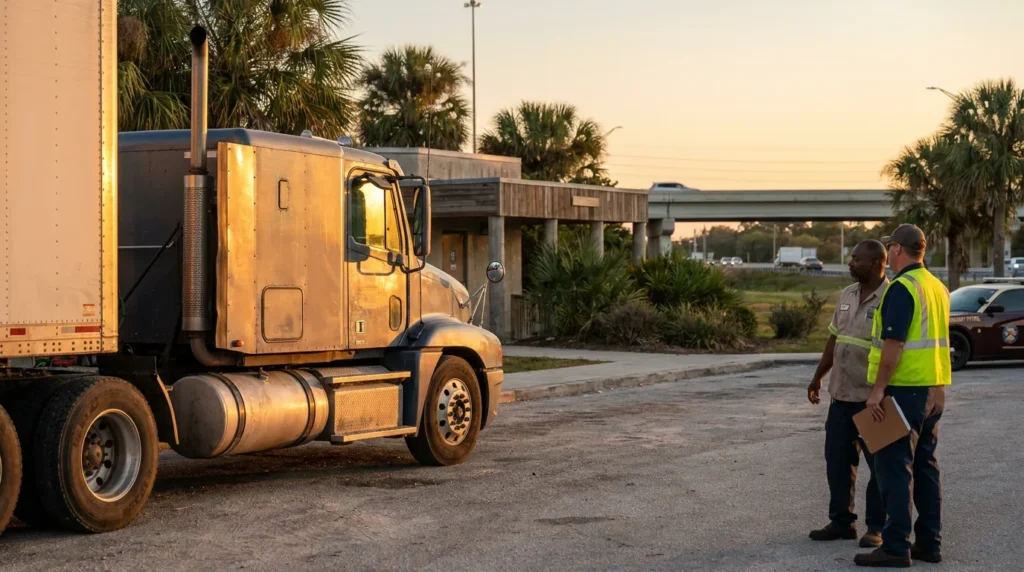
Why Timing Matters After a Hollywood Truck Collision
Key Takeaways: A Florida truck crash report must be completed within 10 days, but the trigger date varies. When law enforcement investigates, the Florida Traffic Crash Report, Long Form must be completed within 10 days after investigation concludes. For uninvestigated minor property-damage crashes, drivers must self-report within 10 days of the crash under § 316.066(1)(e). Commercial motor vehicles automatically trigger the Long Form. Florida law also requires immediate notification to law enforcement under § 316.065(1) for crashes involving injury, death, or $500+ in damage. Understanding these timelines and preserving evidence protects your safety and recovery.
A Florida truck crash report must be completed within 10 days, but the exact trigger depends on who investigates. When law enforcement investigates, the officer’s Long Form must be submitted within 10 days after investigation completion. For uninvestigated minor property-damage wrecks, drivers must self-report within 10 days of the crash. Understanding these timelines protects both your safety and future recovery.
If you or a loved one was injured, reach out to Attorney Big Al at 1-800-HURT-123, call 1-800-487-8123, or request a free consultation online to discuss your legal options.
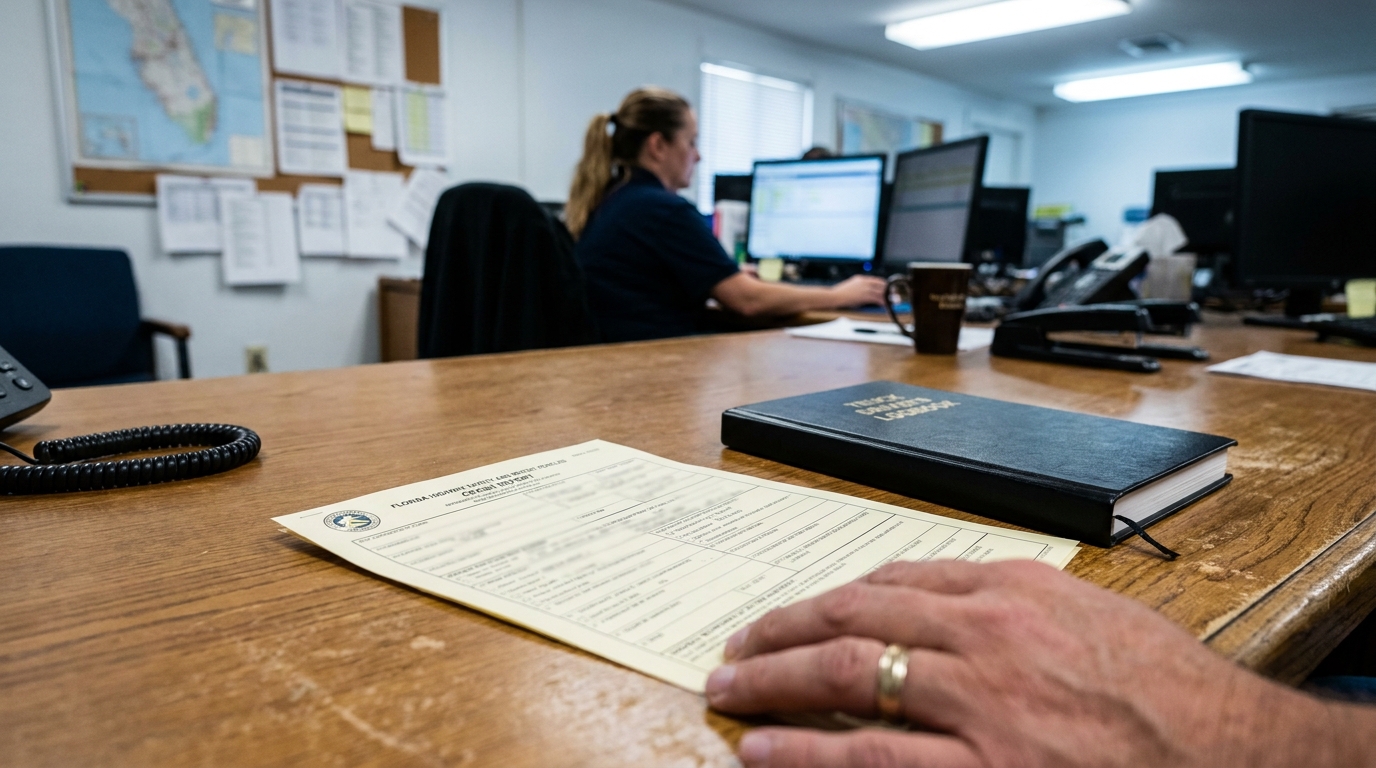
An Incident Report Should Be Completed When These Triggers Apply
Under Florida law, an incident report is required when law enforcement investigates a qualifying crash. Florida Statutes § 316.066(1)(a) requires the Long Form for crashes involving death, personal injury, complaints of pain or discomfort, violations of § 316.061(1) or § 316.193, vehicles requiring wrecker removal, or commercial motor vehicles. Most tractor-trailer wrecks satisfy one or more triggers, making the Long Form standard.
Commercial Vehicle Crashes Automatically Require the Long Form
The Long Form is mandatory whenever an officer investigates a commercial motor vehicle crash. Under § 316.066(1)(a)(4), the commercial-vehicle trigger applies independently, so truck collisions require the Long Form regardless of injuries or damage. This matters because the Long Form captures far more detail than the short form, often becoming central evidence in truck accident claims.
Injury, Death, and Other Common Truck-Crash Triggers
Most serious truck wrecks independently require the Long Form. Section 316.066(1)(a)(1)-(3) requires reports when crashes cause death, injury, or pain complaints, involve leaving-the-scene or DUI violations, or require wrecker removal. These circumstances commonly follow high-energy commercial vehicle collisions.
💡 Pro Tip: If physically able, write down the investigating officer’s name, badge number, and agency at the scene. This information helps you request your report later.
The 10-Day Deadline for Florida Truck Crash Reports
The Long Form deadline runs from investigation completion, not the crash date. Section 316.066(1)(a) requires submission within 10 days after investigation completion. In complex truck cases involving multiple vehicles, electronic data, or reconstruction, investigations can extend this timeline. Review the Florida crash report law for complete statutory language.
When No Officer Responds to a Minor Crash
For crashes not requiring law enforcement reports, drivers must self-report within 10 days. Under § 316.066(1)(e), drivers involved in crashes causing property damage but not requiring law enforcement reports must submit written reports within 10 days using the department-approved Driver Self Report form. The state’s traffic crash reports resource explains these submissions.
| Scenario | Report Type | Deadline |
|---|---|---|
| Officer investigates a truck or injury crash | Long Form (§ 316.066(1)(a)) | Within 10 days after the investigation is completed |
| Property damage, no officer report required | Driver Self Report (§ 316.066(1)(e)) | Within 10 days after the crash |
| Injury, death, or $500+ apparent damage | Immediate notice (§ 316.065(1)) | Immediately, by quickest means |
💡 Pro Tip: Don’t assume the officer’s report is the only paperwork that matters. Your own timely documentation of injuries and property damage strengthens claims.
Your Immediate Duty to Notify Law Enforcement
Florida law imposes an immediate notification duty separate from written reports. Under § 316.065(1), drivers involved in crashes causing injury, death, or $500+ apparent damage must immediately notify local police (if within a municipality) or the county sheriff or Florida Highway Patrol. This immediate duty is not satisfied by later paperwork.
Failing to notify carries consequences. Section 316.065(1) makes violations noncriminal traffic infractions punishable as nonmoving violations under chapter 318. Separate statutes (§§ 316.061, 316.062) also require drivers to stop, remain at the scene, and exchange information.
💡 Pro Tip: Even if injuries seem minor, request law enforcement response. Delayed symptoms are common after truck collisions, and an officer-generated report creates an early, independent record.
What the Long Form Must Contain
The Long Form captures details that often decide truck accident cases. Section 316.066(1)(b) requires specific information categories that help establish liability and identify responsible parties. For injured victims, these details become the foundation for investigating trucking companies and insurers.
- The date, time, and location of the crash
- A description of the vehicles involved
- The names and addresses of all drivers and passengers
- The names and addresses of witnesses
- The investigating officer’s name, badge number, and agency
- The insurance companies for each party involved
Insurance documentation requires special attention. Under § 316.066(1)(d), parties must provide proof of insurance to officers, and failure is a noncriminal traffic infraction unless injuries or special circumstances prevent immediate provision. The statute provides a 24-hour cure period, supplying valid proof within 24 hours allows agencies to void citations.
How Crash Reports Affect Your Truck Accident Claim
Florida truck crash reports are confidential for 60 days. Under § 316.066(2)(a), reports revealing personal information are confidential and exempt from public records disclosure under § 119.07(1) for 60 days after filing. Knowing who can access your crash report during the first 60 days helps you understand information protection while your claim develops.
The report itself is generally privileged. Section 316.066(4) provides that crash reports and statements made to complete them are without prejudice to reporting individuals and may not be used as evidence in civil or criminal trials. The privilege has statutory limits, officers may testify at criminal trials when self-incrimination privileges aren’t violated, and chemical test results aren’t covered.
💡 Pro Tip: Because reports may be privileged, independent proof matters. Photographs, black-box data, driver logs, and witness statements gathered promptly support claims even when reports can’t be used directly at trial.
When commercial vehicles are involved, preserving evidence quickly is essential. A skilled Florida truck crash report attorney can help identify and request federal safety records, maintenance history, and electronic data before they’re lost.
Frequently Asked Questions
1. When must a Florida truck crash report be completed after a collision?
In most truck cases, the officer’s Long Form must be completed within 10 days after investigation completion. Under § 316.066(1)(a), that deadline runs from investigation completion, while driver self-reports for minor, uninvestigated property-damage crashes are due within 10 days of the crash under § 316.066(1)(e).
2. Does a commercial truck crash always require the Long Form?
Generally, yes, when an officer investigates. Section 316.066(1)(a)(4) requires the Long Form whenever officers investigate commercial motor vehicle crashes, so short forms rarely apply to truck wrecks.
3. Can my crash report be used against me in a lawsuit?
Often not, but the answer is fact-specific. Under § 316.066(4), reports and statements made to complete them are privileged and may not be used as evidence in civil or criminal trials, though statutory exceptions exist and privilege application depends on exact circumstances.
4. What immediate steps does Florida law require at the scene?
You must immediately notify law enforcement and remain at the scene. Section 316.065(1) requires immediate notice for crashes involving injury, death, or $500+ apparent damage, and failing to notify is a noncriminal traffic infraction; separate statutes also require stopping and remaining at the scene.
5. How long is my crash report confidential?
For 60 days after filing. Section 316.066(2)(a) makes reports revealing personal information confidential and exempt from public records disclosure for that period, subject to statutory exceptions.
Protecting Your Right to Recover After a Truck Crash
Understanding when reports are due, what they contain, and how they’re used gives injured victims a meaningful advantage. Florida’s overlapping duties, from immediate notice under § 316.065(1) to Long Form and self-report timelines under § 316.066, are designed to document crashes accurately. Because outcomes depend on specific facts and heavy-vehicle evidence can disappear quickly, acting promptly is often the most important step toward fair recovery.
If a commercial truck has upended your life, let a trusted advocate help protect your rights and meet every deadline. Contact Attorney Big Al at 1-800-HURT-123, call 1-800-487-8123, or start your free case review here to take the next step today.
