
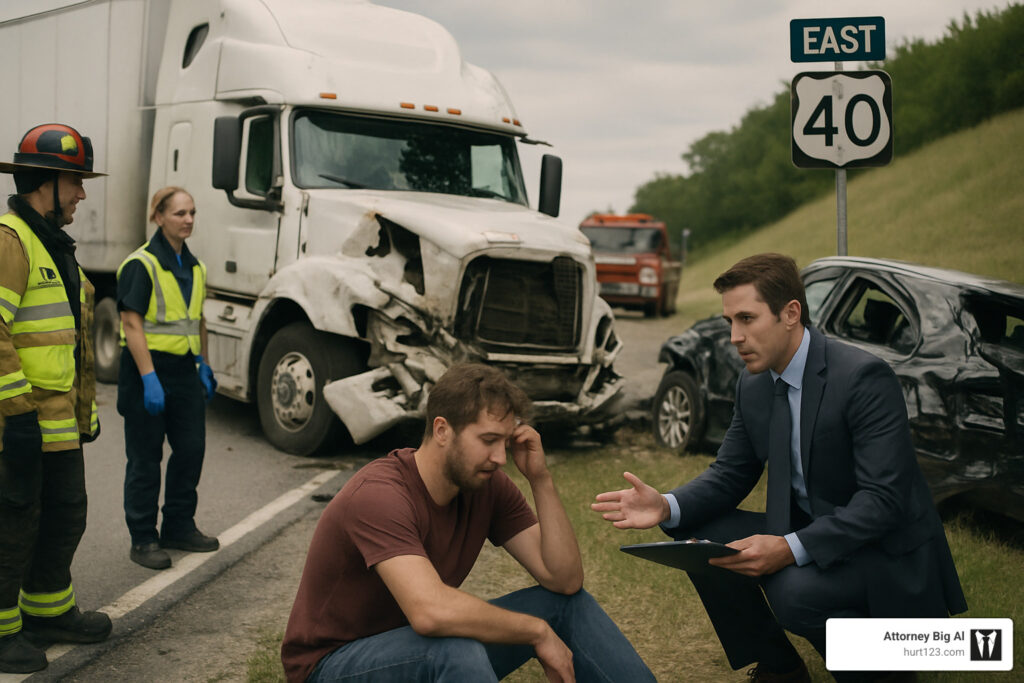
Commercial Truck Accident Lawyer: 7 Powerful Steps in 2025
Why You Need a Commercial Truck Accident Lawyer After a Collision
When you’re hurt in a crash with an 18-wheeler or delivery truck, finding the right commercial truck accident lawyer becomes your most important decision. These cases are drastically different from regular car accidents – they involve federal regulations, multiple insurance companies, and potentially devastating injuries that can change your life forever.
Quick Answer: What to Look for in a Commercial Truck Accident Lawyer:
- Specialized Experience: Focus on trucking regulations (FMCSA rules, hours-of-service violations)
- Resources: Ability to hire accident reconstruction experts and medical specialists
- Track Record: Proven success against major trucking companies and insurers
- No Upfront Costs: Contingency fee structure (you only pay if you win)
- Local Knowledge: Understanding of Florida/Ontario insurance laws and court systems
The statistics paint a sobering picture. In Canada, trucks account for less than 5% of all vehicles but are involved in a disproportionate number of fatal accidents. About 750,000 medium and heavy trucks transport over 65 million shipments annually, creating countless opportunities for catastrophic collisions on highways like I-95, the Florida Turnpike, and Ontario’s Highway 401.
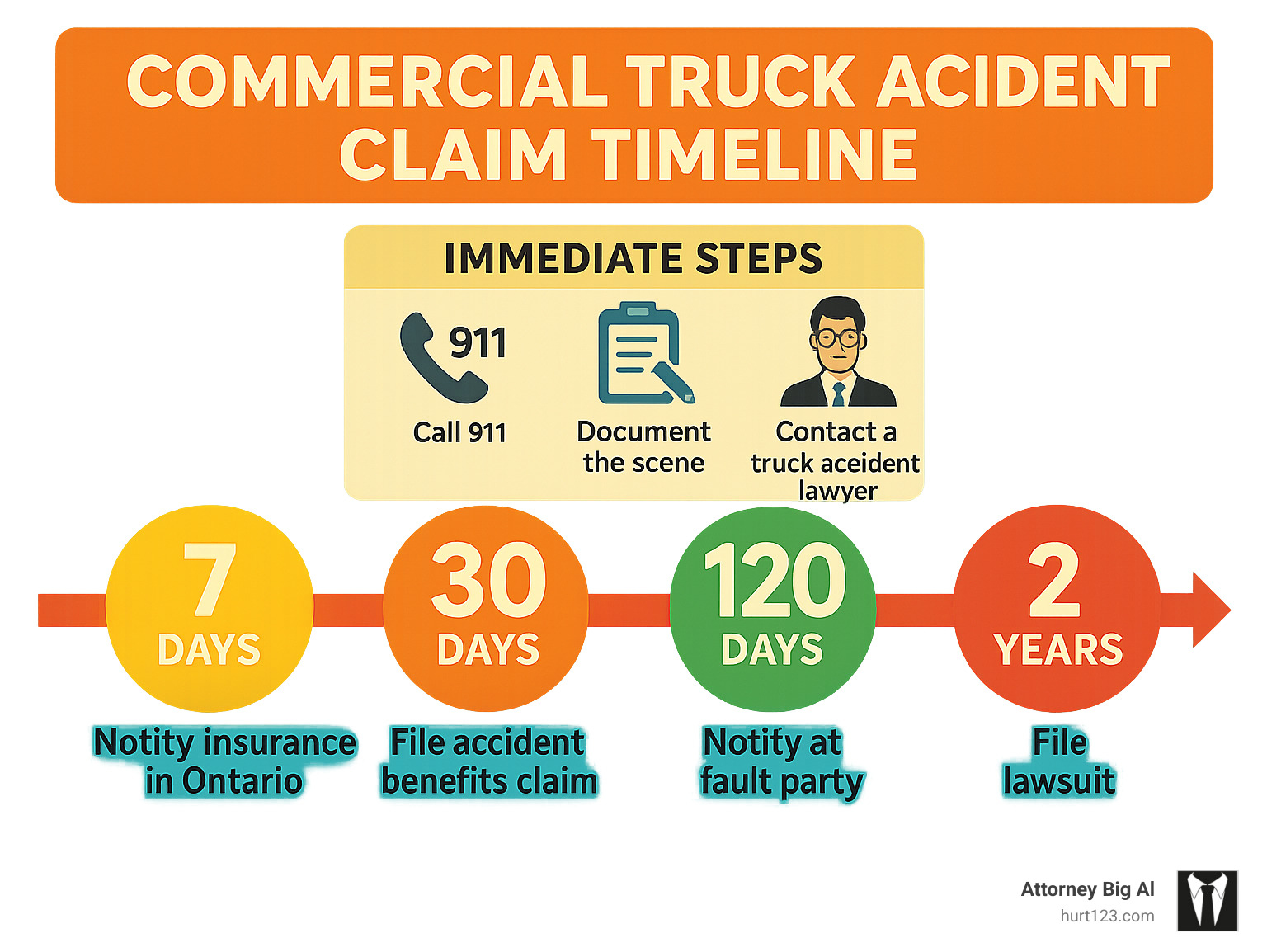
The clock starts ticking immediately after your accident. In Ontario, you have just 7 days to notify your insurance company about claiming accident benefits. In Florida, the statute of limitations gives you only 2 years to file a lawsuit. Meanwhile, trucking companies dispatch their legal teams to accident scenes within hours to protect their interests.
This isn’t the time to go it alone. Commercial truck accidents involve complex federal regulations, multiple liable parties (driver, trucking company, cargo loader, manufacturer), and insurance policies worth millions of dollars. Your regular car accident lawyer isn’t equipped for this battle.
Relevant articles related to commercial truck accident lawyer:
Miami: The Anatomy of Commercial Truck Accidents
Miami’s urban highways create a perfect storm for commercial truck accidents. The combination of heavy traffic, aggressive driving, and massive 80,000-pound vehicles sharing the road with passenger cars leads to devastating consequences. Our research shows that in 2020, Houston alone saw 2,835 truck-injury crashes resulting in 41 fatal incidents – and Miami’s traffic patterns are equally dangerous.

The physics are unforgiving. When a fully loaded tractor-trailer traveling at highway speeds collides with a passenger vehicle, the results are catastrophic. Commercial trucks require up to 40% more distance to stop than passenger cars, and their massive blind spots – called “No Zones” – can completely hide entire vehicles from the driver’s view.
Latest data on large-truck fatalities shows an alarming trend. According to the National Highway Traffic Safety Administration, fatalities involving large trucks increased significantly in 2021, with 5,601 large trucks involved in fatal crashes – a 12% increase from 2020. In Florida specifically, we’re seeing similar patterns on our major highways.
Common Causes on I-95 & Turnpike
Our experience representing truck accident victims in Miami reveals three primary causes of commercial truck accidents on I-95 and the Florida Turnpike:
Driver Fatigue and Hours-of-Service Violations: Federal regulations limit truck drivers to 11 hours of driving within a 14-hour shift, but violations are common. Nearly 6,000 truck crashes annually are attributed to driver fatigue. We’ve seen cases where drivers falsified their electronic logging device (ELD) data to exceed legal driving limits.
Speeding and Aggressive Driving: The pressure to meet tight delivery schedules pushes drivers to dangerous speeds. In fatal Houston crashes, 16.3% of truck drivers had prior speeding convictions – a pattern we see repeated in Florida. When an 80,000-pound truck is speeding, the stopping distance increases exponentially.
Distracted Driving: While Texas law prohibits texting while driving, it allows other mobile device uses like GPS navigation or music selection. This creates dangerous loopholes where drivers can legally engage in distracting activities while operating massive vehicles.
Typical Injuries We See
Commercial truck accidents produce some of the most severe injuries we encounter in personal injury law. The size and weight differential between trucks and passenger vehicles means that 98% of fatalities in truck accidents affect occupants of other vehicles.
Traumatic Brain Injuries (TBI): The violent forces in truck crashes frequently cause TBIs, ranging from concussions to severe brain damage requiring lifelong care. We’ve secured settlements exceeding $3 million for clients with severe head injuries.
Spinal Cord Injuries: Complete or partial paralysis is tragically common in truck accidents. These cases often require extensive medical care, home modifications, and assistive devices, with lifetime care costs reaching millions of dollars.
Fractures and Crush Injuries: The massive forces involved often cause multiple fractures, particularly to the pelvis, ribs, and extremities. Internal injuries and organ damage are also frequent, requiring emergency surgery and extended hospitalization.
Psychological Trauma: Beyond physical injuries, truck accident survivors often experience PTSD, anxiety, and depression. The trauma of surviving such a catastrophic event can be as debilitating as physical injuries.
Fort Lauderdale: Immediate Post-Crash Actions
In the chaotic aftermath of a truck accident, your actions in the first 24 hours can make or break your case. We’ve seen too many clients lose valuable evidence or inadvertently damage their claims by not knowing what to do immediately after the crash.
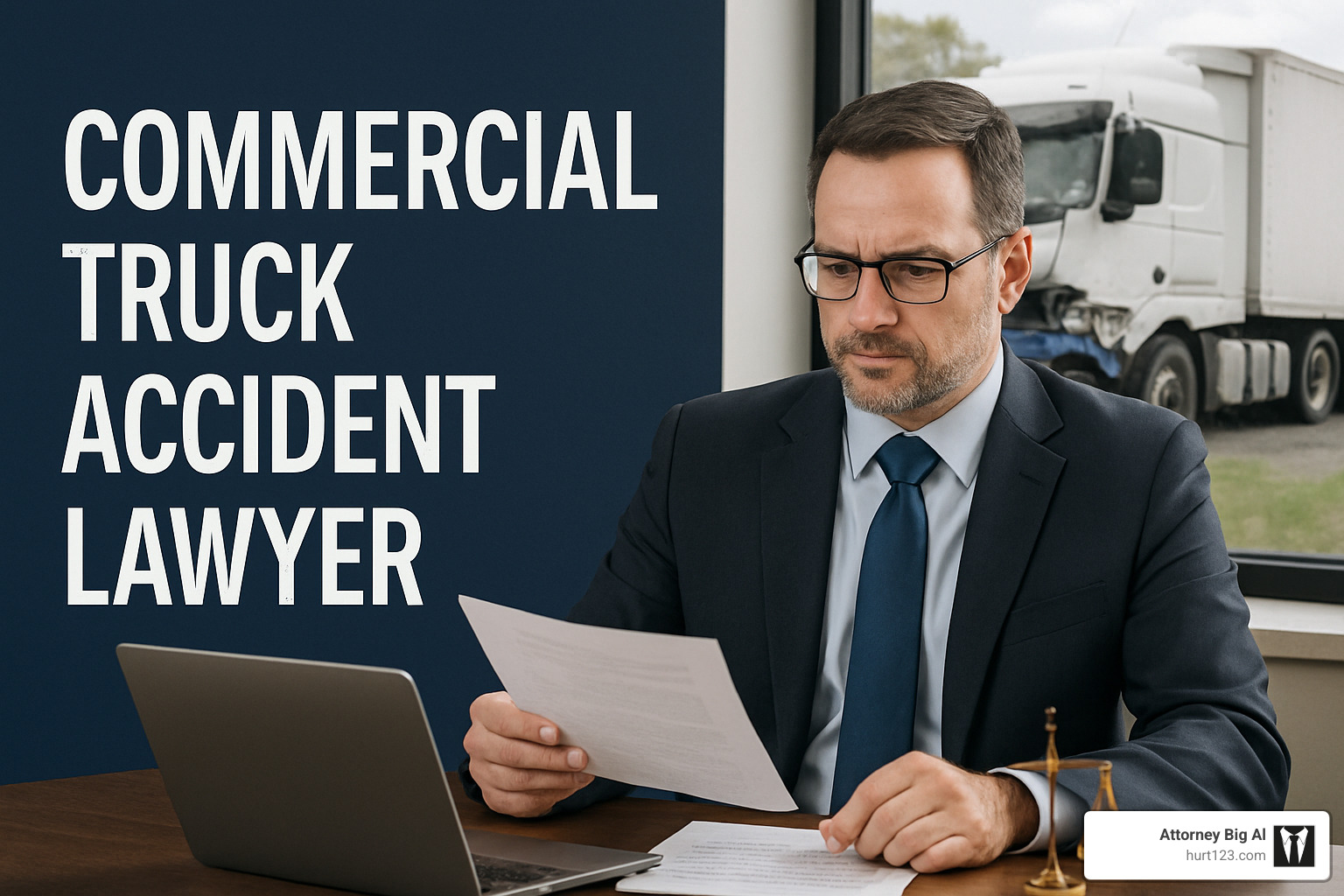
Time is your enemy. Trucking companies know this and often dispatch their legal teams and investigators to accident scenes within hours. They’re not there to help you – they’re there to protect their interests by gathering evidence that minimizes their liability.
Seven-Step Crash Scene Checklist
Here’s your essential roadmap for the critical first moments after a truck accident:
- Ensure Safety First: If possible, move your vehicle out of traffic and turn on hazard lights. Check yourself and passengers for injuries. If anyone is hurt, don’t attempt to move them.
- Call 911 Immediately: Request both police and emergency medical services, even if injuries seem minor. Adrenaline can mask serious injuries, and you need an official police report for your claim.
- Document Everything: Take photos of all vehicles, the accident scene, road conditions, traffic signs, and any visible injuries. Photograph the truck’s DOT number on the driver’s door – this is more reliable than a license plate for identifying the carrier.
- Exchange Information: Get the truck driver’s name, license number, insurance information, and employer details. Also collect contact information from any witnesses.
- Seek Medical Attention: Even if you feel fine, get evaluated by a medical professional. Some injuries, particularly soft tissue damage and concussions, may not manifest symptoms immediately.
- Notify Your Insurance Company: In Ontario, you must notify your insurer within 7 days of your intent to claim accident benefits. In Florida, contact your insurer promptly but consult with us first about what to say.
- Contact a Commercial Truck Accident Lawyer: Don’t wait. The sooner we can begin investigating your case, the better chance we have of preserving crucial evidence.
Preserving Crucial Proof
Modern commercial trucks are equipped with sophisticated data recording systems that can provide crucial evidence for your case. However, this data isn’t preserved forever, and trucking companies aren’t required to maintain it indefinitely.
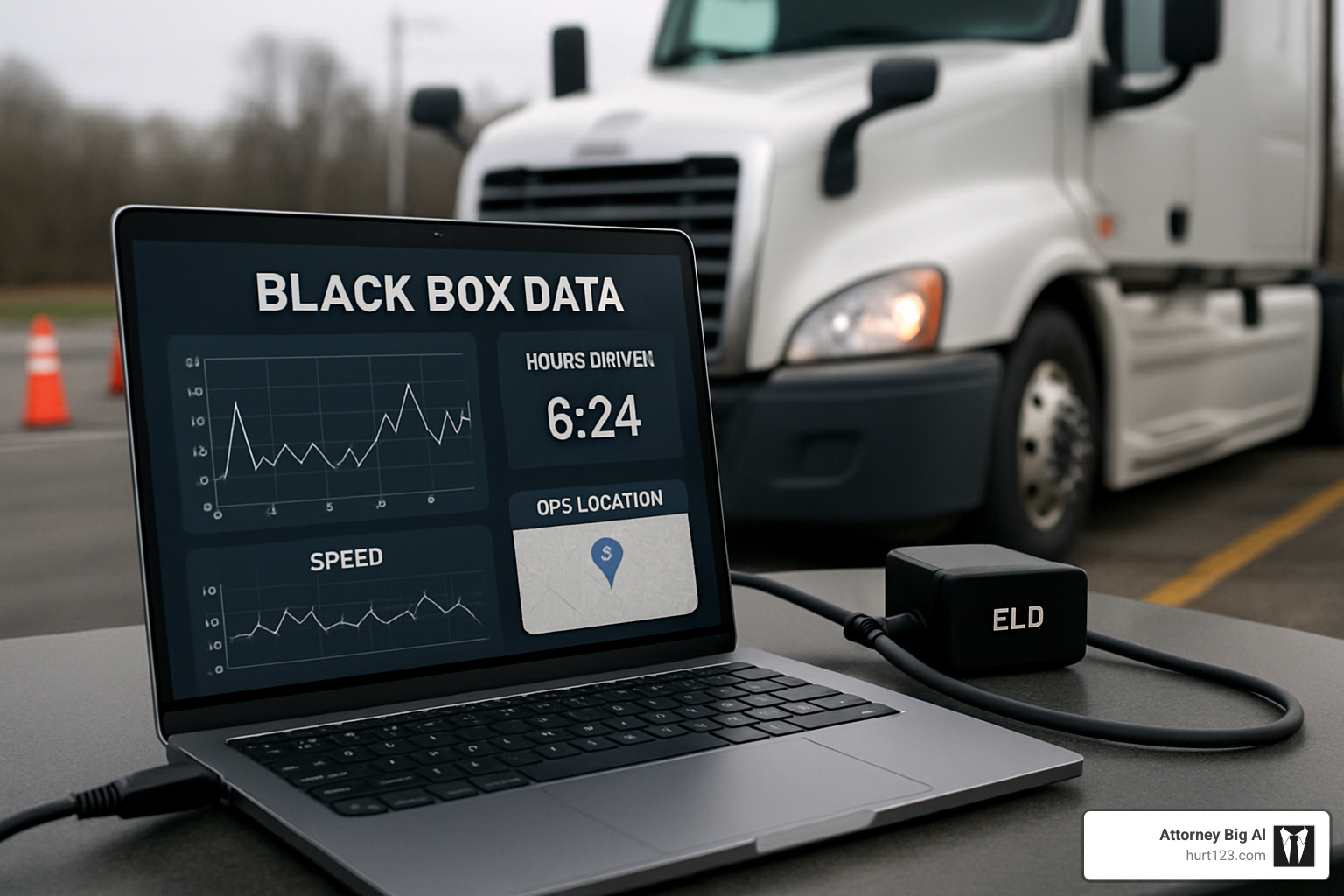
Electronic Logging Devices (ELDs): These devices track driver hours, vehicle speed, and location data. They can prove hours-of-service violations or speeding at the time of the crash. We must act quickly to preserve this data through legal channels.
Dash-Cam Video: Many trucks now have forward-facing and driver-facing cameras. This footage can be invaluable in proving fault, but it may be overwritten or “accidentally” lost if we don’t secure it immediately.
Maintenance Records: Poor maintenance is a leading cause of truck accidents. We need to obtain the truck’s maintenance logs, inspection records, and any outstanding repair orders to build a strong case.
Hollywood: Evidence, Liability & Fault
Commercial truck accidents are legal puzzles with multiple pieces. Unlike simple car accidents where fault is usually clear-cut, truck crashes often involve several potentially liable parties, each with their own insurance company and legal team fighting to minimize their client’s responsibility.
The complexity stems from the commercial nature of trucking operations. When a truck driver causes an accident, liability doesn’t stop with the driver. The trucking company, cargo loading company, truck manufacturer, and even government entities responsible for road maintenance could all share responsibility.
Building a Winning Liability Theory
Our approach to truck accident cases involves investigating every possible source of liability:
Driver Negligence: This is the most obvious source of liability. We investigate whether the driver was speeding, fatigued, distracted, or impaired. Scientific research on driver fatigue from the Federal Motor Carrier Safety Administration shows that 25% of drivers and 50% of professional drivers report having fallen asleep at the wheel.
Trucking Company Oversight: Under the legal doctrine of “Respondeat Superior,” employers are liable for their employees’ actions. But trucking companies also have direct liability for inadequate hiring, training, supervision, or maintenance. We examine:
- Driver qualification files
- Training records
- Safety ratings and violation history
- Maintenance and inspection protocols
Product Liability Claims: Sometimes the truck or its components are defective. We investigate whether brake failures, tire blowouts, or other mechanical issues contributed to the accident. This can involve the truck manufacturer, parts suppliers, or maintenance providers.
Cargo Loading Issues: Improperly loaded or secured cargo can cause rollovers, jackknife accidents, or cargo spills. The company responsible for loading the truck may share liability.
What If You’re Partly at Fault?
Don’t panic if you think you might bear some responsibility for the accident. Both Ontario and Florida have comparative negligence rules that allow you to recover damages even if you’re partially at fault.
In Ontario: The legal system recognizes that fault can be shared. If you’re found to be 25% at fault for the accident, you can still recover 75% of your damages. In some cases where fault can’t be clearly apportioned, liability may be shared equally.
In Florida: The state follows a “pure comparative negligence” system. Even if you’re 90% at fault, you can still recover 10% of your damages. However, if you’re more than 50% at fault, you cannot recover non-economic damages like pain and suffering.
The key is honest communication with your commercial truck accident lawyer. We need to know all the facts to build the strongest possible case and prepare for potential comparative fault arguments.
Boca Raton: Compensation & Benefits Available
Understanding the types of compensation available after a truck accident can be overwhelming, especially when you’re dealing with injuries and medical bills. The good news is that truck accident cases often result in higher settlements than regular car accidents due to the severity of injuries and higher insurance policy limits.
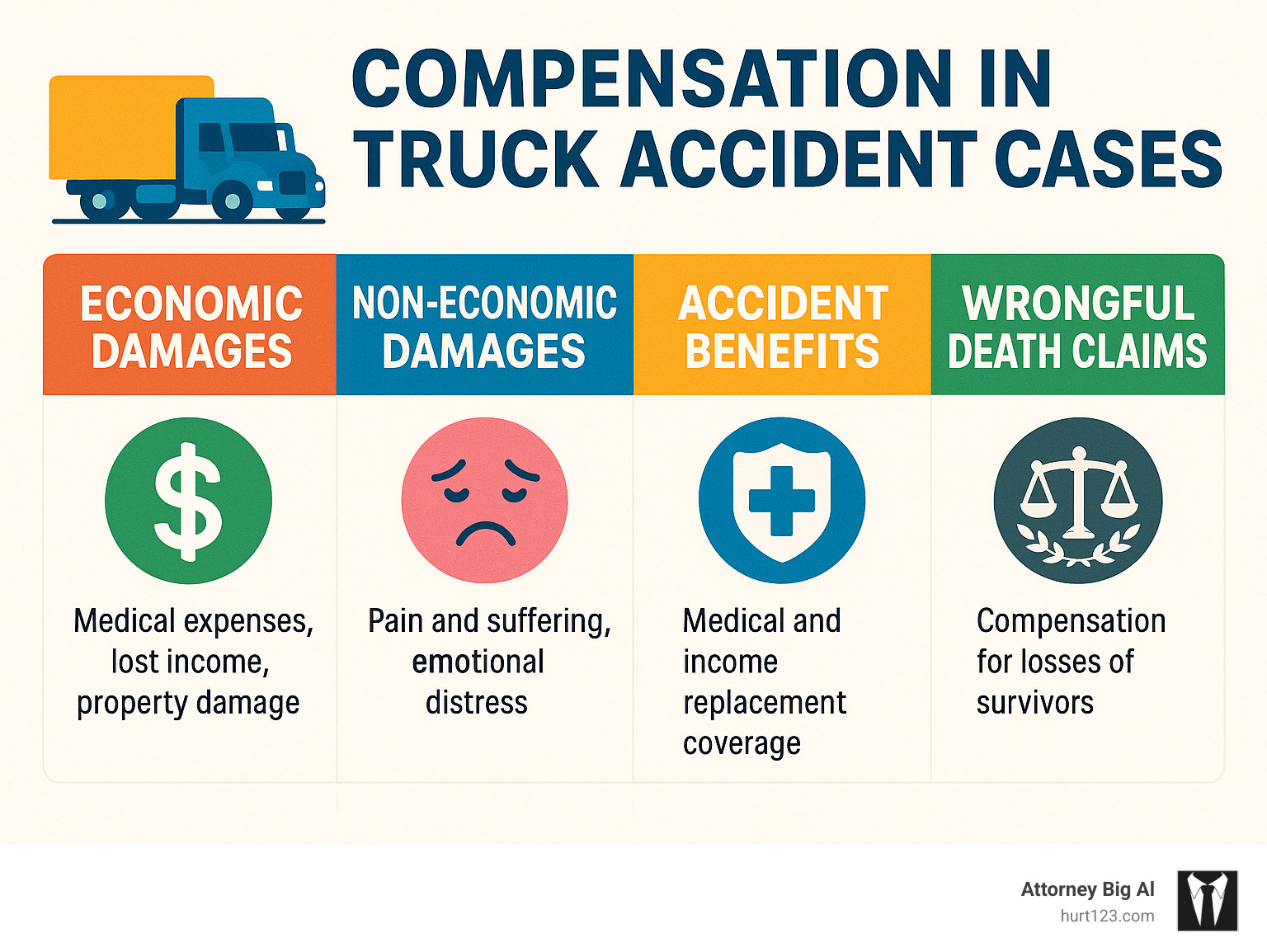
Economic Damages cover your quantifiable financial losses:
- Medical expenses (current and future)
- Lost wages and reduced earning capacity
- Property damage to your vehicle
- Rehabilitation and therapy costs
- Home modifications for disabilities
- Assistive devices and equipment
Non-Economic Damages compensate for intangible losses:
- Pain and suffering
- Emotional distress and mental anguish
- Loss of enjoyment of life
- Disfigurement and scarring
- Loss of consortium (impact on relationships)
In Ontario, you also have access to Statutory Accident Benefits (SABS) regardless of fault:
- Medical and rehabilitation benefits up to $50,000
- Income replacement benefits at $400 per week
- Attendant care benefits up to $3,000 per month
- Non-earner benefits at $185 per week
- Housekeeping and home maintenance benefits
Maximizing Non-Economic Damages
Calculating pain and suffering damages is more art than science. Insurance companies and courts often use a “multiplier method” – taking your economic damages and multiplying by a factor between 2 and 5, depending on the severity of your injuries.
Catastrophic Injury Designation: In Ontario, if your injuries meet the threshold for “catastrophic,” you become eligible for improved benefits:
- Medical and rehabilitation benefits up to $1 million
- Attendant care benefits up to $6,000 per month
- Additional housekeeping and home maintenance benefits
We work with medical professionals to properly document your injuries and their long-term impact on your life. This includes:
- Life care planning to project future medical needs
- Vocational rehabilitation assessments
- Psychological evaluations for mental health impacts
- Economic analysis of lost earning capacity
Dealing With Insurance Pushback
Insurance companies are businesses focused on profit, not justice. They use various tactics to minimize payouts:
Claim Denials: They may deny your claim entirely, arguing their insured wasn’t at fault or that your injuries aren’t related to the accident.
Lowball Offers: Initial settlement offers are typically far below fair value. They’re hoping you’ll accept quickly before understanding the full extent of your damages.
Delay Tactics: They may drag out the claims process, hoping financial pressure will force you to accept a lower settlement.
Surveillance: Don’t be surprised if they hire private investigators to follow you, looking for evidence that contradicts your injury claims.
This is why having a commercial truck accident lawyer is crucial. We know these tactics and how to counter them effectively.
Sunrise: Partnering With a Commercial Truck Accident Lawyer
Choosing the right legal representation can make the difference between a fair settlement and financial devastation. Commercial truck accident cases require specialized knowledge, significant resources, and the willingness to take on major corporations and their insurance companies.
At Attorney Big Al, we bring the financial resources and legal firepower needed to challenge major trucking companies and their insurers. Our experience in Florida’s courts and understanding of both state and federal trucking regulations gives our clients a significant advantage.
Why Hiring a Commercial Truck Accident Lawyer Makes a Difference
Case Complexity: Truck accident cases involve multiple areas of law – personal injury, commercial vehicle regulations, employment law, and product liability. We have the depth of knowledge to steer these complex legal waters.
Multi-Party Insurance: A single truck accident might involve the driver’s personal insurance, the trucking company’s commercial policy, cargo insurance, and umbrella policies. Coordinating claims across multiple insurers requires experience and persistence.
Expert Network: We work with accident reconstruction specialists, medical professionals, vocational rehabilitation counselors, and economists to build compelling cases. These experts don’t come cheap, but they’re often essential for maximum recovery.
Courtroom Leverage: Insurance companies know which lawyers are willing and able to take cases to trial. Our reputation for aggressive litigation gives us negotiating power that translates to better settlements for our clients.
How to Choose Your Commercial Truck Accident Lawyer
When evaluating potential attorneys, consider these factors:
Track Record: Look for lawyers with specific experience in truck accident cases. Ask about their recent settlements and verdicts in similar cases.
Resources: Does the firm have the financial ability to advance case costs? Truck accident cases can require significant upfront investment in expert witnesses and investigation.
Client Communication: You should feel comfortable with your lawyer and confident they’ll keep you informed throughout the process.
Local Presence: Choose a lawyer familiar with local courts, judges, and opposing counsel. This local knowledge can be invaluable.
Contingency Fee Structure: Most truck accident lawyers work on contingency, meaning you don’t pay unless you win. Make sure you understand the fee structure and what expenses you might be responsible for.
Frequently Asked Questions
How long do I have to file a truck accident lawsuit?
In Florida: You have 2 years from the date of the accident to file a personal injury lawsuit. This deadline is strict – miss it, and you lose your right to sue forever.
In Ontario: While accident benefits must be claimed within specific timeframes (7 days to notify, 30 days to file), you generally have 2 years to file a lawsuit for additional damages.
Important: These deadlines can be shorter in some circumstances, such as claims against government entities. Don’t wait – contact us immediately after your accident to ensure all deadlines are met.
Can I recover if I’m uninsured or underinsured?
Yes, you still have options:
Uninsured/Underinsured Motorist Coverage: If you have this coverage on your own policy, it can provide compensation when the at-fault driver lacks adequate insurance.
Direct Action Against the Trucking Company: Commercial trucks are required to carry higher insurance limits than passenger vehicles. Even if the driver is uninsured, the trucking company’s policy may provide coverage.
Motor Vehicle Accident Claims Fund: In some jurisdictions, government funds provide compensation for victims of uninsured drivers.
What’s the typical timeline for resolving a claim?
Investigation Phase (1-3 months): We gather evidence, interview witnesses, and build your case.
Medical Treatment (ongoing): We don’t rush to settle until we understand the full extent of your injuries and their long-term impact.
Negotiation Phase (3-6 months): We present your claim to the insurance companies and negotiate for fair compensation.
Litigation (6-24 months): If negotiations fail, we file a lawsuit and pursue your case through the courts.
Total Timeline: Most truck accident cases resolve within 6-24 months, but complex cases with severe injuries may take longer.
The key is patience. Rushing to settle before understanding your full damages often results in inadequate compensation that doesn’t cover your long-term needs.
Conclusion
Commercial truck accidents are life-changing events that require specialized legal representation. The complexity of federal regulations, multiple insurance policies, and potentially devastating injuries make these cases far different from typical car accidents.
At Attorney Big Al, we understand the unique challenges of truck accident cases. Our experience representing victims throughout Florida – from Fort Lauderdale to Miami, Hollywood to Boca Raton, and Sunrise to West Palm Beach – gives us the local knowledge and courtroom presence needed to take on major trucking companies and their insurers.
We offer compassionate advocacy combined with the financial resources to challenge even the largest corporations. Our contingency fee structure means you don’t pay unless we win your case, allowing you to focus on recovery while we fight for the compensation you deserve.
If you’ve been injured in a commercial truck accident, don’t wait. Contact us today for a free consultation. We’ll review your case, explain your options, and help you understand the path forward. The trucking company’s lawyers are already working to protect their interests – make sure you have experienced advocates protecting yours.
The road to recovery starts with a single phone call. Let us be your legal GPS, guiding you through the complex process of seeking justice after a commercial truck accident.
For more information about our truck accident lawyer services, contact Attorney Big Al today.
