

If you are found to be greater than 50% at fault for your own injuries in a Florida car crash, you are completely barred from recovering any damages. This is the core rule under Florida’s modified comparative fault system, codified in Florida Statute § 768.81. Understanding how fault percentages work can mean the difference between receiving compensation and walking away with nothing. The 51 percent fault rule Florida now follows replaced the older pure comparative fault standard, making it critical for injured parties to know where they stand before filing a claim.
If you were hurt in a crash and worry that fault may be disputed, Attorney Big Al at 1-800-HURT-123 can help you understand your options. Call 1-800-487-8123 or reach out online today to discuss your case.
Understanding Florida’s Modified Comparative Fault System
Florida now follows a modified comparative fault rule that draws a hard line at 50%. Under § 768.81(6), any party found to be greater than 50 percent at fault for his or her own harm may not recover any damages. If a jury or court assigns you 51% or more of the blame, your car accident claim Florida courts would otherwise evaluate is completely defeated. This change took effect on March 24, 2023, when Governor DeSantis signed House Bill 837 into law, and applies to negligence actions filed on or after that date.
This was not always the law. Before HB 837, Florida followed pure comparative fault, where a claimant’s contributory fault reduced damages proportionately but did not bar recovery. A driver who was 80% at fault could still recover 20% of their damages. The shift to a modified system significantly changed auto accident liability Florida claimants must navigate. Cases arising from incidents before March 24, 2023, may still be governed by the prior standard.
💡 Pro Tip: Even if you believe you may share some fault, do not admit blame at the scene or to an insurance adjuster. Fault determinations are complex and often shift as evidence is gathered.
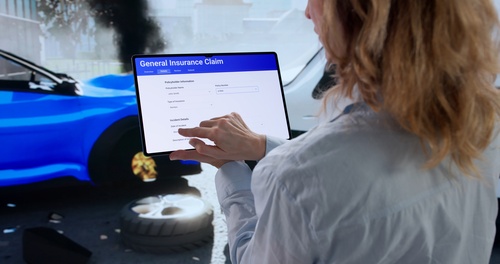
How Fault Percentages Affect Your Car Accident Claim
The percentage of fault assigned to you directly controls how much money you can recover. Under § 768.81(2), contributory fault chargeable to the claimant diminishes proportionately the amount awarded as damages, but does not bar recovery, subject to the greater-than-50% threshold in subsection (6). If you are 30% at fault and your total damages are $100,000, you would recover $70,000.
However, the moment your fault exceeds 50%, the outcome changes dramatically. You recover nothing. There is no sliding scale above that line. This makes the difference between 50% and 51% fault potentially worth the entire value of your case.
| Your Fault Percentage | Effect on Recovery |
|---|---|
| 0% | Full damages awarded |
| 1% to 50% | Damages reduced by your fault percentage |
| 51% or greater | Complete bar to recovery |
💡 Pro Tip: Preserving evidence such as dashcam footage, witness contact information, and photos of the scene can be essential to keeping your fault percentage as low as possible.
What Does "Pure Several Liability" Mean for Your Case?
Florida’s comparative fault statute also eliminated joint and several liability for most negligence cases. Under § 768.81(3), the court shall enter judgment against each party liable on the basis of such party’s percentage of fault. This means each defendant pays only for the share of harm they actually caused.
For injured claimants, this means you cannot collect a larger defendant’s share from a smaller one. If two drivers caused your crash and one is 70% at fault while the other is 30% at fault, each pays only their respective portion. If the 70%-at-fault driver has no insurance or assets, you generally cannot force the other driver to cover that gap.
Why Identifying All At-Fault Parties Matters
Because each defendant only pays their share, identifying every responsible party becomes essential. A thorough investigation may reveal additional liable parties such as a vehicle manufacturer, a government entity responsible for road maintenance, or a rideshare company. The more at-fault parties properly identified, the better your chances of full compensation.
💡 Pro Tip: Ask your attorney to investigate whether third parties like employers, vehicle owners, or maintenance companies may share liability. Missing a responsible party could leave a portion of your damages unrecoverable.
Which Types of Cases Does This Rule Cover?
Florida’s comparative fault statute applies broadly, not just to standard car accident cases. The statute covers negligence actions generally, and Florida courts have applied it to civil actions based on theories of negligence, strict liability, products liability, professional malpractice, and breach of warranty. If your injury involves a car accident in Florida, a defective auto part, or a commercial vehicle collision, this same fault framework generally applies. However, under § 768.81(4), the statute does not apply to actions to recover actual economic damages resulting from pollution, actions based on intentional torts, or causes of action as to which application of the doctrine of joint and several liability is specifically provided by chapter 403, chapter 498, chapter 517, chapter 542, or chapter 895.
The Medical Malpractice Exception
One notable exception exists for medical negligence claims. The 51% bar under subsection (6) explicitly does not apply to actions for personal injury or wrongful death arising out of medical negligence under Chapter 766. Those cases remain under pure comparative fault rules, meaning a claimant’s recovery is reduced but never entirely barred based on their own contributory fault.
How a Car Accident Attorney in Florida Can Protect Your Recovery
Fault is rarely a simple, agreed-upon number. Insurance companies routinely attempt to shift as much blame as possible onto the injured party to push your fault percentage above that critical 50% threshold, eliminating their obligation to pay anything. An experienced car accident attorney in Florida understands these tactics and works to build a strong evidentiary record supporting your version of events.
Key steps an attorney may take on your behalf include:
- Collecting police reports, surveillance footage, and witness statements to establish the other driver’s negligence
- Consulting with accident reconstruction experts to challenge inflated fault allegations
- Documenting your injuries, medical treatment, lost income, and pain and suffering
- Negotiating with insurers who use comparative negligence Florida law as leverage to undervalue claims
💡 Pro Tip: Do not accept a quick settlement offer from an insurance company without first understanding how fault has been allocated. A low offer may reflect an inflated fault assessment that a thorough legal review could challenge.
Protecting Your Claim When Fault Is Disputed
If the other side argues you were mostly at fault, the stakes could not be higher. Under negligence law Florida car accident cases follow, the burden often falls on the claimant to demonstrate the other party’s greater responsibility. Gathering evidence early, seeking prompt medical attention, and avoiding recorded statements to insurers without legal guidance can all help protect your position. If you are unsure whether partial fault affects your case, getting a case evaluation sooner rather than later is advisable.
What the 51% Rule Means for Insurance Negotiations
Insurance adjusters are well aware of the modified comparative fault threshold, and they use it strategically. When liability is contested, an insurer may argue that you were 51% or more at fault specifically to deny your claim outright. This is different from simply reducing your payout, it is an all-or-nothing argument designed to eliminate their financial exposure entirely. Understanding both drivers fault scenarios can help you anticipate these tactics.
Understanding this dynamic gives you leverage. If the evidence supports that your fault was 50% or below, the insurer still owes you a proportionate share of damages. Knowing the Florida comparative fault statute and how courts interpret it allows your legal team to push back effectively against unfair fault attributions.
💡 Pro Tip: Keep a detailed journal of your injuries, symptoms, and how the accident has affected your daily life. This documentation supports both your damages claim and your narrative about how the crash occurred.
Frequently Asked Questions
1. Can I still recover damages if I am 50% at fault for a Florida car crash?
Yes. Under Florida’s modified comparative fault rule, your fault must be greater than 50% to bar recovery. If you are exactly 50% at fault, your damages are reduced by half, but you may still recover compensation.
2. Does the 51% fault rule apply to medical malpractice cases in Florida?
No. The 51% bar under § 768.81(6) explicitly does not apply to claims for personal injury or wrongful death arising out of medical negligence under Chapter 766. Medical malpractice cases in Florida continue to follow pure comparative fault, where damages are reduced but never entirely barred.
3. What happens if multiple defendants share fault in my crash?
Each defendant pays only their own percentage of fault. Florida uses pure several liability under § 768.81(3), meaning the court enters judgment against each party based on their individual share. You cannot collect one defendant’s portion from another, which makes identifying all responsible parties critical.
4. How is fault percentage determined in a Florida car accident case?
Fault is typically determined by a jury, judge, or through settlement negotiations based on available evidence. Factors may include police reports, witness testimony, traffic camera footage, vehicle damage patterns, and accident reconstruction analysis. Because outcomes depend on specific facts, no two cases are resolved identically.
5. Has Florida always used the 51% fault bar?
No. Florida previously followed a pure comparative fault system under which contributory fault reduced damages proportionately but did not bar recovery at any fault level. The modified comparative fault rule imposing the greater-than-50% bar was enacted through House Bill 837, signed into law on March 24, 2023, representing a significant change.
Take Action to Protect Your Rights After a Florida Car Crash
Florida’s modified comparative fault system can determine whether you receive full compensation, reduced compensation, or nothing at all. If your fault percentage is even slightly contested, the outcome of your entire case may hang in the balance. The evidence you preserve and the legal strategy you pursue in the early stages can significantly affect how fault is ultimately allocated.
Do not let an insurance company define your fault percentage without a fight. Call Attorney Big Al at 1-800-HURT-123 today at 1-800-487-8123 or contact us now for a case evaluation. The sooner you act, the stronger your position may be.
