
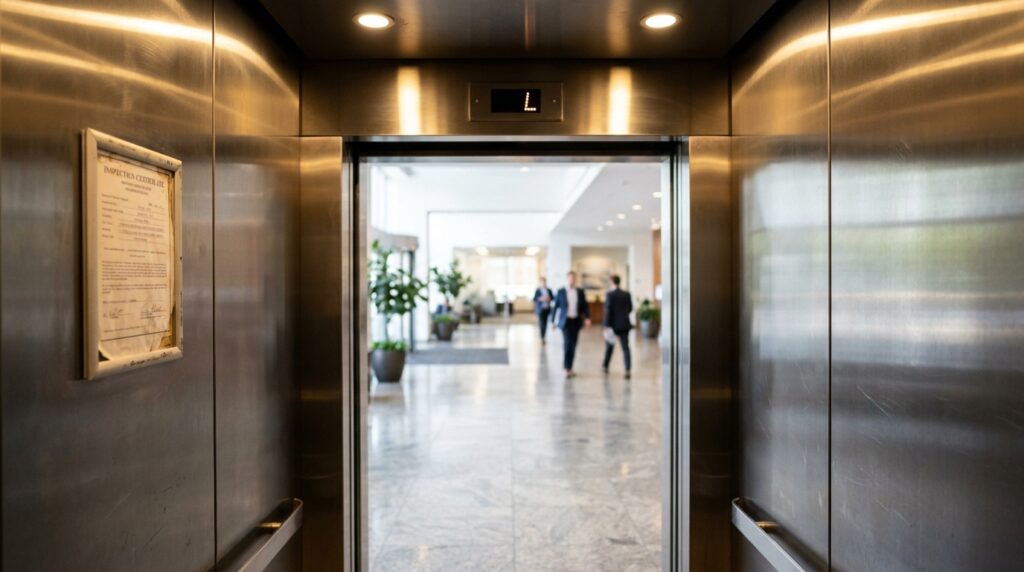
Understanding Florida’s Elevator Death Claims and Your Family’s Rights
Key Takeaways: An elevator death claim is a civil lawsuit brought under Florida’s Wrongful Death Act (Sections 768.16, 768.26) when someone dies due to negligence, defective equipment, or failure to maintain a lifting device. These preventable tragedies can result in liability for building owners, maintenance companies, and manufacturers. Inspection failures under Chapter 399 often serve as key evidence of negligence. Recoverable damages under § 768.21 include lost support, loss of companionship, mental pain and suffering, medical and funeral expenses, and lost earnings, though comparative fault rules can reduce recovery. Preserving maintenance logs and inspection records early is critical to protecting your family’s rights.
When a loved one dies in an elevator accident, Florida law allows families to hold the responsible party accountable. An elevator death claim is a civil lawsuit brought under Florida’s Wrongful Death Act when death results from another party’s negligence, defective equipment, or maintenance failure. Elevators and escalators kill about 30 and seriously injure about 17,000 people annually in the United States, with elevators causing almost 90 percent of deaths and 60 percent of serious injuries. For Florida families, these claims provide accountability and recovery for preventable tragedies.
If your family is facing this situation, Attorney Big Al at 1-800-HURT-123 is ready to listen. Call us at 1-800-487-8123 or reach our team online to discuss your rights.
💡 Pro Tip: After any fatal elevator incident, request that the building preserve the elevator’s maintenance logs and inspection records in writing immediately, because this evidence can disappear once repairs begin.
What the Elevator Death Statistics Reveal About Preventability
The elevator death statistics demonstrate that most accidents are preventable rather than random. Regular inspections and proper maintenance prevent most elevator accidents, yet property owners often overlook basic safety strategies. This matters legally because Florida’s Elevator Safety Act builds preventability directly into the statute. Under Florida’s Elevator Safety Act, FL § 399.001, the Legislature recognized that unsafe and defective lifting devices impose a substantial probability of serious and preventable injury.
National data reveals where danger concentrates. Most injuries stem from door malfunctions, mis-leveling between floors, and sudden movements, not falling elevators. Falls cause over half of elevator deaths among non-workers, with about half of those falls being same-level falls (slips and trips while entering or exiting). Understanding elevator death statistics helps families and attorneys identify which failures may point toward negligence by a property owner or maintenance company.
💡 Pro Tip: If a child was involved, note that residential and gap-related hazards are a recognized risk. Children have been seriously injured or killed when trapped in small gaps between the exterior landing door and interior elevator car door, with gaps exceeding 4 inches considered dangerous.
The Legal Foundation: Florida’s Wrongful Death Act
Florida’s Wrongful Death Act is the primary framework for filing an elevator death claim. Codified at Sections 768.16 through 768.26, the Act establishes a right of action whenever death is caused by wrongful act, negligence, default, or breach of contract or warranty. Under Chapter 768, specifically FL § 768.19, a party that would have been liable in damages had the victim lived remains liable notwithstanding the death. This means a building owner, elevator maintenance company, or manufacturer can face a wrongful death claim.
The Act’s purpose favors families. It is state public policy to shift losses resulting from wrongful death from survivors to the wrongdoer, and Sections 768.16 through 768.26 are remedial and shall be liberally construed. Under FL § 768.20, the personal representative of the decedent’s estate generally files a single action on behalf of both survivors and the estate.
Who Can Be Held Responsible in an Elevator Accident Lawsuit Florida Families File
Responsibility in a Florida elevator death case frequently extends to multiple parties. A building owner, elevator maintenance company, and manufacturer can all be named as defendants in the same lawsuit. Under FL § 768.31(3), Florida’s contribution statute provides that the relative degrees of fault among joint tortfeasors shall be the basis for allocation of liability; however, fault apportionment in Florida negligence cases (including elevator death cases) is primarily governed by FL § 768.81, which requires courts to enter judgment against each party based on their percentage of fault rather than joint and several liability. In most negligence cases, Florida has abolished joint and several liability under FL § 768.81, so each defendant is generally responsible only for its own percentage of fault as determined by the trier of fact.
Inspection failures often become central evidence. Under FL § 399.061, all covered elevators must be annually inspected by a certified elevator inspector, and the division may seal or shut down an unsafe elevator until repairs are made. FL § 399.03(5) generally requires that elevators other than those in private residences be inspected and certified as meeting the Florida Building Code before use. A building owner’s failure to maintain annual inspections or act on deficiency notices may serve as evidence of negligence.
💡 Pro Tip: Document the scene early. Photographs of warning signs, the elevator’s certificate of operation, floor-leveling gaps, and door conditions can help establish what went wrong before maintenance crews alter the equipment.
Common parties and theories in these cases include:
- Property owners and operators for failing to inspect, maintain, or correct known hazards under Florida premises liability law
- Maintenance and service companies for negligent repair, missed service intervals, or ignoring deficiency notices
- Manufacturers and installers for defective components, faulty sensors, or improper installation
To understand how these duties fit within broader property owner obligations, our overview of how a Florida premises liability elevator Florida claim works can help families see the full picture.
How Premises Liability Law Applies to Elevator Deaths
Premises liability law forms the backbone of many elevator death claims in Florida. Florida has specific premises liability provisions, including §§ 768.0701, 768.0705, and 768.0755, that govern a property owner’s duty of care to people lawfully on the property. To prevail, a plaintiff must show duty, breach, proximate causation, and measurable damages. Whether a property owner breached its duty often turns on notice and foreseeability, what the owner knew or should have known about an unsafe elevator condition.
Foreseeability also matters when death follows a third party’s criminal act on commercial property. Under FL § 768.0701, in actions brought by a person injured by the criminal act of a third party, the trier of fact must consider the fault of all persons who contributed to the injury. For families weighing how security and property conditions intersect, this allocation of fault can shape the value and strategy of a claim. A deeper discussion of these duties appears in our guide to elevator accident lawsuit Florida issues.
Compensation Available in a Wrongful Death Elevator Florida Claim
Florida law sets out specific categories of compensation that survivors and the estate may pursue. Under FL § 768.21, recoverable damages can include lost support and services, a surviving spouse’s loss of companionship and mental pain and suffering, a minor child’s loss of parental companionship and guidance, parents’ mental pain and suffering in qualifying circumstances, medical and funeral expenses paid by survivors, and the estate’s recovery for lost earnings and net accumulations. The exact damages available depend on which survivors exist and the facts of the case.
| Category of Damages | Who May Recover (Generally) |
|---|---|
| Lost support and services | Survivors who depended on the decedent |
| Loss of companionship and mental pain and suffering | Surviving spouse, minor children, certain parents |
| Medical and funeral expenses | Survivors or the estate who paid them |
| Lost earnings and net accumulations | The decedent’s estate |
Comparative fault can affect recovery. Under FL § 768.81(6), as amended in 2023, a party found to be greater than 50 percent at fault for their own harm may not recover damages in a negligence action, an exception that does not apply to medical negligence claims. Defense teams may argue a victim contributed to the accident, making it important to establish the property owner’s or operator’s primary responsibility.
Frequently Asked Questions
-
Who is allowed to file an elevator death claim in Florida?
The personal representative of the decedent’s estate files the action under FL § 768.20, pursuing recovery on behalf of surviving family members and the estate. The specific survivors entitled to damages depend on their relationship to the decedent. -
Can more than one company be sued for a single elevator death?
Yes. Under FL § 768.31(3), multiple joint tortfeasors such as an owner, maintenance company, and manufacturer may be named, and fault can be apportioned among them, with each generally responsible for its own share. -
What if my loved one was partly at fault?
Florida follows modified comparative fault under FL § 768.81(6). A claimant found more than 50 percent at fault may not recover in a negligence action, while fault at or below that threshold reduces recovery rather than barring it. -
How do inspection records affect my claim?
Under FL § 399.061, covered elevators must be annually inspected. Failure to maintain inspections or act on deficiency notices may serve as evidence of negligence based on the specific facts. -
Does an administrative inspection process replace a lawsuit?
No. State inspection and enforcement under Chapter 399 are generally separate from a civil wrongful death lawsuit pursued under Chapter 768.
Moving Forward With Clarity and Support
An elevator death claim under Florida premises law gives grieving families a path toward accountability and recovery. Between the Wrongful Death Act’s remedial purpose, the Elevator Safety Act’s recognition that these tragedies are preventable, and the statutory damages available under § 768.21, Florida law provides meaningful tools for families. Because every case turns on its own facts, including inspection history, maintenance records, and comparative fault, outcomes can vary, and timely action to preserve evidence is often critical.
If your family has lost someone in an elevator accident, Attorney Big Al at 1-800-HURT-123 is here to help you understand your rights. Call us today at 1-800-487-8123 or contact our team now to talk through what happened and how Florida law may protect your family.
