
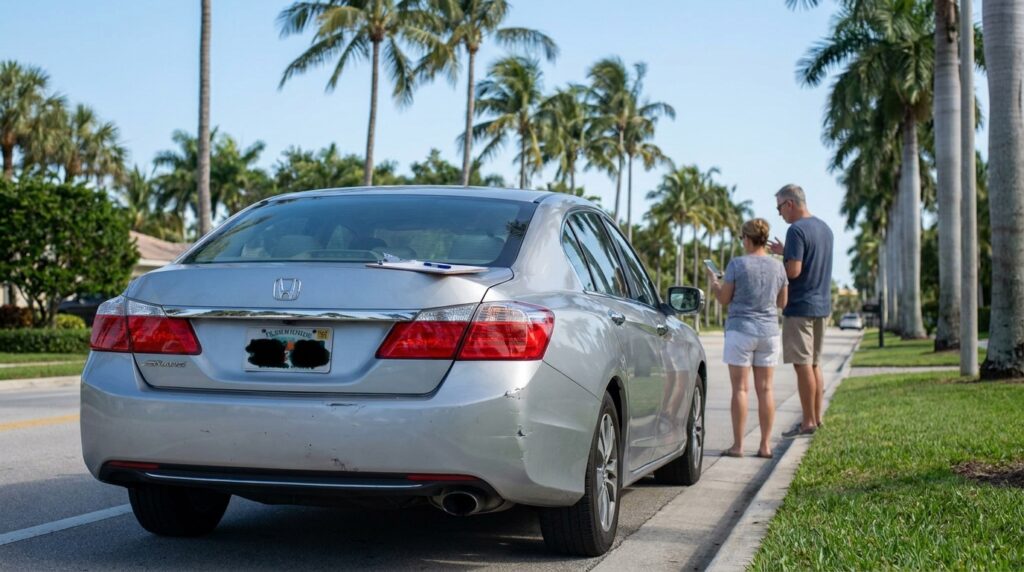
Understanding Your Rights After a Crash in Palm Beach County
Key Takeaways: Filing a car accident claim in Boca Raton requires protecting your health, contacting law enforcement under § 316.065 when crashes involve injury, death, or at least $500 in property damage, and documenting the scene. Florida’s no-fault system means your Personal Injury Protection coverage pays medical bills and lost wages first under § 627.736, regardless of fault. You can sue an at-fault driver only when injuries meet Florida’s serious-injury threshold. Florida’s modified comparative fault rule bars recovery if you are more than 50 percent at fault under § 768.81(6). Most personal injury and wrongful death lawsuits must be filed within two years under § 95.11, making timely action essential.
Filing a car accident claim in Boca Raton starts with protecting your health, documenting the scene, and understanding how Florida’s no-fault system shapes your next steps. Florida treats car accident claims differently than most states, which can surprise injured drivers, passengers, and pedestrians. This guide walks through the Boca Raton accident claim process from the moment of impact through a potential lawsuit.
If you were recently hurt and feel unsure where to begin, reach out to Attorney Big Al at 1-800-HURT-123 for guidance, call 1-800-487-8123 to discuss what happened, or contact our team now to start protecting your claim today.
The First Steps at the Scene of a Florida Car Crash
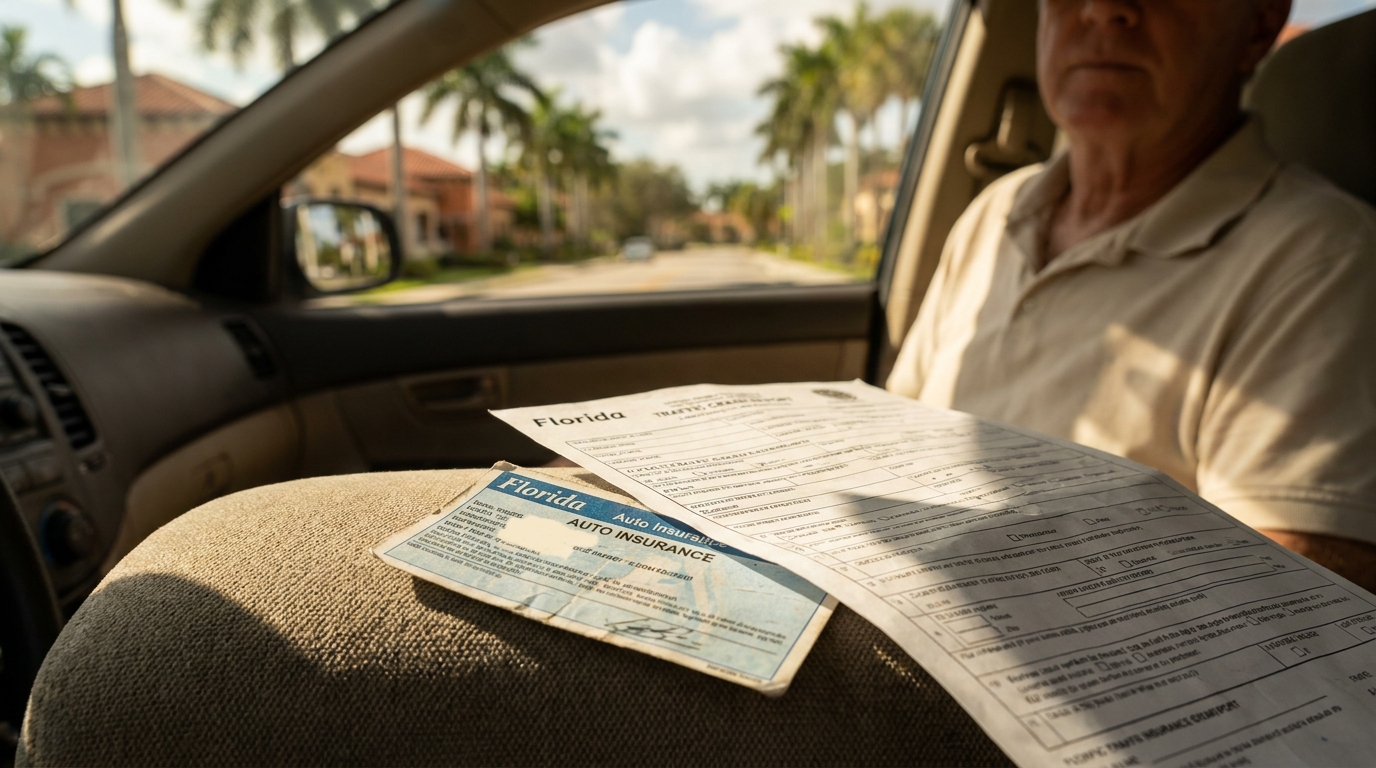
Your actions immediately after a collision can determine the strength of your entire claim. Florida law requires drivers involved in crashes with injury, death, or at least $500 in property damage to contact law enforcement under § 316.065, Florida Statutes. This creates an official record that becomes foundational evidence when you pursue a claim.
If your collision doesn’t meet that threshold, you still have reporting options. Drivers can file a "Driver Report of Traffic Crash (Self Report)" or complete a "Driver Exchange of Information" online or by downloading forms from the state. Review the official crash procedures through the Florida Highway Safety and Motor Vehicles crash reporting resources to confirm which path applies.
💡 Pro Tip: Photograph vehicle positions, license plates, road conditions, visible injuries, and the other driver’s insurance card before moving vehicles. Clear images preserve facts you may need months later.
How Florida’s No-Fault System Shapes Your Claim
Florida is a no-fault insurance state, which changes how injury claims begin. Under the Florida Motor Vehicle No-Fault Law, every registered vehicle owner must carry Personal Injury Protection coverage. After a crash, your own PIP insurance pays medical bills and lost wages first, regardless of fault. PIP generally pays 80 percent of reasonable medical expenses and 60 percent of lost wages, up to your policy limit under § 627.736, Florida Statutes.
Florida sets minimum coverage requirements that affect available compensation. The state requires every owner to carry $10,000 in personal injury protection and $10,000 in property damage liability coverage per crash. Florida doesn’t generally require private passenger vehicle owners to carry bodily injury liability coverage, though financial-responsibility limits of $10,000 per person and $20,000 per crash can apply after certain events. Because PIP benefits exhaust quickly, minimum coverage often doesn’t fully address serious medical needs.
Your insurer carries specific notice obligations once you report a claim. Under § 627.7401(2), Florida Statutes, insurers must mail or deliver notice within 21 days after receiving notice of an accident or claim. This notice must explain available benefits, disability and death benefits, key exclusions, payment timelines, and how PIP coordinates with other coverage.
When You Can Step Outside No-Fault and Sue the At-Fault Driver
Not every crash automatically leads to a lawsuit against the at-fault driver. Florida’s No-Fault Law limits the right to sue in tort unless the injury meets a defined "serious injury" threshold. Under § 627.737(2), Florida Statutes, plaintiffs may generally recover non-economic damages such as pain and suffering only where the injury consists of a significant and permanent loss of an important bodily function, a permanent injury within a reasonable degree of medical probability, significant and permanent scarring or disfigurement, or death. Whether an injury crosses that threshold is fact-dependent.
Florida law gives PIP provisions unusual strength against contrary policy language. Under § 627.736, Florida Statutes, statutory PIP requirements are read into every applicable policy, so statutory benefits and procedures generally control even where they don’t appear expressly in the policy or where policy language appears to conflict.
💡 Pro Tip: Keep a dated journal of symptoms, medical appointments, and missed workdays. Documentation of how injuries affect daily life can support both economic and non-economic damages if your claim moves toward an auto accident lawsuit in Boca Raton.
How Fault Affects Your Florida Accident Compensation
Florida follows a modified comparative fault system that can reduce or eliminate your recovery. If you are more than 50 percent at fault for a car accident, you are completely barred from recovering any damages. Section 768.81(6), Florida Statutes provides that any party found greater than 50 percent at fault may not recover damages, a significant change from the prior pure comparative fault approach.
Even when multiple drivers share blame, Florida apportions responsibility individually. Under § 768.81(3), Florida Statutes, courts enter judgment against each liable party based on that party’s percentage of fault rather than joint and several liability. This means a victim’s total compensation can be reduced proportionally based on each party’s degree of fault.
| Issue | Governing Authority | Key Rule |
|---|---|---|
| Personal injury lawsuit deadline | § 95.11(4)(a), Fla. Stat. | Generally 2 years from the accident |
| Wrongful death deadline | § 95.11(5)(e), Fla. Stat. | Generally 2 years from the date of death |
| More-than-50% fault | § 768.81(6), Fla. Stat. | Recovery may be barred |
| PIP notice from insurer | § 627.7401(2), Fla. Stat. | Within 21 days of claim notice |
Deadlines That Can Make or Break a Boca Raton Accident Claim
Missing a filing deadline can permanently end an otherwise valid claim. In Florida, injured car accident victims generally have only 2 years from the accident date to file a personal injury lawsuit for crashes occurring on or after March 24, 2023. This negligence deadline appears in § 95.11(4)(a), Florida Statutes, reflecting a change under HB 837 from the older four-year period.
The same two-year window generally applies to wrongful death claims. Under § 95.11(5)(e), Florida Statutes, families in Boca Raton and Palm Beach County generally must file within two years of the date of death. You can read the full limitations framework in the Florida statute of limitations chapter.
Limited exceptions sometimes affect these deadlines, but they are interpreted narrowly. Tolling provisions under Section 95.051, Florida Statutes, affect the statute of limitations in several narrow and exclusive circumstances, including a defendant’s absence from the state, use of a false name to avoid service, physical concealment in the state to avoid service, adjudicated incapacity of the person entitled to sue before accrual, voluntary paternity payments, partial payment on a written instrument, pending arbitration, a limited bankruptcy provision applicable to tax certificates under Section 197.482, and minority or previously adjudicated incapacity where no suitable guardian exists. Fraudulent concealment and discovery-based accrual rules are governed by Section 95.031, not Section 95.051; Florida courts have held that Section 95.051 provides an exhaustive list of tolling grounds. Florida does not apply a broad discovery rule to ordinary negligence claims, so the clock typically starts on the crash date for standard car accident claims.
💡 Pro Tip: Calendar your deadline early and build in a buffer. Investigations, medical evaluations, and evidence gathering take time.
How a Car Accident Attorney Boca Raton Residents Trust Can Help
A knowledgeable advocate can help you build documentation, anticipate comparative-fault defenses, and pursue full damages. Establishing a negligence claim requires showing duty, breach, causation, and provable losses such as medical expenses, lost income, and pain and suffering. A car accident attorney Boca Raton injury victims rely on can help connect medical causation to the crash and respond when insurers dispute injury severity.
Obtaining the other driver’s insurance details is sometimes challenging. To obtain the other party’s insurance information, you must complete an Insurance Request Form (HSMV 83392) and submit it with the complete crash report to the state. The DHSMV Customer Service Center can be reached at (850) 617-2000.
Enforcement tools exist when an at-fault driver refuses to pay a judgment. Drivers can pursue a civil suit and obtain a final judgment, which when submitted to the department may result in suspension of the at-fault party’s license, tags, and registrations for up to 20 years or until the judgment is satisfied. Consider consulting a lawyer about your situation before accepting any early settlement offer.
Strong cases generally rest on organized documentation:
- Police reports, crash report numbers, and any self-report forms
- Medical records, bills, and proof of lost wages
- Photos, witness contact information, and insurance correspondence
For broader background, explore the firm’s overview of auto accident lawsuit Boca Raton representation and related vehicle claims.
Frequently Asked Questions
1. Do I have to use my own insurance after a crash that was not my fault?
Yes, in most cases your own PIP coverage applies first. Under § 627.736, Florida Statutes, PIP generally pays your medical bills and lost wages regardless of fault, then liability claims against the other driver may follow if injuries meet the legal threshold.
2. How long do I have to file a car accident lawsuit in Florida?
Generally two years from the accident date. Section 95.11(4)(a), Florida Statutes sets this limit for negligence actions accruing on or after March 24, 2023.
3. Can I still recover money if I was partly at fault?
Possibly, depending on your share of fault. Under § 768.81(6), Florida Statutes, you may recover reduced damages if you are 50 percent or less at fault, but recovery is barred if you are more than 50 percent at fault.
4. What if the other driver refuses to share insurance information?
You may request it through the state. Complete Insurance Request Form HSMV 83392 with the crash report, and the DHSMV Customer Service Center at (850) 617-2000 can answer insurance-law questions.
5. Does every crash lead to a lawsuit against the other driver?
No, not automatically. Florida’s no-fault framework under § 627.737(2) limits tort suits unless the injury meets the serious-injury threshold.
Moving Forward With Confidence After Your Boca Raton Crash
Filing a car accident claim in Florida means balancing no-fault PIP rules, comparative-fault doctrine, and strict deadlines. From reporting the crash under § 316.065 to understanding the two-year window in § 95.11, each step shapes your ability to recover. Careful documentation and timely action remain your strongest tools, and a car accident attorney Boca Raton families turn to can help you avoid common pitfalls.
When you’re ready to take the next step toward Florida accident compensation, support is available. Speak with Attorney Big Al at 1-800-HURT-123, call 1-800-487-8123 to talk through your options, or reach out to our team now so you can focus on healing while your claim moves forward.
