
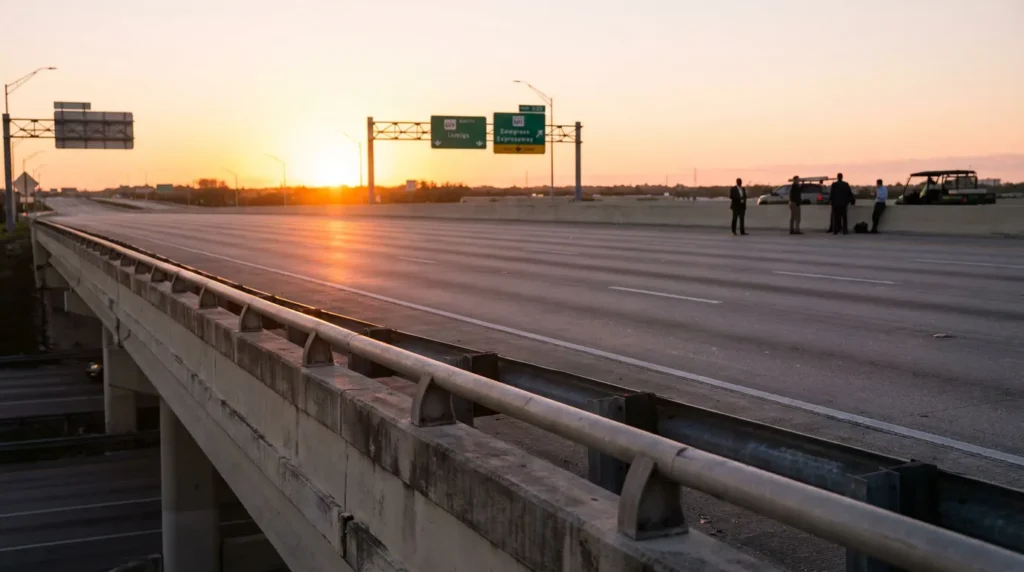
Understanding Fault After a Sawgrass Expressway Crash
Key Takeaways: After a Sunrise car accident on the Sawgrass Expressway, liability can rest with the at-fault driver, vehicle owner, rental company, or your own insurer. Florida’s no-fault PIP coverage pays initial medical bills and lost wages regardless of fault up to $10,000, but serious injuries meeting Florida’s injury threshold allow fault-based claims for pain and suffering. Under Florida’s modified comparative fault rule, parties more than 50% at fault cannot recover, while those 50% or less at fault have damages reduced proportionally. Vehicle owners who loan cars and short-term rental lessors share liability up to statutory caps, with added exposure when drivers are uninsured or underinsured. Crash reports and timely evidence are essential to proving fault, with a strict two-year deadline for negligence and wrongful death claims.
A Sunrise car accident on the Sawgrass Expressway can leave multiple parties legally responsible for your injuries. The driver who caused the wreck typically bears primary liability, but Florida law also allows claims against vehicle owners, rental companies, and sometimes your own insurer. Florida blends a no-fault insurance system with fault-based negligence rules, so "who pays" depends on how the crash happened and what the official record shows.
Understanding your rights early can protect your recovery. Reach Attorney Big Al at 1-800-HURT-123 for guidance, call 1-800-487-8123 to speak with our team, or contact us now to discuss your Sawgrass Expressway crash.
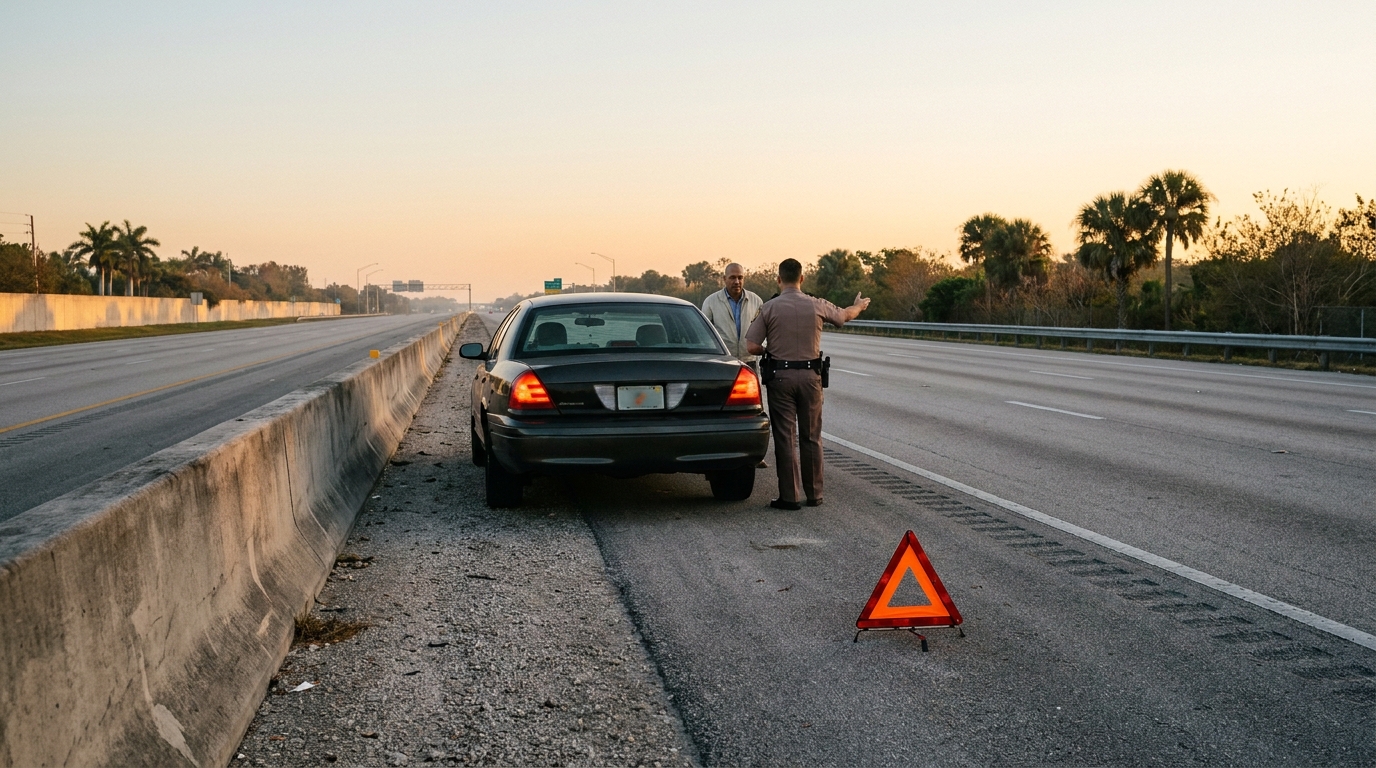
Florida’s No-Fault System and Your First Line of Coverage
Florida begins every car accident claim with its no-fault insurance framework. After a car accident on the Sawgrass Expressway, your own Personal Injury Protection (PIP) insurance pays initial medical expenses and lost wages regardless of who caused the crash.
Under Fla. Stat. § 627.736(1), PIP provides benefits to the named insured, resident relatives, operators, passengers, and struck pedestrians, regardless of fault.
These insurer obligations apply automatically. Under Fla. Stat. § 627.7311, provisions authorized in ss. 627.730-627.7405 control over general provisions in insurance policy forms, meaning carriers generally cannot withhold PIP benefits because a particular clause is missing.
What PIP Covers and Where It Ends
PIP coverage is meaningful but limited. PIP typically covers 80% of reasonable medical expenses and 60% of lost wages up to $10,000, with a $5,000 death benefit cap under § 627.736(1). Florida law requires all motor vehicle owners to maintain PIP coverage; failure results in suspension of driver’s license and vehicle registration.
Serious injuries often exceed these caps, opening the door to fault-based claims. To recover non-economic damages like pain and suffering from an at-fault driver, the injury must meet Florida’s serious injury threshold under Fla. Stat. § 627.737(2); economic damages exceeding PIP limits may be pursued without meeting that threshold. Whether this threshold applies depends on medical documentation of permanent injury or significant impairment.
💡 Pro Tip: Keep every medical record, mileage log, and pay stub. Documentation separates fully supported claims from disputed ones.
Determining the At-Fault Driver in Florida
Once injuries move beyond PIP, Florida’s negligence and financial responsibility rules govern who pays. The Florida Financial Responsibility Law in Chapter 324 requires the at-fault owner or driver to have minimum compulsory coverage (including the required $10,000 property damage liability (PDL) and PIP) in effect at the time of the crash.
An uninsured at-fault owner faces consequences. They must obtain releases or post security, purchase $10,000 PIP and $10,000 PDL insurance or surrender the plate, and pay a $150 to $500 reinstatement fee. Section 324.121 authorizes license suspension when a judgment is rendered against the at-fault party.
Florida’s Modified Comparative Fault Rule
Florida assigns damages according to each party’s share of fault. Under Fla. Stat. § 768.81(6), any party greater than 50 percent at fault for their own harm may not recover any damages. If an injured driver is 51% or more responsible, they cannot recover from the other party; a driver 50% or less at fault has recovery reduced proportionally. This standard does not apply to medical malpractice actions. Review Florida’s comparative negligence statute for the full framework.
Comparative fault is a common defense against injured plaintiffs. Insurers frequently argue claimants contributed to the collision to reduce or eliminate payouts. Understanding what happens when both drivers share fault helps anticipate this strategy.
💡 Pro Tip: Avoid giving recorded statements to the other driver’s insurer before understanding your rights. Adjusters use early statements to build comparative fault arguments.
Other Parties Who May Share Liability
Liability after a Broward County car accident isn’t always limited to the driver. Florida law extends responsibility to certain owners, lessors, and lessees under specific conditions. Identifying every potentially responsible party matters when damages exceed the at-fault driver’s coverage.
Borrowed Cars and Permissive Users
When an at-fault driver borrowed the vehicle, the owner may also be liable. Under Fla. Stat. § 324.021(9)(b)3, an owner who is a natural person and loans a vehicle to a permissive user is liable up to $100,000 per person and $300,000 per incident for bodily injury and up to $50,000 for property damage. If the permissive driver is uninsured or underinsured below $500,000 combined, the owner can face up to an additional $500,000 in economic damages.
Rental Vehicles and Short-Term Lessors
Crashes involving rental cars trigger separate liability limits. Short-term lessors can be held liable for up to $100,000 per person and $300,000 per incident in bodily injury and $50,000 in property damage. If the renter is uninsured or carries less than $500,000 combined, the lessor faces additional liability up to $500,000 in economic damages. For long-term leases of one year or more, the lessor may be shielded if the lessee carries at least $100,000/$300,000 bodily injury and $50,000 property damage coverage.
| Responsible Party | Bodily Injury Limit | Property Damage | Added Economic Exposure |
|---|---|---|---|
| Permissive user’s owner | $100k / $300k | $50k | Up to $500k if underinsured |
| Short-term rental lessor | $100k / $300k | $50k | Up to $500k if renter underinsured |
| Long-term lessor | Possible shield if lessee meets minimums | N/A | Limited |
These figures represent statutory caps depending on exact facts and coverage.
Deadlines and Evidence That Shape a Florida Crash Claim
The official crash record is often the backbone of a liability case. After any Sawgrass Expressway crash with injury, death, or property damage of at least $500, drivers must immediately notify law enforcement under Fla. Stat. § 316.065(1). Officers responding to crashes involving injury, death, pain complaints, DUI violations, vehicles requiring wreckers, or commercial motor vehicles must complete a Florida Traffic Crash Report within 10 days under Fla. Stat. § 316.066.
You have tools to gather information needed to prove fault and coverage. Parties can obtain crash reports and request insurance information under Section 324.242, with reports available at floridacrashportal.gov. The Florida Highway Safety and Motor Vehicles agency outlines what to do after a crash.
Filing deadlines are strict and narrowly interpreted. Injured victims generally have two years from the accident date to file a personal injury lawsuit based on negligence, and wrongful death claims carry a two-year deadline under Fla. Stat. § 95.11(4). This two-year period, shortened from four years by 2023 tort reform (HB 837), applies to negligence causes accruing on or after March 24, 2023. Missing this deadline typically results in permanent bar to recovery.
💡 Pro Tip: Request your crash report as soon as available. Early review lets you correct factual errors before they become disputes about fault.
Why Work With a Sunrise Car Accident Lawyer
A Sunrise car accident lawyer can connect crash facts to statutes governing recovery. Injured drivers, passengers, cyclists, and pedestrians face complex questions about PIP, comparative fault, and multiple potentially liable parties. Our team focuses on documenting duty, breach, causation, and provable damages.
Building a strong claim involves:
- Preserving crash reports, photos, and witness contacts
- Documenting medical treatment to support the serious injury threshold
- Identifying every potentially liable owner, lessor, or permissive user
- Anticipating comparative fault arguments from Florida insurers
Every case turns on its own facts, and outcomes are never guaranteed. Explore our resources as a Sunrise car accident lawyer serving injured clients across Broward County.
Frequently Asked Questions
1. Does Florida’s no-fault system mean I cannot sue the other driver?
Not necessarily. PIP pays first regardless of fault, but you may pursue the at-fault driver for non-economic damages like pain and suffering if your injury meets Florida’s serious injury threshold; economic losses exceeding PIP may be pursued without meeting the threshold.
2. What happens if I was partly to blame for the Sawgrass Expressway crash?
Recovery may still be possible. Under Fla. Stat. § 768.81(6), a party 50% or less at fault can recover reduced damages, but a party more than 50% at fault is barred from recovery.
3. Can the owner of a borrowed or rented car be held responsible?
In many cases, yes. Under Fla. Stat. § 324.021(9)(b), owners who loan vehicles and short-term rental lessors face liability up to statutory caps, with additional exposure when drivers are uninsured or underinsured.
4. How long do I have to file a claim after a Sunrise Florida car accident?
Generally two years. Fla. Stat. § 95.11(4) sets a two-year deadline for negligence and wrongful death actions accruing on or after March 24, 2023. Courts apply exceptions narrowly, so act promptly.
5. What should I do to prove who was liable?
Secure the official record. Obtain your crash report through floridacrashportal.gov, request insurance information under Section 324.242, and preserve medical and photographic evidence early.
Protecting Your Recovery After a Sawgrass Expressway Crash
Liability after a Sunrise car accident on the Sawgrass Expressway can rest with the at-fault driver, vehicle owner, rental company, or a combination of parties. Florida’s no-fault PIP coverage handles initial losses, while comparative fault rules, financial responsibility laws, and strict two-year deadlines shape fault-based claims. Careful documentation and timely action give injured victims the strongest position.
If you or a loved one was injured, our team is ready to review your options. Reach Attorney Big Al at 1-800-HURT-123 today, call 1-800-487-8123 for a conversation about your crash, or contact us now to take the next step toward protecting your recovery.
