
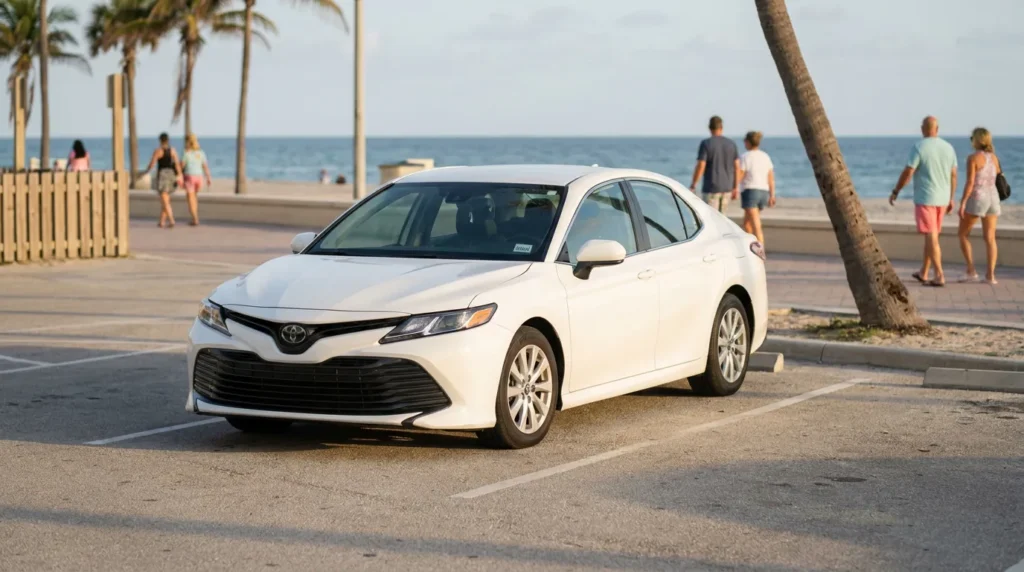
Sorting Out Fault After a Hollywood Beach Rental Car Wreck
Key Takeaways: Determining liability after a rental car crash on Hollywood Beach often involves multiple parties: the at-fault driver, rental company, peer-to-peer platform, other motorists, or a combination. Florida uses percentage-based fault. The federal Graves Amendment generally preempts vicarious liability against rental companies, leaving them exposed primarily for their own negligence. Insurance priority typically starts with the rental company’s coverage as primary under Fla. Stat. § 627.7263, unless the agreement shifts responsibility. Under Florida’s modified comparative fault rule, anyone found greater than 50 percent at fault for their own harm cannot recover damages. Injured victims generally have two years from the crash to file a negligence claim. Understanding this framework and acting promptly to preserve evidence is essential to pursuing full compensation.
Figuring out who is liable after a rental car crash on Hollywood Beach often involves multiple parties. Responsibility may fall on the at-fault driver, the rental company, another motorist, a peer-to-peer platform, or a combination. Florida law layers multiple statutes, which means a single crash near the Broadwalk can trigger competing insurance policies and legal defenses.
If you were hurt in a rental car collision, Attorney Big Al at 1-800-HURT-123 is ready to help. Call 1-800-487-8123 for a case review or reach out through our contact page. Acting promptly helps preserve evidence and protect your rights.
How Florida Law Assigns Liability in a Rental Car Crash
Florida uses a percentage-based system to divide responsibility among everyone who contributed to a crash. Under Fla. Stat. 768.81(3), courts enter judgment against each party based on their percentage of fault, not joint and several liability. Each responsible party pays only their share of damages rather than the entire award.
The statute applies to negligence cases, including civil actions based on strict liability, products liability, and similar theories. This matters when a defective vehicle component or rental company carelessness contributes to the collision.
The Rental Company as the Legal "Owner"
Florida’s statute historically treated rental companies as the vehicle’s owner for certain liability purposes, but with statutory caps. Under Fla. Stat. § 324.021(9)(b)2, a lessor renting a vehicle for less than one year is deemed the owner only up to $100,000 per person and $300,000 per incident for bodily injury and $50,000 for property damage. However, the federal Graves Amendment (49 U.S.C. § 30106) preempts this vicarious liability. Companies engaged in renting vehicles generally cannot be held vicariously liable merely for a renter’s negligence. Importantly, a company’s own negligence, such as renting to an unfit driver or failing to maintain the vehicle, remains fully actionable. Review the statutory language governing motor vehicle owner responsibility under Florida rental car liability rules in Chapter 324.
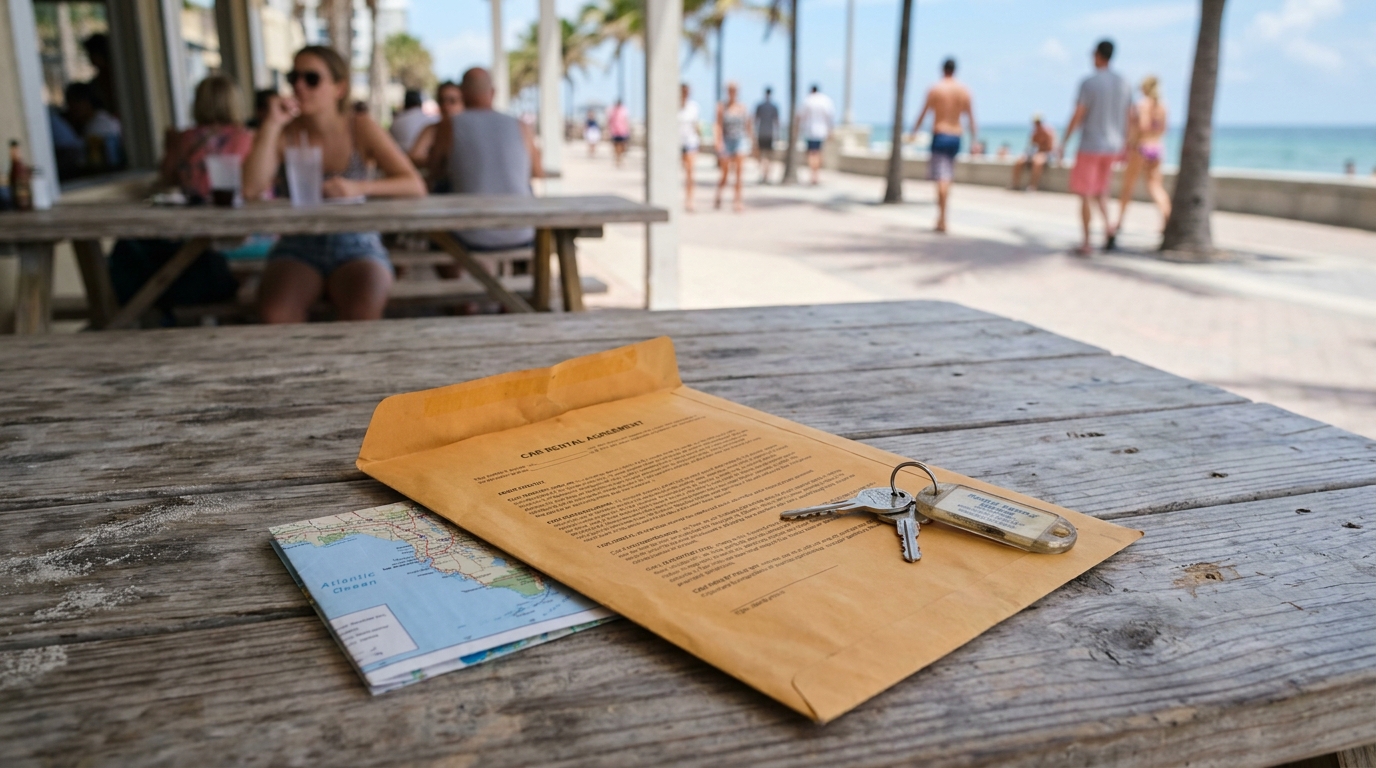
💡 Pro Tip: Keep your full rental agreement, including fine print. It determines which policy pays first and can reveal whether the company shifted primary coverage onto you.
Which Insurance Policy Pays After a Rental Car Crash Hollywood Victims Face
Determining which insurer pays first is often the hardest part of a Florida car accident claim. Florida law creates default rules, but rental agreements and personal policies can rearrange coverage order.
By default, the rental company’s coverage is primary. Under Fla. Stat. § 627.7263, the valid and collectible liability insurance or PIP providing coverage for the lessor is primary unless otherwise stated in at least 10-point type on the rental agreement. If fine print shifts primary coverage to the renter’s policy, the renter’s personal auto insurance responds first. Tourists renting on Hollywood Beach may be covered by the rental company’s policy by default, but contract language can change that result.
Peer-to-Peer Car-Sharing and App-Based Rentals
If you were driving a car booked through a car-sharing app, a different statute may govern. Florida’s peer-to-peer law requires platforms to maintain primary insurance during the car-sharing period. Under Fla. Stat. § 627.7483(2)(b)2, insurance satisfying requirements is primary during each car-sharing period, and if the shared vehicle owner’s or driver’s insurance has lapsed or doesn’t provide required coverage, the peer-to-peer platform’s insurance must provide coverage beginning with the first dollar. This matters for crashes involving apps like Turo, because the platform, not just the individual owner, may bear responsibility.
Florida’s Financial Responsibility Law sits underneath these rules. The at-fault owner or driver must carry adequate liability coverage at the time of a crash involving a moving violation and injuries. Florida does not generally require bodily injury liability (BIL) coverage for most drivers; the state mandates only $10,000 in Personal Injury Protection (PIP) and $10,000 in Property Damage Liability (PDL). However, under Florida’s Financial Responsibility Law, drivers involved in an at-fault crash with injuries may be required to demonstrate BIL coverage of at least $10,000 per person and $20,000 per crash. An SR-22 filing is typically required for three years for qualifying violations (with DUI offenses requiring an FR-44 instead).
| Potentially Liable Party | Common Basis for Liability |
|---|---|
| At-fault driver | Negligent operation of the rental vehicle |
| Rental company | Negligent rental practices (vicarious liability generally preempted by Graves Amendment) |
| Car-sharing platform | Primary coverage during sharing period |
| Other motorists | Their own share of comparative fault |
💡 Pro Tip: Request the at-fault vehicle’s insurance details using Form HSMV 83392 under Fla. Stat. § 324.242, useful when several policies could apply.
Comparative Fault: How Your Own Actions Affect Your Claim
Your own conduct can reduce or eliminate your recovery under Florida’s modified comparative fault rule. Courts assign each party a percentage of fault, and each liable party pays only their share. Under the 2023 reform in Fla. Stat. § 768.81(6), any party found greater than 50 percent at fault for their own harm may not recover damages. This 50 percent bar makes careful documentation of the other side’s negligence essential. This modified standard does not apply to medical negligence actions, which remain governed by pure comparative fault.
Defendants often try to point fingers at nonparties. Under Florida law, a defendant must affirmatively plead the fault of a nonparty and prove that fault by a preponderance of evidence to include them on the verdict form. Anticipating this tactic is a core part of plaintiff-focused strategy, and it’s one reason many injured people work with an experienced auto accident attorney Hollywood team early in the process.
💡 Pro Tip: Avoid apologizing or speculating about fault at the scene. Casual statements can be framed as admissions that inflate your comparative share.
Deadlines and Tolling: Why a Car Accident Lawyer Hollywood Florida Can Help
Florida imposes strict deadlines that can permanently end a claim if missed. Under Fla. Stat. § 95.11(4)(a), an action founded on negligence must be brought within two years, and wrongful death actions also carry a two-year limit under § 95.11(4)(d). This reflects the 2023 tort reform (HB 837) and applies to claims accruing on or after March 24, 2023. Missing the applicable window generally results in dismissal, regardless of liability evidence strength.
In limited circumstances, the clock may pause, but courts read exceptions narrowly. Florida’s tolling statute provides that the limitations period is tolled by absence from the state of the person to be sued, use of a false name unknown to the claimant, or concealment in the state so process cannot be served, per Fla. Stat. § 95.051(1). Because these rules are fact-dependent, an auto accident attorney Hollywood resource and prompt case review help avoid costly miscalculations.
Steps to Protect Your Rental Car Crash Claim
Taking the right steps after a Broward County car crash can strengthen your Florida car accident claim. Careful documentation supports both liability and damages.
- Seek medical care promptly and follow treatment to document injury causation
- Photograph the scene, vehicles, rental paperwork, and visible injuries
- Collect insurance and contact information for every driver and car-sharing platform involved
- Preserve your rental or car-sharing agreement, including all fine print
- Report the crash and request insurance information through proper channels at the Florida agency’s page covering what to do if you are involved in a crash
Administrative processes are separate from civil lawsuits. A rendered court judgment can lead to license suspension of an at-fault driver under Fla. Stat. § 324.121, and injured victims may pursue a final judgment by filing a civil suit.
Frequently Asked Questions
1. Can both the rental company and the driver be liable for my injuries?
Yes, multiple parties often share responsibility. Florida’s percentage-based system allocates fault among all liable parties. Although the federal Graves Amendment generally preempts vicarious liability against rental companies, recovery usually depends on proving the company’s own negligence, such as negligent maintenance or entrustment.
2. Whose insurance pays if I was hurt as a passenger in a rented car?
Coverage follows default and contract rules. The rental company’s coverage is typically primary under Fla. Stat. § 627.7263 unless the agreement shifts responsibility in at least 10-point type, in which case the renter’s policy may respond first.
3. What happens if the at-fault driver has already left Florida?
Their absence may toll the deadline in limited circumstances. Fla. Stat. § 95.051(1) allows tolling for absence from the state or concealment from service, but courts interpret these exceptions narrowly.
4. Does my own fault prevent me from recovering anything?
It depends on your percentage of fault. Under Fla. Stat. § 768.81(6), anyone found greater than 50 percent at fault for their own harm may not recover, while a smaller share reduces recovery proportionally.
5. How long do I have to file a rental car injury lawsuit?
Generally two years from the crash for negligence claims. Fla. Stat. § 95.11(4)(a) sets a two-year deadline for negligence actions accruing on or after March 24, 2023, and wrongful death claims carry the same limit under § 95.11(4)(d).
Getting Full Value for Your Hollywood Beach Injury Claim
Liability after a rental car crash on Hollywood Beach turns on the interplay of ownership rules, insurance priority, comparative fault, and strict deadlines. The at-fault driver, rental company, car-sharing platform, and other motorists may each carry a share of responsibility, and applicable statutes can expand or limit your recovery. A knowledgeable, plaintiff-focused approach helps injured people document losses and anticipate common insurer defenses.
If you were injured, don’t wait to protect your rights. Contact Attorney Big Al at 1-800-HURT-123 for help understanding your Florida car accident claim, call 1-800-487-8123 to speak with our team, or schedule your consultation online today. A trusted car accident lawyer Hollywood Florida clients rely on can help you pursue the full compensation you deserve.
