
Understanding Responsibility When You Fall in a Florida Condo Hallway
Key Takeaways: In Florida, condominium hallway falls typically point to the condominium association as the responsible party, because Fla. Stat. § 718.113(1) assigns common element maintenance to the association. Hallways, lobbies, and shared walkways generally qualify as common elements, though liability can be shared with a property manager or another party controlling the space. To prevail, an injured person must show the party in control had actual or constructive knowledge of the hazard under Fla. Stat. § 768.0755 and failed to act reasonably. Your legal status as an invitee, licensee, or trespasser shapes the duty owed, and Florida’s modified comparative negligence rule may reduce or bar recovery if you are more than 50 percent at fault. Individual unit owners are rarely targeted, since their liability is capped at a pro rata share not exceeding the unit’s value. Because outcomes are fact-dependent, preserving evidence early and understanding who controlled the hallway are essential to protecting your claim.
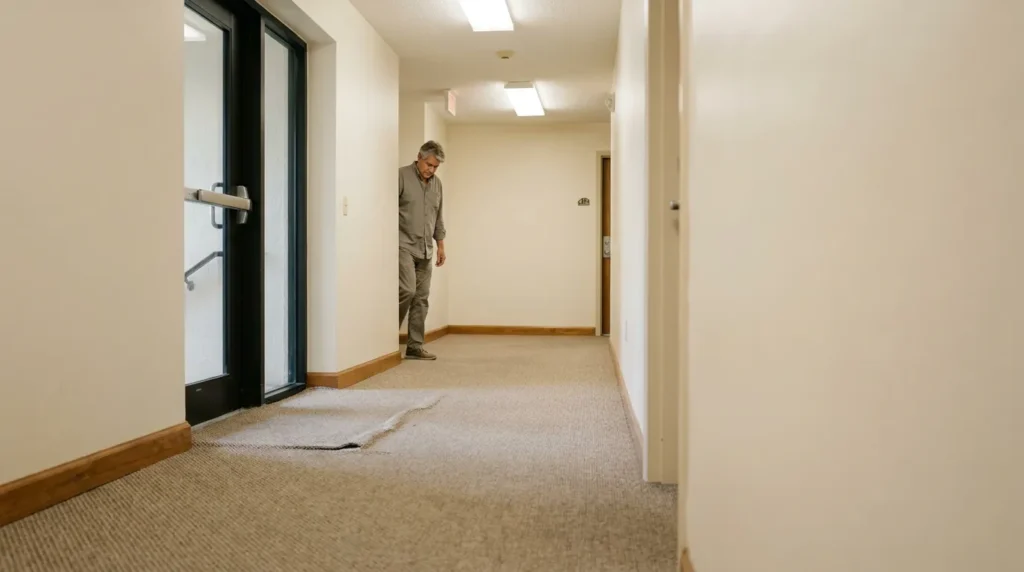
A condominium hallway fall in Florida usually points to one primary responsible party: the condominium association. Under Florida’s Condominium Act, hallways are common elements, and the duty to keep them reasonably safe rests with the association that controls them. Liability can be shared among the association, a property manager, or another party in control of the space. Determining who owes you a duty depends on who controlled the hallway, whether they knew about the hazard, and whether they acted reasonably to fix it.
If you were hurt in a common area of your building, understanding your rights early can protect your claim. For guidance tailored to your situation, reach out to Attorney Big Al at 1-800-HURT-123, call 1-800-487-8123, or use the firm’s online case review request to discuss what happened.
Why the Condo Association Usually Owes the Duty
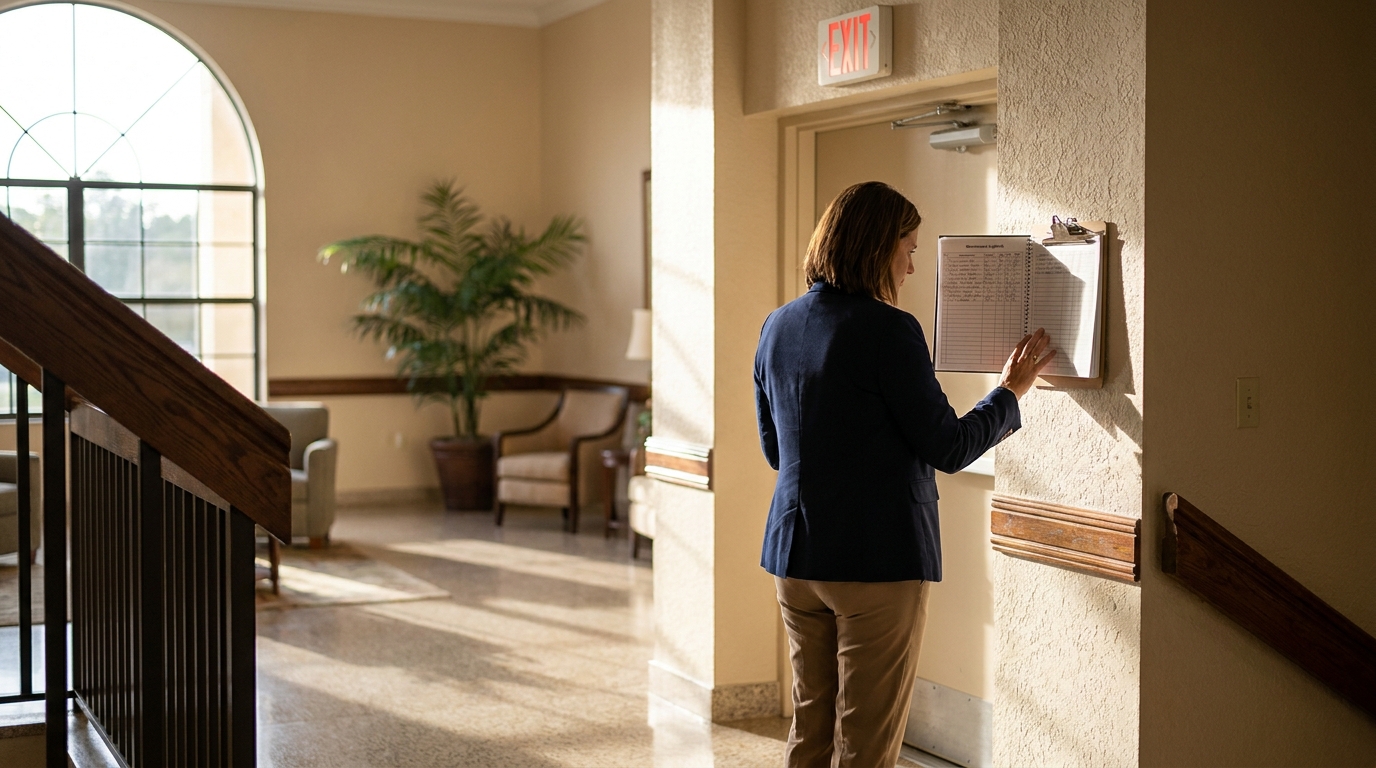
Florida law places the legal duty to maintain common elements squarely on the condominium association. Under Fla. Stat. § 718.113(1), maintenance of the common elements is the association’s responsibility, except for limited common elements assigned to a unit owner by the declaration. Because hallways, lobbies, and shared walkways generally qualify as common elements, the association typically bears responsibility to keep them reasonably safe. You can review the full statutory framework in Florida’s Condominium Act under Chapter 718.
This responsibility connects directly to premises liability principles. Premises liability holds parties controlling property accountable for hazardous conditions based on negligence, a failure to meet a legal duty that directly causes injury. When an association neglects to maintain a hallway and a resident or guest is hurt, that failure can form the basis of a condo negligence Florida claim.
💡 Pro Tip: Ask your building’s management office for a copy of the declaration of condominium. It defines which areas are common elements and which are limited common elements, and that distinction can influence who is responsible for your fall.
What "Common Area" Means for Your Claim
The definition of a common area is broader than many residents expect. In the homeowners association context, Fla. Stat. § 720.301(2) defines a common area as all real property within a community owned or leased by an association or dedicated for use or maintenance by the association or its members. In the condominium context, the parallel concept is the "common elements" defined in Chapter 718. This helps clarify which spaces, such as interior hallways, shared entryways, and walkways, fall under an association’s duty to maintain safely.
Florida also recognizes the association as the primary responsible party, not individual owners. Under Fla. Stat. § 718.119(2), a unit owner may be personally liable for the association’s acts or omissions related to common element use, but only to the extent of that owner’s pro rata share, and liability cannot exceed the unit’s value. This capped structure reinforces that a common area fall Florida claim generally targets the association itself.
If you want a deeper explanation of upkeep obligations, this overview of who maintains common areas in condo cases breaks down how those duties are assigned.
Condominium Duty of Care Florida: Proving the Association Knew
Establishing the condominium duty of care Florida standard often turns on knowledge of the hazard. For a slip and fall on a transitory foreign substance, Fla. Stat. § 768.0755 requires the injured person to prove the party in control had actual or constructive knowledge of the dangerous condition and should have taken action to remedy it. This standard frequently applies to spills, tracked-in water, or debris in a condo hallway.
Constructive knowledge can be shown through circumstantial evidence. Under the same statute, constructive knowledge may be proven by showing the dangerous condition existed long enough that a reasonably careful party should have discovered it, or that the condition occurred with regularity and was therefore foreseeable. A recurring leak or repeatedly wet entry mat can support your case even if no one saw the exact moment the hazard formed. The broader negligence framework appears throughout Chapter 768 on negligence.
💡 Pro Tip: Timing evidence matters enormously. Photograph the hazard, note how long it appeared to have been present, and look for signs like dried footprints or debris that suggest the condition existed for a while.
How Your Legal Status Affects the Duty Owed
Florida largely retains the traditional visitor classification framework. Under premises liability principles, the duty owed generally depends on whether you were an invitee, a licensee, or a trespasser. An invitee is owed the highest protection, including a duty to inspect for dangers, make prompt repairs, and warn of hazards. A licensee is owed a duty to warn of known dangers that are not obvious, while a trespasser is generally owed only a limited duty to avoid willful or wanton harm.
Most residents and their guests fall into the higher-protection categories. While some states have abolished the invitee and licensee distinction in favor of a single reasonable-care standard, Florida generally continues to apply the classification approach. Where you fit can shape the strength of your HOA duty of care Florida argument.
| Visitor Status | General Duty Owed |
|---|---|
| Invitee | Inspect, repair, and warn of hazards |
| Licensee | Warn of known, non-obvious dangers |
| Trespasser | Avoid willful or wanton harm |
Common-law duties also survive alongside the statutes. Fla. Stat. § 768.0755(2) states that the section does not affect any common-law duty of care owed by a person or entity in possession or control of business premises. A condo association, manager, or owner controlling a hallway can still owe traditional common-law obligations to keep the premises reasonably safe.
Comparative Fault and How It Affects Recovery
Florida uses a modified comparative negligence standard that can reduce or bar recovery. Under Fla. Stat. § 768.81(6), an injured party found more than 50 percent at fault is barred from recovering damages. If you are assigned fault at or below that threshold, your recovery may be reduced proportionally.
Fault can also be spread across multiple parties. Fla. Stat. § 768.0701 directs the trier of fact to consider the fault of all persons who contributed to an injury caused by a third party’s criminal act on commercial or real property. This becomes relevant when a hallway injury involves conduct by someone other than the association.
💡 Pro Tip: Insurance adjusters may try to shift blame onto you to push your fault over the 50 percent line. Avoid giving recorded statements before speaking with counsel, and stick to the facts if you must describe what happened.
Steps That Can Strengthen a Florida Condo Hallway Fall Case
Preserving evidence quickly is one of the most valuable things you can do. Because a Florida condo hallway fall case often depends on proving knowledge and conditions that change fast, early documentation can make a meaningful difference. Consider taking these steps as soon as you are able:
- Photograph the hazard, the surrounding area, and any warning signs or their absence
- Report the incident to management and request a written incident report
- Ask whether hallway surveillance footage exists and request that it be preserved
- Get names and contact information for any witnesses
- Seek prompt medical care and keep all related records
Understanding association procedures can also help. Under Fla. Stat. § 718.119(3), when an association may be exposed to liability exceeding its insurance coverage, it must give notice to unit owners within a reasonable time, and those owners have the right to intervene and defend.
For focused help with a condo association liability Florida matter, connect with a condominium duty of care Florida lawyer who handles these premises cases in the Hollywood area.
Frequently Asked Questions
1. Who is usually responsible for a slip and fall in a condo hallway?
The condominium association is generally the primary responsible party because Fla. Stat. § 718.113(1) assigns common element maintenance to the association. A property manager or another party controlling the hallway may also share responsibility.
2. What do I have to prove in a condo hallway slip and fall?
For a transitory foreign substance, Fla. Stat. § 768.0755 requires you to show the party in control had actual or constructive knowledge of the hazard and should have remedied it. Constructive knowledge can be established through evidence the condition existed long enough to be discovered or recurred with regularity.
3. Can I still recover if I was partly at fault?
Yes, if you are 50 percent or less at fault. Under Fla. Stat. § 768.81(6), your damages can be reduced by your share of the blame. Recovery is barred if you are found more than 50 percent responsible.
4. Are individual unit owners liable for my hallway injury?
Usually the association bears the responsibility. Under Fla. Stat. § 718.119(2), any individual owner’s liability is limited to a pro rata share and cannot exceed the unit’s value. Claims generally focus on the association.
5. Does my status as a resident or guest matter?
Yes. Florida generally applies the invitee, licensee, and trespasser framework, and the duty owed varies by category. Outcomes remain highly fact-dependent.
Bringing the Pieces Together
In most Florida condominium hallway falls, the association carries the core duty to keep shared spaces reasonably safe. That duty flows from the Condominium Act, broader premises liability principles, and preserved common-law obligations, while proof of knowledge and comparative fault often decide how a claim resolves. Because every case depends on specific facts, such as who controlled the area and how long the hazard existed, the strength of a condominium injury Florida claim varies considerably. This information is general rather than individualized legal advice.
If a hallway fall left you facing medical bills and lost time, you do not have to sort out the condominium duty of care Florida rules alone. Speak with Attorney Big Al at 1-800-HURT-123 today, call 1-800-487-8123 for a conversation about your options, or send your details through the firm’s confidential contact form to get started.
