
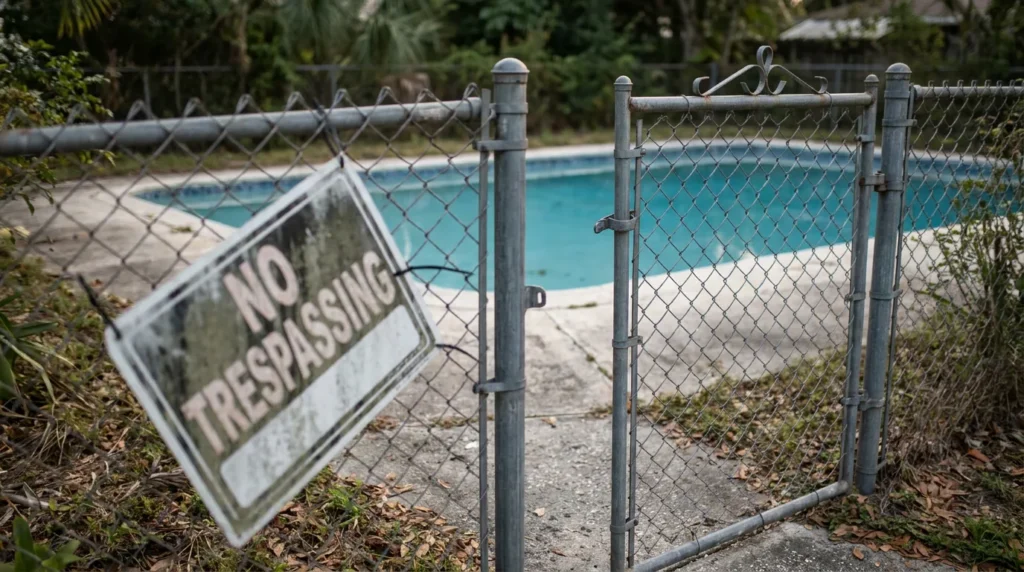
When a Backyard Pool Becomes a Legal Hazard for Children in Florida
Key Takeaways: The attractive nuisance doctrine is a common-law exception that may allow a Florida family to pursue a claim when a young child drowns in an unsecured pool, even as a trespasser. Fla. Stat. § 768.075(3)(c) expressly preserves the doctrine despite trespasser-duty limitations. Courts examine five conditions: whether children were likely to trespass, whether the pool posed unreasonable risk of death, whether the child was too young to appreciate that risk, whether the burden of securing the pool was slight, and whether the owner failed to act reasonably. Evidence about fencing, gate latches, self-closing hardware, and compliance with Florida’s Residential Swimming Pool Safety Act (Chapter 515) often influences outcomes. Claims after a child’s death proceed under Florida’s Wrongful Death Act through a personal representative, while claims for injured minors require a parent or guardian and court-approved settlements. Expect parental supervision defenses under comparative fault and act promptly because filing deadlines are strict.
Florida law generally limits what property owners owe trespassers, but that limitation has a significant exception when the trespasser is a young child drawn to a swimming pool. Under Fla. Stat. § 768.075(3)(c), the statute expressly preserves the common law as it pertains to the attractive nuisance doctrine. That carve-out is why families who lose a child in an unsecured pool may still have a viable claim, even though the child entered without permission. The doctrine is not automatic; Florida courts apply it narrowly, and every case turns on what the owner knew, what safeguards existed, and how accessible the water was.
If your family is facing this kind of loss, you do not have to sort through the statutes alone. Attorney Big Al at 1-800-HURT-123 handles premises liability matters throughout Florida and can review how the doctrine may apply to your circumstances. Call 1-800-487-8123 or contact us now to discuss what happened.
The Statutory Backdrop for Florida Premises Liability Claims
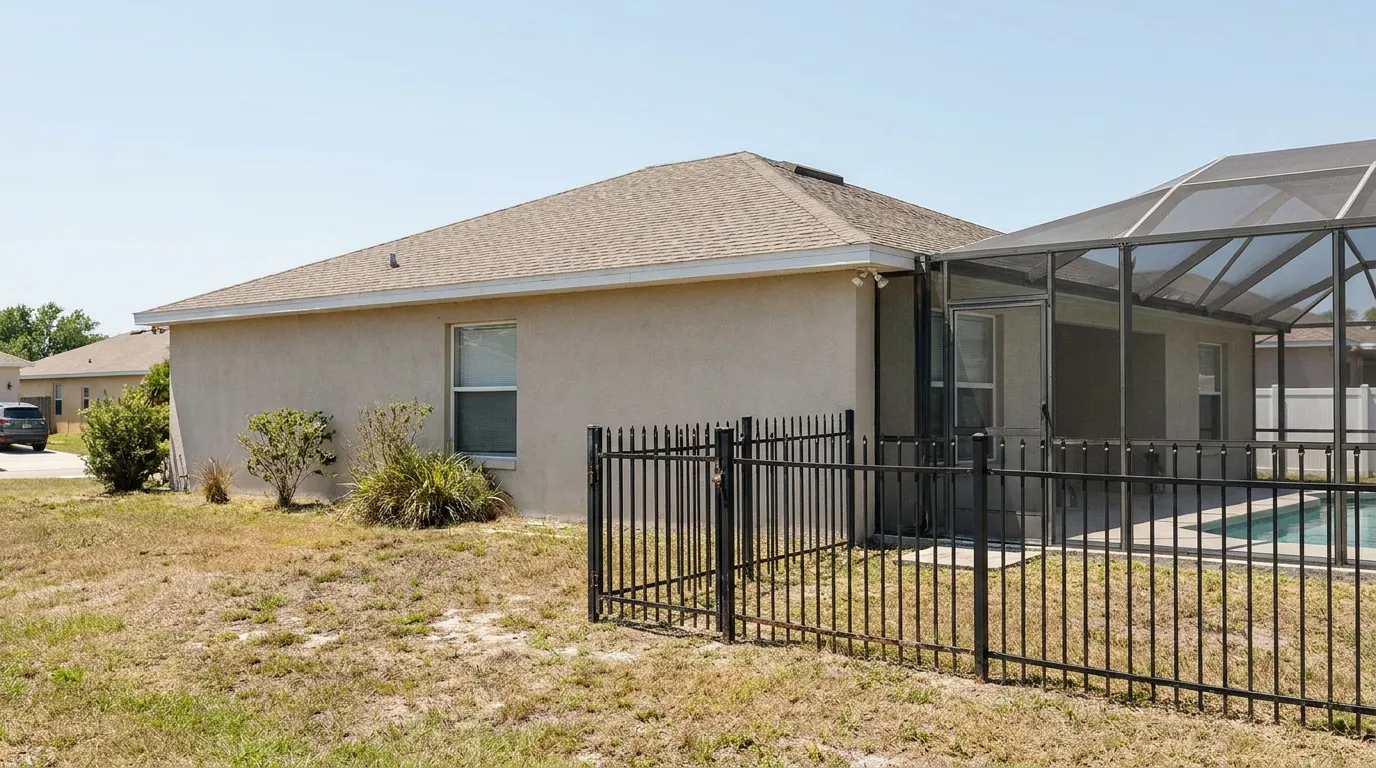
Florida’s negligence rules governing premises liability live in Chapter 768, Part I of Title XLV. Within it, Fla. Stat. § 768.075 addresses immunity from liability for injury to trespassers on real property. Separate pool-specific safety requirements appear in Chapter 515, the Residential Swimming Pool Safety Act, and in local building codes.
What Duty Does an Owner Owe a Trespasser?
The baseline duties depend on whether the trespasser was discovered or undiscovered. Under Fla. Stat. § 768.075(3)(b), an owner generally owes an undiscovered trespasser only the duty to refrain from intentional misconduct, with no duty to warn of dangerous conditions. For a discovered trespasser, the owner must avoid gross negligence or intentional misconduct and warn of known dangerous conditions that are not readily observable.
Those low default duties are why the attractive nuisance carve-out matters for young children.
| Visitor Status | General Duty Owed |
|---|---|
| Invitee | Reasonable care to maintain the premises and warn of known hazards |
| Licensee | More limited duty, generally to warn of known dangers |
| Undiscovered trespasser | Refrain from intentional misconduct; no duty to warn |
| Discovered trespasser | Avoid gross negligence or intentional misconduct; warn of known, non-obvious dangers |
| Child trespasser (attractive nuisance) | Heightened protection under the common-law doctrine |
How the Attractive Nuisance Doctrine Child Drowning Analysis Works
Courts applying the doctrine typically examine five conditions before finding a property owner may owe a duty to a child trespasser. The framework described in this overview of child injuries on property generally requires that:
- The owner knows or should know that children are likely to trespass on the property.
- The condition involves an unreasonable risk of death or serious harm to children.
- Because of their youth, the children do not realize the risk the condition presents.
- The burden of eliminating the danger is slight compared to the risk involved.
- The owner fails to exercise reasonable care to protect children from that danger.
Swimming pools are frequently cited as classic examples, though no condition is an attractive nuisance simply because it appeals to children. The doctrine generally applies to artificial conditions rather than natural features. Florida courts also consider the child’s age, maturity, intelligence, and capacity to appreciate the danger, and they may weigh fencing, gate latches, signage, prior incidents, and the presence of children in the neighborhood.
Why Children Are Treated Differently Than Adults
The doctrine exists because young children may be drawn to hazards without appreciating what could happen to them. An adult who climbs a fence into a stranger’s pool may understand the risk in a way that a four-year-old who wanders through an open gate does not.
This reasoning extends beyond pools. Fla. Stat. § 823.08 addresses discarded refrigerators and freezers, and related hazards raise comparable questions, which we explore in our discussion of whether abandoned appliances are attractive nuisances under Florida law.
Evidence That Often Shapes an Unsecured Pool Liability Claim
Proving breach often comes down to physical evidence about access. Photographs of the fence line, gate latch height, whether a self-closing and self-latching mechanism functioned, and whether the gate was propped open may carry more weight than witness recollection. Maintenance logs, prior complaints to a landlord or HOA, code compliance records under Chapter 515, and municipal code enforcement records can demonstrate that the owner knew children could reach the water.
Florida law reflects a legislative expectation that pool areas should be restricted. Fla. Stat. § 768.0706(2)(a)6. lists "locked gates with key or fob access along pool fence areas" among security measures that can create a presumption against liability for multifamily residential properties. While that statute addresses criminal acts and would not control a drowning case, it illustrates that securing pool access is treated as a baseline safety practice.
💡 Pro Tip: Photograph the gate, latch, and fence from multiple angles and distances as soon as it is safe to do so. Property owners frequently repair or replace hardware after an incident, and post-repair conditions can make a hazardous setup look compliant.
Pursuing a Wrongful Death Claim After a Child Drowns
When a child dies, the family’s recovery is generally pursued under Florida’s Wrongful Death Act, codified beginning at Fla. Stat. § 768.16. The Act requires that the action be brought by the personal representative of the estate, on behalf of the estate and the statutory survivors.
How the Process Differs When the Injured Person Is a Minor
Minors generally cannot file suit on their own behalf. A parent or legal guardian generally files the claim as next friend or guardian, and settlements involving a minor’s interests typically require judicial approval. Courts may also appoint a guardian ad litem to independently evaluate whether a proposed resolution serves the child’s interests. A premises liability lawyer can explain which procedural requirements may apply.
Defenses Families Should Expect to Encounter
A common response in a child trespasser pool case is an argument that the parents failed to supervise the child. Under Florida’s modified comparative negligence framework, a plaintiff’s own comparative fault reduces recovery proportionally, and a claimant found more than 50 percent at fault generally recovers nothing.
Owners may also argue that the pool was adequately secured, that the danger was obvious even to a child of that age, or that no reason existed to anticipate children on the property. Each argument can be tested with evidence.
Deadlines and Why Waiting Creates Risk
Florida imposes filing deadlines on wrongful death and personal injury actions, and missing one generally ends the claim regardless of its merits. Wrongful death actions generally must be brought within two years of death, and for negligence causes of action accruing after March 24, 2023, the general limitations period is two years. Limited tolling exists, including for minority under Fla. Stat. § 95.051, but Florida courts generally interpret those exceptions narrowly. Claims involving a governmental entity are subject to separate pre-suit notice and sovereign immunity requirements.
Because the applicable deadline can vary, families should confirm their specific timeframe with counsel promptly.
Frequently Asked Questions
1. Does the attractive nuisance doctrine child drowning exception apply to every pool in Florida?
No. The doctrine generally applies only when the five general conditions are satisfied, including that the owner knew or should have known children were likely to enter and that the burden of securing the pool was slight compared to the risk. A fully fenced pool with a functioning self-latching gate may present a very different case than an open, unfenced one.
2. Can we still recover if our child climbed a fence to reach the pool?
Possibly, though it may become harder. A child’s ability to bypass a barrier may support arguments that the child appreciated the risk or that the owner took reasonable precautions. Courts consider the child’s age, maturity, capacity, and the barrier’s height and condition.
3. What if the drowning happened at an apartment complex or HOA pool?
Multifamily properties often involve additional defendants, including the property management company and sometimes a pool maintenance vendor. Common area pools generate more documentation, such as inspection records and prior resident complaints, which can be valuable. A guest or resident’s child lawfully on common areas may also be treated as an invitee rather than a trespasser, changing the duty analysis.
4. Will a parental supervision defense end our case?
Not necessarily. Under Florida’s modified comparative negligence rules, an award may be reduced by the assigned degree of fault, though a claimant found more than 50 percent at fault is generally barred. The extent of reduction depends on how the finder of fact weighs the evidence.
5. Who actually files the lawsuit after a child’s death?
A personal representative of the child’s estate generally brings the action under Florida’s Wrongful Death Act on behalf of the estate and surviving family members. When a surviving child was injured, a parent or guardian generally files on the minor’s behalf, and any settlement typically requires court approval.
Understanding Your Family’s Position Under Florida Pool Safety Law
Florida’s trespasser statute significantly limits what owners owe uninvited entrants, but Fla. Stat. § 768.075(3)(c) deliberately preserves the common-law attractive nuisance doctrine. For families facing a child’s drowning, that preservation can be the difference between a barred claim and a viable one. The analysis turns on foreseeability of child trespassers, the unreasonable risk the pool presented, the modest burden of securing it, and whether the owner acted reasonably.
You deserve straightforward answers about whether Florida law may support a claim in your situation. Reach out to Attorney Big Al to have your circumstances reviewed by a team that handles premises liability matters statewide. Call 1-800-487-8123 or schedule a consultation to get started.
Disclaimer: This content is for informational purposes only and is not legal advice. Every case is unique, and results may vary. Consult an attorney about your specific circumstances.
