

Are attorney consultations confidential? Trust 2025
Why Attorney Consultation Confidentiality Matters for Your Case
Are attorney consultations confidential? Yes, attorney consultations are confidential and protected by attorney-client privilege, even if you don’t hire the lawyer. This protection applies immediately when you seek legal advice, regardless of whether you pay a fee or sign any paperwork.
Quick Answer:
- Initial consultations are confidential – Your conversation is protected from the moment you seek legal advice
- No payment required – Confidentiality applies even during free consultations
- Entire law firm is bound – All staff members must keep your information private
- Information stays protected – Even if you don’t hire the lawyer, your shared information remains confidential
If you’ve been in a car accident in Fort Lauderdale, Hollywood, Miami, Boca Raton, or Sunrise, you might worry about sharing sensitive details with a lawyer. Maybe you’re concerned about what happens if you don’t hire them. Or perhaps you’re wondering if that intake coordinator on the phone can share your information.
These are valid concerns. Trust forms the foundation of any attorney-client relationship, and understanding your privacy rights is crucial before you share personal details about your accident, injuries, or insurance situation.
The good news is that Florida law provides strong protections for anyone seeking legal help. Whether you’re dealing with medical bills, insurance disputes, or wondering about your legal options after an accident, you can speak openly with an attorney without fear that your words will be used against you later.
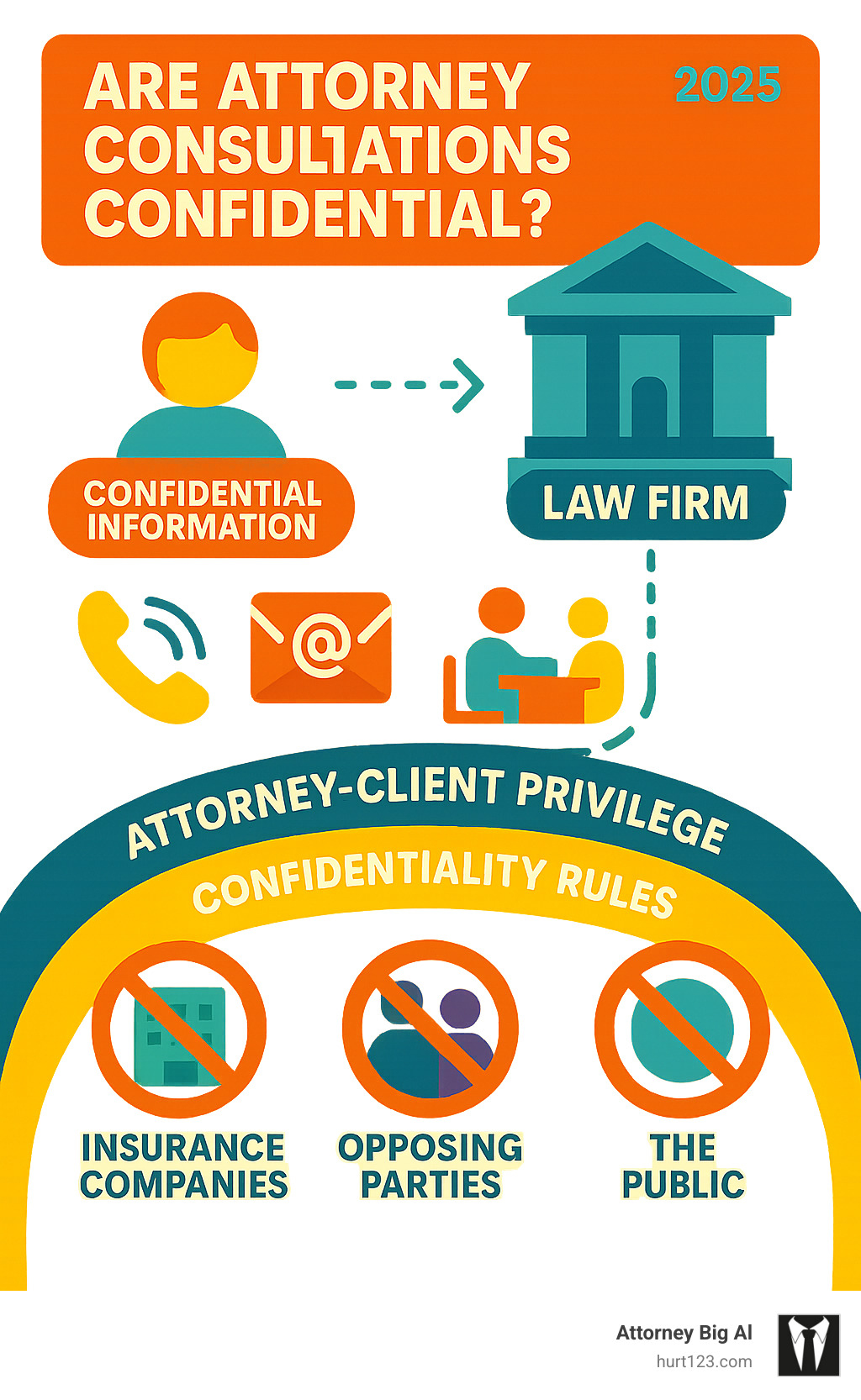
The Foundation of Trust: Attorney-Client Privilege vs. The Duty of Confidentiality
When people ask “Are attorney consultations confidential?” they’re really talking about two overlapping protections that let you speak freely:
- Attorney-client privilege – an evidentiary rule that keeps courts from forcing a lawyer to reveal your private legal communications.
- The duty of confidentiality – an ethical rule that bars lawyers from sharing any information related to your matter, even if it didn’t come directly from you.
Both rules apply the moment you start seeking legal advice in Florida. Without them, an injured driver in Hollywood might hide key facts—hurting the case and the chance for a fair recovery.
What Is Attorney-Client Privilege?
The privilege belongs to you. It attaches when you consult a licensed lawyer for legal advice in a private setting. Only you can waive it. Courts can’t force your lawyer to testify about what you disclosed while explaining your car accident in Miami, and opposing counsel can’t demand those details in findy. For more background, see Cornell Law School’s overview of attorney-client privilege or our short guide.
The Broader Ethical Duty of Confidentiality in Florida
Even if a conversation wouldn’t be privileged in court, Rule 4-1.6 of The Florida Bar Rules of Professional Conduct still forbids disclosure. The rule covers:
- Information you give directly
- Facts the lawyer uncovers while investigating
- Details learned from third parties while handling your claim
It also protects prospective and former clients. You can read how our office enforces these standards.
Taken together, these safeguards mean you can speak openly with a car accident lawyer in Boca Raton, Fort Lauderdale, or Sunrise without fear your words will reappear in an adjuster’s file or a courtroom later.
The Core Question: Are Attorney Consultations Confidential?

After a crash in Miami or Fort Lauderdale it’s normal to hesitate before calling a lawyer. You may wonder: If I share something that hurts my case, will it leak? The short answer is no—Florida law locks those conversations down.
Confidential Even If You Never Hire the Lawyer
The moment you seek legal advice, you become a prospective client. That status triggers privilege and the duty of confidentiality—even during a free, no-obligation meeting. No retainer or payment is required. This rule lets you shop around, compare firms, and still sleep soundly knowing what you revealed can’t be passed to an insurance company.
The Entire Law Firm Is Bound
You might first speak with an intake coordinator, paralegal, or legal assistant. Every staff member works under the lawyer’s license, so the same confidentiality rules apply to your phone calls, emails, and web forms. Law firms use secure case-management systems, encrypted email, and staff training to keep data locked down.
What Information Is Protected?
Nearly everything connected to your potential claim, including:
- How the accident happened—even unflattering details
- Your medical history, bills, and photos of injuries
- Statements already made to insurers or police
- Private worries about time off work or family finances
- Documents you provide (police reports, repair estimates, pay stubs)
Full disclosure lets a car accident lawyer spot challenges early and build the best strategy. Because the law shields these communications, honesty is always the smartest move.
When Confidentiality Might Not Apply: Understanding the Exceptions

While attorney consultation confidentiality provides strong protection, it’s not a magic shield that covers everything. Think of it like a sturdy umbrella – it keeps you dry in most situations, but there are a few specific circumstances where it might not protect you.
Understanding these exceptions isn’t meant to scare you away from being honest with your lawyer. Instead, it helps you steer conversations more effectively and avoid accidentally losing your privacy protections. The good news is that these exceptions are rare and specific – they won’t affect most car accident cases in Fort Lauderdale or anywhere else in Florida.
The Future Crime or Fraud Exception
Here’s something that might surprise you: confidentiality doesn’t protect plans to commit future crimes or fraud. If you tell your car accident lawyer that you’re planning to lie about your injuries or fake medical records, they may have a duty to prevent this harm.
But before you panic, let’s be clear about what this exception covers. It only applies to future crimes – not past mistakes or poor decisions. If you tell your lawyer you were texting when the accident happened, or that you waited three days to see a doctor because you were embarrassed, this information stays confidential.
The exception is narrow and specific. It covers plans to commit future crimes, ongoing fraud schemes, and situations where someone might be seriously harmed. It doesn’t cover admitting you made mistakes or sharing embarrassing details about your accident.
Your lawyer cannot and will not lie in court on your behalf. But they also cannot reveal your confidential communications without your permission. This creates a careful balance that protects both your privacy and the integrity of the legal system.
Most car accident cases never come close to triggering this exception. You can freely discuss your concerns, admit your mistakes, and share sensitive information without worrying about this rule.
How You Can Accidentally Waive Your Privilege
Unfortunately, you can accidentally destroy the confidentiality of your communications in several ways. The most common mistake happens when third parties are present during your consultation. If your spouse, friend, or family member sits in on your meeting with your lawyer, the conversation may lose its protected status.
Public conversations can also waive your privilege. Discussing your case loudly in a restaurant or where others can overhear can destroy confidentiality for those specific conversations. The same goes for social media posts – sharing details about your case on Facebook or Twitter can waive confidentiality for that information.
Forwarding emails from your lawyer to friends or family is another common mistake. Once you share that confidential communication with others, you may lose privilege for those specific emails. Similarly, giving consent to share information – either explicitly or by discussing your case publicly – can waive your protections.
The key is maintaining the confidential nature of your communications. Keep your conversations private, avoid discussing your case in public, and think twice before sharing legal documents or emails with others. As long as you’re careful about who’s present and where you discuss your case, your privilege remains strong.
Disputes Between a Client and Attorney
If you end up in a dispute with your lawyer – such as a malpractice claim or fee disagreement – they may be able to disclose confidential information necessary to defend themselves. This exception allows attorneys to protect themselves from unfair accusations while still maintaining client confidentiality to the greatest extent possible.
This exception is limited to what’s reasonably necessary for the attorney’s self-defense. They can’t share everything you told them – only what’s directly relevant to defending against your specific claims.
While this exception exists, it’s rarely used in practice. Most disputes between clients and attorneys are resolved without breaching confidentiality. The exception simply ensures that lawyers can defend themselves when necessary, which ultimately protects the integrity of the legal profession.
How to Ensure Your Consultation in Boca Raton Remains Private

While Florida law provides strong protections for attorney consultations, you play an important role in keeping your information secure. Think of it as a partnership – the law sets up the framework, but your actions help ensure those protections stay in place.
Are attorney consultations confidential? Absolutely, but taking a few simple steps can help you maintain that privacy throughout your entire legal journey.
Practical Steps for Your First Meeting
Before you pick up the phone or walk into that law office, there are smart ways to protect yourself. Verify the attorney’s license first – you can check with The Florida Bar to make sure you’re speaking with a licensed attorney or their supervised staff. Only communications with licensed attorneys and their teams get the full protection of attorney-client privilege.
Choose a private setting for your conversation. Whether you’re meeting in person or talking by phone, find a quiet space where others can’t overhear. That means stepping away from the family dinner table or finding a private room at work.
When it comes to technology, be smart about your choices. Avoid public Wi-Fi when sending emails or joining video calls about your case. Coffee shop Wi-Fi might be convenient, but it’s not secure. Use your home internet or cellular data instead.
Most reputable law firms provide secure email systems or encrypted file transfer options. Ask about these during your first contact. If you need to send photos of your accident scene or copies of medical records, these secure systems keep your information safe.
Ask questions if you’re unsure about anything. A good car accident lawyer will be happy to explain how they protect your information. If they seem annoyed by your privacy concerns, that might be a red flag.
Finally, keep documents secure on your end too. Store case-related paperwork in a safe place at home, and don’t leave sensitive documents lying around where others might see them.
Being Open and Honest with Your Car Accident Lawyer
Here’s the thing about confidentiality – it exists specifically so you can tell your lawyer everything. And we mean everything. Those embarrassing details about the accident? Your lawyer needs to know. That pre-existing back injury you’re worried about? They need to know that too.
Your car accident lawyer can’t help you effectively if they’re missing pieces of the puzzle. Hidden facts have a way of surfacing during a case, often at the worst possible moment. It’s much better for your lawyer to know about potential problems from day one so they can address them proactively.
Be completely honest about everything that happened during your accident. If you were changing the radio station, reaching for your coffee, or checking your phone, tell your lawyer. They’re not there to judge you – they’re there to build the strongest possible case despite any challenges.
Share your complete medical history, including any previous injuries or ongoing health issues. Insurance companies will dig deep into your medical records, so your lawyer needs to know what they’ll find. This helps them craft a strategy that addresses these issues head-on.
Tell your lawyer about any statements you made to insurance companies, police officers, or even friends and family. Sometimes people say things in the heat of the moment that might not be accurate. Your lawyer can work with these statements much better when they know about them in advance.
Don’t hide financial pressures you’re facing. If you’re struggling to pay bills or facing foreclosure, your lawyer needs to understand the full picture. This information helps them prioritize your case and understand what kind of timeline works best for your situation.
The bottom line? Your lawyer is on your side. They want to help you get the best possible outcome, and they can only do that with complete and accurate information. The confidentiality protections exist so you can share freely without fear – so take advantage of them.
What Happens if a Lawyer Breaches Confidentiality in Sunrise?
When you’re wondering \”Are attorney consultations confidential?\” the answer is a resounding yes – and Florida takes this protection very seriously. If a lawyer violates their duty of confidentiality, they face consequences that can literally end their legal career.
The reality is that breaches of confidentiality are rare, precisely because the penalties are so severe. Lawyers understand that their entire profession depends on client trust, and The Florida Bar has created a system of oversight that makes attorneys think twice before risking their livelihood.
But what exactly happens when a lawyer crosses this line? The consequences come from two directions: professional discipline and potential legal liability.
Disciplinary Actions by The Florida Bar
The Florida Bar doesn’t mess around when it comes to confidentiality violations. They have investigators, hearing panels, and a comprehensive system designed to protect the public from attorneys who can’t be trusted with sensitive information.
When someone files a complaint about a confidentiality breach, The Florida Bar launches a thorough investigation. They interview witnesses, review documents, and examine exactly what happened. This isn’t a quick process – they take the time to get the facts right.
For minor violations, an attorney might receive a formal reprimand that becomes part of their permanent record. This might not sound like much, but it’s actually a big deal. Other lawyers, judges, and potential clients can see this mark on their record.
More serious violations can result in suspension from practice. This means the attorney loses their license to practice law for a specific period – sometimes months, sometimes years. During this time, they can’t represent clients, can’t earn income as a lawyer, and must find another way to support themselves.
The most serious violations can lead to disbarment. This is the legal equivalent of a career death sentence. Once disbarred, an attorney permanently loses their license to practice law. All those years of law school, bar exams, and building a practice – gone.
These disciplinary actions become public record. Anyone can look up an attorney’s disciplinary history, which means a confidentiality breach can follow a lawyer for the rest of their career.
Potential Legal Consequences
Professional discipline is just the beginning. Attorneys who breach confidentiality may also face civil lawsuits from the clients they’ve wronged.
Malpractice lawsuits can be financially devastating. If a lawyer’s breach of confidentiality causes you financial harm, you can sue them for damages. This might include money you lost because your case was compromised, additional legal fees you had to pay, or other costs directly related to the breach.
Sometimes the breach itself can be damaging to your case. If confidential information gets shared with the wrong people, it might hurt your position in negotiations or at trial. This gives you additional grounds to seek compensation from the attorney who violated your trust.
Courts take confidentiality breaches seriously too. If evidence was obtained through an improper breach of attorney-client privilege, courts may exclude that evidence from being used in your case. This protects you from having your own confidential communications used against you.
The combination of professional discipline and potential legal liability creates a powerful incentive for attorneys to protect client confidentiality. Law firms invest heavily in secure systems, staff training, and policies specifically designed to prevent breaches.
At our firm, we understand that your trust is everything. We’ve built our practice on the foundation that clients need to feel completely safe sharing their most sensitive information. That’s why we take confidentiality so seriously – because we know that without your trust, we can’t effectively represent you.
Your Privacy Is Protected When Seeking Legal Help
Florida’s confidentiality rules exist so injured people can get clear, candid advice without risking their privacy. From the first call to the final settlement, what you tell your lawyer is protected by statute, court precedent, and strict Bar rules.
If you were hurt in a collision in Fort Lauderdale, Hollywood, Miami, Boca Raton, or Sunrise, don’t let privacy worries keep you from answers. Your consultation is free, confidential, and carries no obligation to hire us.
Ready to talk? Contact us for a confidential consultation. Want to speak directly with a Fort Lauderdale car accident lawyer? Visit https://hurt123.com/fort-lauderdale/car-accident-lawyer/.
Remember: the sooner you understand your rights, the sooner you can focus on healing while we handle the insurance battle.
