

What It Takes to Show a Florida Business Knew About a Dangerous Condition
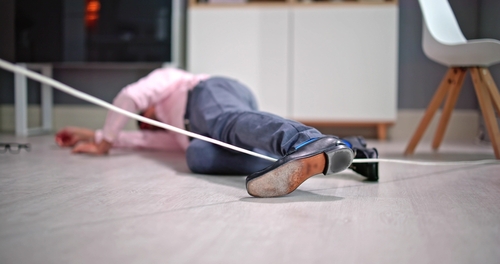
If you slipped, tripped, or fell inside a Florida business, one of the most important questions in your case will be whether that business knew about the hazard that caused your injury. Under Florida law, simply getting hurt on someone else’s property is not enough to recover compensation. You must demonstrate that the business had actual or constructive knowledge of the dangerous condition and failed to take action. This requirement, rooted in Florida Statute § 768.0755, places the burden on you to connect the hazard and the business’s awareness of it.
If you were injured on a business property in Florida and need guidance, Attorney Big Al at 1-800-HURT-123 is ready to help. Call 1-800-487-8123 or reach out online to discuss your situation.
The Legal Standard for Proving a Premise Liability Attorney in Florida Can Help You Meet
Florida Statute § 768.0755(1) establishes the foundation for every slip and fall claim filed against a business in this state. If you are injured by a transitory foreign substance in a business establishment, you must prove that the business had actual or constructive knowledge of the dangerous condition and should have taken action to remedy it.
Actual knowledge means the business was directly aware of the hazard. Perhaps a manager saw a spill and walked away, or a customer reported a broken handrail that was never fixed. Constructive knowledge is more nuanced and often harder to prove, but it is the pathway most plaintiffs rely on. You can learn more about constructive knowledge in Florida fall cases to understand how courts analyze this concept.
How Constructive Knowledge Works Under Florida Law
Constructive knowledge does not require proof that a business employee physically saw the hazard. Instead, Florida Statute § 768.0755(1) provides two ways to establish it:
- Duration of the condition: Under § 768.0755(1)(a), you may show that the dangerous condition existed for such a length of time that, in the exercise of ordinary care, the business should have known of it.
- Regularity and foreseeability: Under § 768.0755(1)(b), you may demonstrate that the condition occurred with regularity and was therefore foreseeable.
These two avenues give injured plaintiffs flexibility in building their cases. If a grocery store consistently allows water to accumulate near its produce section without warning signs, the regularity may satisfy the foreseeability prong. If security footage shows a spill went unaddressed for 45 minutes in a busy aisle, the duration element may be met. Either path requires solid slip and fall evidence in Florida, including photographs, witness statements, incident reports, and surveillance video.
💡 Pro Tip: After a fall, immediately ask the store manager whether surveillance cameras cover the area where you were injured. Footage can be overwritten within days, so request preservation early.
Proving Negligence in a Slip and Fall: What Evidence Matters Most
Building a strong premises liability case in Florida requires more than your own account of what happened. Courts and insurance adjusters will scrutinize your evidence. The more documentation you collect, the stronger your position becomes.
Photographs and Physical Evidence
Take photos of everything at the scene before anything is cleaned up or repaired. Capture the substance or defect that caused your fall, the surrounding area, lighting conditions, your footwear, and any visible injuries. Time-stamped photos can help establish how long a condition existed, especially when compared with the business’s cleaning logs.
Witness Statements and Incident Reports
Other customers or employees who saw what happened can provide valuable testimony. Ask for names and contact information from anyone who witnessed the fall or noticed the hazard beforehand. Request that the business complete an incident report and ask for a copy.
Maintenance and Inspection Records
Businesses that follow regular inspection schedules often have logs documenting when floors were last checked. If no inspection occurred for hours before your fall, that gap may support your argument that the business failed to exercise ordinary care. The absence of records may also work in your favor.
💡 Pro Tip: Keep a written journal of your symptoms, medical appointments, and how your injuries affect daily life from the day of the accident. This record can strengthen your damages claim.
How the 2023 Tort Reform Changed Premises Liability Proof in Florida
Florida’s legal landscape for premises liability shifted meaningfully with the passage of HB 837, codified as Chapter 2023-15. One of the most significant changes involved Florida’s comparative fault system. The state moved from pure comparative negligence to modified comparative negligence, meaning a plaintiff found to be greater than 50 percent at fault is barred from recovering any damages. This threshold is codified at Florida Statute § 768.81(6) and does not apply to medical negligence actions under Chapter 766.
The reform also addressed fault allocation in premises liability cases involving third-party criminal acts. Under Florida Statute § 768.0701, when a person lawfully on a property is injured by a criminal act, the trier of fact must consider the fault of all persons who contributed to the injury, including the criminal actor.
The bill created Florida Statute § 768.0706, which requires owners or principal operators of multifamily residential properties to implement specified security measures to gain a presumption of non-negligence under Florida premises liability statutes. This means landlords and apartment complexes have defined obligations, and failure to meet them may support a claim.
💡 Pro Tip: If you were injured at an apartment complex, check whether the property had working security cameras, adequate lighting, and functioning deadbolts, these are among the specific security measures Florida law now evaluates.
Security Measures and the Presumption Against Liability
Certain Florida businesses can earn a legal shield by implementing required security measures, but that shield is not absolute. Under Florida Statute § 768.0705, the owner or operator of a convenience business that substantially implements the applicable security measures listed in §§ 812.173 and 812.174 gains a presumption against liability for criminal acts committed by third parties on the premises. This presumption applies only to criminal acts by non-employees and non-agents.
If a business fails to implement required security measures, it loses that presumption. This failure can serve as evidence that the business knew or should have known about potential hazards from criminal activity.
| Security Measure | Applicable Property Type | Statutory Basis |
|---|---|---|
| Security camera system at entry/exit points with 30-day footage retention | Multifamily residential properties | § 768.0706(2) |
| Adequate lighting in parking areas and walkways | Multifamily residential properties | § 768.0706(2) |
| Deadbolt locks on unit doors | Multifamily residential properties | § 768.0706(2) |
| CPTED (Crime Prevention Through Environmental Design) assessment | Multifamily residential properties | § 768.0706(2) |
| Security measures under §§ 812.173 and 812.174 | Convenience businesses | § 768.0705 |
Florida Statute § 768.0755(2) also preserves common-law duties of care. Even if a business meets certain statutory requirements, it may still owe additional duties. A premises liability attorney in Florida can evaluate whether a business breached both its statutory and common-law obligations.
💡 Pro Tip: If your injury occurred due to a criminal act at a convenience store or apartment complex, request records showing what security measures were in place. Gaps in security compliance can strengthen your negligence claim.
What Duties Does a Florida Property Owner Owe You?
The duty a property owner owes you depends on your legal status on the property. Under Florida common law and Florida Statute § 768.075, property owners owe different duties depending on whether you are an invitee, a licensee by invitation, or a trespasser. If you are a customer in a store, you are classified as an invitee, which means the business owes you the highest duty of care, including a duty to inspect for and remedy dangerous conditions.
Even trespassers receive some protection under Florida law. Under § 768.075(3), a property owner must refrain from gross negligence or intentional misconduct toward discovered trespassers and must warn them of dangerous conditions known to the owner but not readily observable. Subsection (b) of § 768.075(3) governs undiscovered trespassers and provides that the owner need only refrain from intentional misconduct and owes no duty to warn of dangerous conditions. Understanding this spectrum illustrates how seriously Florida’s premises liability laws treat a property owner’s knowledge of hazards.
💡 Pro Tip: If a business argues you were not an invitee at the time of your injury, gather receipts, loyalty cards, appointment records, or other proof showing you had a legitimate reason to be on the property.
Frequently Asked Questions
1. What is the difference between actual and constructive knowledge in a Florida premises liability case?
Actual vs. Constructive Knowledge
Actual knowledge means the business directly knew about the hazard, such as when an employee witnessed a spill or received a complaint. Constructive knowledge means the business should have known about the condition. Under § 768.0755(1)(a), it can be established if the dangerous condition existed long enough that ordinary care would have revealed it. Under § 768.0755(1)(b), it can be shown if the condition occurred with regularity and was foreseeable.
2. How does Florida’s modified comparative negligence rule affect my slip and fall case?
Impact of Comparative Fault on Your Recovery
Under the 2023 tort reform (Chapter 2023-15), Florida now follows modified comparative negligence. If you are found to be greater than 50 percent at fault for your injuries, you are barred from recovering damages. This makes it essential to document everything and demonstrate that the business’s negligence was the primary cause of your fall. This modified system does not apply to medical negligence claims under Chapter 766.
3. What evidence should I collect after a slip and fall in a Florida business?
Key Evidence to Preserve
Gather photographs of the hazard, your injuries, and the surrounding area immediately after the incident. Obtain contact information from witnesses, request the business’s incident report, and seek medical attention right away. Maintenance logs, surveillance footage, and your written notes can all serve as critical evidence.
4. Can a business avoid liability by having security cameras installed?
Security Measures and Liability
Installing security cameras alone does not guarantee immunity from liability. Under § 768.0706(2), multifamily residential property owners must implement a combination of measures, including cameras with 30-day footage retention, proper lighting, deadbolts, and a CPTED assessment. Even then, the presumption against liability can be overcome with sufficient evidence of negligence, and common-law duties still apply under § 768.0755(2).
5. How long do I have to file a premises liability claim in Florida?
Filing Deadlines
Florida imposes strict time limits on personal injury claims, and missing the deadline may permanently bar your right to recover. For most negligence-based premises liability claims accruing on or after March 24, 2023, the statute of limitations is two years from the date of injury under Florida Statute § 95.11(4)(a), as amended by HB 837. Claims that accrued before that date are generally subject to the prior four-year deadline.
Taking Action After a Fall Injury in Florida
Proving that a Florida business knew about a hazard requires legal knowledge, thorough evidence gathering, and an understanding of how recent reforms have reshaped the rules. From establishing constructive notice through Florida premises liability statutes to navigating modified comparative fault, every element of your claim demands careful attention.
If you or a loved one suffered an injury on a business property in Florida, Attorney Big Al at 1-800-HURT-123 can help you understand your options. Call 1-800-487-8123 or contact the team today to start building your case.
