Truck Accident Injury Law: 7 Powerful Facts for 2025 Success
Why Truck Accident Injury Law Matters in Florida
Truck accident injury law controls the legal landscape when a commercial truck collides with a passenger vehicle. Federal regulations, multiple insurance policies, and catastrophic injuries make these claims very different from routine car crashes.
Key Elements of Truck Accident Injury Law:
– Federal oversight – FMCSA rules on driver hours, maintenance, and safety
– Multiple defendants – Driver, carrier, loaders, and manufacturers may share liability
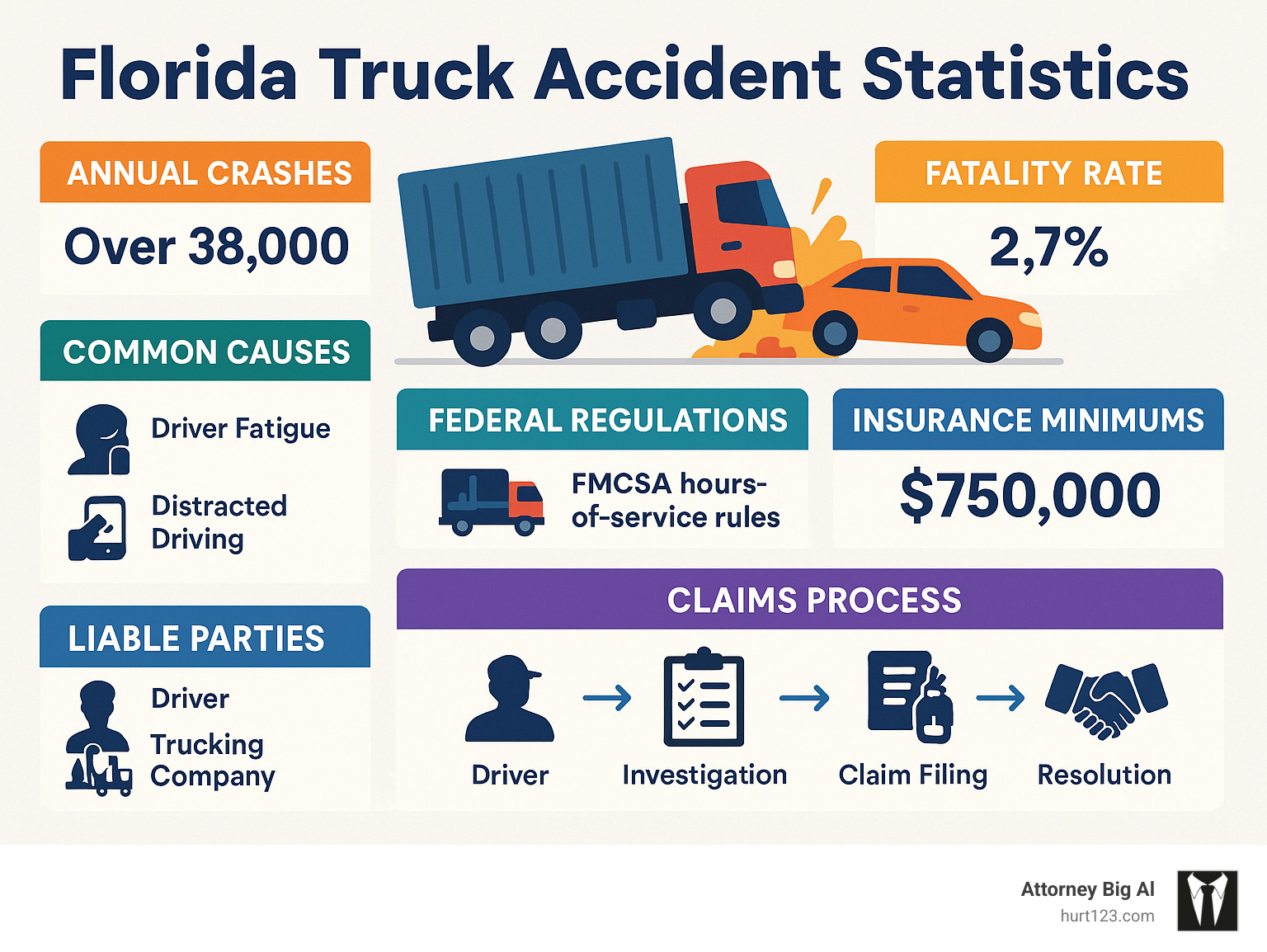
– Higher insurance limits – Trucks must carry at least $750,000 in coverage
– Specialized evidence – Black-box data, electronic logs, and maintenance files
– Vicarious liability – Employers answer for negligent drivers
– Comparative negligence – Your share of fault only reduces, not eliminates, recovery
Florida sees thousands of truck crashes every year, especially near Fort Lauderdale, Hollywood, Miami, Boca Raton, and Sunrise. When an 80,000-pound semi meets a 4,000-pound car, the results are devastating.
Unlike typical car collisions, truck cases involve:
– Layers of federal and state rules
– Several insurance policies
– Severe, long-term injuries
– Corporate defendants with large legal teams
Truck accident injury law terms to know:
– hollywood truck accident attorney
– truck accident attorney florida
– truck accident injury compensation
Fort Lauderdale: How Truck Crashes Differ From Car Wrecks
When you’re driving down I-95 through Fort Lauderdale and see those massive eighteen-wheelers rumbling alongside you, it’s easy to forget just how different these vehicles are from your family car. The reality hits hard when accidents happen – and unfortunately, they happen far too often on our busy South Florida highways.
The numbers tell a sobering story. A fully loaded semi-truck can tip the scales at 80,000 pounds – that’s literally twenty times heavier than your typical passenger vehicle. When physics meets pavement, this weight difference turns even seemingly minor collisions into life-changing events.
Think about stopping distance for a moment. If you’re cruising at 65 mph in your car, you need about 316 feet to come to a complete stop. That loaded truck beside you? It needs 525 feet – nearly two football fields. This massive difference in stopping power explains why so many truck accidents result in catastrophic injuries.
But size isn’t the only factor that makes truck crashes unique. Every commercial truck carries something your car doesn’t – black-box data stored in an Electronic Control Module (ECM). This device records crucial information like speed, braking patterns, and engine performance for up to 30 days before a crash.
Unlike typical fender-benders between two cars, truck accidents often involve multiple defendants. You might be dealing with the truck driver, the trucking company, cargo loading companies, maintenance providers, and even parts manufacturers. Each party potentially carries responsibility – and liability.
The federal insurance minimums reflect this reality. While Florida only requires $10,000 in liability coverage for regular vehicles, commercial trucks must carry at least $750,000. Some carry much more, especially when hauling hazardous materials.
Why Size & Regulation Matter Under Truck Accident Injury Law
Truck accident injury law operates in a completely different world from regular car accident cases. The trucking industry falls under interstate commerce regulations, meaning federal rules govern everything from driver qualifications to vehicle maintenance.
The Federal Motor Carrier Safety Administration sets strict hours-of-service limits. Drivers can only be behind the wheel for 11 hours after taking 10 consecutive hours off duty. These rules exist because driver fatigue contributes to thousands of crashes annually.
But regulations go far beyond driving time. Commercial drivers face stricter blood alcohol limits – 0.04% compared to 0.08% for regular drivers. They must pass physical exams every two years and undergo mandatory drug testing. Daily pre-trip inspections aren’t suggestions – they’re FMCSA rules that carry the force of federal law.
When trucking companies or drivers violate these regulations, they’ve essentially handed you evidence of negligence. A driver who exceeded hours-of-service limits or a company that failed to maintain proper inspection records has violated federal law – making your case significantly stronger.
Hollywood: Pinpointing Fault—Top Causes & Liable Parties
Hollywood’s busy trucking routes witness crashes that often involve multiple causes and multiple responsible parties. When we investigate these accidents, we’re not just looking at what the driver did wrong—we dig deeper to uncover everyone who contributed to your crash.
The Truck Crash Causation Study shows driver actions play a role in 87% of truck crashes, but that’s rarely the whole story.
Driver fatigue remains one of the biggest culprits. We look for altered logbooks, electronic logging device tampering, and text messages from dispatchers that push drivers past legal limits.
When distracted driving is suspected, we pull cell-phone records, GPS data, and in-cab computer logs. Maintenance failure often points to corporate cost-cutting; worn brakes or bald tires are evidence, not accidents.
Cargo overload and cargo shift cases arise when companies ignore weight limits or securement rules, while defective parts can place manufacturers in the chain of liability.
Truck Accident Injury Law & Vicarious Liability in Hollywood
Under vicarious liability, trucking companies are responsible for their drivers’ on-the-job negligence. That matters because individual drivers rarely have assets to cover catastrophic injuries, but their employers carry sizeable policies.
The key question is employment status. Companies often label drivers “independent contractors” to dodge responsibility, yet if they control routes, pay, or schedules, the driver is legally an employee.
Comparative Negligence and Your Percentage of Fault
Florida’s pure comparative negligence rule lets you recover even if you were partly at fault. If your damages are $800,000 and you are 15% responsible, you still collect $680,000. Insurers know the math and will try to inflate your share of fault—we counter with evidence of FMCSA violations.
For more info about personal injury services Attorney Big Al provides representation against corporate defendants and their insurers.
Miami: Truck Accident Injury Law—Key Federal & State Rules You Must Know
Miami sits at the heart of Florida’s shipping industry, with massive commercial trucks constantly moving through our highways carrying cargo to and from the port. These trucks don’t just follow regular traffic laws – they operate under a complex web of federal and state regulations that create unique legal opportunities when crashes occur.
Understanding truck accident injury law means knowing these rules inside and out. When trucking companies or drivers violate these regulations, it strengthens your case significantly.
The Federal Motor Carrier Safety Administration (FMCSA) oversees interstate trucking with strict requirements that simply don’t exist for regular drivers. CDL requirements go far beyond a standard driver’s license – commercial drivers must pass specialized written and road tests, maintain clean driving records, and complete ongoing safety training.
Drug testing protocols are much stricter for truck drivers too. They face mandatory testing before employment, random testing throughout their career, and immediate post-accident testing. The legal blood alcohol limit for commercial drivers is just 0.04% – half the limit for regular drivers.
The hours of service rules are incredibly detailed and frequently violated. Drivers can only drive 11 hours after taking 10 consecutive hours off duty. They must take a 30-minute break within their first 8 hours of driving. After 70 hours of driving in 8 days, they must take 34 consecutive hours off.
Electronic logging devices became mandatory in 2017 specifically because trucking companies and drivers were falsifying paper logbooks. These devices automatically track driving time and make it nearly impossible to hide violations.
For complete details on federal trucking regulations, visit the Federal Motor Carrier Safety Administration website.
Florida adds its own layer of rules that affect your case. The statute of limitations gives you exactly two years from the crash date to file a lawsuit. Miss this deadline, and you lose your right to compensation forever.
Evidence Miami Lawyers Demand After a Crash
Miami truck crashes generate far more evidence than typical car accidents, and much of it disappears quickly if we don’t act fast.
Electronic Control Module downloads are like airplane black boxes for trucks. Every commercial truck built after 1990 has one, and the data it contains can make or break your case. We can see the truck’s exact speed in the seconds before impact, whether the driver hit the brakes, if cruise control was engaged, and even whether the driver was wearing a seatbelt.
Electronic logs have revolutionized truck crash cases since becoming mandatory. These devices connect directly to the truck’s engine and automatically record driving time, making it nearly impossible for drivers to fudge their hours.
Maintenance records tell us whether the truck was properly maintained. Federal law requires detailed pre-trip inspection reports, scheduled maintenance logs, and records of any repairs. When brake systems fail or tires blow out, these records often show the company knew about problems but kept the truck on the road anyway.

Boca Raton: Building Your Case—Critical Evidence & Investigation Timeline
In Boca Raton truck crash cases, the quality and timing of evidence collection often determines case outcomes. Unlike car accidents where liability might be obvious, truck crashes require methodical investigation to uncover all responsible parties and maximize compensation.
Essential evidence categories:
Police reports – While not admissible at trial, these provide the foundation for our investigation. We look for:
– Officer observations about road conditions and weather
– Statements from drivers and witnesses
– Citations issued and violations noted
– Whether post-crash drug/alcohol testing occurred
Medical records – Complete documentation of your injuries establishes damages and proves causation. This includes:
– Emergency room treatment records
– Diagnostic imaging (X-rays, MRIs, CT scans)
– Surgical reports and operative notes
– Physical therapy and rehabilitation records
Preservation of electronic logs – Federal law requires trucking companies to maintain driver logs for only six months unless litigation is pending. We immediately send preservation notices to prevent destruction of:
– Electronic logging device data
– GPS tracking information
– Communication records between driver and dispatch
What to Do Immediately After a Boca Raton Truck Collision
Your actions in the minutes and hours after a truck crash can significantly impact your legal case. Here’s our step-by-step guide:
Immediate priorities:
1. Call 911 – Even if injuries seem minor, you need police documentation and medical evaluation
2. Seek medical care – Adrenaline can mask serious injuries; get checked by paramedics or go to the emergency room
3. Photograph everything – Use your phone to document:
– All vehicle damage from multiple angles
– The truck’s DOT number (usually on the driver’s door)
– Road conditions, traffic signals, and weather
– Your visible injuries
- Exchange information – Collect from the truck driver:
- Full name and commercial driver’s license number
- Trucking company name and contact information
- Insurance carrier and policy numbers
- Truck and trailer license plate numbers
- Avoid statements – Don’t discuss fault or accept blame. Insurance adjusters will use any statements against you later.
Within 24-48 hours:
– Contact us for a free consultation
– Notify your insurance company (but don’t give recorded statements until we advise you)
– Begin a written log of your pain, symptoms, and how injuries affect daily activities
Role of a Specialized Lawyer in Collecting Proof
Truck accident injury law cases require resources and knowledge that general practice attorneys often lack. Here’s how we level the playing field against major trucking companies:
Case strategy development – We analyze all evidence to identify every potentially liable party and theory of recovery. This might include:
– Multiple insurance policies from different companies
– Vicarious liability claims against trucking companies
– Product liability claims against manufacturers
Negotiating with insurers – Commercial truck insurance adjusters are highly trained professionals who handle million-dollar claims daily. They know every trick to minimize payouts. We counter their tactics by:
– Presenting comprehensive demand packages with documentation
– Refusing lowball settlement offers that don’t reflect true damages
– Using our reputation for trial success to encourage fair negotiations

Sunrise: Compensation, Deadlines & Insurance Tactics
When you’re injured in a Sunrise truck crash, understanding what you’re entitled to can feel overwhelming. The trucking industry has deep pockets and teams of lawyers working to minimize what they pay you. But knowing your rights and Florida’s strict deadlines puts you in a stronger position to fight back.
Your compensation falls into three main categories. Economic damages cover your actual financial losses – things like medical bills, lost wages, and property damage. Non-economic damages compensate you for pain, suffering, and how the crash changed your life. Punitive damages are different – Florida only awards these when the truck driver or company acted with extreme recklessness.
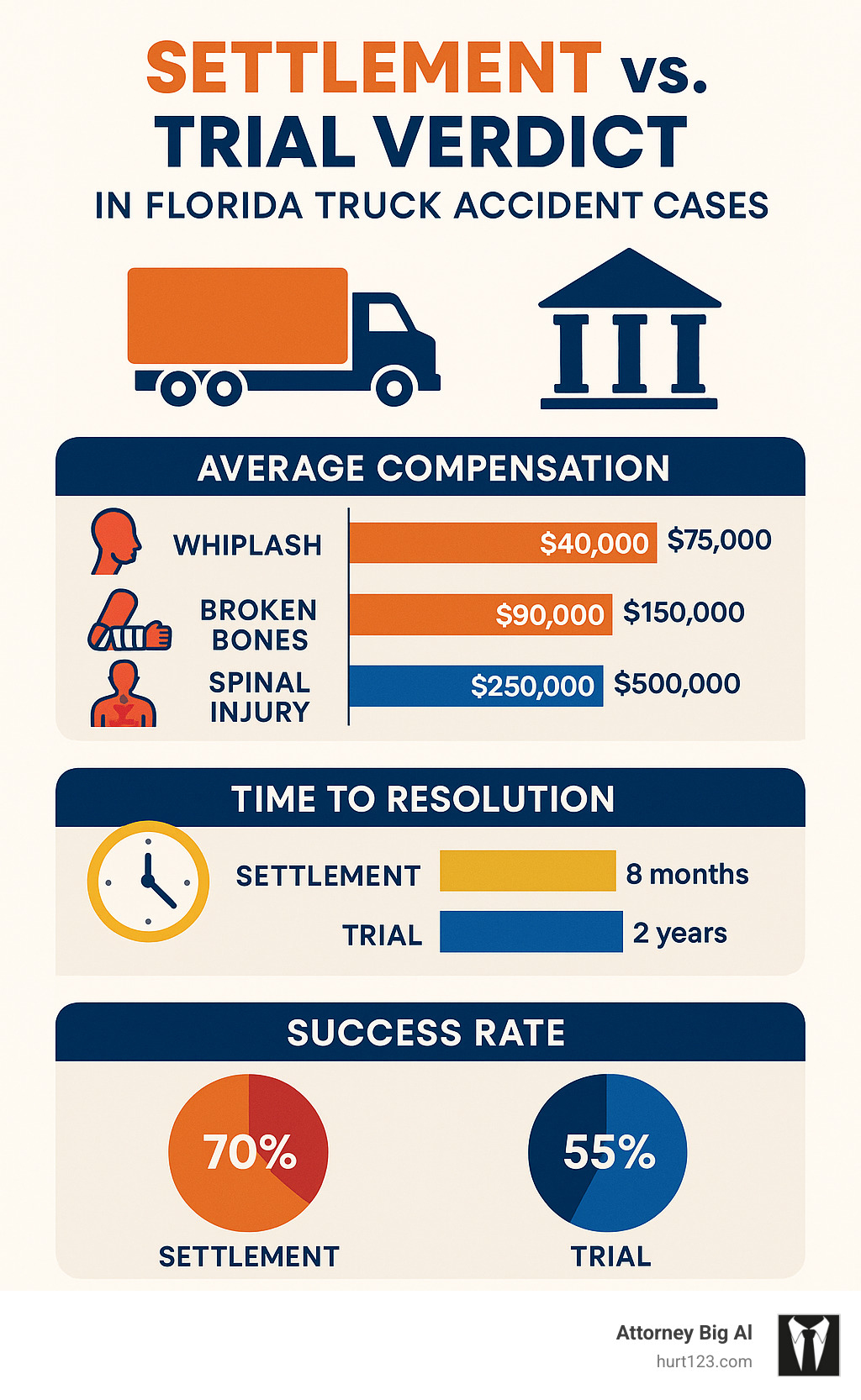
The math behind claim valuation isn’t simple. We don’t just add up your medical bills and call it done. Your lost wages include not just time you’ve already missed, but your reduced earning capacity if you can’t return to your old job. Future medical care costs can run into millions for spinal cord injuries or traumatic brain injuries.
Policy limits matter more in truck cases than car crashes. While Florida only requires $10,000 in car insurance, commercial trucks must carry at least $750,000. Many trucking companies carry $1 million or more.
But here’s the catch: insurance companies use every trick in the book to avoid paying what you deserve. They’ll offer you money right after the crash, hoping you’ll take it before understanding how badly you’re hurt. They’ll deny their driver caused the crash or claim he was driving his own truck, not working for them.
Filing a Sunrise Truck Accident Claim on Time
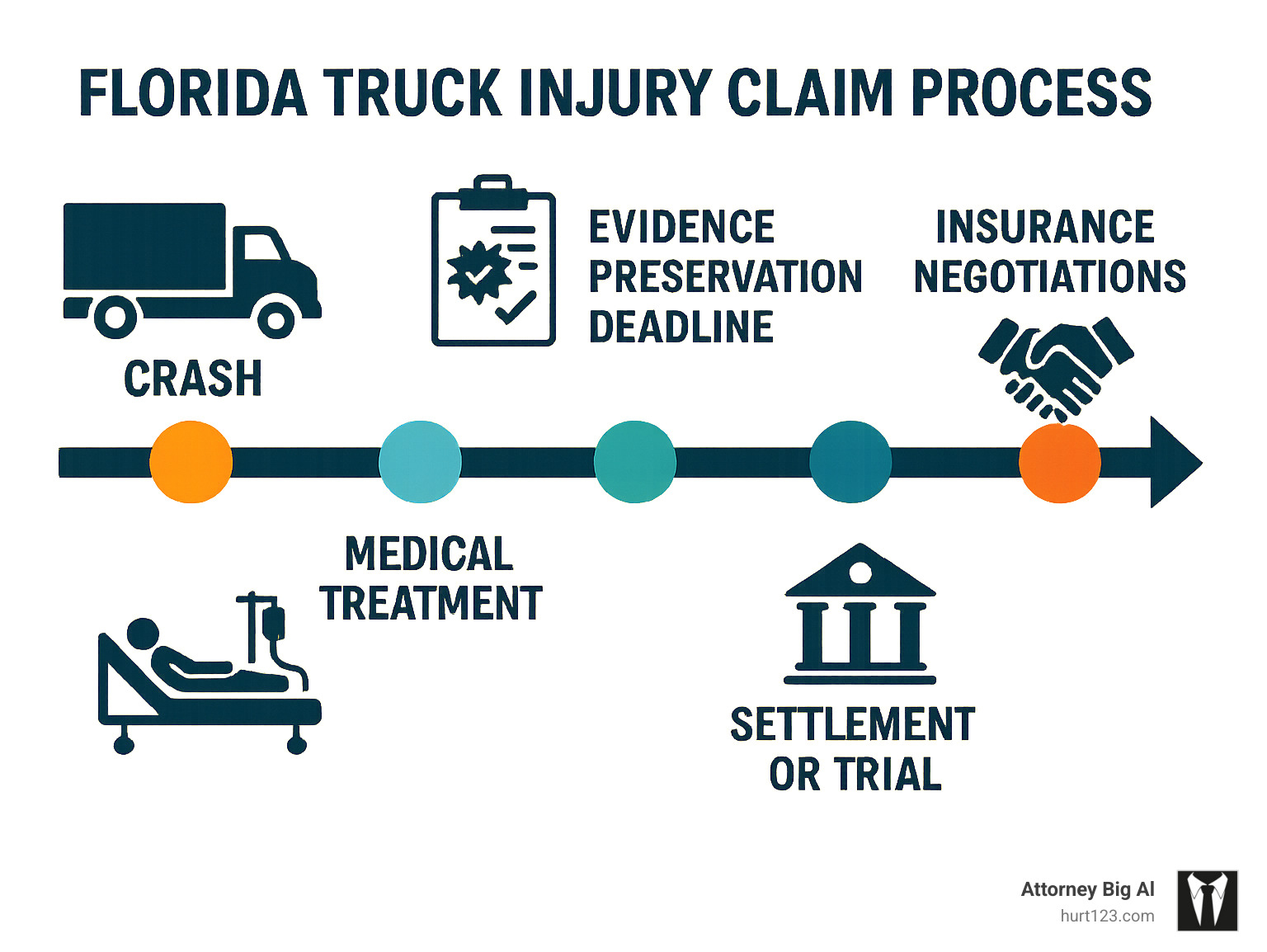
Florida gives you two years from your crash date to file a lawsuit under truck accident injury law. Miss that deadline, and you lose your right to compensation forever. It sounds like plenty of time, but it goes by faster than you think.
The statute clock usually starts ticking on your crash date. But there are exceptions. If you didn’t realize you were injured until later – maybe a herniated disc that didn’t cause symptoms for weeks – the deadline might start when you finded the injury.
Notice letters aren’t always required by law, but sending them early protects your case. These letters tell the trucking company and their insurer that you’re pursuing a claim and they must preserve all evidence.
If we can’t settle your case, lawsuit filing becomes necessary. This means drafting formal court papers, serving them on all defendants, and beginning the findy process where we gather additional evidence.
Negotiating with Powerful Insurance Companies
Commercial truck insurers aren’t like the adjuster who handles your fender-bender claim. These are highly trained professionals who handle million-dollar cases every day. They have one job: pay you as little as possible.
Our demand package tells your story in a way that maximizes your compensation. We include every medical record, every lost wage statement, and reports explaining exactly how the crash happened. We research similar cases to show what juries have awarded for injuries like yours.
Trial readiness gives us the leverage we need in negotiations. Insurance companies know we’re not afraid to take cases to trial, and they adjust their settlement offers accordingly. When they know you’re serious about fighting for fair compensation, they’re more likely to make reasonable offers.
The bottom line is this: trucking companies and their insurers have unlimited resources to fight your claim. You need someone in your corner who understands their tactics and has the resources to fight back.
Frequently Asked Questions about Truck Accident Injury Law in Florida
What makes truck accident injury law different from car accident law?
Truck accident injury law operates in a completely different world than regular car accident cases. When you’re dealing with an 80,000-pound commercial vehicle versus your family sedan, everything changes – from the regulations involved to the severity of injuries.
The biggest difference is federal oversight. Commercial trucks must follow strict Federal Motor Carrier Safety Administration (FMCSA) rules that simply don’t exist for regular drivers. Truck drivers can only work specific hours before taking mandatory rest breaks. They must pass rigorous drug tests with lower alcohol limits than regular drivers.
Multiple parties get involved in ways you’d never see in a typical fender-bender. While car accidents usually involve two drivers and their insurance companies, truck crashes can pull in the driver, trucking company, cargo loaders, maintenance shops, parts manufacturers, and freight brokers.
The financial stakes are much higher too. Florida only requires $10,000 in liability coverage for cars, but commercial trucks must carry at least $750,000 – and many carry millions in coverage.
Who can be held liable besides the truck driver?
Here’s where truck accident injury law gets interesting – and potentially more valuable for injured victims. The truck driver might have caused the crash, but they’re often just one piece of a larger puzzle of corporate responsibility.
Trucking companies face liability in multiple ways. They’re responsible for hiring qualified drivers, providing proper training, and maintaining their vehicles. Under vicarious liability rules, they’re also on the hook for their drivers’ negligent actions during work hours.
Cargo loading companies can be liable when improperly loaded or unsecured freight shifts during transport, causing the driver to lose control. Maintenance providers who service the trucks become liable when mechanical failures contribute to crashes.
Parts manufacturers face product liability claims when defective components cause crashes. Faulty brakes, defective tires, or malfunctioning coupling systems can all lead to manufacturer liability.
How does comparative negligence affect my compensation?
Florida’s comparative negligence system can be confusing, but it’s actually more favorable to injured victims than many other states. Under our pure comparative negligence rule, you can recover compensation even if you were partially at fault for the crash.
Here’s how it works in practice: Let’s say a jury determines your total damages are $1 million, but finds you were 30% responsible because you were speeding when the truck ran a red light. You’d still receive $700,000 – your total damages minus your percentage of fault.
Insurance companies will try everything to shift blame onto you. They’ll claim you were following too closely, distracted by your phone, or failed to yield right of way.
Our job is fighting back with evidence showing the truck driver’s violations were the primary cause. When a commercial driver violates federal hours-of-service rules and causes a crash due to fatigue, that typically outweighs minor traffic violations by other drivers.
Conclusion
When a massive commercial truck collides with your passenger vehicle on the highways around Fort Lauderdale, Hollywood, Miami, Boca Raton, or Sunrise, your world changes in an instant. Truck accident injury law governs these complex cases where federal regulations meet devastating injuries, and where trucking companies deploy teams of lawyers to protect their interests.
A fully loaded semi-truck can weigh 80,000 pounds; your car, about 4,000. The injuries we see—spinal cord damage, traumatic brain injuries, amputations—are life-altering.
Many people don’t realize they’re facing a sophisticated industry built around minimizing payouts. Carrier investigators are often on scene before you leave the hospital.
Your claim is about far more than today’s medical bills. It must include decades of future care, lost earning capacity, and the impact on your quality of life. Florida’s two-year deadline and the rapid disappearance of electronic data make fast action critical.
At Attorney Big Al we level the playing field with the resources to hire reconstruction specialists, medical experts, and economists. We work on a contingency fee basis—no fee unless we win.
For more info about truck accident representation contact us today for a free consultation.