

What Does Constructive Knowledge Mean in a Florida Fall Case?
If you slipped and fell inside a Florida business, you may have heard the term "constructive knowledge" and wondered what it means for your claim. Under Florida Statute §768.0755, an injured person must prove the business had actual or constructive knowledge of the dangerous condition that caused the fall. Constructive knowledge means the business should have known about the danger based on the circumstances, even without directly seeing the hazard. Understanding this legal concept is critical for building a strong Florida premises liability claim.
If you were hurt in a fall and need guidance on your legal options, Attorney Big Al at 1-800-HURT-123 is ready to help. Call 1-800-487-8123 or reach out online today to discuss your case.
How Florida Law Defines Constructive Knowledge in Premises Liability
Constructive knowledge is a legal standard that holds a business accountable for hazards it should have discovered through reasonable diligence. Under Section 768.0755(1), an injured person must prove the business had actual or constructive knowledge of the dangerous condition and should have taken action to remedy it. This statute governs slip and fall cases involving transitory foreign substances, such as spilled liquids, food debris, or tracked-in rainwater.
Florida law outlines two primary ways to establish constructive knowledge. First, under Section 768.0755(1)(a), you may show the dangerous condition existed long enough that, in the exercise of ordinary care, the business should have known about it. Second, under Section 768.0755(1)(b), you may demonstrate the condition occurred with regularity and was therefore foreseeable. Either path can satisfy the requirement, but both demand supporting evidence.
💡 Pro Tip: After a fall, document everything immediately. Take photos of the hazard, your injuries, and the surrounding area. Ask for a copy of the incident report and note witness names. This evidence can be critical to proving constructive knowledge later.
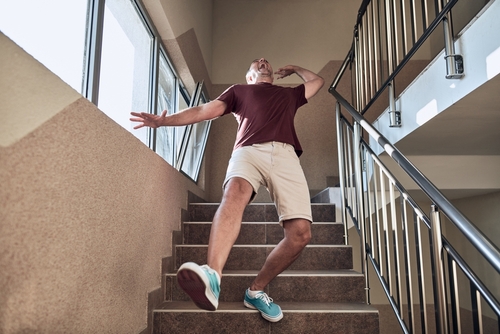
The Two Paths to Proving Constructive Knowledge Under Florida Slip and Fall Law
Duration of the Hazard
One common way to prove constructive knowledge is showing the dangerous condition existed long enough for the business to have discovered it. Courts look at circumstantial evidence such as the substance’s appearance, foot traffic patterns, and employee behavior in the area. There is no specific minimum time a hazard must exist before constructive knowledge applies. Instead, courts evaluate the totality of the circumstances.
Foreseeability Through Regularity
A second method focuses on whether the hazardous condition happened repeatedly, making it foreseeable. For example, if a grocery store entrance regularly becomes slippery during rainstorms and the store fails to place mats or warning signs, a court may find the business had constructive knowledge of the recurring danger. This path is useful when the exact moment the hazard appeared is unknown.
| Method | What You Must Show | Statutory Basis |
|---|---|---|
| Duration of the hazard | The condition existed long enough that ordinary care would have revealed it | §768.0755(1)(a) |
| Regularity and foreseeability | The condition occurred with regularity and was therefore foreseeable | §768.0755(1)(b) |
💡 Pro Tip: If you fell near a store entrance on a rainy day, check whether the business had floor mats, caution signs, or employees monitoring wet conditions. The absence of these precautions may support a constructive knowledge argument.
A Real-World Example: When a Court Found Enough Evidence
A federal court case in South Florida illustrates how constructive knowledge arguments work in practice. In Avila Andrade v. Wal‑Mart Stores East, LP (Case No. 1:2022cv23488, S.D. Fla.), Judge Kathleen M. Williams granted Wal‑Mart’s motion for summary judgment on October 17, 2023. You can review the court’s order in that case for detailed analysis.
A separate case styled Thompson v. Wal‑Mart Stores East, L.P. (Case No. 0:2020cv61907, S.D. Fla.) resulted in a denial of summary judgment on January 6, 2022, illustrating that outcomes can differ depending on the specific facts and evidence presented.
This illustrates that courts may reach different conclusions on whether circumstantial evidence is sufficient to create a triable issue of fact. Circumstantial evidence, such as surveillance footage, foot traffic patterns, or employee inspection practices, can in some cases be enough to move a case forward, while in others courts have concluded summary judgment is appropriate. For anyone pursuing a slip and fall claim in Florida, these cases demonstrate how constructive knowledge standards can produce different results in real litigation.
💡 Pro Tip: Surveillance footage is often the strongest evidence in a constructive knowledge case. Request that the business preserve video recordings immediately after your fall, because many systems overwrite footage within days.
Common Defenses Businesses Use Against Constructive Knowledge Claims
Property owners and their insurers frequently raise the "lack of notice" defense to defeat constructive knowledge arguments. The business claims it was not aware of the dangerous condition and did not have reasonable opportunity to discover or remedy it. If the hazard appeared moments before the fall and no employee was nearby, this defense may carry weight.
Florida now follows modified comparative negligence under HB 837 (effective March 24, 2023), which can reduce or bar your recovery even when constructive knowledge is established. If the business argues you were partially at fault, perhaps for looking at your phone or ignoring a visible warning sign, the court may reduce your compensation by your percentage of blame. Critically, if you are found more than 50 percent at fault, you are barred from recovering any damages. Understanding how to minimize your assigned comparative fault is key to proving negligence in a Florida fall case.
- The business may argue the spill occurred seconds before your fall with no time to respond.
- The defense may claim you failed to watch where you were walking or ignored posted warnings.
- The property owner may contend the hazard was "open and obvious" and you should have avoided it.
Why Hiring a Slip and Fall Attorney in Florida Matters
Proving constructive knowledge requires thorough investigation and strategic evidence gathering. You may need surveillance footage, employee schedules, maintenance logs, weather reports, and witness testimony to build a compelling case. A slip and fall lawyer in Hollywood, FL with premises liability experience understands how to gather and present this evidence effectively.
An attorney can also help you navigate the broader framework of Florida premises liability law. Section 768.0755(2) preserves any common-law duty of care owed by a person or entity in possession or control of business premises. This means the statute does not limit other premises liability obligations beyond transitory foreign substance cases. Chapter 768 Part I also includes provisions addressing limitations on premises liability and immunity related to trespassers, which may affect your claim.
💡 Pro Tip: Keep a detailed journal of your medical treatment, pain levels, and how your injuries affect daily life. This record strengthens your damages claim and helps your attorney calculate the compensation you deserve.
What a Slip and Fall Attorney in Florida Can Do for Your Case
A dedicated Florida fall injury attorney handles the legal burden so you can focus on recovery. From preserving critical evidence to negotiating with insurance adjusters, legal representation can make a significant difference in your case outcome. Many injury attorneys work on contingency, meaning you generally pay nothing unless your case results in a recovery.
How Common-Law Duties Expand Protections for Injured Visitors
Florida Statute §768.0755 is not the only source of legal protection for people injured on business premises. The statute explicitly states it does not affect any common-law duty of care owed by a person or entity in possession or control of business premises. This means even if your case does not fit the transitory foreign substance framework, other negligence theories rooted in common law may still apply.
- Property owners generally owe invitees a duty to maintain reasonably safe conditions.
- Failure to warn of known hazards or conduct reasonable inspections may constitute a breach of duty.
- Common-law claims can supplement statutory claims, broadening legal avenues available to injured persons.
💡 Pro Tip: If you are unsure whether your fall involved a "transitory foreign substance" or another hazard type, consult a slip and fall attorney in Florida who can identify every viable legal theory for your situation.
Frequently Asked Questions
1. What is the difference between actual knowledge and constructive knowledge in a Florida slip and fall case?
Actual knowledge means the business knew about the hazard, often through direct evidence like an employee report. Constructive knowledge means the business should have known because the hazard existed long enough to be discovered through ordinary care, or occurred with regularity and was foreseeable.
2. How long does a hazard need to exist before constructive knowledge applies?
Florida courts have not established a fixed minimum time requirement. The determination depends on the totality of circumstances, including the hazard’s nature, foot traffic, employee presence, and weather conditions.
3. Can I still recover compensation if I was partially at fault for my fall?
Under Florida’s modified comparative negligence system (effective March 24, 2023), you may still recover if you are 50 percent or less at fault, but your award will be reduced by your percentage of fault. If you are found more than 50 percent at fault, you are barred from recovering any damages.
4. What evidence helps prove constructive knowledge in a slip and fall case?
Helpful evidence includes surveillance video, photos of the hazard, witness statements, employee schedules, maintenance logs, and weather records. Any evidence showing the business failed to inspect or address a known or foreseeable hazard supports a constructive knowledge argument.
5. Does Florida Statute §768.0755 apply to all premises liability cases?
No, this statute specifically addresses transitory foreign substances in business establishments. However, Section 768.0755(2) preserves common-law duties of care, meaning other premises liability claims may proceed under different legal theories.
Protecting Your Rights After a Slip and Fall in Florida
Constructive knowledge is often the central issue in Florida slip and fall cases, and understanding how it works helps you evaluate your claim’s strength. Whether the hazard existed long enough to be discovered or occurred with regularity, the law provides a framework for holding businesses accountable for preventable injuries. Every case depends on specific facts, so gathering evidence early and understanding your legal options are critical.
Attorney Big Al at 1-800-HURT-123 has a proven track record advocating for fall injury victims throughout Florida. If you or a loved one suffered injuries in a slip and fall, call 1-800-487-8123 or contact us now to discuss your case and learn how we may help you pursue the compensation you deserve.
