

What is personal injury claim: Your 4-Step Guide
What You Need to Know About Personal Injury Claims
What is personal injury claim – it’s a legal request for compensation when someone suffers harm due to another person’s negligence or intentional actions. Personal injury claims allow victims to seek financial recovery for medical expenses, lost wages, pain and suffering, and other damages through negotiations with insurance companies or court proceedings.
Quick Answer:
- Legal Definition: A civil action seeking compensation for harm to body, mind, or emotions
- Purpose: To recover financial losses and hold responsible parties accountable
- Process: Starts with filing a claim, may escalate to a lawsuit if settlement fails
- Damages: Can include medical bills, lost income, pain and suffering, and property damage
- Time Limit: Must be filed within Florida’s statute of limitations (typically 2-4 years)
If you’ve been injured in Fort Lauderdale, Hollywood, Miami, Boca Raton, or Sunrise, you’re likely facing medical bills and wondering about your legal options. Personal injury law protects victims from financial hardship caused by another’s careless or intentional actions.
Personal injury claims cover harm to your body, emotions, or reputation, not just property damage. This legal framework allows you to seek compensation when another party’s breach of their duty of care causes you harm. Whether it’s a car accident, a slip and fall, or medical malpractice, understanding your rights is the first step toward recovery.
The process usually starts with an insurance claim but can escalate to a lawsuit if a fair settlement isn’t reached. With car accidents making up 52% of the over 400,000 personal injury claims filed annually in the U.S., knowing how to steer this process is crucial.
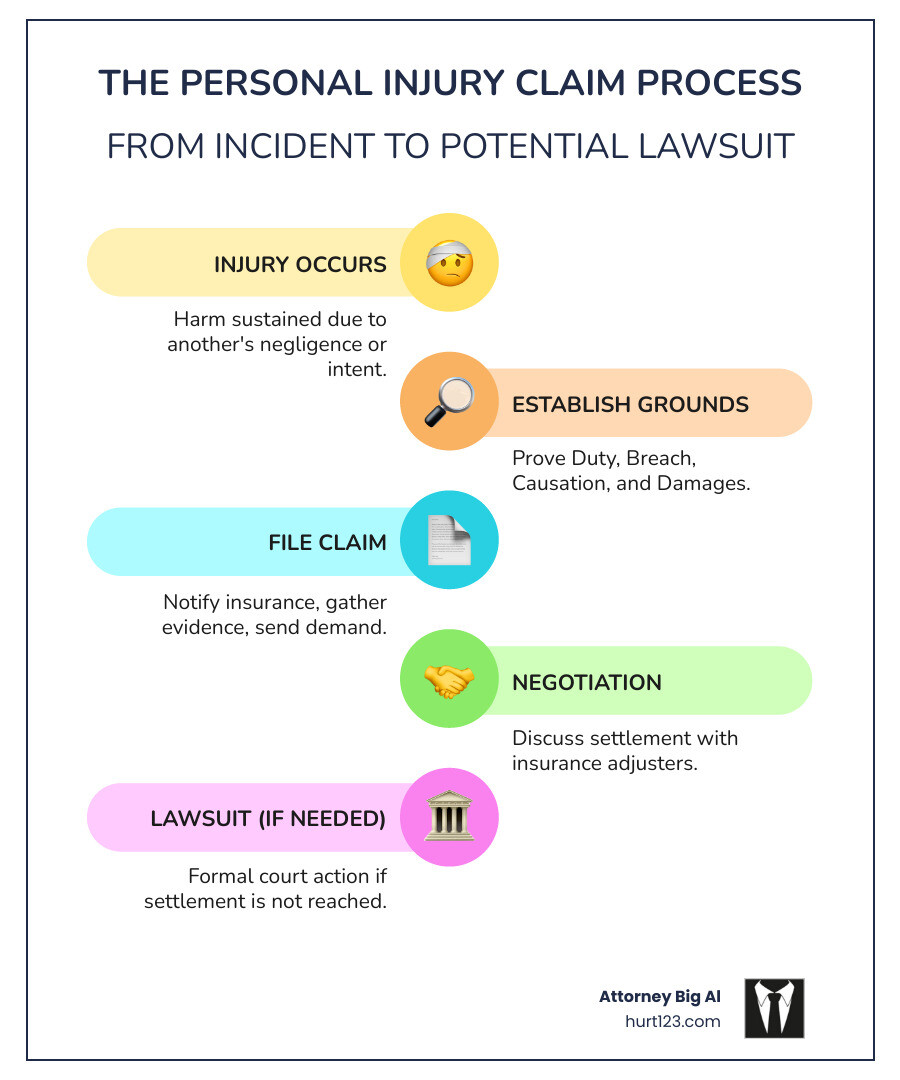
Common What is personal injury claim vocab:
- How are settlements calculated
- Should I accept settlement offer
- Are attorney consultations confidential
Understanding the Legal Grounds: What is a Personal Injury Claim?
A personal injury claim is a formal legal request for compensation when you’ve been hurt—physically, emotionally, or reputationally—because of someone else’s wrongful actions. It’s a civil lawsuit where the injured person (the plaintiff) seeks money for their losses.
This wrongful conduct falls into a few main categories:
| Type of Wrongful Conduct | Description | Example |
|---|---|---|
| Negligence | Failing to act with ordinary care, leading to injury. It’s the most common basis for personal injury claims. | A distracted driver causing a car accident. |
| Strict Liability | Responsibility for harm is presumed due to the nature of the activity or product, regardless of carelessness. | A company being liable for injuries from a faulty product. In Florida, dog owners are often strictly liable for bites. |
| Intentional Wrongs | Deliberate acts meant to cause harm. | Physically assaulting someone (battery), threatening harm (assault), or spreading false, damaging information (defamation). |
What is a personal injury claim versus a bodily injury claim?
While related, “personal injury” and “bodily injury” have key legal differences.
Bodily injury refers strictly to physical harm, like broken bones or whiplash. It’s a common term in insurance policies, covering medical bills and lost wages from physical injuries.
Personal injury is a broader legal term covering any harm an individual suffers, not just physical. A personal injury claim can seek compensation for:
- Physical harm (bodily injury).
- Mental or emotional distress, like anxiety or PTSD from the accident.
- Damage to your reputation, such as from false statements.
In short, every bodily injury is a personal injury, but not all personal injuries are bodily injuries. This distinction is important because it affects the types of compensation you can seek, as a personal injury case can include damages for pain and suffering.
The Four Elements of Negligence in a Fort Lauderdale Claim
Since negligence is central to most personal injury claims, understanding its four elements is crucial. To prove negligence in a Fort Lauderdale claim, we must show each element is “more likely than not” true, known as proving by a “preponderance of the evidence.”
- Duty of Care: The defendant had a legal obligation to act reasonably to prevent harm to you. For example, drivers have a duty to drive safely.
- Breach of Duty: The defendant failed to meet that duty of care, acting carelessly or recklessly. For example, a driver speeding or a store owner ignoring a spill.
- Causation: The defendant’s breach of duty must have directly caused your injuries. If a driver runs a red light and hits you, their action directly caused your injury.
- Damages: You must have suffered actual harm or losses that can be compensated with money. This includes financial losses like medical bills and non-economic losses like pain and suffering. Without provable damages, there is no claim.
Common Causes of Personal Injury Claims in South Florida
South Florida’s busy highways and tourist destinations present unique risks. When accidents happen, understanding if you have a valid personal injury claim is key to your recovery.
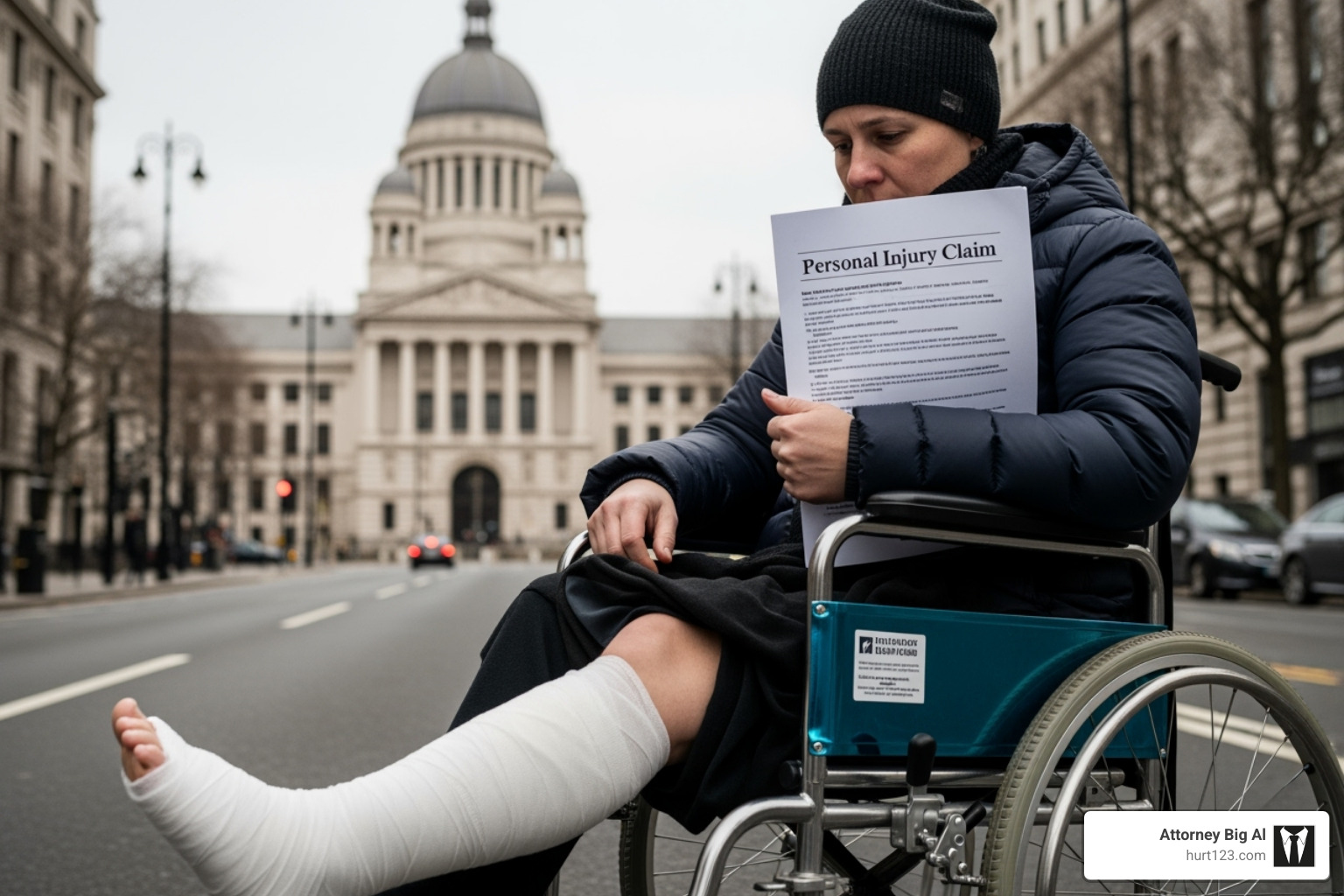
Car accidents are the most common personal injury case, making up over half of all claims. Florida’s busy interstates see many crashes from distracted driving, speeding, and aggressive behavior. These accidents often cause significant injuries and financial hardship. A car accident lawyer can help you steer the complex insurance claims process.
Truck accidents are especially dangerous. Collisions with an 80,000-pound commercial truck are often devastating. These cases require investigation into federal trucking regulations, driver logs, and vehicle maintenance. A truck accident lawyer understands the unique challenges these cases present.
Medical malpractice accounts for about 15% of personal injury claims. When healthcare providers fail to meet accepted standards of care, patients suffer from issues like misdiagnosis, surgical errors, or medication mistakes. A medical malpractice lawyer can help determine if your treatment fell below acceptable standards.
Premises liability cases occur when property owners fail to keep their property safe. In Florida, slip and fall accidents are common in hotels and restaurants. Negligent security is another concern where inadequate safety measures lead to injuries from criminal acts.
Defective products cause about 5% of personal injury claims. Manufacturers must ensure their products are safe. When they fail, consumers get hurt.
Dog bites are relevant in Florida due to strict liability laws for owners. If a dog bites you, the owner is typically responsible. A dog bite lawyer can explain your rights under Florida law.
Wrongful death is the most tragic outcome. When negligence causes a death, surviving family members may have a wrongful death claim. A wrongful death lawyer can help families seek justice.
Each of these situations can be life-altering. Florida law provides a path to seek compensation when another’s negligence causes you harm. Understanding what a personal injury claim is is the first step to protecting your rights.
The Path to Compensation: From Claim to Lawsuit
Seeking compensation after an injury can seem daunting. We are here to guide you through the entire process, from the initial claim to a potential lawsuit.

Initial Steps
Your health is the priority. Seek immediate medical attention, even if you don’t feel pain. This creates an official record of your injuries, which is vital evidence for your personal injury claim.
Next, report the incident. This could be a police report for a car accident, an incident report at a business, or a notification to your employer. Official reports help document what happened.
Evidence and Documentation
A strong personal injury claim relies on thorough evidence collection. We will help you gather key documents. Medical records are critical, including bills, diagnoses, and treatment plans. They show the full extent and cost of your injuries.
Police or incident reports provide official details about the event. Witness statements provide invaluable support. Photos or videos from the scene are also crucial, including images of property damage, injuries, and hazardous conditions.
Filing the Claim
Once we understand the facts, we will start your personal injury claim. We contact the at-fault party’s insurer and send a formal demand letter. This letter outlines the accident details, your injuries, and the compensation you are owed.
Negotiation Process
After sending the demand letter, we negotiate with the insurance adjuster. The insurance adjuster works for the insurance company, not you. Their goal is to settle for the lowest amount possible.
Insurance companies often make a low initial settlement offer. We analyze any offer, present strong counteroffers with supporting evidence, and negotiate for fair compensation that reflects your losses.
Escalating to a Lawsuit
Most personal injury claims settle through negotiation. If a fair settlement isn’t reached, we may advise escalating the claim to a formal lawsuit.
If the insurer refuses a reasonable settlement or denies liability, a lawsuit becomes necessary. The first step is filing a complaint with the civil court, which outlines the case facts, legal grounds, and damages sought.
Next is the findy process, a formal exchange of information including written questions (interrogatories), document requests, and depositions (sworn testimony). If no settlement is reached, the case proceeds to trial.
What is the difference between a personal injury claim and a personal injury lawsuit?
A personal injury claim is the initial, informal pre-litigation process of seeking compensation, usually through negotiation with an insurer. It’s typically quicker, less formal, less costly, and private if settled.
A personal injury lawsuit is a formal legal action filed in civil court when a claim doesn’t resolve satisfactorily. Lawsuits are more complex, time-consuming, and costly, involving formal procedures like findy and a potential trial. The outcome is public, but lawsuits can lead to higher compensation when an insurer won’t negotiate fairly.
How can a personal injury lawyer in Hollywood, Florida help?
Navigating a personal injury claim or lawsuit is overwhelming while recovering. A personal injury lawyer in Hollywood, Florida provides invaluable support:
We conduct a thorough investigation and evidence gathering, collecting police reports, medical records, and witness statements to identify all responsible parties.
We accurately value the claim by assessing all damages, including medical expenses, lost wages, and pain and suffering, to seek comprehensive compensation.
We handle all negotiations with insurers, protecting you from lowball offers and tactics used to minimize your claim.
If a fair settlement isn’t reached, we are prepared to file a lawsuit and represent you in court. We have the resources to challenge major insurance companies and fight for the compensation you deserve.
Our goal is to let you focus on recovery while we handle the legal work.
How a Personal Injury Lawyer Can Help
Frequently Asked Questions about Florida Personal Injury Claims
After an injury, it’s natural to have questions and feel overwhelmed. Here, we answer common questions about personal injury claims in Florida to clarify your path forward.
What types of damages can I recover in a Boca Raton personal injury case?
In a personal injury claim, “damages” refer to the financial compensation for your losses. Damages fall into a few key categories.
Economic damages are tangible, calculable expenses. This includes medical bills (past and future), lost wages, loss of future earning capacity, and property damage.
Non-economic damages are subjective, covering less tangible impacts. This includes pain and suffering (physical and emotional distress), emotional distress (anxiety, PTSD), and loss of enjoyment of life. Though harder to calculate, these are very real losses.
Punitive damages are rare. They are not to compensate you, but to punish the at-fault party for outrageous or intentional misconduct and to deter others. They are awarded only in severe cases in Florida.
What is the statute of limitations for filing a personal injury claim in Florida?
The statute of limitations is a strict deadline for filing a lawsuit. If you miss it, you typically lose your right to seek compensation, regardless of your case’s strength.
For most negligence-based personal injury claims in Florida (like a car accident in Fort Lauderdale), you have two years from the incident date to file a lawsuit.
Exceptions exist. The “Findy Rule” may apply if an injury isn’t immediately obvious, starting the clock when the injury was or should have been finded. For wrongful death claims, the two-year limit starts from the date of death. Claims against government entities have much shorter notice requirements.
Given these strict deadlines, it’s incredibly important to act quickly. Contacting us soon after an injury in Sunrise or anywhere in South Florida allows us to investigate and meet all crucial legal deadlines.
What if the at-fault party has no insurance?
It’s frustrating when an at-fault party has no or insufficient insurance. However, this doesn’t mean you are out of options.
Your own Uninsured/Underinsured Motorist (UM/UIM) coverage is often your best protection. This coverage applies when the at-fault driver has no insurance (uninsured) or not enough (underinsured). We can help you file a claim with your own insurer.
Another option is suing the individual directly if they have significant personal assets. We can conduct an asset search to see if this is a viable path, though collecting can be difficult if they have few assets.
We also identify other liable parties. For example, an employer could be responsible if the at-fault driver was working. A manufacturer could be liable for a defective part. A bar could be liable under dram shop laws for over-serving a driver.
Our job is to investigate every detail to uncover all potential sources of compensation. We explore every avenue to help you secure the recovery you deserve.
Securing Your Rights After an Injury in Sunrise
A personal injury can turn your world upside down with physical pain, emotional distress, medical bills, and lost wages. Understanding a personal injury claim and the legal process is the first step toward reclaiming your life.

Navigating an injury’s aftermath requires action. Prioritize your health by seeking immediate medical care, which also documents your injuries. Diligently document everything, including medical records, police reports, and photos. Remember Florida’s two-year statute of limitations for most cases—acting quickly is key.
Dealing with insurance companies is an uphill battle. They have vast resources and aim to settle for as little as possible. This is where dedicated legal guidance is crucial. At Attorney Big Al, we level the playing field. We have the resources to challenge large insurance companies and fight for the fair compensation you deserve.
We believe in providing dedicated, professional service to every client. If you’ve been injured in an accident in Boca Raton, Hollywood, Fort Lauderdale, Miami, Pembroke Pines, Sunrise, or West Palm Beach, Florida, please don’t try to steer this complex journey alone. We are here to help you understand your options and secure your rights.
Contact a Fort Lauderdale car accident lawyer for a free consultation
