
Understanding Your Options After a Phantom Vehicle Crash in Florida
Key Takeaways: Yes, no-contact car accident victims in Florida can often recover damages even when the at-fault "phantom" driver is never identified. Recovery flows through your own insurance: PIP covers medical expenses regardless of fault, while uninsured motorist (UM) coverage addresses damages beyond medical bills, including pain and suffering when a statutory injury threshold is met. Success depends on independent evidence like witness statements, dashcam footage, and a prompt police report establishing that a phantom vehicle caused the crash. Florida’s modified comparative negligence system bars recovery if you are more than 50 percent at fault. A strict two-year deadline applies to negligence claims, and your policy may require even earlier notice, so acting quickly protects both your lawsuit rights and coverage.
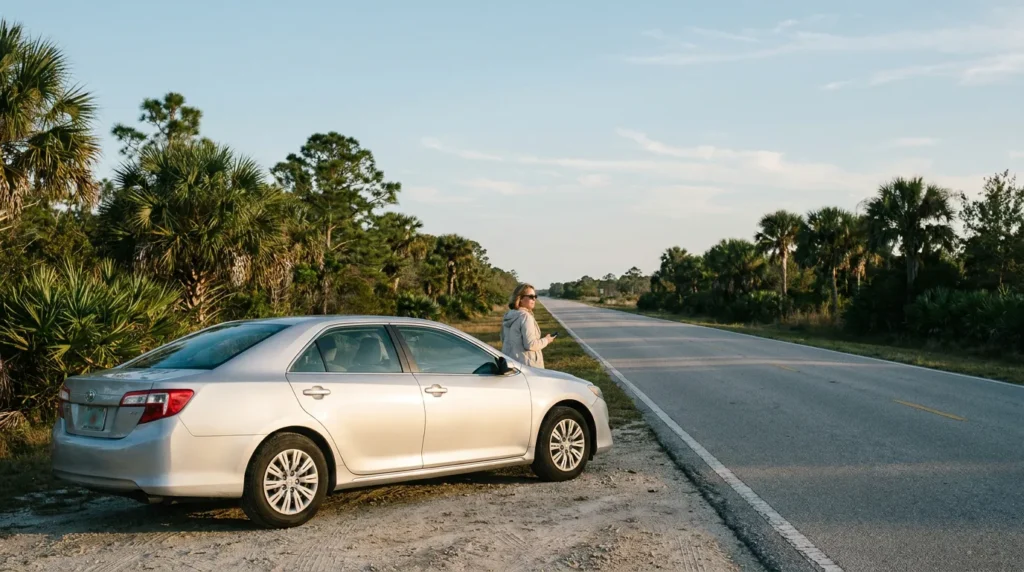
Yes, a no-contact car accident victim can often recover damages in Florida, even when the driver who caused the crash is never identified. A "no-contact" or phantom vehicle accident happens when another driver forces you off the road or triggers a wreck without touching your vehicle, then flees. While these cases feel hopeless without a defendant to sue, Florida’s insurance framework provides real paths to compensation through your own coverage.
If you were hurt in a no contact car accident and want to understand your rights, reach out to Attorney Big Al at 1-800-HURT-123 today. Call our team at 1-800-487-8123 or send us the details through our online case review form to learn how Florida law may protect you.
What Counts as a No-Contact Car Accident in Florida?
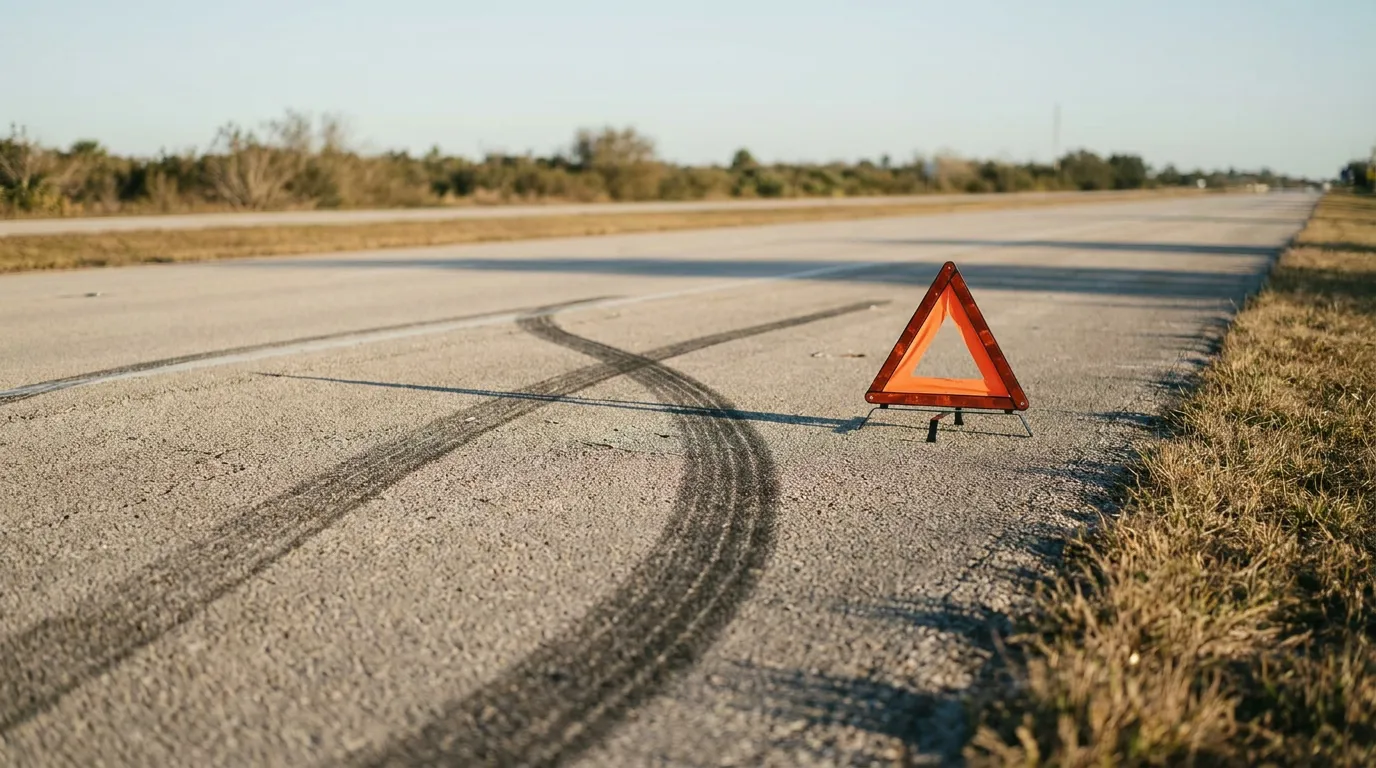
A no-contact car accident occurs when another motorist causes your crash without any physical contact between vehicles. Common examples include a driver drifting into your lane, forcing you into a guardrail, or cutting you off so you swerve and collide with a fixed object. Because the at-fault motorist never touches you and often disappears, these are called phantom vehicle accidents or "miss and run" wrecks.
These crashes create a proof problem that ordinary collisions do not. Since the phantom driver is unidentified, you generally cannot file a standard liability claim against that person. Instead, recovery depends on your own policy and on documenting that a phantom vehicle actually caused the wreck. Because no physical contact occurs, Florida law and most policies require corroboration by independent evidence such as witness statements, dashcam footage, or a prompt police report.
💡 Pro Tip: If a phantom driver runs you off the road, call 911 immediately and ask that responding officers document the other vehicle. Insurers often require independent evidence beyond your own account before paying a no-contact claim.
How No Contact Car Accident Victims Recover Damages
Most no contact car accident victims in Florida recover through their own auto insurance rather than through a lawsuit against a stranger. Two coverages typically drive these claims: personal injury protection (PIP) and uninsured/underinsured motorist coverage (UM). Understanding how they work together helps you set realistic expectations.
PIP Benefits as Your First Line of Recovery
PIP coverage pays your medical expenses regardless of who caused the crash, making it a first resource for a phantom vehicle victim. Under Florida’s no-fault system, PIP pays 80 percent of reasonable and necessary medical expenses, generally up to a $10,000 limit when initial care is sought within 14 days of the crash. Failing to maintain this coverage carries consequences: the state may suspend your driver license and vehicle registration under Fla. Stat. § 627.7407(5)(b).
Timing matters when you seek treatment. When an insurer receives notice of an accident potentially covered by PIP, it must reserve $5,000 of benefits for 30 days to pay physicians, dentists, or hospitals providing emergency or inpatient care under Fla. Stat. § 627.736(4)(c). Prompt medical attention protects both your health and your PIP benefits Florida claim.
Uninsured Motorist Coverage When the At-Fault Driver Vanishes
Uninsured motorist coverage is the mechanism that most often allows a phantom vehicle victim to recover beyond medical bills. Florida law requires insurers to include UM coverage in auto liability policies unless the insured rejects it in writing, for insured persons legally entitled to recover damages from owners or operators of uninsured motor vehicles under Fla. Stat. § 627.727(1). A phantom driver is treated as uninsured because they cannot be identified. You can review the governing insurance provisions in Florida’s motor vehicle insurance chapter.
UM coverage fills the gap between benefits you already received and the damages you actually sustained. It stacks over and above PIP, covers the difference between those benefits and your total damages up to your policy limits, and cannot be reduced by a setoff against liability insurance under Fla. Stat. § 627.727(1).
One limitation deserves special attention for non-economic damages. Under Fla. Stat. § 627.727(7), a UM insurer’s liability does not include tort damages for pain, suffering, mental anguish, and inconvenience unless your injury meets a statutory threshold described in s. 627.737(2). A no-contact victim generally must show a qualifying injury, such as significant and permanent loss of an important bodily function, to recover for pain and suffering.
Damages You May Be Able to Pursue
Florida law recognizes several categories of recoverable losses in a negligence-based crash claim. Economic damages generally include past and future lost income, medical and funeral expenses, lost support and services, and other economic losses under Fla. Stat. § 768.81.
Below is a general overview of how these damages typically map onto no-contact recovery:
- Medical expenses: Emergency care, hospitalization, and ongoing treatment, often addressed first through PIP and then UM coverage.
- Lost income: Past wages and future earning capacity reduced to present value.
- Pain and suffering: Non-economic damages available through UM only when the statutory injury threshold is met.
- Lost support and services: Household contributions and other losses tied to the injury.
Every claim turns on its specific facts. The amount and type of compensation depend on your coverage, the severity of your injuries, and the strength of your evidence.
How Fault Rules Can Affect a Phantom Vehicle Claim
Florida uses a modified comparative negligence system that can reduce or eliminate recovery depending on your share of fault. Fla. Stat. § 768.81 codifies this framework. Under subsection (2), contributory fault attributable to you diminishes your award proportionally, but does not bar recovery, subject to subsection (6). You can read the current statutory text in Florida’s comparative fault statute.
The 2023 tort reform changed the stakes significantly. Under subsection (6), a party found to be greater than 50 percent at fault for his or her own harm may not recover any damages, subject to a medical negligence exception. In a no-contact case, an insurer may argue your own driving contributed to the crash, so preserving evidence that a phantom vehicle caused the wreck is essential.
Defendants and insurers can also try to shift blame to the unidentified driver. Florida allows fault to be allocated to a nonparty, but that fault must be affirmatively pleaded and proven at trial. This nuance cuts both ways in phantom vehicle disputes, which is why careful documentation matters.
Deadlines That Control Your Right to Sue
Florida imposes a strict time limit on negligence claims arising from a crash. Under Fla. Stat. § 95.11(5)(a), an action founded on negligence must generally be commenced within two years, a deadline shortened from four years by the 2023 tort reform.
Tolling or extensions apply only in limited circumstances, and courts interpret those exceptions narrowly. Civil statutes of limitations are distinct from contractual notice requirements in your insurance policy, which may demand even earlier reporting, so acting quickly protects both your lawsuit rights and your coverage claim.
💡 Pro Tip: Report the crash to your own insurer promptly and in writing. UM policies often contain notice conditions that are separate from, and shorter than, the two-year civil deadline.
Practical Steps to Protect a No-Contact Claim
Taking the right steps early can strengthen a claim that insurers might otherwise question. Because phantom vehicle cases hinge on proof, the moments after a crash carry real weight.
Consider these general steps after a suspected phantom vehicle crash:
- Call law enforcement and request a written report noting the other vehicle.
- Photograph the scene, road position, and any skid marks or debris.
- Collect names and contact information from witnesses.
- Seek prompt medical care and follow through on treatment.
- Preserve dashcam footage before it is overwritten.
Experienced local guidance can help you navigate coverage disputes and fault arguments. If you are unsure whether your situation qualifies, speak with a no contact car accident lawyer Florida who handles these claims in Broward County. This guide on whether to call an attorney after a hit and run offers additional context.
Frequently Asked Questions
1. Do I need physical contact with another car to file a claim?
No, physical contact is not required to pursue recovery for a phantom vehicle crash. UM coverage generally applies when an unidentified driver causes your injuries, though insurers often require independent evidence corroborating that another vehicle caused the wreck.
2. Will my rates go up if I use my own UM or PIP coverage?
This blog does not address premium or pricing questions, which depend on your insurer and policy. Florida law establishes that UM benefits stack over and above PIP and cannot be reduced by a setoff against liability coverage under Fla. Stat. § 627.727(1).
3. How long do I have to take legal action after a no-contact crash?
Under Fla. Stat. § 95.11(5)(a), a negligence action generally must be filed within two years. Exceptions are interpreted narrowly, and your insurance policy may require even earlier notice.
4. Can I still recover if the crash was partly my fault?
In many cases, yes, though your recovery may be reduced. Under Fla. Stat. § 768.81(2), your damages are diminished in proportion to your fault, but a party found greater than 50 percent at fault may not recover damages under subsection (6).
5. What if I did not have PIP at the time of the crash?
Your options may be narrower, and consequences can follow. Florida requires PIP, and failing to maintain it may lead to suspension of your driver license and registration under Fla. Stat. § 627.7407(5)(b).
Moving Forward After a No-Contact Crash
Recovering damages after a no-contact car accident in Florida is often possible, but success depends on the facts, your coverage, and swift action. Between PIP benefits, uninsured motorist coverage, comparative fault rules, and a two-year deadline for negligence claims, these cases involve overlapping legal and insurance issues that can be difficult to manage alone.
If a phantom vehicle left you injured and searching for answers, let Attorney Big Al at 1-800-HURT-123 review your situation and explain your options under Florida law. Call our team now at 1-800-487-8123 or request your consultation through our confidential contact page so you can take the next step with clear, practical guidance.
