
From Convenience to Catastrophe: Understanding Elevator Risks in Florida
Elevators are a daily convenience in Florida’s high-rises, from Miami to Fort Lauderdale. But when they malfunction, the results can be catastrophic. An elevator accident injury can be a complex and devastating event, but you have legal rights.
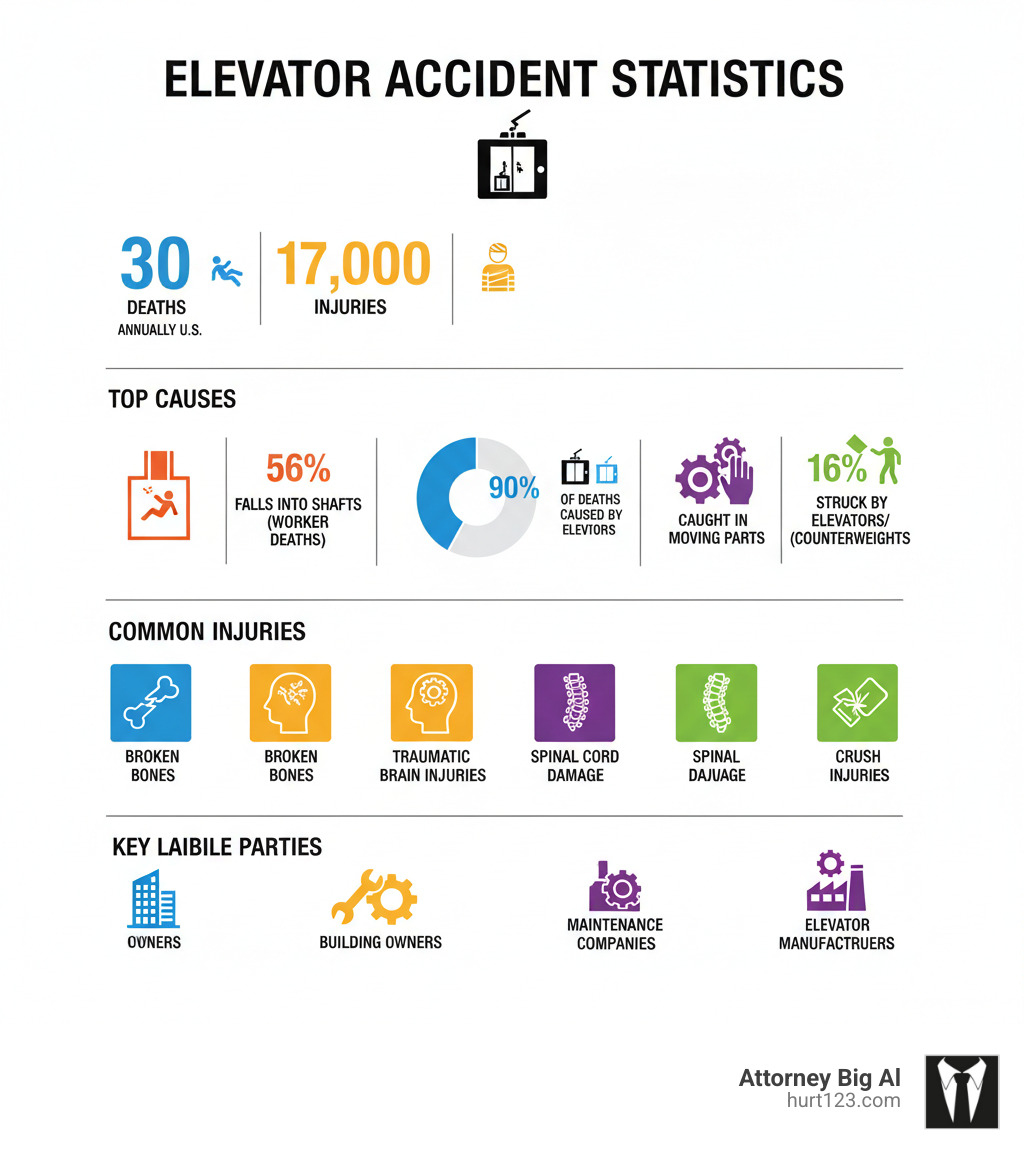
The statistics are unsettling. Each year in the U.S., elevator and escalator incidents lead to approximately 30 deaths and 17,000 serious injuries. Elevators are responsible for about 90% of these deaths and 60% of the injuries. These accidents are often preventable, caused by poor maintenance, faulty equipment, or building owner negligence.
The injuries can be severe, including broken bones, traumatic brain injuries, and spinal cord damage. Workers face even greater risks, with falls into shafts being a primary cause of fatalities during installation or repair.
Building owners have a legal duty to maintain safe elevators. When they fail, they can be held responsible. This guide explains what to do after an elevator accident to protect your rights and seek the compensation you deserve.
In cities like Boca Raton, Hollywood, and Sunrise, a sudden elevator malfunction can turn a routine day into a life-altering event. Understanding the risks is the first step toward knowing your rights if an accident happens.
Steps to Take After an Elevator Accident Injury in Fort Lauderdale

After an elevator accident injury, you may be shaken and confused. Whether you’re in a Fort Lauderdale office tower or a Miami condo, the steps you take next are critical.
Property owners have a legal duty to keep you safe under a principle called premises liability. If they fail to maintain their elevators and you get hurt, they can be held accountable for negligence. Time is critical, as evidence can disappear and surveillance footage gets erased. Acting quickly protects your health and your legal rights.
Immediate Actions: Securing Your Health and Evidence
Even if you feel fine, adrenaline can mask serious injuries.
- Get medical help immediately. A doctor’s evaluation is crucial for your health and creates an official medical record linking your injuries to the accident. Waiting to see a doctor can allow insurance companies to argue your injuries aren’t serious or were caused by something else.
- Report the incident. Inform building management or security and insist on filing an official incident report. Get a copy for your records.
- Document everything. Use your phone to take photos and videos of the elevator, any malfunctions, the scene, and your injuries.
- Get witness information. Collect names and phone numbers from anyone who saw what happened. Their statements can be vital.
- Preserve evidence. Keep the clothes you were wearing and any damaged personal items.
- Do not give recorded statements. The building’s insurance adjuster may call, but their job is to minimize the payout. Politely decline to give a statement or sign anything until you have spoken with an attorney. The principles are similar to other injury situations, like knowing what to do if you slip and hurt yourself at a restaurant.
Identifying Liability: Who is Responsible for Elevator Safety?

Determining who is at fault for an elevator accident injury can be complex. Several parties could be responsible:
- Building Owners and Property Managers: They have a legal duty to ensure elevators are safe. This includes regular inspections and prompt repairs. Florida’s Bureau of Elevator Safety requires owners to report accidents within five working days.
- Maintenance and Repair Companies: These third-party companies are hired to service elevators. If they perform negligent work or miss safety checks, they can be held liable.
- Elevator Manufacturers or Component Suppliers: Under product liability law, manufacturers can be responsible for accidents caused by design flaws or defective parts.
- Installation Companies: If an elevator was installed improperly, the installation company could be at fault.
An investigation will review maintenance logs and inspection records to see if safety standards, like the ASME A17.1 code, were followed.
Common Causes and Types of Elevator Accident Injury
An elevator accident injury can result from various malfunctions, most often stemming from a lack of proper maintenance.
Common causes include:
- Misleveling: The elevator stops above or below the floor, creating a trip hazard.
- Sudden Drops or Abrupt Stops: Malfunctions can cause the car to jolt or fall, throwing passengers.
- Door Malfunctions: Doors closing too fast, not opening, or opening to an empty shaft can cause serious harm.
- Cable Snaps and Shaft Falls: These are rare but catastrophic events leading to severe injuries or death.
The resulting injuries are often devastating:
- Crush Injuries: A person can be trapped by moving parts, like the man in New York who was fatally crushed by a malfunctioning elevator.
- Traumatic Brain Injuries (TBIs) and Concussions: Caused by falls or impacts inside the car.
- Broken Bones and Fractures: Common from falls due to sudden stops or misleveling.
- Spinal Cord Damage: Severe impacts can lead to paralysis.
- Psychological Trauma: Many victims suffer from anxiety, phobias, or PTSD.
These incidents share legal principles with other premises liability cases, such as slip and fall accidents and lawsuits.
Proving Negligence in Your Elevator Accident Injury Claim
To win your elevator accident injury case, we must prove negligence. This involves establishing four key elements:
- Duty of Care: The defendant (e.g., building owner) had a legal duty to keep the elevator safe.
- Breach of Duty: They failed in that duty through carelessness, such as skipping maintenance.
- Causation: Their failure directly caused your accident and injuries.
- Damages: You suffered real losses, such as medical bills and lost wages.
Building a strong case requires gathering evidence like:
- Maintenance logs and inspection records
- Accident reports from the building and state authorities
- Witness testimony
- Analysis from elevator mechanics
- Records of prior complaints about the elevator
- Building code violations or failure to meet ASME safety standards
This investigation is essential for holding the responsible parties accountable. You can see how these principles apply in famous premise liability cases.
Seeking Compensation: What Your Claim Could Be Worth in Miami

An elevator accident injury creates not only physical pain but also significant financial strain from medical bills and lost income. In cities like Miami, Fort Lauderdale, and Boca Raton, these accidents can disrupt your entire life.
Florida law allows you to seek financial recovery when someone’s negligence causes your injuries. Understanding what a personal injury claim is and what your case might be worth involves calculating all your losses—both financial and personal. It’s crucial to act promptly, as Florida’s statute of limitations sets a strict deadline for filing a lawsuit.
Recoverable Damages in an Elevator Accident Claim
If you’ve suffered an elevator accident injury, you may be entitled to compensation for all your losses. These damages are typically broken into two categories.
Economic Damages are your measurable financial losses:
- Medical Bills: All costs for treatment, from the ER visit to surgery and medication.
- Future Medical Care: Projected costs for ongoing needs like physical therapy, rehabilitation, or long-term care.
- Lost Wages: Income lost while you were unable to work.
- Loss of Earning Capacity: Compensation if your injuries permanently affect your ability to earn a living.
Non-Economic Damages compensate for intangible, personal losses:
- Pain and Suffering: For the physical pain and emotional distress caused by the injury.
- Emotional Distress: For anxiety, depression, or PTSD resulting from the traumatic event.
- Loss of Enjoyment of Life: If your injuries prevent you from participating in activities you once loved.
In cases of extreme negligence, punitive damages may be awarded to punish the wrongdoer and deter similar conduct in the future.
Navigating the Legal Process in Boca Raton
Facing a legal battle after an elevator accident injury is daunting. Whether you’re in Boca Raton or Hollywood, you need a team that can manage the process while you focus on recovery.
Our process is straightforward:
- Free Consultation: We listen to your story and provide a clear assessment of your case at no cost to you.
- Thorough Investigation: We gather all necessary evidence, including maintenance logs, witness statements, and expert analysis, to build a strong case.
- Filing a Claim: We handle all legal paperwork and formally file a claim against the responsible parties.
- Negotiation and Litigation: We negotiate with insurance companies for a fair settlement. If they refuse to be reasonable, we are fully prepared to take your case to trial.
At our firm, we handle all communications and protect you from insurance company tactics. We work on contingency fees, meaning you pay nothing unless we win your case. Our firm has the financial resources to stand up to major insurance companies and fight for the compensation you deserve. Your job is to heal; our job is to handle the legal fight.
If you’re ready to take the next step, contact a premises liability lawyer today.
