

How to Preserve Evidence After a Fall on Florida Property
A fall on someone else’s property can leave you injured and unsure of what to do next. In Florida, premises liability claims depend on evidence collected immediately after the accident. Whether you slipped on a wet floor in a grocery store or tripped over a broken sidewalk at an apartment complex, the steps you take to preserve evidence determine your ability to recover compensation. Florida law places specific burdens on injured parties to prove negligence, and without solid documentation, even strong cases can fail.
If you were hurt in a fall on Florida property, Attorney Big Al at 1-800-HURT-123 can help you understand your rights and protect your claim. Call 1-800-487-8123 or reach out online today to get started.
Why Evidence Preservation Matters for a Premise Liability Attorney in Florida
The outcome of your premises liability claim depends on what you can prove. Under Florida Statute §768.0755, if you slip and fall on a transitory foreign substance in a business establishment, you must demonstrate the business had actual or constructive knowledge of the dangerous condition and should have remedied it. Constructive knowledge can be established by showing the hazard existed long enough that ordinary care should have led to its discovery, or that it occurred with regularity and was foreseeable. Without preserved evidence such as photographs, witness accounts, or surveillance footage, meeting this burden becomes extremely difficult.
Florida’s modified comparative fault system adds urgency. Under §768.81, if you are found more than 50 percent at fault for your injuries, you are barred from recovering compensation. Property owners’ defense teams will try to shift blame onto you. Preserving clear evidence of the dangerous condition demonstrates the owner’s negligence rather than your own.
💡 Pro Tip: Do not assume someone else will preserve evidence. Businesses may clean up hazards within minutes, and surveillance footage is often overwritten within days. Act quickly to document everything yourself.
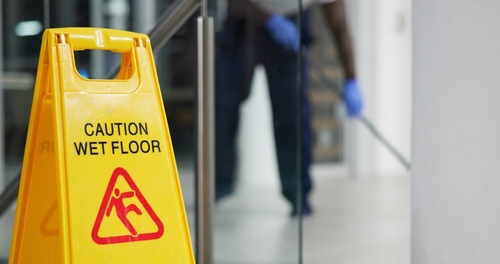
What to Document at the Scene of a Fall
Your first priority after ensuring your safety is capturing the scene exactly as it exists. Slip and fall photos are among the most powerful tools in a premises liability case. Use your phone to photograph and video the hazard, surrounding area, lighting conditions, warning signs (or their absence), and your visible injuries.
Photographs and Videos
Take wide-angle shots of the entire area and close-ups of the specific hazard. If liquid caused your fall, photograph the substance, its color, and any footprints through it. Capture flooring condition, broken tiles, uneven surfaces, or obstructions. Record time stamps on your photos to establish a timeline.
Witness Information
Gather names and contact information of anyone who saw the fall or dangerous condition. Witnesses can confirm the hazard existed and describe its duration. Their statements may support a finding of constructive knowledge under Florida law.
Your Own Physical Condition
Document injuries with photographs before receiving medical treatment. Bruises, swelling, cuts, and torn clothing all tell a story. Continue photographing injuries over following days as they develop.
💡 Pro Tip: Send photos and notes to a trusted friend or upload them to cloud storage immediately. This creates a backup if your phone is lost or damaged.
Filing an Incident Report After a Florida Fall
Requesting an incident report from the property owner or manager creates an official record of your fall. Most businesses have processes for documenting accidents on their premises. Ask for a copy of the completed report before leaving, and verify it accurately describes what happened. If management refuses a copy, note the date, time, and name of the person you spoke with.
An incident report after a fall documents when and where the accident occurred and puts the property owner on notice of the dangerous condition. This notice can become critical if the hazard is cleaned up before you pursue legal action.
What to Include in the Report
- Exact date, time, and location of the fall
- Description of the hazard (wet floor, broken step, poor lighting, debris)
- Names of employees or witnesses present
- Description of your injuries
- Whether you requested medical assistance
💡 Pro Tip: Do not sign any statement prepared by the property owner without reading it carefully. Avoid language that admits fault or minimizes your injuries. Stick to the facts.
Securing Medical Records and Billing Documentation
Seeking prompt medical attention is essential for both your health and your legal claim. Florida law limits medical expense evidence at trial, meaning your medical records and billing documentation must be thorough and accurate from the first visit. Gaps in treatment or delayed care can give the defense arguments that your injuries were not serious or were caused by something other than the fall.
Keep organized records of every medical appointment, diagnosis, treatment plan, prescription, and bill related to your fall. Request copies directly from your providers. This fall accident documentation strengthens your ability to prove damages.
| Type of Evidence | Why It Matters | How to Preserve It |
|---|---|---|
| Scene photographs/videos | Proves the hazard existed and its condition | Take immediately; back up to cloud storage |
| Witness contact information | Supports constructive knowledge arguments | Collect names, phone numbers, and emails at the scene |
| Incident report | Creates an official record of the event | Request a copy from the property before leaving |
| Medical records and bills | Documents injuries and quantifies damages | Keep all records from initial visit onward |
| Clothing and footwear | May show the cause and nature of the fall | Store unwashed in a sealed bag |
How Florida’s Comparative Fault System Affects Your Evidence Strategy
Under Florida’s modified comparative negligence framework, evidence must show what happened and why the property owner is at fault. Section 768.81 of the Florida Statutes on negligence governs comparative fault and requires consideration of the fault of all persons who contributed to the injury. The defense will scrutinize your conduct at the time of the fall.
Evidence showing you were walking carefully, wearing appropriate footwear, and had no reason to expect the hazard strengthens your position. If you were distracted or ignored visible warnings, your recovery could be reduced or eliminated. Preserving evidence of the property’s dangerous condition, including absent security cameras, inadequate lighting, or missing warning signs, shifts focus to the owner’s negligence.
Security Measures and Property Conditions
Florida law under §768.0706 provides property owners a presumption against liability when they implement certain security measures. Documenting whether these measures were present or deficient supports your claim. If a property lacked working cameras or had poor lighting where you fell, this may undermine the owner’s defense.
💡 Pro Tip: If the property had security cameras, ask the manager in writing to preserve the footage immediately. Many surveillance systems overwrite footage within days or weeks. A written preservation request creates a record of your diligence.
Special Considerations for Falls on Government Property
Falls on government property involve additional procedural hurdles. To succeed in a government property fall claim, you must prove a dangerous condition existed, the government had notice, the government failed to act, and your injury resulted from that failure. Strict procedural requirements under government slip-and-fall claim rules demand precise steps, and procedural errors can result in permanent claim denial.
You must establish the government entity had actual or constructive notice of the hazard. Photographs showing the age or deterioration of a hazard, maintenance request records, and prior complaints help establish this requirement.
Time Limits and Filing Deadlines
Florida generally allows two years to file a negligence action against private parties, but prompt evidence collection remains essential. Conditions change, witnesses forget details, and physical evidence disappears. Under Florida’s sovereign-immunity statute (Fla. Stat. §768.28), before suing the State of Florida or its agencies/subdivisions a claimant generally must provide written notice within 3 years after the claim accrues (2 years for wrongful death) as a condition precedent. The time to file the lawsuit is governed by the applicable statute of limitations, negligence causes of action accruing on or after March 24, 2023 are often subject to a 2-year limitation, while some other claims may have a 4-year limitation, and section 768.28 also contains a 4-year bar for claims brought under that section. Courts interpret tolling exceptions narrowly, so acting quickly protects your rights.
💡 Pro Tip: Write down everything you remember about the fall as soon as possible. A detailed written account created within hours carries more weight than a recollection months later.
How a Premise Liability Attorney in Florida Protects Your Claim
An experienced Florida property accident lawyer understands what evidence matters most and how to secure it before it disappears. Attorneys can send spoliation letters demanding businesses preserve surveillance footage, maintenance logs, and inspection records. They can identify witnesses, hire investigators, and work with medical professionals to document your injuries. Legal counsel can also guide you through reporting unsafe conditions to the appropriate authorities when necessary.
A premises liability attorney in Florida can evaluate your fall’s specific facts and determine which statutes apply. Because Florida’s premises liability proof requirements vary by property type and circumstances, having knowledgeable legal guidance early is critical.
Frequently Asked Questions
1. How long do I have to file a premises liability claim in Florida?
Florida generally allows two years to file a negligence action against private parties, but this timeline varies depending on circumstances and property type. Under Florida’s sovereign-immunity statute (Fla. Stat. §768.28), before suing the State or its agencies/subdivisions a claimant generally must provide written notice within 3 years after the claim accrues (2 years for wrongful death) as a condition precedent. The time to file suit is governed by the applicable statute of limitations, negligence causes of action accruing on or after March 24, 2023 are often subject to a 2‑year limitation, while some other claims may have a 4‑year limitation; section 768.28 also includes a 4‑year bar provision. Consult with a premise liability attorney in Florida early to avoid missing critical deadlines.
2. What if the business cleaned up the hazard before I could take photos?
Witness statements and an incident report become even more important. Your detailed written account of what you saw serves as evidence. An attorney can request surveillance footage and maintenance records confirming the condition existed.
3. Do I need to prove the property owner knew about the dangerous condition?
In many Florida slip-and-fall cases involving businesses, yes. Under §768.0755, you must prove the business had actual or constructive knowledge of the hazard and should have remedied it. Constructive knowledge can be shown through evidence proving the condition existed long enough for discovery or occurred regularly and was foreseeable.
4. What should I do if the property owner asks me to give a recorded statement?
You are not required to provide a recorded statement to the property owner or their insurance company. Anything you say could reduce your claim or support comparative fault arguments. Speak with an attorney before providing statements beyond basic facts in an incident report.
5. Can my own actions reduce my compensation in a Florida fall case?
Yes. Under Florida’s modified comparative fault system in §768.81, if you are found partially at fault, your recovery will be reduced by your percentage of responsibility. If you are more than 50 percent at fault, you are barred from recovering compensation. This makes preserving evidence of the property’s dangerous condition and your reasonable conduct crucial.
Protect Your Rights by Taking Action Now
Preserving evidence after a fall on Florida property is one of the most important steps to protect your legal rights. From photographing the scene and filing an incident report to securing medical records and understanding Florida’s statutory requirements, every piece of documentation strengthens your ability to recover fair compensation. The sooner you act, the more evidence you preserve, and the stronger your claim will be.
Do not wait until critical evidence disappears. Call Attorney Big Al at 1-800-HURT-123 at 1-800-487-8123 or contact us online for a case evaluation. The team is ready to help you preserve evidence, understand your rights, and pursue the compensation you deserve.
