
Understanding Fault When Two Cars Collide at a Florida Intersection
Key Takeaways: In Florida, fault in a T-bone intersection crash typically falls on the driver who failed to yield, ran a stop sign, or entered against a red signal. Liability is determined through crash reports, physical evidence, witness accounts, and video. Florida’s modified comparative negligence rule bars recovery if you’re more than 50% at fault, while lesser percentages reduce damages proportionally. Fault can be apportioned among multiple drivers or shifted to nonparties, and the crash report, while influential, is not final.
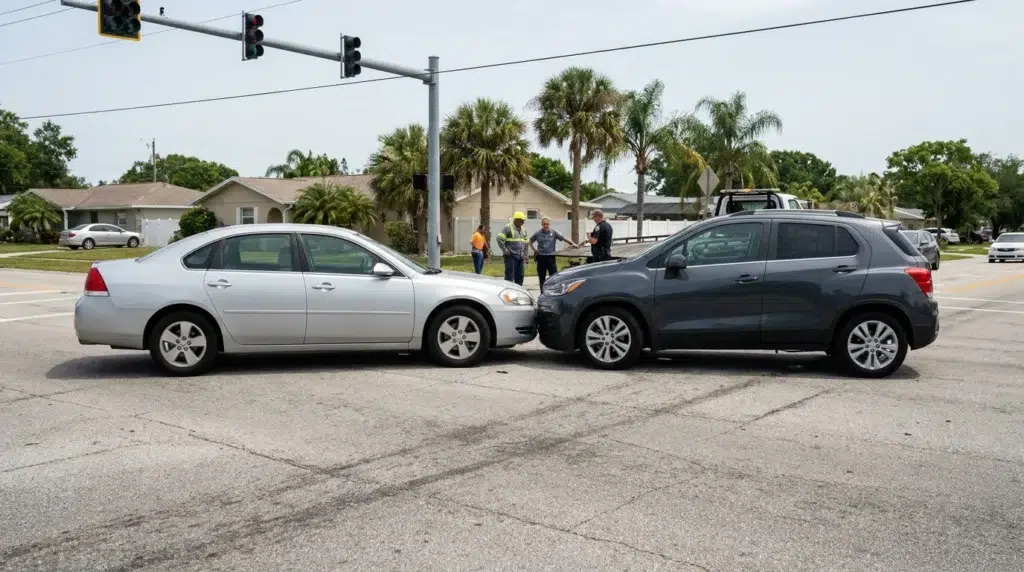
Fault in a Florida T-bone crash usually comes down to who had the right-of-way and who breached it. A side-impact collision happens when one vehicle’s front strikes another’s side, almost always at an intersection. The driver who failed to yield, ran a stop sign, or entered against a red signal is typically found at fault, but Florida’s fault system requires careful examination of traffic laws, physical evidence, and each driver’s conduct before impact.
If you were hurt in an intersection accident, reach out to Attorney Big Al at 1-800-HURT-123 by calling 1-800-487-8123 or by using our online case review form to understand your next steps.
How Florida Law Assigns Blame in a T-Bone Car Accident
Florida applies negligence principles to decide who caused a t bone car accident. To hold another driver responsible, you must show they owed a duty of care, breached that duty, and caused measurable harm. In intersection crashes, the breach is often a traffic statute violation, such as failing to stop or yield. These core concepts of negligence theory in personal injury cases form the foundation of nearly every side-impact claim.
The reporting duty also shapes how fault gets documented. Section 316.065, Florida Statutes, requires drivers involved in crashes with injury, death, or at least $500 in property damage to immediately contact law enforcement. Under FL § 316.066(1)(a), investigating officers must complete a Florida Traffic Crash Report (Long Form) within 10 days when crashes result in death, injury, pain complaints, inoperable vehicles, or commercial vehicle involvement. This report frequently becomes the first evidence insurers examine.
💡 Pro Tip: Get the crash report number from the responding officer at the scene for easier retrieval later.
Right-of-Way Rules That Often Decide Intersection Crashes
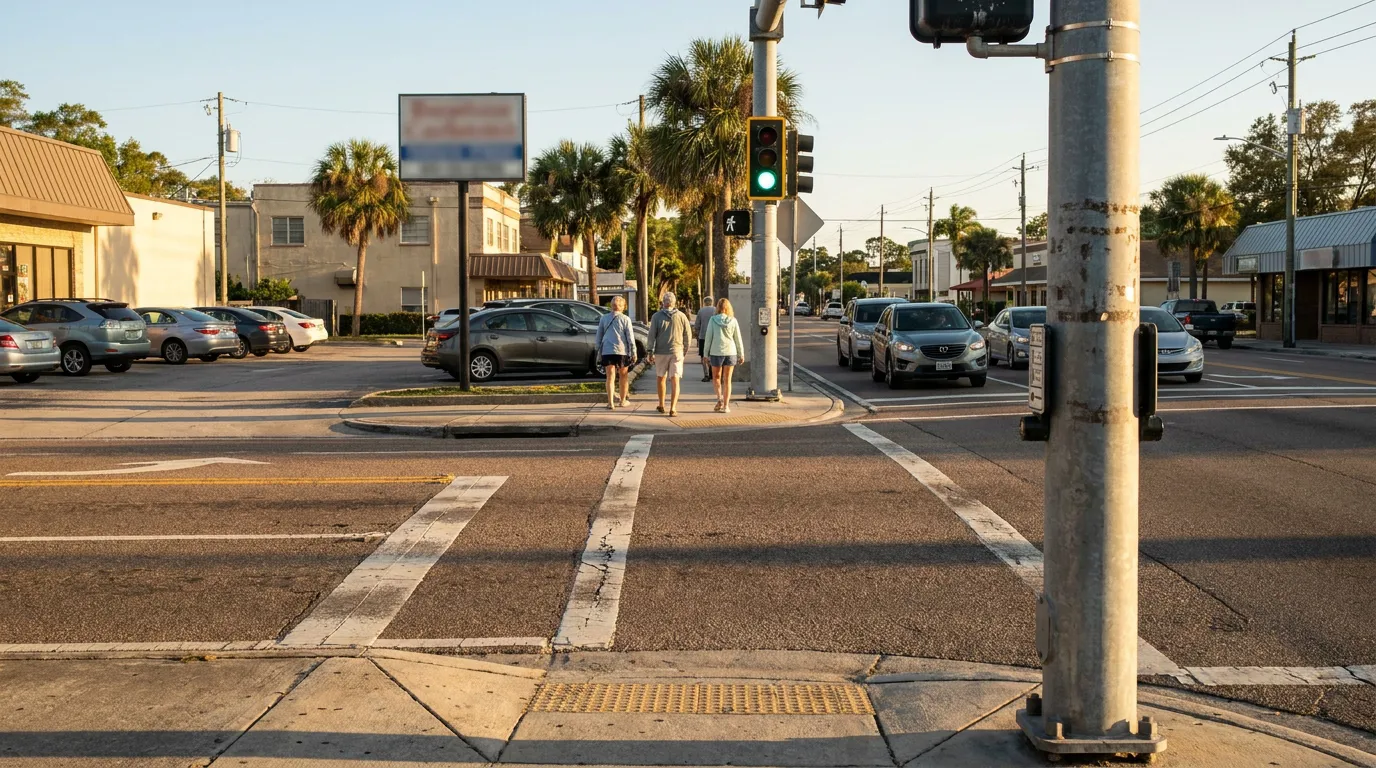
Most T-bone accident fault questions turn on Florida’s right-of-way statutes. Under FL § 316.123, drivers approaching stop signs must come to a full stop and yield to vehicles already in the intersection or approaching as immediate hazards. At four-way stops, the first vehicle to stop proceeds first; when two arrive simultaneously, the left driver yields to the right. Rolling through and striking a car with right-of-way typically establishes fault.
Flashing signals and yield signs follow their own rules. Under FL § 316.076(1)(a)-(b), flashing red signals require complete stops like stop signs, while flashing yellow signals require only caution. Yield-sign drivers who collide after failing to stop face presumed fault unless rebutted.
Common right-of-way scenarios include:
- Running a stop sign or flashing red light and striking a crossing vehicle
- Turning left across oncoming traffic without yielding
- Entering an intersection on a stale or red signal
- Failing to yield at uncontrolled intersections
💡 Pro Tip: Photograph all traffic control devices, including their position and functionality. Malfunctioning or obscured signs can change fault analysis.
When Both Drivers Share the Blame
Florida’s comparative system recognizes that fault is rarely entirely one-sided. Insurers often argue injured drivers contributed through speeding, distraction, or careless entry. Understanding shared fault is essential before accepting any crash characterization.
Modified Comparative Negligence After 2023
Florida adopted a modified comparative negligence rule in 2023 that can bar recovery entirely. Under Fla. Stat. 768.81(6), parties more than 50% at fault for their own harm cannot recover damages, except in medical negligence actions. If your fault is 50% or less, your compensation is reduced proportionally. For example, 20% fault on a $100,000 claim reduces recovery to $80,000.
| Your Percentage of Fault | Effect on a $100,000 Claim |
|---|---|
| 0% | Full $100,000 recoverable |
| 20% | Reduced to $80,000 |
| 50% | Reduced to $50,000 |
| 51% or more | No recovery (limited exceptions) |
These thresholds make fault percentages the most contested issue. A shift from 50% to 51% can erase claims entirely, giving insurers strong incentive to push blame onto injured drivers. If you’re worried about being assigned partial responsibility, understand what happens when both drivers share fault before speaking with adjusters.
Apportioning Damages Among Multiple Drivers
When multiple drivers contribute to a crash, each pays only their share. Under Fla. Stat. 768.81(3), courts enter judgment based on each party’s fault percentage, and Florida has abolished joint and several liability in most negligence actions. This means injured persons may need to pursue several parties for full recovery.
Blaming a Nonparty Driver
Defendants frequently try shifting blame to drivers never sued. Under Fla. Stat. 768.81(3)(a), defendants must affirmatively plead nonparty fault and prove it by preponderance of evidence at trial. Florida courts generally require specific identification of nonparties rather than blaming phantom drivers, underscoring why thorough investigation matters.
Evidence That Proves Fault After a Side-Impact Collision
Strong documentation separates disputed claims from well-supported ones. The crash report is central. Florida drivers can obtain complete copies for their records and claims. Crash reports are available at floridacrashportal.gov.
The Crash Report and Supporting Proof
Beyond reports, several evidence categories establish intersection crash fault. Physical evidence like damage patterns, skid marks, and debris fields show which car was struck and where. Independent witness statements, surveillance or doorbell video, and traffic-camera footage confirm who had right-of-way. Medical records tie injuries to collisions, supporting causation and damages.
💡 Pro Tip: Seek prompt medical care even for minor discomfort. Treatment gaps give insurers openings to argue injuries came from other sources.
Florida’s insurance framework also affects claims. The state operates under no-fault insurance requiring $10,000 PIP/$10,000 PDL coverage. Personal Injury Protection covers initial medical costs regardless of fault, but injuries meeting Florida’s serious-injury threshold allow injured persons to step outside no-fault and pursue at-fault drivers directly. Review state guidance for drivers involved in a crash for coverage basics.
Special Situations That Change the Fault Analysis
Not every intersection follows standard right-of-way rules. Under FL § 316.1974(3)(b)-(c), funeral processions have right-of-way at intersections once lead vehicles lawfully enter, and following vehicles may proceed through signal changes, though they must still yield to emergency vehicles and obey police direction. This can flip usual fault assumptions.
Deadlines and locating defendants can also complicate claims. Florida’s personal injury statute of limitations sets filing deadlines, and FL § 95.051 lists limited tolling circumstances that may pause that clock. Courts interpret tolling provisions narrowly, they don’t apply automatically and may include defendant absence from the state, use of false names preventing service, or plaintiff’s adjudicated incapacity before claims arose.
💡 Pro Tip: Don’t assume unlimited time because exceptions might apply. Treat standard deadlines as firm and act early, since tolling arguments are difficult and fact-dependent.
Frequently Asked Questions
1. Is the driver who hits the side of another car always at fault?
Not necessarily, though that driver is often the starting suspect. Fault depends on right-of-way, so striking drivers could still recover if the other vehicle ran a red light or turned illegally.
2. Can I still recover if I was partly to blame?
Yes, as long as your fault is 50% or less. Under Fla. Stat. 768.81(6), being more than 50% at fault generally bars recovery in most negligence cases, while lower percentages reduce damages proportionally.
3. What if the other driver blames a car that left the scene?
A defendant may point to a nonparty driver. Under Fla. Stat. 768.81(3)(a), defendants must plead and prove nonparty fault at trial, and courts generally require specific identification, making preserved witness information and video especially important.
4. How long do I have to file a lawsuit?
Florida’s civil filing deadline is separate from insurance reporting duties. While specific tolling situations under FL § 95.051 can pause the clock in limited circumstances, courts read exceptions narrowly, so act quickly.
5. Does a crash report decide who is at fault?
The report is influential but not final. An officer’s opinion can be reconsidered as new evidence emerges, and fault is ultimately decided by insurers, and if needed, a court.
Protecting Your Right to Recover After an Intersection Crash
Deciding fault in a Florida T-bone accident blends statutory right-of-way rules, comparative negligence, and solid evidence. The default rule points to drivers who failed to yield or ignored traffic controls, but shared-fault defenses, nonparty blame, and unusual scenarios can shift outcomes significantly. Because results depend heavily on specific facts, early and thorough investigation provides the strongest footing. Working with a dedicated t bone car accident lawyer can help you gather proof, anticipate insurer tactics, and pursue full damages Florida law allows.
You should not have to fight an insurance company alone after a serious intersection crash. Contact Attorney Big Al at 1-800-HURT-123 today by calling 1-800-487-8123 or reaching out through our confidential contact page to discuss how the law may apply to your situation.
