
Understanding Fault When You Fall in a Florida Parking Garage
Key Takeaways: Responsibility for a slip and fall in a Florida parking garage falls on the party that owns, operates, or controls the property when their negligence creates or ignores a dangerous condition. Under Florida premises liability law, injured invitees must prove the owner had actual or constructive knowledge of the hazard through timing or recurrence evidence. Liability may be shared among owners, management companies, and lessees. Government-owned garages impose strict pre-suit notice requirements, while defenses like comparative fault can reduce recovery. Prompt evidence preservation and early legal review are essential to protecting your claim.
A slip and fall in a parking garage can leave you facing broken bones, mounting medical bills, and one urgent question: who is legally responsible? The party that owns, operates, or controls the garage may be held accountable if their negligence created or ignored a dangerous condition. Florida law requires the injured person to prove the property owner or operator knew, or should have known, about the hazard and failed to fix it.
If you were hurt in a Hollywood-area garage, guidance can make a real difference in protecting your claim. Reach out to Attorney Big Al at 1-800-HURT-123 for a free consultation, call 1-800-487-8123 to speak with the team directly, or contact us now to start reviewing your options today.
How Premises Liability Shapes Your Right to Recover
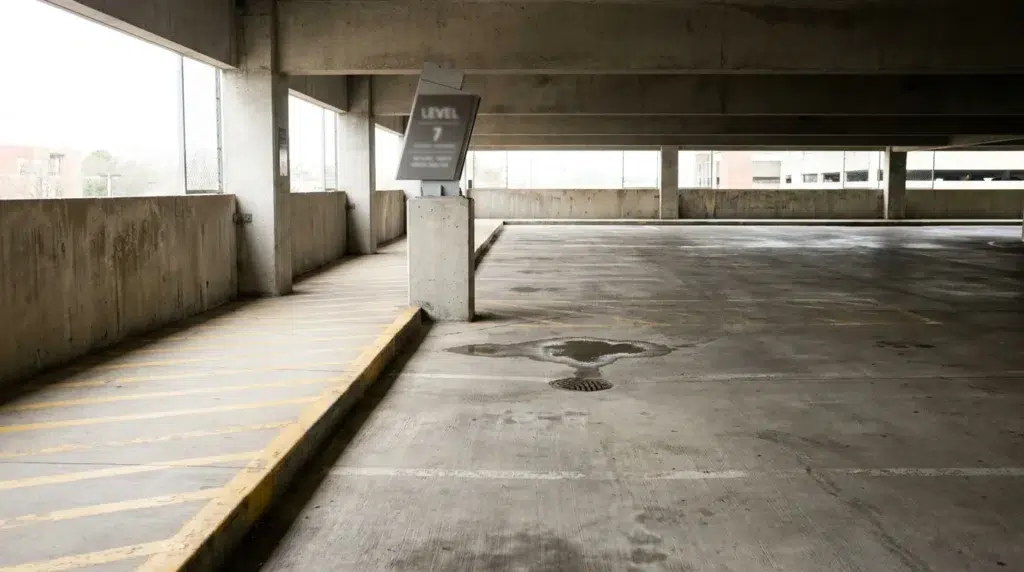
Premises liability is the legal framework that decides who pays when a hazardous condition causes injury. This area of personal injury law holds parties in control of property accountable for dangerous conditions based on negligence. In a parking garage, that could mean oil slicks, standing water, poor lighting, crumbling concrete, or debris on a ramp or stairwell. You can review a plain-language explanation of premises liability basics before speaking with counsel.
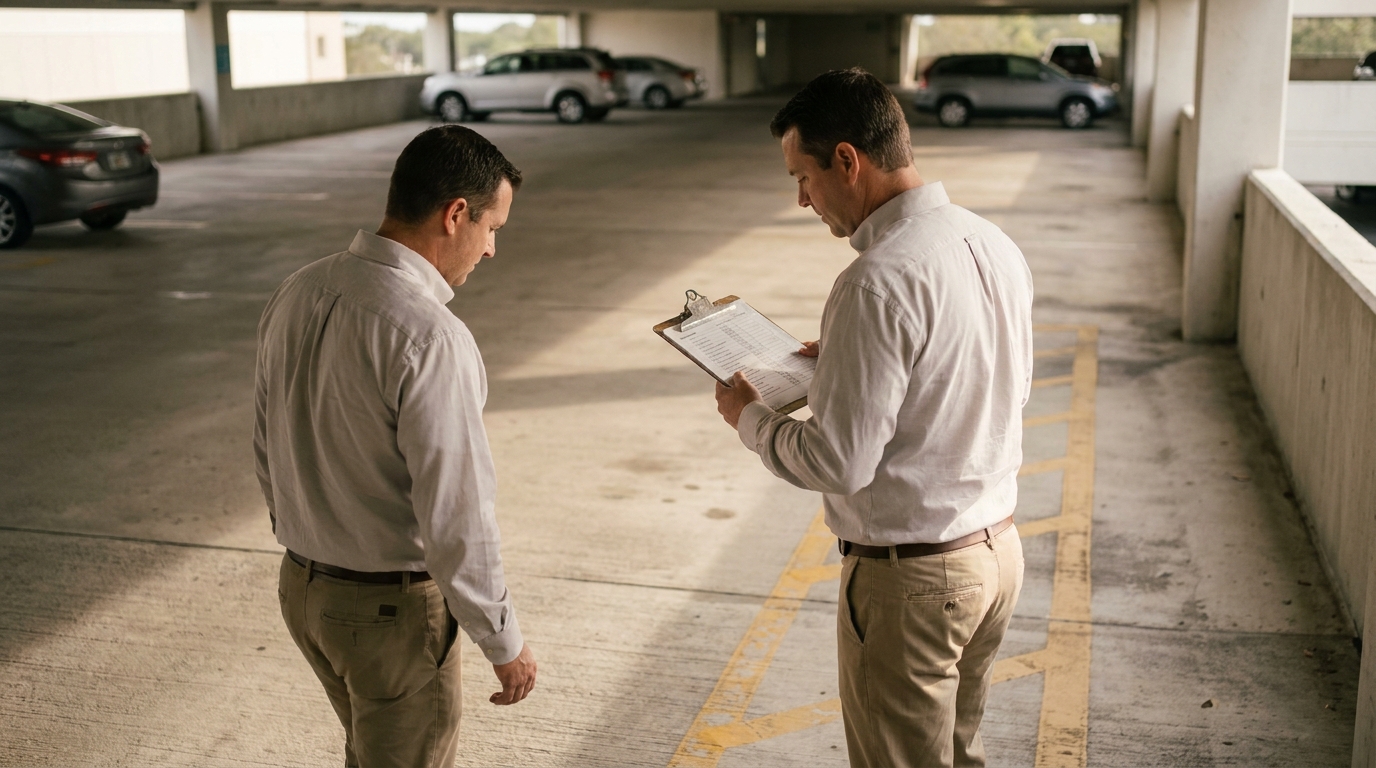
Most dangerous property conditions arise from inadequate maintenance. Garages are especially prone to hazards because of heavy vehicle traffic, fluid leaks, and exposure to the elements. When an owner or manager neglects routine inspection and cleanup, foreseeable risks accumulate. That neglect is often the starting point for establishing property owner negligence.
💡 Pro Tip: Photograph the exact hazard, the surrounding area, and any missing warning signs before you leave the scene. Visual evidence taken the day of your fall is far more persuasive than a description written weeks later.
The Duty a Garage Owner Owes to You
Your legal status on the property determines how much protection Florida law gives you. Florida distinguishes between invitees, licensees, and trespassers, each carrying a different standard of care. A paying customer or member of the public using a garage is generally treated as an invitee, the group that receives the highest level of protection. For invitees, the owner has a duty to inspect for dangers, make repairs, and warn of hazards.
The duty owed to unauthorized visitors is far narrower. Under Fla. Stat. § 768.075, property owners are generally immune from liability for injuries to trespassers, though they must refrain from gross negligence or intentional misconduct and warn of known dangerous conditions. This means a person lawfully parking in a garage has stronger legal footing than someone who entered without permission.
Comparing Visitor Status Under Florida Premises Law
| Visitor Type | Example in a Garage | General Duty Owed |
|---|---|---|
| Invitee | Paying customer or public user | Inspect, repair, and warn of hazards |
| Licensee | Social guest with permission | Warn of known dangers |
| Trespasser | Unauthorized entrant | Avoid gross negligence or intentional harm |
Common-law duties still apply beyond these categories. Fla. Stat. § 768.0755(2) confirms that the transitory-substance rule does not eliminate any common-law duty of care owed by a person or entity in control of a business premises. Garage owners cannot escape their broader responsibility to keep the property reasonably safe.
Proving the Garage Knew About the Danger
Florida law requires you to prove the business had knowledge of the hazard that caused your fall. Under Fla. Stat. § 768.0755(1), if you slip on a transitory foreign substance such as oil, water, or debris in a business establishment, you must show the owner or operator had actual or constructive knowledge of the dangerous condition and should have acted to remedy it. Actual knowledge means someone actually knew. Constructive knowledge means they should have known through reasonable care.
Constructive knowledge gives injured parties two practical paths to establish liability. Fla. Stat. § 768.0755(1)(a)-(b) allows proof through circumstantial evidence by showing either that the hazard existed long enough that ordinary care would have detected it, or that the condition occurred with regularity and was therefore foreseeable. Timing and pattern evidence often become central to a garage injury liability dispute.
- Time-based evidence: surveillance footage, weather records, or witness accounts showing how long a spill sat unaddressed.
- Recurrence evidence: maintenance logs or prior complaints suggesting the hazard happened repeatedly.
💡 Pro Tip: Ask a garage attendant or manager to complete a written incident report before you leave, and request a copy. This creates an official record that can support the knowledge element later.
Filing a Slip and Fall Lawsuit When More Than One Party Is at Fault
Sorting out responsibility gets complicated when several parties share control of a garage. Ownership, management, and leasing arrangements frequently overlap, so an injured person may have claims against a property owner, a management company, and a lessee at the same time. Florida has modified joint and several liability in favor of apportioning damages by each party’s share of fault. Determining who controlled the specific area where you fell is often the key issue.
Whether your case is against a private or public entity changes the entire process. If your fall happened in a government-owned garage, special pre-suit rules apply. Under Fla. Stat. § 768.28(6)(a), you generally may not sue the state or its agencies unless you first present a written claim to the appropriate agency, and, for state agencies, to the Department of Financial Services, within 3 years after the claim accrues. You generally may not file suit until the agency denies the claim in writing or fails to make final disposition within 6 months, which the statute treats as a denial. Missing this notice can bar an otherwise valid claim.
Because these deadlines carry serious consequences, early legal review matters. A qualified slip and fall lawsuit lawyer can help identify every potentially responsible party and confirm which notice rules apply to your situation. Claims against government entities carry pre-suit notice steps and shorter windows that private-property claims do not impose.
💡 Pro Tip: If you suspect a garage is publicly owned, do not wait to investigate. Confirming the owner early gives you time to meet strict administrative notice requirements.
Defenses and Deadlines That Can Affect Your Case
Garage owners and their insurers routinely raise defenses to reduce or eliminate responsibility. Common defenses in slip-and-fall cases include comparative fault, the open-and-obvious doctrine, assumption of risk, and expiration of the statute of limitations. Under Florida’s modified comparative negligence standard, your recovery is reduced by your share of fault, and a person found more than 50% at fault generally cannot recover at all. You can review the full statutory scheme governing Florida premises liability law to see how these provisions fit together.
Florida’s deadline to file a personal injury claim can be paused only in limited circumstances. Under Fla. Stat. § 95.051(1), the running of a statute of limitations may be tolled by conditions such as the defendant’s absence from the state, concealment preventing service of process, or the adjudicated incapacity of the injured person before the cause of action accrued. Courts interpret these tolling exceptions narrowly, and tolling does not apply automatically. Confirm your deadline early rather than assume an extension applies.
Most premises liability claims are ultimately resolved through insurance. Commercial general liability policies typically cover injuries that occur on business property, so recovery usually involves negotiating with the owner’s insurer. Insurers may minimize your injuries or shift blame to you, which is why documentation matters. If you want to read more practical guidance, you can consult a lawyer resource library covering Florida injury topics.
💡 Pro Tip: Keep every medical record, bill, and receipt in one folder, and avoid giving a recorded statement to an insurance adjuster before understanding how comparative fault could reduce your recovery.
Frequently Asked Questions
-
Who is usually responsible for a parking garage fall in Florida?
The party that owns, operates, or controls the garage may be responsible if their negligence created or ignored a hazard. Under Fla. Stat. § 768.0755, you must show the business had actual or constructive knowledge of the dangerous condition. Responsibility can involve owners, managers, or lessees.
-
How long do I have to file a slip and fall claim?
Florida’s civil deadline for personal injury claims is set by statute, and tolling under Fla. Stat. § 95.051(1) applies only in limited circumstances. Government claims carry separate pre-suit notice requirements under Fla. Stat. § 768.28(6)(a). Confirming your specific deadline early is strongly advised.
-
What if the garage was owned by a city or county?
Public ownership triggers special rules. You generally must present a written claim to the correct agency within 3 years, and the claim must be denied in writing, or six months must pass without final disposition, before you file suit. This administrative step is separate from a civil lawsuit.
-
Can I still recover if I was partly at fault?
Possibly. Florida applies a modified comparative negligence rule, which reduces your recovery by your share of fault and generally bars recovery entirely if you are found more than 50% at fault. How courts apportion responsibility depends on your specific facts.
-
What evidence helps prove a garage owner’s negligence?
Photos, incident reports, surveillance footage, maintenance logs, and witness statements can all support your claim. This evidence helps establish how long a hazard existed or whether it recurred. Preserving it quickly strengthens your position.
Protecting Your Rights After a Garage Injury
Determining who is responsible for a Florida parking garage fall depends on ownership, the duty owed to you, and whether the owner knew or should have known about the hazard. Invitees receive the strongest protection, constructive knowledge can be proven through timing or recurrence, and government-owned garages impose strict pre-suit notice requirements. Defenses like comparative fault can complicate recovery, and tolling of deadlines applies only in narrow situations. Prompt evidence preservation and legal review are essential.
You do not have to navigate a Florida slip and fall claim alone. Contact Attorney Big Al at 1-800-HURT-123 for a free case review, call 1-800-487-8123 to discuss what happened, or reach out online now so the team can help protect your right to fair compensation.
