
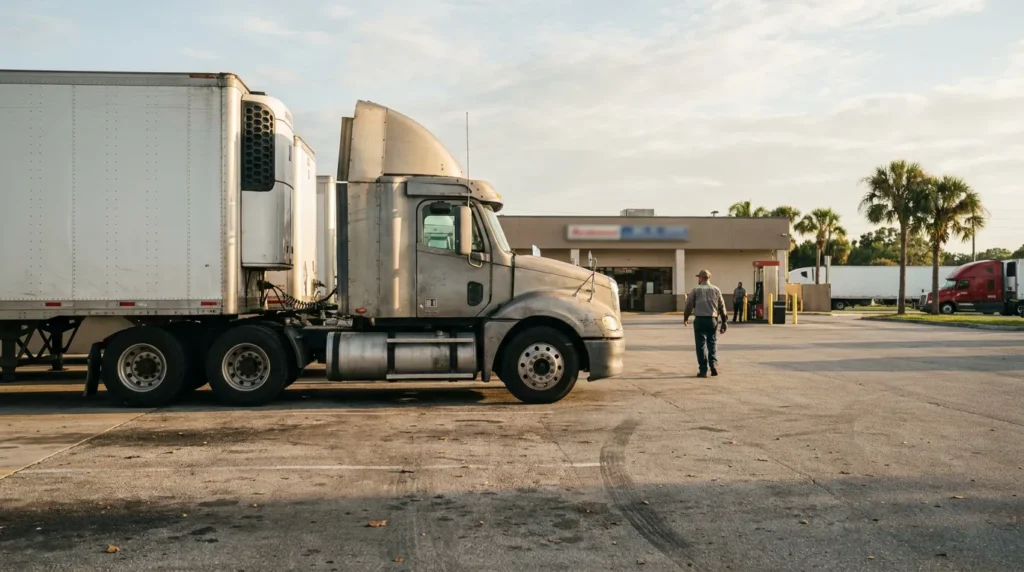
Holding Florida Trucking Companies Accountable When a Drunk Trucker Causes a Crash
Key Takeaways: Yes, a Florida trucking company can often be sued when it hires a drunk driver who causes a crash. Injured victims can pursue both vicarious liability and direct claims like negligent hiring, retention, and supervision, informed by Fla. Stat. § 768.096 and § 324.021(9)(b)3. A company may lose its background-check presumption when it skips key steps, such as a driver’s license record check revealing prior DUIs, or ignores federally mandated drug testing. Evidence of intoxication can support punitive damages if the company acted with gross negligence. Florida’s comparative fault rules bar recovery for anyone more than 50 percent at fault, while a two-year statute of limitations makes prompt action essential.
Yes, a trucking company can often be sued when it hires a drunk driver who injures someone on Florida roads. Florida law recognizes that commercial carriers have their own duties, separate from the driver, including screening people they put behind the wheel of an 80,000-pound rig. When a company ignores a driver’s DUI history or skips required alcohol testing, an injured victim may have a claim against the company itself. That distinction matters because a company’s insurance policy and assets are frequently the real source of meaningful compensation after a catastrophic Truck Accident in Florida.
If you or a loved one was hurt by an impaired trucker, prompt legal guidance can protect your rights. Reach out to Attorney Big Al at 1-800-HURT-123, call 1-800-487-8123, or use the firm’s confidential case review form to discuss what happened and what evidence should be preserved right away.
How Florida Law Lets You Sue the Company for Its Own Negligence
Florida separates a driver’s fault from the trucking company’s independent wrongdoing. Two legal theories usually drive these cases: vicarious liability for the driver’s conduct and direct liability for the company’s own decisions. Under Florida’s financial responsibility law, Fla. Stat. § 324.021(9)(b)3 states that "nothing in this subparagraph shall be construed to affect the liability of the owner for his or her own negligence," which preserves a victim’s ability to pursue negligent hiring and supervision claims.
Direct claims target what the company knew or should have known. Negligent hiring, retention, and supervision focus on the employer’s choices rather than the moment of impact. Because these are negligence-based civil actions, fault can be allocated between the company and the driver. To understand the full range of potential defendants, review a plain-English breakdown of who can be held liable after a truck crash.
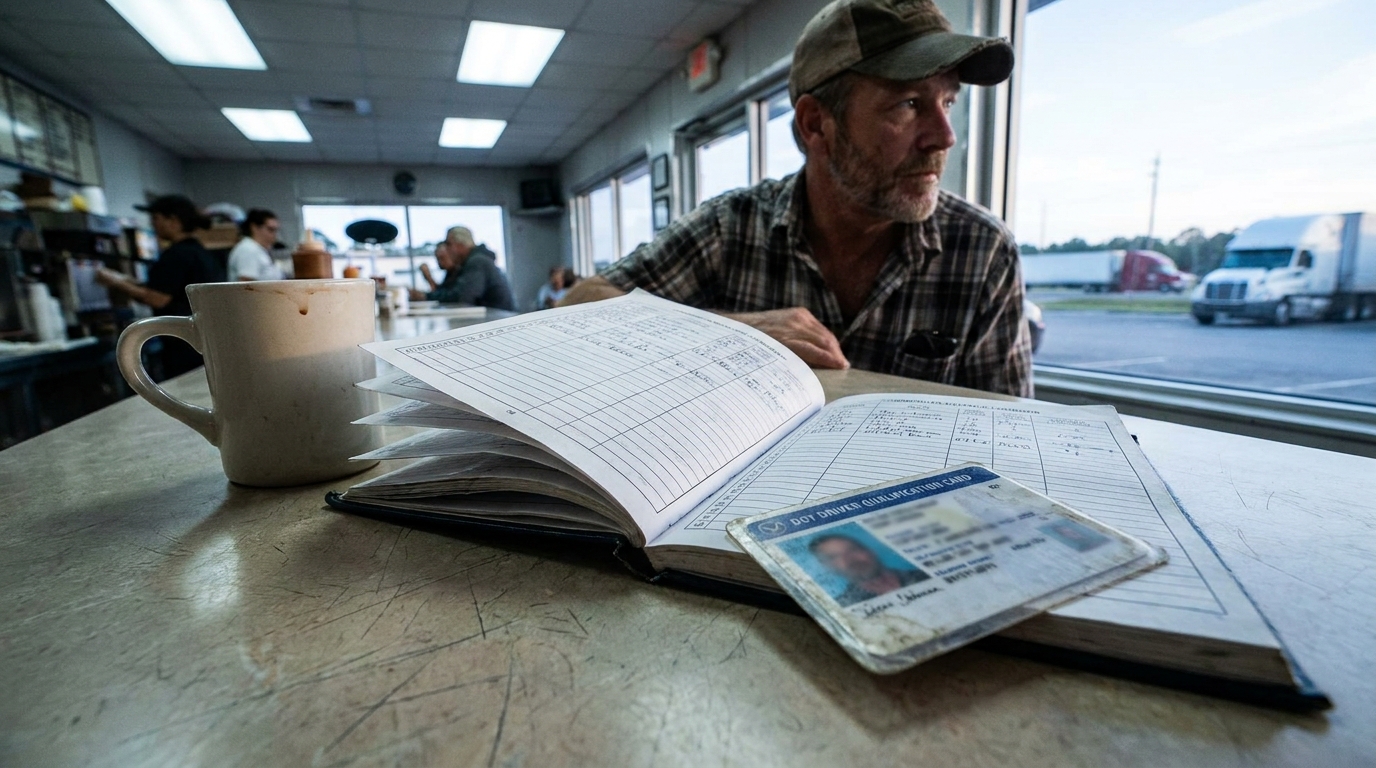
💡 Pro Tip: Ask that the company’s driver qualification file, pre-employment testing records, and hiring documents be preserved in writing as soon as possible, because these materials can disappear once litigation is anticipated.
Negligent Hiring and Florida’s Background Check Safe Harbor
Florida gives employers a defense, but only if they actually did the homework. Under Fla. Stat. § 768.096, an employer is presumed not to have been negligent in hiring if it conducted a background investigation that did not reveal information demonstrating the employee’s unsuitability. This statutory presumption typically informs common-law theories of negligent hiring, retention, and supervision. For commercial carriers, the presumption is not automatic and can be undercut when the company cuts corners.
A proper investigation contemplates several specific steps:
- A criminal background check through the Florida Crime Information Center
- Contact with prior employers and personal references
- A job application asking about prior criminal convictions
- A check of the driver’s license record when relevant to the work, under Fla. Stat. § 768.096(1)(d)
A skipped license check can quietly sink the company’s defense. When a carrier fails to obtain a driver license record check that would have revealed prior DUI convictions or license suspensions, it may be unable to rely on the statutory presumption. That omission often becomes powerful evidence of negligent hiring. The broader torts framework appears in Florida’s Chapter 768 negligence statutes.
💡 Pro Tip: Whether a driving-record check was "relevant to the work" is rarely disputed for a commercial trucker, so a missing check tends to weigh heavily against the company.
Federal Testing Rules That Florida Enforces
Florida incorporates federal commercial motor vehicle safety rules directly into state law. Under Fla. Stat. § 316.302(1)(a)-(b), owners and drivers of commercial motor vehicles operating in Florida in interstate commerce are subject to rules in 49 C.F.R. parts 382 through 386 and 390 through 397. This means Florida carriers must follow 49 C.F.R. Part 382, which mandates pre-employment, random, and post-accident drug and alcohol testing.
Skipping required alcohol screening can expose a carrier under both state and federal standards. A company that failed to test before putting a driver in a commercial truck may face liability on multiple fronts. Fla. Stat. § 316.3025 authorizes civil penalties reaching up to $11,000 for third and subsequent violations against companies that require or allow drivers to violate 49 C.F.R. s. 392.80 (texting prohibition) or 49 C.F.R. s. 392.82 (handheld mobile phone prohibition) while operating a commercial motor vehicle. Employers can verify a driver’s testing violations through the FMCSA Drug and Alcohol Clearinghouse.
💡 Pro Tip: Post-accident toxicology and Clearinghouse records are time-sensitive; a demand to preserve them early can prevent gaps that insurers later exploit.
Why an Intoxicated Trucker Strengthens Your Case
Evidence of intoxication can transform an ordinary negligence case into something far more serious. Florida has a long-standing public policy against intoxicated operators of commercial transportation. In a civil DUI truck crash matter, proof of impairment can support arguments that the conduct was not merely careless but unlawful.
The Punitive Damages Threshold
Punitive damages are reserved for the most serious misconduct. Under Fla. Stat. § 768.72(2), a defendant may be liable for punitive damages only on clear and convincing evidence of intentional misconduct or gross negligence. Gross negligence is conduct so reckless or wanting in care that it constitutes a conscious disregard or indifference to the life, safety, or rights of others.
When the Company Itself Faces Punitive Exposure
A corporation can face punitive damages for its own gross negligence. Under Fla. Stat. § 768.72(3), punitive damages against an employer require that the employee or agent’s conduct first meet the gross negligence or intentional misconduct standard, and additionally that (a) the employer actively and knowingly participated in such conduct; (b) the officers, directors, or managers of the employer knowingly condoned, ratified, or consented to such conduct; or (c) the employer itself engaged in conduct constituting gross negligence that contributed to the injury. Knowingly hiring or retaining an unfit driver with a known impairment history may, under certain circumstances, meet this standard.
How Comparative Fault Shapes a Florida Truck Accident Claim
Florida apportions damages according to each party’s share of the blame. Under Fla. Stat. § 768.81(3), a court enters judgment against each liable party based on that party’s percentage of fault. This is why allocating fault between the drunk driver and the negligent employer is so central to Florida trucking company liability.
There is a hard ceiling on a plaintiff’s own fault. Since the 2023 tort reform, Fla. Stat. § 768.81(6) provides that a party found to be greater than 50 percent at fault for their own harm may not recover damages. Insurers frequently try to shift blame onto the injured person to push them past that line, which makes thorough investigation essential.
| Legal Issue | Governing Authority | Practical Effect |
|---|---|---|
| Apportioning fault | Fla. Stat. § 768.81(3) | Liability split by percentage |
| Plaintiff over 50% at fault | Fla. Stat. § 768.81(6) | Recovery barred |
| Negligent hiring safe harbor | Fla. Stat. § 768.096 | Presumption may be lost if checks skipped |
| Punitive damages | Fla. Stat. § 768.72 | Clear and convincing proof |
Deadlines You Cannot Afford to Miss
Timing can decide whether a valid claim ever gets heard. Following the 2023 reform under HB 837, general negligence claims accruing after the law’s effective date moved from a four-year to a two-year statute of limitations under Fla. Stat. § 95.11.
Exceptions exist, but courts interpret them narrowly. Tolling and delayed-discovery arguments may apply in limited circumstances, yet they are not automatic and should never be assumed.
💡 Pro Tip: Treat the two-year window as your working deadline and gather evidence early, because waiting to "see how injuries heal" can quietly forfeit a strong claim.
How a Florida Drunk Driving Accident Attorney Can Help
A drunk driving accident attorney focuses on proving both the driver’s impairment and the company’s independent failures. That often means securing driver qualification files, testing records, black box data, and hiring documents before they are lost. A seasoned Florida truck injury attorney can also anticipate insurer tactics that aim to minimize payouts or shift blame onto you. If your collision happened near Hollywood, learn more from a dedicated Florida truck injury attorney who handles these claims.
Every case turns on its own facts, so outcomes are never guaranteed. A knowledgeable drunk driving accident attorney can evaluate whether negligent hiring, retention, or punitive theories realistically fit your situation and explain the risks candidly.
Frequently Asked Questions
-
Can I sue the trucking company instead of just the driver?
Often, yes. Florida law recognizes direct claims like negligent hiring under Fla. Stat. § 768.096 and owner liability under Fla. Stat. § 324.021(9)(b)3, so both the driver and company may be defendants.
-
What if the company says it ran a background check?
A background check alone may not save the company. Under Fla. Stat. § 768.096, the presumption contemplates a criminal check, reference contacts, a proper application, and a driver’s license review. A missing license check can weaken the presumption.
-
How long do I have to file a Florida truck accident claim?
Generally two years for negligence claims. Under Fla. Stat. § 95.11 as amended by HB 837, most general negligence actions now carry a two-year deadline.
-
Can I recover if I was partly at fault?
Possibly, up to a limit. Under Fla. Stat. § 768.81(6), you may recover if you were 50 percent or less at fault, but recovery is barred if you were more than 50 percent responsible.
-
Are punitive damages available in a DUI truck crash lawyer case?
Sometimes, under a demanding standard. Fla. Stat. § 768.72 permits punitive damages on clear and convincing evidence of gross negligence, which may include knowingly hiring an unfit, impaired driver.
Protecting Your Right to Recover After a DUI Truck Crash
When a carrier hires a drunk trucker and someone gets hurt, Florida law provides real avenues for accountability. Between negligent hiring rules, incorporated federal testing standards, comparative fault apportionment, and potential punitive exposure, injured victims have meaningful tools to hold companies responsible. Acting quickly to preserve records and meet the two-year deadline can make a decisive difference.
You do not have to face the trucking company’s insurer alone. Connect with Attorney Big Al at 1-800-HURT-123 for guidance, call 1-800-487-8123 to speak about your situation, or request a review through the firm’s online contact page so your rights and deadlines are protected from day one.
