Understanding Snowbird Crash Liability on Boca Raton Roads
Key Takeaways: When a snowbird causes a Boca Raton car accident, liability falls on the at-fault driver, but Florida law can extend responsibility to vehicle owners, rental companies, and insurers. Florida’s no-fault system governs crashes that occur in Florida, but its application to out-of-state drivers depends on statutory presence rules and policy language; your PIP coverage will generally pay first when Florida PIP applies. A liability claim for non-economic damages generally opens only when your injury meets the serious injury threshold, while PIP exhaustion can allow pursuit of additional economic damages beyond PIP limits. Modified comparative fault reduces your recovery by your share of blame and bars recovery if you are more than 50 percent at fault. Official crash reports and documentation form the backbone of successful claims.
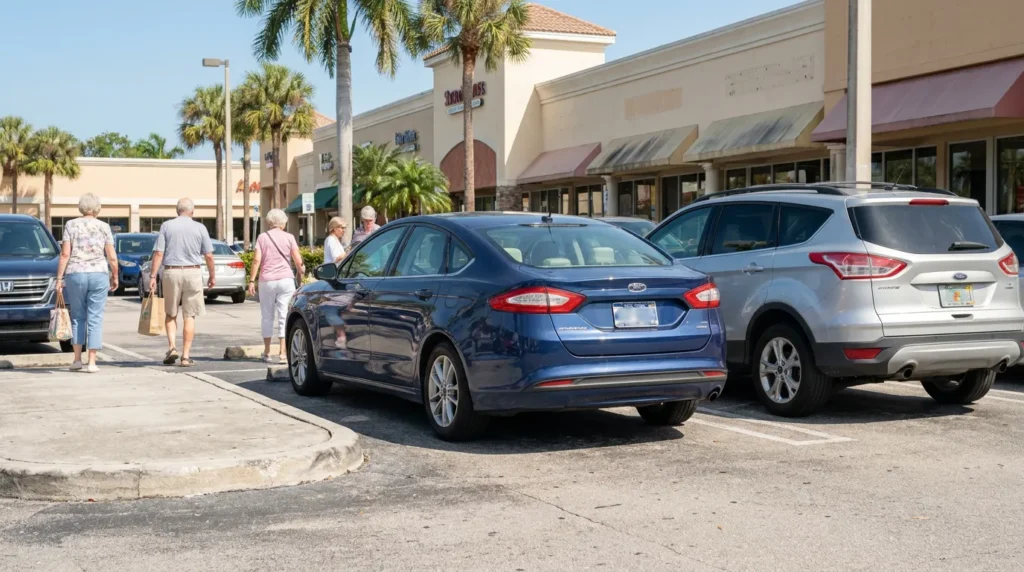
When a seasonal visitor causes a wreck, liability usually falls on the at-fault snowbird driver, but Florida law can also reach vehicle owners, rental companies, and insurers. Each winter, Palm Beach County welcomes thousands of out-of-state drivers, and unfamiliar roads and heavy traffic can increase crash risk. If a seasonal driver injured you, understanding fault and coverage is the first step toward recovery.
If you were hurt by a seasonal driver, reach out to Attorney Big Al at 1-800-HURT-123 by calling 1-800-487-8123 or using the firm’s confidential case review form to learn about your options.
Why an Out-of-State Driver Is Still Bound by Florida Law
Florida’s no-fault system governs crashes that occur in Florida, but it does not automatically apply to every out-of-state driver regardless of policy language or presence.
Florida’s No-Fault Law under ss. 627.730 through 627.7405 governs motor vehicle injury claims in Florida. However, under Fla. Stat. § 627.733(2), nonresident vehicle owners are required to maintain Florida PIP coverage only after their vehicle has been physically present in Florida for more than 90 days during the preceding 365 days. Whether an out-of-state insurer must pay Florida PIP benefits therefore depends on the specific language of the out-of-state policy and whether the driver meets the statutory presence threshold.
Even a visiting driver’s home-state insurer can be pulled into Florida’s procedures in some circumstances, for example when the vehicle is registered in Florida or the insurer does business here, but ultimate coverage depends on the policy terms and applicable statutes.
The statute also can preempt conflicting policy language in many situations, but whether an out-of-state policy provides Florida-conforming PIP depends on the policy and the 90-day presence rule.
Specific statutory provisions control over general policy language in many cases, but an out-of-state policy that does not contain conforming coverage or a driver who has not met the 90-day presence threshold may not be subject to Florida PIP requirements.
💡 Pro Tip: Save every document connected to the crash, including your insurance declarations page. Knowing your PIP limits helps you understand when a liability claim may open.
How Personal Injury Protection Shapes Your First Steps
When Florida PIP applies, your own PIP coverage pays first, even when a snowbird clearly caused the wreck.
Florida law requires most registered vehicle owners to carry Personal Injury Protection insurance, and after a Boca Raton car accident, your PIP coverage pays a portion of initial medical expenses and lost wages regardless of fault when Florida PIP applies.
Prompt medical treatment matters because Florida law generally requires initial treatment within 14 days to preserve PIP benefits.
A direct liability claim for non-economic damages against the seasonal driver generally becomes available only if the injuries meet the serious injury threshold; PIP exhaustion alone allows pursuit of additional economic damages beyond PIP limits but does not independently open a full tort claim for non-economic damages.
The serious injury threshold under Fla. Stat. § 627.737(2) is the legal gateway to suing for pain and suffering; whether an injury meets that threshold is fact-dependent, and courts and insurers weigh medical evidence carefully.
How a Car Accident Attorney Boca Raton Victims Rely On Evaluates Fault
Fault in a snowbird crash is measured under Florida’s comparative fault system, which divides responsibility by percentage.
Florida applies a comparative fault system to negligence claims, meaning liability and damages are apportioned according to each party’s share of fault.
A seasonal driver’s insurer will often try to assign some blame to you. Review the governing statute in Florida negligence and damages laws to see how these principles are organized.
Following 2023 tort reform, Florida uses a modified version with a hard cap on recovery.
If you are more than 50 percent at fault, you are barred from recovering damages, while a share of 50 percent or less reduces your recovery proportionately.
A car accident attorney Boca Raton residents consult can help document the seasonal driver’s conduct to protect your percentage.
Damages are allocated individually rather than collectively among defendants.
Florida apportions damages under a several-liability model, meaning each defendant is generally liable only for their own percentage of fault.
When multiple parties contributed to a crash, this framework decides who pays what. If your collision involved a visitor from another jurisdiction, our overview of an out-of-state driver accident Florida claim explains how these rules play out.
💡 Pro Tip: Do not accept a quick recorded statement blaming yourself. Even innocent phrasing can raise your fault percentage under Florida law.
When Vehicle Owners and Rental Companies Share Responsibility
Liability may extend beyond the seasonal driver when a borrowed or rented vehicle is involved.
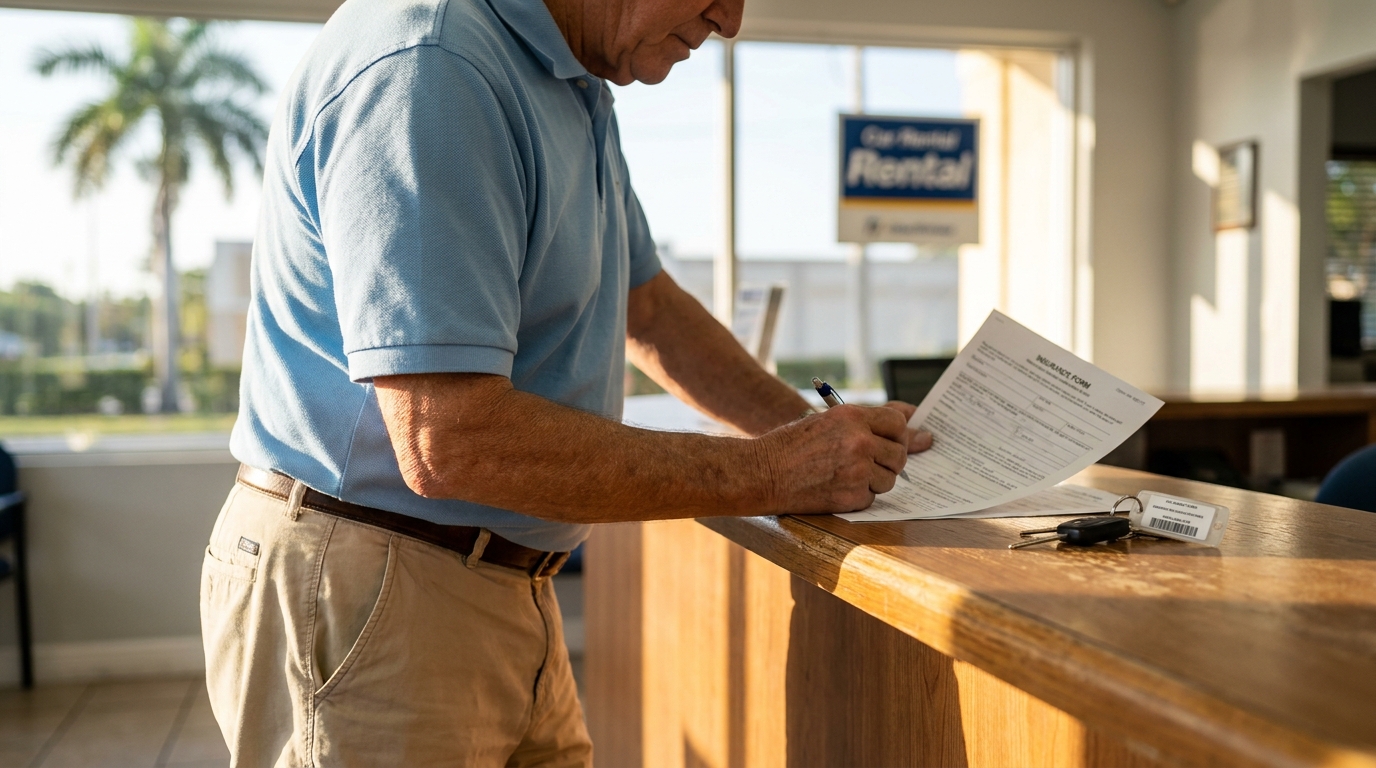
Under Florida’s dangerous instrumentality doctrine, when a snowbird causes a car accident while driving a borrowed or rented vehicle with the owner’s consent, Florida law may extend liability to the vehicle’s owner.
This is significant when the driver’s personal coverage is thin.
The statute sets defined limits for private owners who lend their cars.
For vehicles loaned by a natural person not in the rental business, the owner can be held vicariously liable up to 100,000 dollars per person and 300,000 dollars per incident for bodily injury, and up to 50,000 dollars for property damage.
If the snowbird driver carries less than 500,000 dollars combined coverage, the owner may face up to an additional 500,000 dollars in economic damages. For short-term rental vehicles, the Graves Amendment (49 U.S.C. § 30106) fully preempts Florida’s dangerous instrumentality doctrine and the statutory vicarious-liability provisions previously applied to rental companies, eliminating vicarious liability for qualifying rental companies; a rental company can only be held liable for its own negligence or criminal wrongdoing.
These figures come from Florida’s financial responsibility rules in the motor vehicle financial responsibility statute.
| Potentially Liable Party | General Basis for Liability |
|---|---|
| Snowbird driver | Direct negligence in causing the crash |
| Private vehicle owner | Loaning a vehicle to a permissive user |
| Rental company | Direct liability only for the company’s own negligence or wrongdoing (vicarious liability preempted by federal law) |
| Multiple parties | Each pays their own percentage of fault |
💡 Pro Tip: Photograph the vehicle’s plate, registration, and rental paperwork at the scene. Identifying the true owner can reveal additional coverage.
Building Evidence After a Seasonal Driver Crash
Official crash documentation is often the backbone of a snowbird crash liability claim.
Any driver involved in a Boca Raton car accident, including snowbird drivers, must immediately report a crash to local police, county sheriff, or Florida Highway Patrol when the accident results in injury, death, or apparent property damage of at least 500 dollars under Fla. Stat. § 316.065(1).
That report frequently becomes key evidence.
Investigators are required to prepare a formal long-form report in many serious cases, and the officer who investigates must complete and submit it within 10 days after finishing the investigation.
Under Fla. Stat. § 316.066, a Florida Traffic Crash Report Long Form must be completed and submitted to the department within 10 days after completing an investigation by the law enforcement officer who investigates a motor vehicle crash that resulted in death, personal injury, or complaints of pain or discomfort; involved a violation of s. 316.061(1) or s. 316.193; or rendered a vehicle inoperable requiring a wrecker. The statute explicitly enumerates names and addresses of parties and vehicle identification among the required content in the short-form crash report provisions, and officers are required to collect proof of insurance documentation for any crash report submitted under the statute.
The Florida Highway Patrol is empowered to investigate accidents, secure testimony, and make reports under Fla. Stat. § 321.05(1), and their findings may be used as evidence, subject to accident-report privilege limiting use of a driver’s own statements.
Where a snowbird’s conduct was especially dangerous, additional remedies may be available.
Punitive damages require clear and convincing evidence that the defendant engaged in intentional misconduct or gross negligence under Fla. Stat. § 768.72(2).
Gross negligence means conduct so reckless that it constituted conscious disregard for the life, safety, or rights of others.
Courts apply this standard narrowly.
Defenses You Should Anticipate From the Other Side
Expect the seasonal driver’s insurer to try to shift blame, sometimes onto nonparties.
A defendant can seek to shift fault to a nonparty but must affirmatively plead and prove that nonparty’s fault by a preponderance of evidence under Fla. Stat. § 768.81(3).
Anticipating this tactic helps preserve evidence.
Certain claims fall outside the standard comparative fault structure.
The statute contains exceptions and does not apply to intentional torts or certain pollution-related actions, and the 50 percent bar does not apply to medical negligence claims, which remain under pure comparative negligence.
Working with a dedicated Boca Raton car accident lawyer helps you respond to these defenses effectively.
Common challenges plaintiffs face after a seasonal driver crash include:
- Locating a visitor who has returned to another state
- Confirming whether the vehicle was borrowed, rented, or owned
- Meeting the serious injury threshold to move beyond PIP
- Countering attempts to raise your comparative fault percentage
Frequently Asked Questions
-
Does a snowbird’s out-of-state insurance still apply in Florida?
Generally yes, but only if Florida PIP applies under statutory rules or the out-of-state policy contains conforming Florida coverage. Florida law implements no-fault procedures for crashes in Florida, but nonresident vehicles are subject to the 90-day presence rule and policy language can determine whether Florida PIP benefits are available.
-
Can I still recover if I was partly at fault?
Yes, as long as you were not more than half responsible. Your damages are reduced by your percentage of fault, and recovery is barred only when you are more than 50 percent at fault.
-
What if the snowbird was driving a rented car?
The rental company may share liability within statutory limits for short-term rentals, though federal law often limits this. Florida law can extend responsibility to rental companies under certain circumstances, but the Graves Amendment generally shields rental companies absent their own fault.
-
When can I sue the driver directly instead of using PIP?
Generally, you can pursue additional economic damages beyond PIP limits if PIP is exhausted, but a direct claim for non-economic damages (pain and suffering) is generally available only if your injuries meet the serious injury threshold. Whether an injury qualifies is fact-dependent and often turns on medical evidence.
-
Are punitive damages common in these cases?
No, they are reserved for egregious conduct proven by a heightened standard. Clear and convincing evidence of intentional misconduct or gross negligence is required, and courts apply this narrowly.
Protecting Your Recovery After a Boca Raton Crash
Determining liability when a snowbird causes a Boca Raton car accident depends on the facts, vehicle, and coverage involved. Florida’s no-fault system shapes your first steps, modified comparative fault rules govern how damages are divided, and owner and rental company liability may broaden your sources of recovery. Because these questions are fact-sensitive, careful documentation and prompt legal guidance can make a meaningful difference.
If a seasonal driver injured you, do not wait to protect your rights. Contact Attorney Big Al at 1-800-HURT-123 today by calling 1-800-487-8123 or by requesting your free consultation online to discuss the next steps in your case.