
Understanding Your Rights After an Injury in a Florida Rental
Key Takeaways: Yes, an apartment complex in Florida can be sued for tenant injury when property owner negligence causes harm. Landlords owe a continuous duty to keep rental premises safe under Fla. Stat. § 83.51, with apartment complexes carrying added obligations for common areas, locks, lighting, and essential services. Paying tenants are typically treated as invitees owed reasonable care including inspection, repair, and warning of hazards. To win, injured tenants must prove duty, breach, causation, and damages, while anticipating defenses like open-and-obvious hazards, lack of notice, and Florida’s modified comparative fault rule barring recovery if you exceed 50 percent fault. Negligent security claims arise when weak safety measures contribute to third-party criminal acts, and complexes skipping required protections forfeit statutory liability presumptions. A strict two-year deadline under Fla. Stat. § 95.11(5)(a) applies to injuries accruing on or after March 24, 2023, making prompt documentation essential.
Yes, an apartment complex can be sued for tenant injury in Florida when property owner negligence causes harm. Florida law places clear safety duties on landlords, and when ignored, injured tenants may pursue compensation. This area of law holds property owners responsible for injuries from unsafe conditions. Whether your case involves broken stairs, poor lighting, or criminal attacks in shared areas, recovery depends on proving the landlord failed to meet their legal duty.
If you or a loved one were hurt in a rental property, Attorney Big Al at 1-800-HURT-123 is ready to help. Call 1-800-487-8123 for a free consultation, or reach out through our contact page to discuss your situation.
What Duties Florida Landlords Owe Their Tenants
Florida imposes a continuous, non-delegable duty on landlords to keep rental premises safe throughout tenancy. Under Fla. Stat. § 83.51(1), landlords must comply with building, housing, and health codes, and maintain roofs, floors, steps, porches, exterior walls, foundations, and structural components in good repair capable of resisting normal forces. This duty cannot be delegated to contractors to escape responsibility.
Apartment complexes carry additional obligations beyond single-family homes. Under Fla. Stat. § 83.51(2)(a), landlords of dwelling units other than single-family homes or duplexes must make reasonable provisions for extermination of rats, mice, roaches, ants, wood-destroying organisms, and bedbugs; provide locks and keys; maintain the clean and safe condition of common areas; provide garbage removal and outside receptacles; and maintain functioning facilities for heat during winter, running water, and hot water. Breaches resulting in tenant injury can support claims under Florida’s landlord-tenant statute.
Your legal status shapes the care owed to you. Property owners owe invitees a heightened duty including regularly inspecting for hidden dangers, repairing them, and warning of uncorrected hazards. As a paying tenant, you typically fall into this protected category, strengthening the duty owed.
💡 Pro Tip: Keep copies of every written maintenance request you submit. A documented history of unaddressed complaints can be powerful evidence that the landlord had notice of a dangerous condition.
When Poor Maintenance Turns Into Landlord Liability
Landlords can be held responsible for injuries in shared spaces of rental property. These areas include lobbies, hallways, parking lots, swimming pools, and fitness centers. Because tenants have little control over communal spaces, responsibility for safety rests with the property owner.
Certain hazards appear repeatedly in apartment injury claims. Common dangerous conditions include:
-
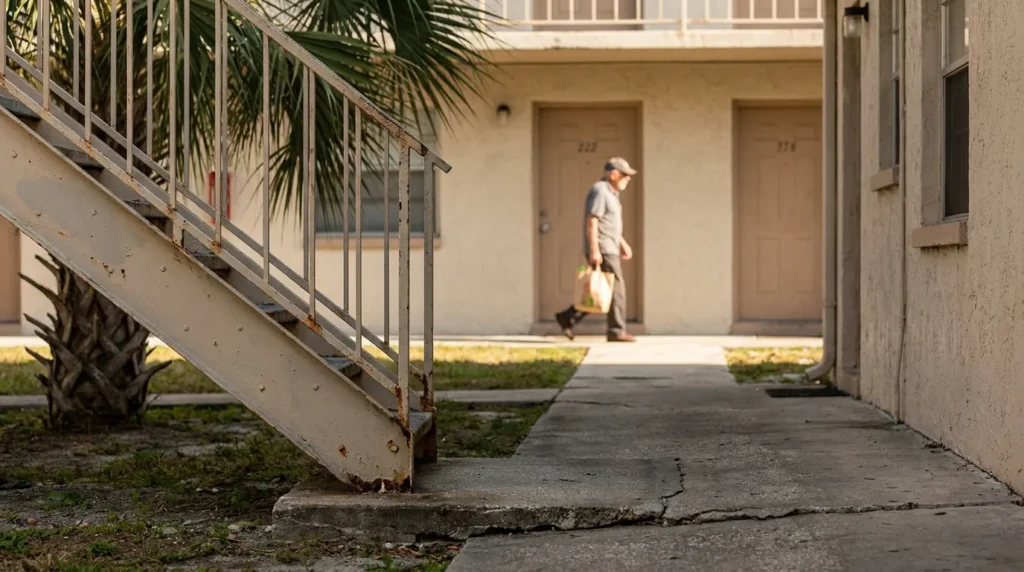
Structural defects such as decaying stairs and loose handrails
-
Inadequate lighting in stairwells and parking lots
-
Faulty equipment like malfunctioning elevators, and negligent security including broken locks or gates
Florida law limits when landlords are responsible for these conditions. Under Fla. Stat. § 83.51(4), landlords aren’t responsible for conditions created by the tenant’s negligent or wrongful acts, family members, or others on premises with tenant consent. Complexes can raise defenses if your conduct contributed to the hazard, so honest documentation matters.
Suing an Apartment Complex for Injury: Proving Your Case
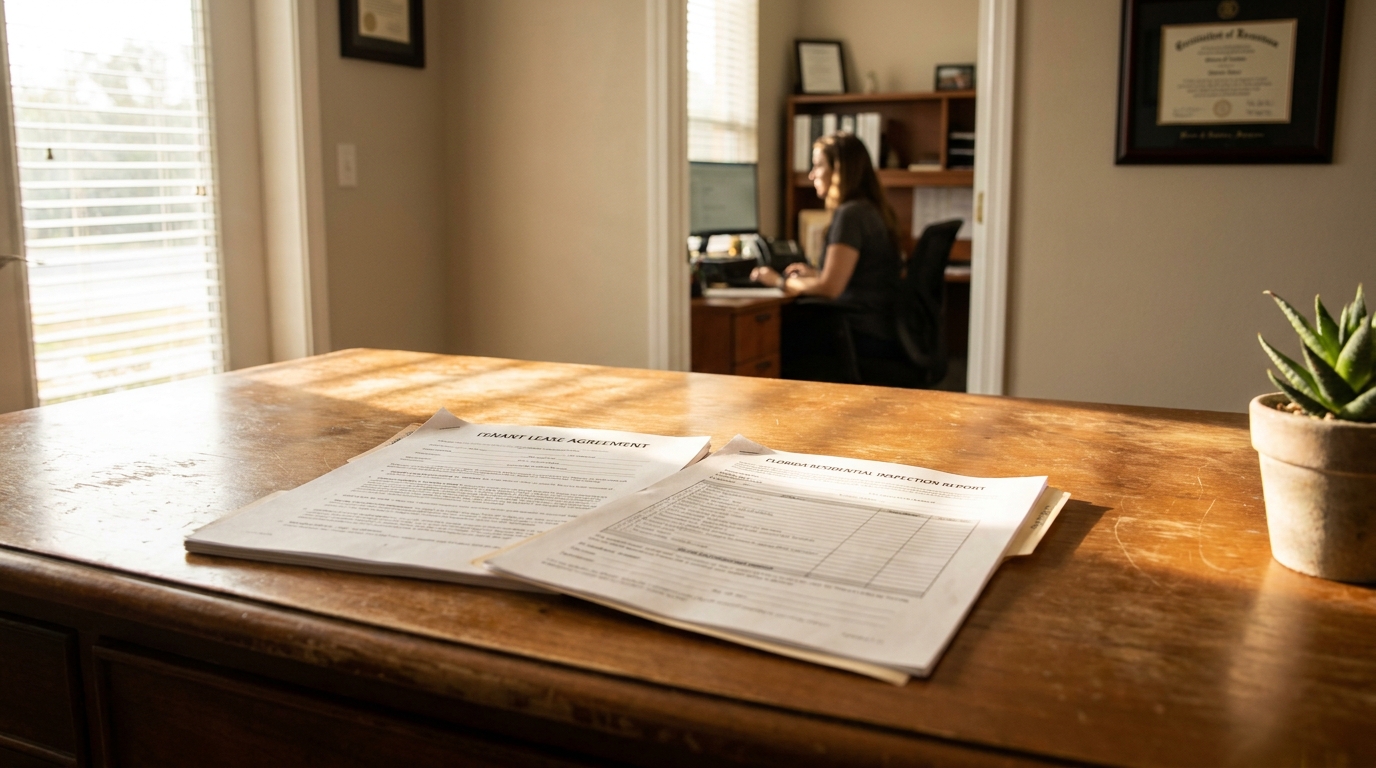
Winning a maintenance-based injury claim requires proving four core elements. To succeed in premises liability lawsuits, injured persons must prove duty of care, breach of that duty, causation, and measurable damages. Each element depends on specific facts.
Apartment complexes routinely raise several defenses. Common defenses include that danger was open and obvious, the landlord lacked notice, and comparative fault of the injured person. Anticipating these arguments early helps build strong claims. Our overview of premises liability in Florida and who can file provides additional foundation.
Florida applies a modified comparative fault rule affecting recovery. Under Fla. Stat. § 768.81(6), any party found greater than 50 percent at fault may not recover damages; this doesn’t apply to medical negligence actions. Partial fault doesn’t automatically end cases, but being mostly responsible bars recovery entirely.
💡 Pro Tip: Photograph the hazard from multiple angles as soon as possible after an injury, before the landlord has a chance to repair it. Conditions change quickly, and early images can preserve critical proof.
Negligent Security and Criminal Acts on Apartment Property
Florida has specific rules addressing injuries from third-party criminal acts on rental property. Under Fla. Stat. § 768.0701, in actions against property owners brought by persons lawfully on property injured by third-party criminal acts, fact-finders must consider fault of all contributing persons. Complexes can be accountable when weak security contributes to violent attacks.
Newer provisions in the Florida negligence statute create safety benchmarks for multifamily properties. Under Fla. Stat. § 768.0706(2), owners of multifamily properties with at least five units that substantially implement defined security measures gain a rebuttable presumption against liability for third-party criminal acts. Measures include security cameras at entry/exit points, parking lots lit to 1.8 foot-candles, lighted walkways and common areas, one-inch deadbolts, window and sliding door locks, locked pool gates, and door peepholes.
Complexes skipping required steps cannot claim that presumption. Under Fla. Stat. § 768.0706(2)(b)-(c), by January 1, 2025, owners must obtain a crime prevention through environmental design assessment no more than three years old and provide crime deterrence and safety training to current employees, with new employee training within 60 days of hire. Failure to meet these requirements forfeits the protective presumption, strengthening injured tenants’ positions.
| Safety Standard | Statutory Source | Why It Matters |
|---|---|---|
| Structural repair duty | Fla. Stat. § 83.51(1) | Sets baseline maintenance obligations |
| Common area and lock duties | Fla. Stat. § 83.51(2)(a) | Applies specifically to apartments |
| Security measures presumption | Fla. Stat. § 768.0706(2) | Defines negligent security benchmarks |
| Comparative fault | Fla. Stat. § 768.81(6) | Determines recovery limits |
Deadlines That Can Make or Break Your Claim
Florida sets a strict time limit for filing negligence lawsuits against apartment complexes. Under Fla. Stat. § 95.11(5)(a), negligence actions must generally be brought within two years for claims accruing on or after March 24, 2023 (four years for earlier claims). Missing this deadline almost certainly results in dismissal regardless of claim strength.
While narrow exceptions exist, courts interpret them narrowly. Tolling or delayed discovery applies only in limited circumstances and should never be assumed. This civil statute of limitations is separate from government administrative claim deadlines. The safest approach is prompt action. Speaking with a knowledgeable Florida premises liability lawyer early preserves your rights.
💡 Pro Tip: Request a copy of the police report and any incident report the complex prepared. These records often capture details witnesses forget within days.
Frequently Asked Questions
1. Can I sue my apartment complex if I was partly at fault?
Possibly, depending on your share of fault. Florida uses modified comparative fault, and under Fla. Stat. § 768.81(6), persons found more than 50 percent at fault cannot recover. If your fault is 50 percent or less, you may recover a reduced amount.
2. How long do I have to file a tenant injury lawsuit in Florida?
Generally two years from injury date. Under Fla. Stat. § 95.11(5)(a), negligence actions accruing on or after March 24, 2023 must be filed within that window. Because exceptions are narrowly applied, consult counsel quickly.
3. What if I was attacked by a stranger in my apartment parking lot?
You may have a negligent security claim. Under Fla. Stat. § 768.0701, fault of all contributing parties is considered, and complexes ignoring required security measures under Fla. Stat. § 768.0706 may face greater exposure.
4. Does the landlord have to fix problems in common areas?
Yes, under most circumstances. Fla. Stat. § 83.51(2)(a) requires apartment landlords to make reasonable provisions for extermination of certain pests, maintain clean, safe common areas, provide working locks, and ensure essential services such as garbage removal, outside receptacles, and functioning facilities for heat during winter, running water, and hot water, making them potentially liable for injuries from neglect.
5. What evidence helps a Florida apartment injury claim?
Documentation is key. Photos, written maintenance requests, medical records, witness statements, and incident reports establish notice, breach, and damages.
Protecting Your Recovery After an Apartment Injury
Florida law gives injured tenants real avenues to hold negligent apartment complexes accountable, but success depends on facts and timely action. From structural repair duties under Fla. Stat. § 83.51 to negligent security standards under Fla. Stat. § 768.0706 and the two-year deadline in Fla. Stat. § 95.11(5)(a), the framework favors tenants who document injuries and understand their rights. Thoughtful investigation and timely action make meaningful differences.
Don’t wait until evidence disappears or your filing window closes. Contact Attorney Big Al at 1-800-HURT-123 today, call 1-800-487-8123 for a free case review, or send us your details online so we can help you pursue the recovery you deserve.
