
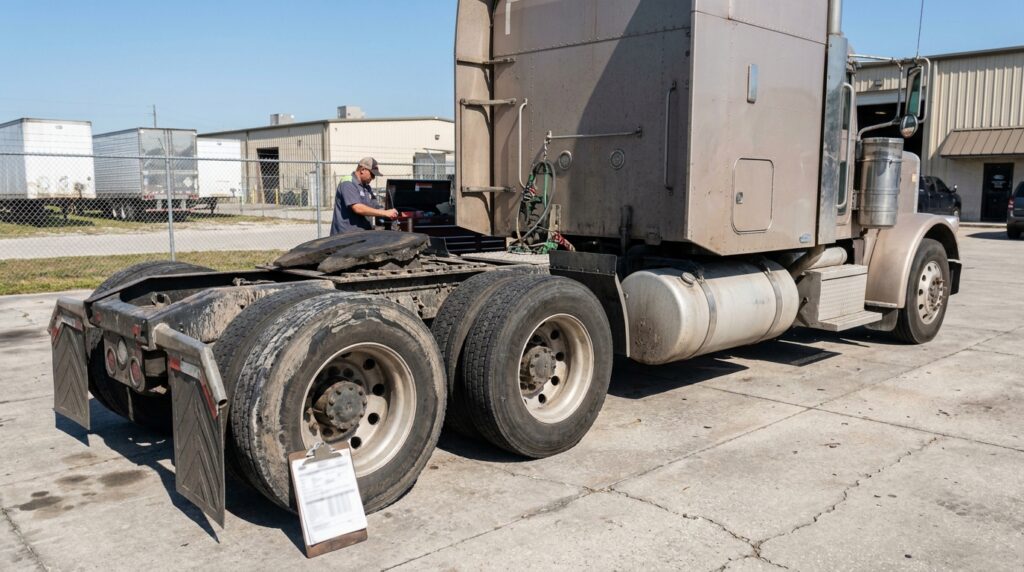
Holding Trucking Companies Accountable for Maintenance Failures in Florida
Key Takeaways: Florida law allows injury victims to sue trucking companies for accidents caused by poor vehicle maintenance. Federal FMCSA maintenance standards are enforceable under FL § 316.302, with violations penalized under FL § 316.3025. The 2023 passage of HB 837 shortened the statute of limitations for personal injury claims from four years to two years. Trucking companies cannot escape liability for their own maintenance failures through lease arrangements under FL § 324.021(9)(b). A truck accident attorney in Florida can help you build a strong claim using inspection records, crash reports, and federal safety violations.
Yes, a trucking company can generally be sued for poor maintenance that causes an accident in Florida. When a commercial truck collides with a passenger vehicle due to worn brakes, faulty tires, or broken lighting, the consequences are often catastrophic. More than 5,000 people died in crashes with large trucks in some recent years nationwide (for example, 5,472 in 2023 and 5,340 in 2024), a figure that has risen approximately 30% in the past decade. Florida ranks third nationally for truck-related fatalities. If you or a loved one suffered injuries in a crash involving a poorly maintained truck, Florida law may provide a path to hold the trucking company directly responsible.
If you need guidance after a serious truck collision, Attorney Big Al at 1-800-HURT-123 is ready to help. Call 1-800-487-8123 or reach out online to discuss your case today.
Why Poor Truck Maintenance Leads to Serious Crashes
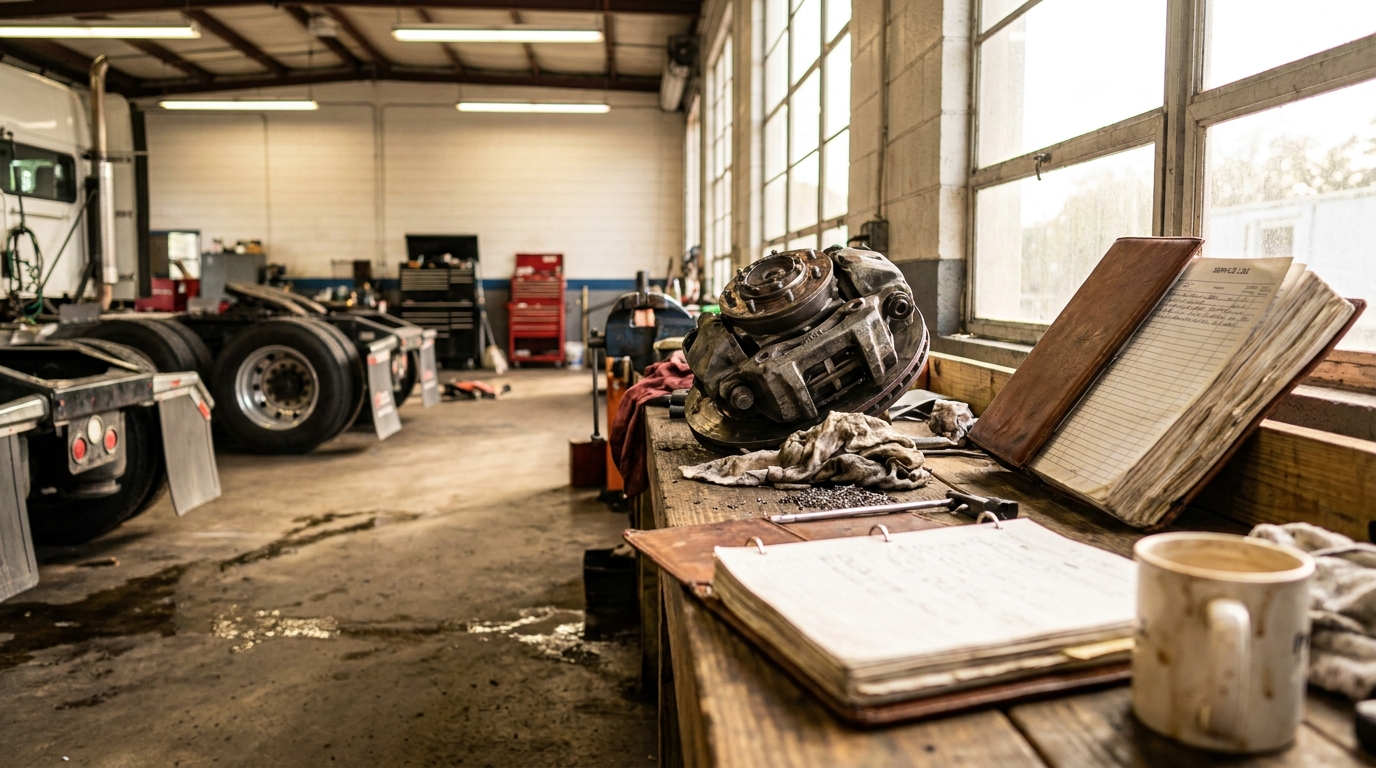
Negligent truck maintenance is one of the most common causes of commercial truck accidents that form the basis of injury lawsuits. Trucking companies and owner-operators have a legal duty to keep their vehicles in safe operating condition. When they cut corners on inspections, replacements, or repairs, they put every driver at risk.
Common maintenance failures that lead to truck crashes include:
- Worn or defective braking systems
- Tire blowouts from bald or improperly inflated tires
- Broken or missing lighting and reflectors
- Steering and suspension defects
- Trailer coupling and securement failures
These failures typically result from systemic decisions by trucking companies to delay repairs, skip scheduled inspections, or pressure drivers to keep rolling despite known mechanical problems. When those decisions lead to a crash, the company may bear significant legal responsibility.
💡 Pro Tip: If you were involved in a truck crash, ask your attorney to request the trucking company’s maintenance logs and pre-trip inspection reports immediately. These records can disappear or be altered if not preserved early.
How Florida Law Enforces Federal Truck Maintenance Standards
Florida adopts and enforces federal FMCSA regulations under FL § 316.302, including 49 C.F.R. Parts 393 and 396, which set detailed standards for commercial vehicle equipment and maintenance. Penalties for violations are established under FL § 316.3025. This means a trucking company that violates federal maintenance requirements is also violating Florida motor vehicle law.
Roadside Inspections and Out-of-Service Orders
Florida law gives certified law enforcement officers authority to stop and inspect commercial vehicles on state highways. Under FL § 316.302, if an officer finds that a truck is missing required equipment or that any part is not in proper repair and continued operation would be unduly hazardous, the officer can order the vehicle out of service under the North American Standard Out-of-Service Criteria until corrections are made.
Consequences for Ignoring Safety Orders
The penalties for defying these orders are severe. Under FL § 316.3026, the Office of Commercial Vehicle Enforcement can issue out-of-service orders to motor carriers who violate safety regulations. Any person who knowingly operates a commercial motor vehicle in violation of an out-of-service order commits a third-degree felony. In a civil lawsuit, evidence that a trucking company operated vehicles despite an out-of-service order can serve as compelling proof of negligence.
💡 Pro Tip: FMCSA maintenance violations are public record. Your attorney can access a trucking company’s federal safety profile, including past inspection results and out-of-service rates, to build your case.
Trucking Company Liability: Who Is Really at Fault?
Trucking companies are often held liable for their employees’ negligence under established legal doctrines. However, some carriers attempt to classify drivers as independent contractors to distance themselves from accident liability. Understanding this distinction is critical for any Florida truck crash claim. You can learn more about who can be held liable after a truck crash to better understand your options.
Owners and Lessors Cannot Escape Their Own Negligence
Florida’s financial responsibility statute provides important protection for crash victims. Under FL § 324.021(9)(b), nothing in the statute limits the liability of a vehicle owner or lessor "for its own negligence." This means that if a trucking company owns or leases a truck and negligently failed to maintain it, they cannot hide behind lease arrangements to avoid responsibility. This provision preserves direct negligence claims against trucking companies for maintenance failures regardless of lease structure.
| Legal Basis | What It Means for Your Claim |
|---|---|
| FL § 316.302 (FMCSA adoption) | Federal maintenance standards in 49 C.F.R. Parts 393 and 396 are enforceable as Florida law |
| FL § 316.3025 (Penalties) | Violations of adopted federal standards carry civil penalties and enforcement consequences |
| FL § 316.3026 (Out-of-service) | Operating after an out-of-service order is a felony and strong evidence of negligence |
| FL § 324.021(9)(b) (Financial responsibility) | Trucking companies cannot escape liability for their own maintenance negligence |
| FL § 316.065(1) (Crash reporting) | Mandatory crash reports may document unsafe truck conditions at the scene |
💡 Pro Tip: Florida law under FL § 316.065(1) requires drivers in crashes resulting in injury, death, or at least $500 in property damage to immediately report the crash. These official reports often contain law enforcement observations about the truck’s condition and can become critical evidence.
How HB 837 Changed the Rules for Truck Accident Attorney in Florida Cases
In 2023, Florida passed HB 837, which significantly altered the landscape for personal injury claims. Governor DeSantis signed the bill on March 24, 2023, shortening the statute of limitations for negligence-based personal injury claims from four years to two years for causes of action accruing on or after that date. The law also changed how medical bills are presented at trial, shifted Florida from a pure comparative negligence system to a modified system that bars recovery when the plaintiff is more than 50% at fault, and included new procedural requirements for bad faith claims against insurance companies.
Why the Shorter Deadline Matters
The two-year statute of limitations creates urgent pressure for crash victims. As Zach Cahalan, executive director of the Truck Safety Coalition, has noted, the first two to three years after a crash are completely disorienting for victims. With Florida’s window now set at just two years, crash victims must move quickly to protect their rights.
💡 Pro Tip: Do not wait to consult an attorney after a truck accident. The two-year statute of limitations begins running from the date of the crash, and critical evidence like electronic logging data and maintenance records may be lost if not preserved promptly.
The Insurance Gap in Trucking Accident Cases
Even when a victim wins a truck accident case, collecting adequate compensation can be challenging. The minimum liability insurance for truckers carrying general freight across state lines is $750,000, a figure set by Congress in 1980 and never adjusted for inflation. For victims with catastrophic injuries, this amount may fall far short of covering actual losses. A truck accident attorney in Florida can investigate whether additional insurance policies, umbrella coverage, or direct claims against the trucking company’s assets may be available.
💡 Pro Tip: Ask your attorney to identify all potentially liable parties and insurance policies early. Trucking operations often involve multiple entities, including the carrier, the vehicle owner, the broker, and the shipper, each of which may carry separate insurance.
Frequently Asked Questions
1. Can I sue a trucking company if poor maintenance caused my accident in Florida?
Yes. Florida law under FL § 316.302 makes federal FMCSA maintenance standards enforceable at the state level, with penalties under FL § 316.3025. If a trucking company failed to properly maintain its vehicle and that failure contributed to your crash, you may have grounds for a negligence claim.
2. How long do I have to file a truck accident lawsuit in Florida?
Under HB 837, signed into law on March 24, 2023, the statute of limitations for negligence-based personal injury claims in Florida is two years from the date of the accident for causes of action accruing on or after that date. Limited exceptions may apply for minors or legally incapacitated individuals, so consult an attorney immediately after a crash.
3. What evidence helps prove a trucking company neglected vehicle maintenance?
Key evidence includes maintenance logs, pre-trip and post-trip inspection reports, FMCSA inspection history, out-of-service orders, driver complaints about vehicle conditions, and the official crash report filed under FL § 316.065(1). Electronic data from the truck’s onboard systems can also be valuable.
4. Can a trucking company avoid liability by using independent contractors?
Some trucking companies attempt to classify drivers as independent contractors to limit exposure. However, under FL § 324.021(9)(b), a vehicle owner or lessor cannot escape liability for its own negligence, including negligent maintenance. The specific facts of the working relationship and vehicle ownership will determine how liability applies.
5. Is $750,000 in insurance enough to cover serious truck accident injuries?
In many catastrophic injury cases, the federal minimum of $750,000 in liability coverage is insufficient. Victims with traumatic brain injuries, spinal cord damage, or long-term disabilities often face costs that far exceed this amount. Your attorney can explore additional sources of recovery based on the specific parties and policies involved.
Protect Your Rights After a Florida Truck Accident
Time is not on your side after a truck collision in Florida. With a two-year statute of limitations, changing civil litigation rules under HB 837, and trucking companies that may attempt to limit their exposure through contractor classifications or lease structures, injured victims need to act decisively. Florida law provides meaningful tools to hold negligent trucking companies accountable for maintenance failures, but using those tools effectively requires prompt action and thorough investigation.
Do not face the trucking company and its insurers alone. Attorney Big Al at 1-800-HURT-123 has a proven track record of fighting for truck crash victims in Florida. Call 1-800-487-8123 or contact us today to start building your case.
