
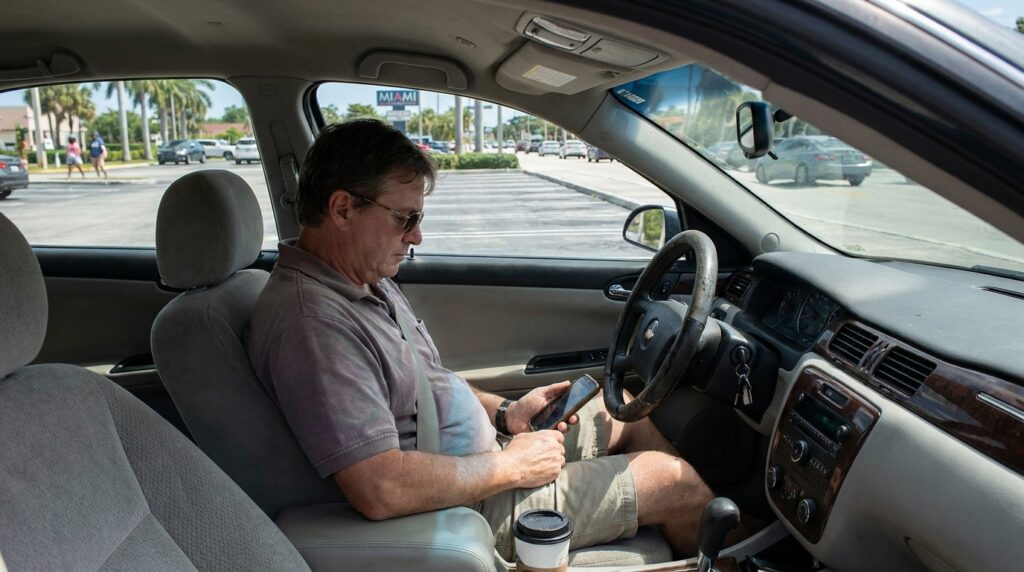
Key Takeaways: Distracted driving is one of the most dangerous behaviors on Florida roads, contributing to thousands of deaths and injuries annually. Florida law under FL § 316.305 targets texting while driving, and violations can help establish fault in personal injury claims. The state’s modified comparative fault system under FL § 768.81 determines damages based on each party’s fault percentage and bars recovery if a claimant is more than 50% at fault. Victims should understand their legal rights and act within filing deadlines. Consulting a car accident attorney in Florida can help injured individuals pursue deserved compensation.
Distracted driving is one of the most significant contributors to car crashes in Florida and nationwide. In 2024, 3,208 people were killed in motor vehicle crashes involving distracted drivers, and an estimated 315,167 suffered injuries. The percentage of drivers manipulating hand-held electronic devices increased 82% between 2013 and 2022, rising from 1.7% to 3.1%. Florida residents sharing some of the nation’s busiest roads cannot afford to ignore this trend. Whether rear-ended by a texting driver or sideswiped by someone adjusting their GPS, the consequences can be life-altering.
If you or a loved one has been hurt in a distracted driving crash, Attorney Big Al at 1-800-HURT-123 is ready to help. Call 1-800-487-8123 or reach out online today to discuss your case.
What Counts as Distracted Driving Under Florida Law?
Distracted driving encompasses any activity that diverts a driver’s attention away from the road. According to the National Highway Traffic Safety Administration (NHTSA), this includes phone use, eating and drinking, talking to passengers, adjusting entertainment or navigation systems, grooming, or calming a pet.
The behavior falls into three categories: visual, manual, and cognitive distractions. Visual distractions take your eyes off the road. Manual distractions take your hands off the wheel. Cognitive distractions take your mind off driving. Texting while driving is particularly dangerous because it involves all three simultaneously. Sending or reading a text takes your eyes off the road for about five seconds, at 55 mph, that equals driving the length of a football field with your eyes closed.
Florida’s Texting While Driving Statute
FL § 316.305 was enacted to prevent crashes related to texting while driving. This statute authorizes law enforcement to stop and cite drivers who text behind the wheel. Its goals include reducing injuries, deaths, property damage, and insurance rates connected to distracted driving crashes. For victims, this law creates a clear legal standard against which a distracted driver’s behavior can be measured.
💡 Pro Tip: If you were hit by a distracted driver, document everything at the scene. Photos of the other driver’s phone, witness statements about device use, and cell phone records obtained through legal discovery can all serve as critical evidence in your claim.
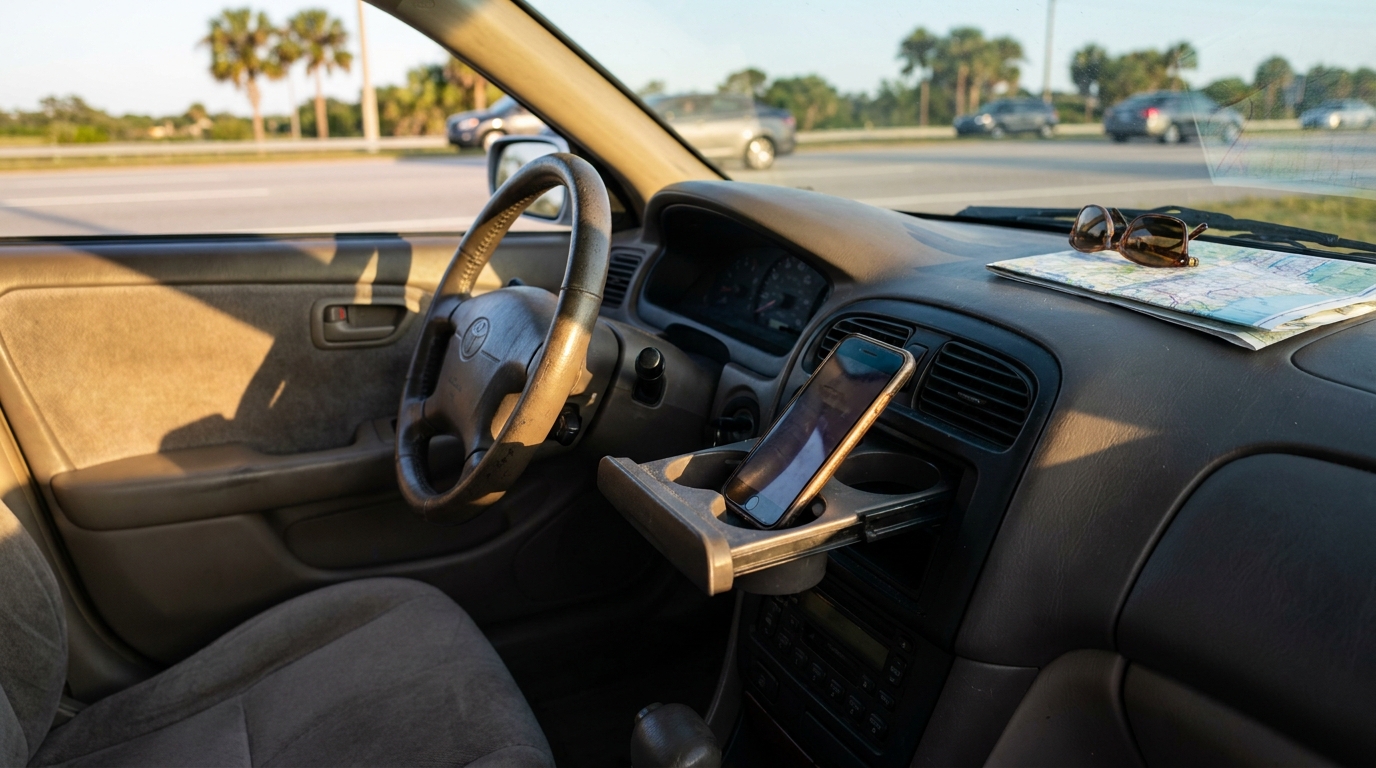
The Numbers Behind Distracted Driving: A Growing Threat
National crash data paints a sobering picture. NHTSA reported that 3,308 people died in distraction-affected crashes in 2022, a decrease from 3,522 deaths in 2021. However, distraction-affected fatal crashes have increased 4% since 2013, revealing a long-term upward trend. Cell phone use was involved in 12.1% of fatal distraction-affected crashes in 2022.
| Distracted Driving Metric | Data |
|---|---|
| Fatalities from distracted driving (2024) | 3,208 killed nationwide |
| Injuries from distracted driving (2024) | An estimated 315,167 people injured |
| Fatalities from distracted driving (2022) | 3,308 killed nationwide |
| Change in fatal distraction crashes since 2013 | 4% increase |
| Drivers manipulating devices (2013 vs. 2022) | 1.7% to 3.1% (82% increase) |
| Cell phone involvement in fatal distracted crashes (2022) | 12.1% |
These figures only capture reported cases, and actual numbers may be significantly higher. Distracted driving is notoriously underreported because drivers rarely admit to phone use, and in fatal crashes, the at-fault driver may not survive to provide a statement. Proving distraction often requires aggressive investigation, including subpoenas of phone records and analysis of vehicle data recorders.
💡 Pro Tip: Florida’s comparative fault rules mean that even if you bear some responsibility for a crash, you may still recover damages as long as your share of fault does not exceed 50%. Do not assume you have no case simply because circumstances were complicated.
How a Car Accident Attorney in Florida Can Help Prove Distracted Driving
Proving distraction requires more than just your word. A successful claim depends on establishing the four elements of negligence: duty, breach, causation, and damages. Every driver owes a duty of care to others. When a driver picks up a phone to text or otherwise diverts their attention, they may breach that duty. If the breach causes a collision resulting in injuries, the injured party may pursue compensation.
Negligence Per Se and Florida’s Distracted Driving Laws
In states with texting bans like Florida, violating the law can establish "negligence per se." This legal doctrine means the violation of a safety statute may serve as proof of negligence. Under FL § 316.305, texting while driving is a citable offense. If the at-fault driver received a citation for texting at the time of your crash, this could significantly strengthen your claim. The majority of states have enacted laws restricting phone use while driving, reflecting widespread recognition of this risk.
Florida’s Comparative Fault System
Florida follows a modified comparative fault system under FL § 768.81, which directly affects how damages are calculated. Under subsection (3), the court enters judgment against each party based on their percentage of fault. Critically, under subsection (6), added by HB 837 in 2023, any party found greater than 50% at fault for their own harm is completely barred from recovering damages. If a distracted driver is found 80% at fault and the injured party 20% at fault, the injured party’s recovery is reduced by 20%. However, if the injured party were more than 50% at fault, they would recover nothing. This framework makes thorough evidence gathering essential to minimize the claimant’s fault percentage and maximize recovery.
💡 Pro Tip: Keep detailed records of all medical treatment, lost wages, and out-of-pocket expenses after a crash. These records form the foundation of your damages claim and help your attorney build the strongest case possible.
Tolling Rules and Filing Deadlines for Florida Car Accident Victims
Understanding filing deadlines is critical. Florida imposes statutory deadlines for personal injury claims, and missing them can permanently bar your right to recovery. Under FL § 95.051, the statute of limitations may be tolled in limited circumstances, including absence from the state by the person to be sued, use of a false name by the defendant, or concealment within the state preventing service of process.
Courts interpret tolling exceptions narrowly, so victims should not rely on these provisions to delay filing. The safest course is always to consult with a distracted driving accident lawyer as soon as possible. Waiting too long can result in lost evidence, faded memories, and a weakened case.
💡 Pro Tip: Even if you are unsure whether the driver who hit you was distracted, an attorney can investigate by requesting cell phone records, reviewing traffic camera footage, and interviewing witnesses to uncover evidence of distraction.
Steps to Take After a Distracted Driving Crash in Florida
What you do after a car accident injury in Florida can shape the outcome of your entire claim. Taking the right steps protects both your health and legal rights.
- Seek medical attention immediately, even if you feel fine. Some injuries may not produce symptoms for hours or days.
- Call law enforcement and ensure an official crash report is filed. Ask the responding officer to note any signs of distraction.
- Gather evidence at the scene, including photos, videos, witness contact information, and details about the other driver’s behavior.
- Avoid giving recorded statements to the other driver’s insurance company before speaking with an attorney.
- Contact a Florida auto accident lawyer promptly to preserve evidence and understand your filing deadlines.
💡 Pro Tip: If a witness tells you they saw the other driver looking at their phone, ask if they would be willing to provide a written statement. Witness testimony about device use can be powerful evidence in a distracted driving claim.
Frequently Asked Questions
1. Can I sue a distracted driver who caused my car accident in Florida?
Yes, in many cases you may file a personal injury lawsuit against a distracted driver. You must prove the elements of negligence: the driver owed you a duty of care, breached that duty through distraction, caused the crash, and you suffered measurable damages. An auto accident attorney Florida residents trust can evaluate your claim’s strength.
2. What evidence can prove the other driver was texting?
Cell phone records, witness testimony, traffic camera footage, and vehicle data recorders can establish distraction. A citation issued under FL § 316.305 for texting while driving may also support your claim through negligence per se.
3. What if I was partially at fault for the crash?
Under FL § 768.81, your recovery is reduced by your fault percentage, provided your fault does not exceed 50%. If you are found greater than 50% at fault, you are barred from recovering any damages. The court assigns fault percentages to each party, and damages are awarded accordingly.
4. How long do I have to file a distracted driving injury claim in Florida?
Florida law imposes statutory filing deadlines for personal injury claims, and missing them can permanently bar your case. While tolling under FL § 95.051 may apply in limited situations, courts interpret these exceptions narrowly. Speak with an attorney as soon as possible to protect your rights.
5. Does a texting citation guarantee I will win my case?
A citation for violating FL § 316.305 can strengthen your claim but does not guarantee a specific outcome. Courts consider the totality of evidence, including comparative fault, injury severity, and witness credibility. Every case turns on its own facts.
Protecting Your Rights After a Florida Distracted Driving Crash
Distracted driving continues to cause devastating injuries and fatalities across Florida, and victims deserve strong legal advocacy to pursue fair compensation. From understanding Florida’s texting ban under FL § 316.305 to navigating the comparative fault system under FL § 768.81, the legal landscape requires careful attention. If you have been hurt by a negligent, distracted driver, you do not have to face the insurance companies or legal system alone.
Attorney Big Al at 1-800-HURT-123 has the experience and dedication to fight for your full recovery. Call 1-800-487-8123 today or contact us now for a consultation about your car accident claim.
