
Nursing home wrongful death: 3 Steps to Seeking Justice
Understanding Nursing Home Wrongful Death in Florida
Nursing home wrongful death occurs when a resident dies due to negligence, abuse, or inadequate care provided by the facility or its staff. This tragic outcome represents a failure in the most basic duty of care that families trust these facilities to provide.
What constitutes nursing home wrongful death:
- Death caused by facility negligence or staff misconduct
- Preventable deaths from medical errors or delayed treatment
- Deaths resulting from physical, emotional, or sexual abuse
- Fatalities due to unsafe conditions or inadequate supervision
- Deaths from failure to provide proper nutrition, medication, or medical care
The emotional toll on families is devastating. As one family member shared, “Losing a loved one is painful enough. Having to live with the thought of a loved one dying because of the choice of a nursing home can be unbearable for those left behind.”
In Florida nursing homes, facilities have a legal obligation to protect residents from harm. When they fail in this duty, families have the right to seek justice through wrongful death claims. The average nursing home abuse settlement is $406,000, though cases can range from hundreds of thousands to millions of dollars depending on the circumstances.
Common causes include:
- Falls due to inadequate supervision
- Untreated bedsores leading to sepsis
- Medication errors and mismanagement
- Malnutrition and dehydration
- Choking incidents during meals
- Infections from unsanitary conditions
Understanding your rights is the first step toward holding negligent facilities accountable and preventing similar tragedies from happening to other families.
When a loved one passes away in a nursing home, it is always a difficult time. However, when that death is caused by the facility’s negligence or abuse, it transforms grief into a complex legal and emotional journey. We understand that you are not just seeking financial compensation; you are seeking answers, accountability, and justice for your family. Our firm is committed to helping families steer these challenging waters, ensuring that negligent facilities are held responsible. The rise of nursing home litigation underscores the growing need for legal intervention in these cases. The Rise Of Nursing Home Litigation has shown that families are increasingly turning to the legal system to address preventable deaths and injuries.
Building a Nursing Home Wrongful Death Case in Boca Raton
This section details the process of establishing a wrongful death claim, from identifying the cause to understanding the legal requirements and potential financial outcomes. It is crucial for families in Boca Raton and across Florida to know their rights when a loved one’s death is suspected to be the result of a care facility’s failure.
Identifying Negligence: Common Causes and Warning Signs
The first step in any nursing home wrongful death case is to identify if negligence or abuse played a role in your loved one’s passing. A wrongful death is a legal term describing a death caused by someone else’s reckless or negligent actions. This means the death likely wouldn’t have occurred if the at-fault party had not behaved negligently or recklessly. Our legal team can help you determine if the circumstances surrounding your loved one’s death meet the criteria for a wrongful death claim.

Common Causes of Wrongful Death in Nursing Homes:
Nursing home wrongful deaths are typically due to a resident’s health care needs being neglected. Our experience shows that several recurring issues often lead to these tragic outcomes:
- Falls: Inadequate supervision can lead to residents falling and suffering severe injuries like hip fractures, traumatic brain injuries, or spinal cord trauma, which can be fatal, especially for the elderly. A Michigan jury awarded over $5,000,000 for an assisted living death lawsuit due to improper supervision and negligent care, highlighting the severity of such incidents.
- Bedsores (Pressure Ulcers): If not properly treated, bedsores can progress to severe stages, leading to dangerous infections like sepsis, which can be deadly. We’ve seen cases where residents died from sepsis due to an untreated bedsore.
- Malnutrition and Dehydration: When staff fail to provide adequate nutrition and hydration, residents can suffer severe health deterioration, organ failure, and ultimately death. A $650,000 settlement was reached in a Cook County, Illinois, case where a resident died from dehydration and sepsis.
- Medication Errors: These can include administering the wrong medication, incorrect dosages, missed doses, or dangerous drug interactions. A nursing home and pharmacy paid nearly $13 million to a former judge’s family after staff failed to administer antibiotics, leading to his death. Another Chicago, Illinois, case saw a $1.4 million settlement for medication negligence that led to a patient’s death.
- Infections: Due to their age and compromised health, nursing home residents are highly susceptible to infections. Facilities must have robust infection prevention protocols. Failure to do so can lead to outbreaks of illnesses like pneumonia or even Legionnaire’s disease, which can be fatal.
- Choking: Residents with swallowing disorders require careful supervision during meals. Negligence in this area can lead to choking incidents that result in death, as seen in a $750,000 settlement for a choking death in a skilled nursing care facility.
- Physical Abuse: Intentional harm from staff or even other residents can lead to fatal injuries. The World Health Organization (WHO) estimates that as many as one in six people aged 60 years and older experience abuse in a community setting each year, and this rate is higher in nursing homes.
Warning Signs of Neglect or Abuse:
It’s vital for families to recognize the “Red Flags of Abuse” that could indicate a dangerous environment for their loved ones. National Center on Elder Abuse. “Red Flags of Abuse.” While some signs might seem minor, they can collectively point to a pattern of neglect that could lead to a nursing home wrongful death:
- Unexplained Injuries: Bruises, cuts, fractures, or other injuries that cannot be reasonably explained or are inconsistent with the resident’s reported activities.
- Sudden Weight Loss or Poor Hydration: Significant and unexplained weight loss, dry mouth, or other signs of dehydration.
- Poor Hygiene: Unbathed appearance, soiled bedding or clothing, or strong odors.
- Staff Unresponsiveness or Evasiveness: Difficulty getting clear answers from staff, staff avoiding questions, or reluctance to allow family visits.
- Fear or Anxiety in the Resident: Your loved one becoming withdrawn, fearful, anxious, or showing signs of depression, especially around staff members.
- Unsanitary Living Conditions: Visible dirt, pests, or general uncleanliness in the resident’s room or the facility.
- Lack of Medical Attention: Untreated medical conditions, worsening bedsores, or delayed medical care for new symptoms.
We encourage you to learn more about how to spot these critical signs. More info about spotting abuse. If you observe any of these warning signs, it is crucial to act quickly.
The Legal Path to Justice: Filing a Nursing Home Wrongful Death Claim
When a nursing home wrongful death occurs, pursuing a legal claim can seem daunting. However, our firm is here to guide you through every stage of the process, ensuring your family’s rights are protected and justice is served.

Who is Eligible to File a Wrongful Death Lawsuit?
Generally, surviving family members are eligible to file a wrongful death lawsuit. In most cases, the deceased’s will appoints an estate representative (often an executor) to file the suit. If no will exists, the courts typically allow the next of kin to file. This usually includes:
- Surviving Spouse: The deceased’s husband or wife.
- Children: Biological or adopted children of the deceased.
- Parents: If the deceased had no surviving spouse or children.
- Estate Representative: An individual appointed to manage the deceased’s estate.
Depending on Florida state law and specific circumstances, other parties such as life partners, financial dependents, or even siblings may also be eligible. We can help you determine your eligibility during a free consultation.
Statute of Limitations: Florida Time Limits
A critical aspect of any wrongful death claim is the statute of limitations, which sets a strict deadline for filing a lawsuit. In Florida, the statute of limitations for a nursing home wrongful death lawsuit is generally two years from the date of the loved one’s death. This means you typically have two years to file your claim, although there can be rare exceptions that might extend this period. Missing this deadline can result in losing your right to pursue compensation entirely. It’s why contacting a lawyer promptly is so important.
What Evidence is Needed to Prove a Nursing Home Wrongful Death Case?
Building a strong case requires comprehensive evidence that clearly demonstrates the nursing home’s negligence led to your loved one’s death. Our team will carefully gather and analyze all available evidence, which typically includes:
- Medical Records: The deceased’s complete medical history, including physician’s orders, nurses’ notes, vital signs, medication administration records, and treatment plans. These records are crucial for showing a decline in health or untreated conditions.
- Facility Records: The nursing home’s internal records, such as incident reports, care plans, staffing records, complaint logs, and policies and procedures. These can reveal patterns of neglect or understaffing.
- Autopsy Report: If an autopsy was performed, the report can provide definitive medical evidence regarding the cause of death.
- Police Reports: If abuse or suspicious circumstances were reported, police reports can offer valuable insights.
- Surveillance Footage: Any available security camera footage from the facility could capture incidents of abuse or neglect.
- Witness Statements: Testimonies from other residents, visitors, former staff, or even current staff members who observed negligence or abuse.
- Photos and Videos: Visual documentation of injuries, unsanitary conditions, broken equipment, or other evidence of neglect.
- Expert Testimony: We often work with medical professionals, nursing home administrators, and other experts who can provide testimony on the standard of care and how the facility’s actions deviated from it, directly causing the death.
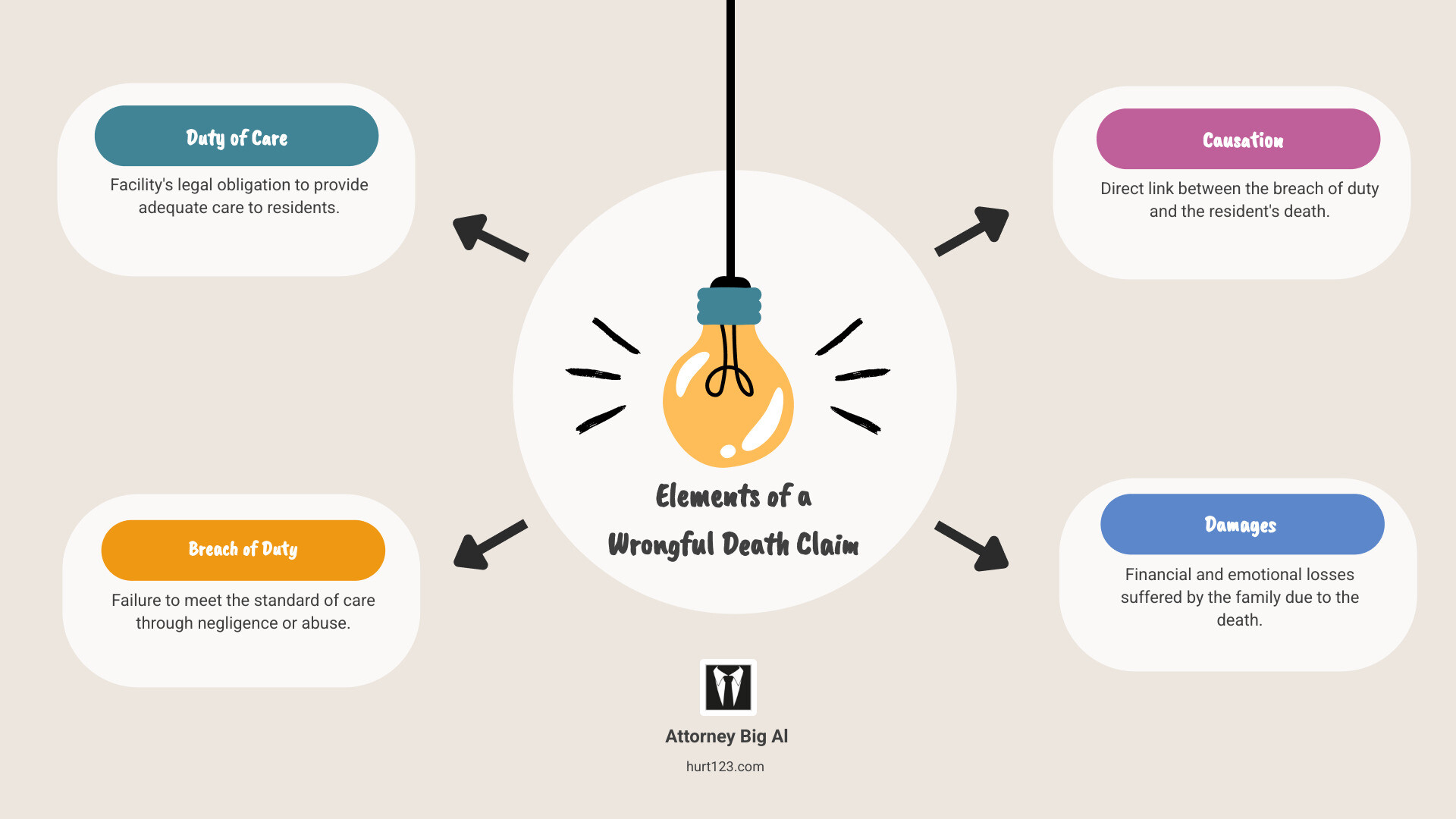
Proving Negligence: To succeed in a nursing home wrongful death lawsuit, we must prove four key elements:
- Duty of Care: The nursing home had a legal responsibility to provide a certain standard of care to your loved one.
- Breach of Duty: The nursing home failed to meet this standard of care through negligence or abuse.
- Causation: This breach of duty directly caused or significantly contributed to your loved one’s death.
- Damages: Your family suffered actual losses (economic and non-economic) as a result of the death.
We can assist you in understanding the process of filing a complaint against a nursing home. More info about filing a complaint. Our firm has the resources to investigate thoroughly and build a compelling case on your behalf.
Understanding Compensation: Settlements, Verdicts, and Damages
When pursuing a nursing home wrongful death claim, families can seek various types of compensation. It’s important to understand the difference between a settlement and a verdict, and what damages your family may be entitled to.
| Feature | Settlement – Verdict – |
|---|---|
| What is it? | A settlement is a negotiated agreement between the family and the nursing home’s insurance company, resolving the claim without going to trial. Most cases end in a settlement. – A verdict is a decision made by a jury after a trial. Verdicts can be higher than settlements but are not guaranteed. For example, a jury awarded $1.2 million in a case where a resident died from a fall. Verdicts can also be appealed, which can prolong the process. – |
| Pros | Faster resolution, less stressful for the family, confidential terms, and guaranteed compensation. – Potential for a higher award, public accountability for the nursing home. – |
| Cons | The settlement amount may be lower than a potential jury verdict. – Time-consuming, emotionally draining, no guarantee of winning, and the verdict can be appealed. – |
Types of Damages You Can Recover:
In a Florida nursing home wrongful death lawsuit, your family may be entitled to recover several types of damages, which are categorized as economic and non-economic.
- Economic Damages: These are tangible financial losses that can be calculated, such as:
- Medical expenses incurred by the deceased before their death.
- Funeral and burial expenses.
- Loss of the deceased’s expected net accumulations to the estate.
- Loss of financial support and services the deceased provided to surviving family members.
- Non-Economic Damages: These are intangible losses that are harder to quantify but are just as real:
- Pain and suffering of the deceased before their death (in a survival action).
- Loss of companionship, guidance, and protection for the surviving spouse.
- Mental pain and suffering for the surviving spouse and minor children (and adult children in some cases).
- Punitive Damages: In cases of extreme or intentional misconduct, punitive damages may be awarded. These are not meant to compensate for losses but to punish the at-fault party and deter similar behavior in the future. Florida law has specific requirements for awarding punitive damages, and we can evaluate if your case qualifies.
Every case is unique, and the value of a claim depends on many factors, including the severity of the negligence, the age and health of the resident, and the extent of the family’s suffering. Our team at Attorney Big Al will meticulously evaluate all aspects of your case to determine the full extent of damages your family deserves.
