
Reporting an Unsafe Condition on Property in Florida
Key Takeaways: If you are injured due to a dangerous condition on someone else’s property in Florida, you may have grounds for a premises liability claim. Florida law requires property owners to maintain safe conditions, and tenants have specific procedures to formally report hazards. Documenting the unsafe condition with photos, witness statements, and medical records is critical. You generally have two years from the date of injury to file a lawsuit under Fla. Stat. §95.11(4)(a). Your legal status on the property and the owner’s duty of care significantly affect your ability to recover damages.
Discovering a hazardous condition on someone else’s property in Florida can be alarming, especially if it has caused you or a loved one harm. Whether you slipped on an unmarked wet floor, tripped over a cracked sidewalk, or were injured from a broken handrail, knowing how to properly report that unsafe condition is critical. Florida premises liability law places clear obligations on property owners to keep premises safe, and when they fail, injured individuals may be entitled to compensation.
If you have been hurt due to an unsafe condition, Attorney Big Al at 1-800-HURT-123 can help you understand your rights. Call 1-800-487-8123 or reach out online today.
What Makes a Property Condition "Unsafe" Under Florida Law
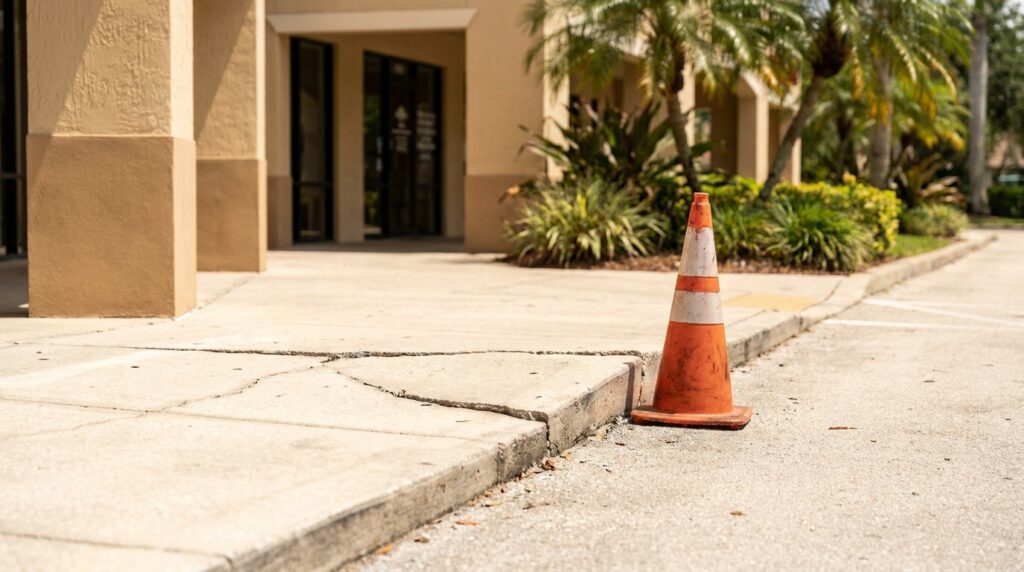
Florida law recognizes a wide range of hazards that can form the basis of a premises liability claim. Common examples include unrepaired fixtures, spills, broken windows, cracked sidewalks, broken locks, loose handrails, cluttered walkways, and overgrown vegetation.
All property owners in Florida are expected to maintain their properties and make reasonable repairs to avoid injuries to visitors. Under Florida negligence law, a cause of action requires a legal duty to protect the plaintiff, breach of that duty, a causal connection between the breach and injury, and actual damages. If a property owner knew or should have known about a dangerous condition and failed to address it, that failure may constitute a breach of duty.
💡 Pro Tip: Take photos and videos of the hazardous condition immediately after an incident. Capture timestamps, lighting conditions, and any lack of warning signs. This evidence can be difficult or impossible to recreate later, and it may prove essential to your claim.
Property Owner Duties and Why They Matter for Your Claim
In Florida, property owners owe different levels of care depending on your legal status when on their property. Under Fla. Stat. §768.075, the law limits the duty owed to trespassers. Under Florida common law, invitees, such as customers or hotel guests, are owed the highest duty of care, including a duty to inspect for and remedy dangerous conditions. For known (discovered) trespassers, a property owner must refrain from gross negligence or intentional misconduct and must warn of known dangerous conditions that are not readily observable. For unknown (undiscovered) trespassers, the owner need only refrain from intentional misconduct, there is no duty to warn of dangerous conditions and gross negligence is not part of the standard.
Understanding this distinction matters because your legal pathway to recovering damages depends on your status when on the property. A shopper injured in a store will generally face a more straightforward claim than someone injured while cutting through private property. You can review Florida’s tort statutes for additional detail.
The duty to maintain premises is generally considered a "non-delegable duty" under Florida law. This means the property owner remains ultimately responsible even if they hired a third-party maintenance company. Condominium or homeowners’ associations can also be held liable for failing to maintain common areas.
💡 Pro Tip: If you were injured in a common area maintained by an HOA or condo association, request a copy of their maintenance logs and any prior complaints about the same condition. These records can help establish that the association knew about the hazard.
How to Report an Unsafe Condition as a Tenant in Florida
Formal Written Notice to Your Landlord
Florida law provides tenants with a specific process for reporting unsafe conditions in rental properties. Under Fla. Stat. §83.51(1), residential landlords must comply with applicable building, housing, and health codes. Where no codes apply, landlords must maintain roofs, windows, doors, floors, steps, porches, exterior walls, foundations, and all other structural components in good repair and capable of resisting normal forces and loads, and keep plumbing in reasonable working condition. Additional obligations, such as common area maintenance and extermination, apply under §83.51(2) to landlords of dwelling units other than single-family homes or duplexes.
When a residential landlord fails to comply, the tenant may deliver written notice under Fla. Stat. §83.56(1) specifying the noncompliance and giving the landlord 7 days to cure the condition. If the landlord fails to cure within that period, the tenant may terminate the rental agreement. For nonresidential tenancies, Fla. Stat. §83.201 provides a separate process allowing written notice giving the landlord at least 20 days to make repairs when the premises are rendered wholly untenantable, with the potential remedy of withholding rent.
Tenant Responsibilities to Keep in Mind
While landlords bear primary responsibility, Florida law also places obligations on tenants under Fla. Stat. §83.52. Tenants must comply with applicable codes, keep their unit clean and sanitary, and avoid damaging the property. A landlord is generally not responsible for unsafe conditions created by the tenant’s negligent or wrongful acts.
💡 Pro Tip: Always send repair requests to your landlord in writing, whether by certified mail or email, and keep copies. Verbal complaints are difficult to prove later if your case goes to court.
Proving a Business Knew About a Hazard: Slip and Fall Evidence in Florida
If you slipped and fell on a foreign substance in a business establishment, Florida law under Fla. Stat. §768.0755 requires you to prove that the business had actual or constructive knowledge of the dangerous condition and failed to remedy it. Constructive knowledge can be established by showing the hazard existed long enough that a reasonable business should have discovered it, or that the same type of hazard regularly occurs at that location.
Gathering strong evidence right away can make or break your claim. To learn more about building this type of case, read about how to prove a business knew about a hazard in Florida.
| Evidence Type | Why It Matters | How to Obtain It |
|---|---|---|
| Photos/Videos | Documents the hazard as it existed at the time of injury | Use your phone immediately after the incident |
| Witness Statements | Corroborates your account and the condition’s duration | Collect names and contact information at the scene |
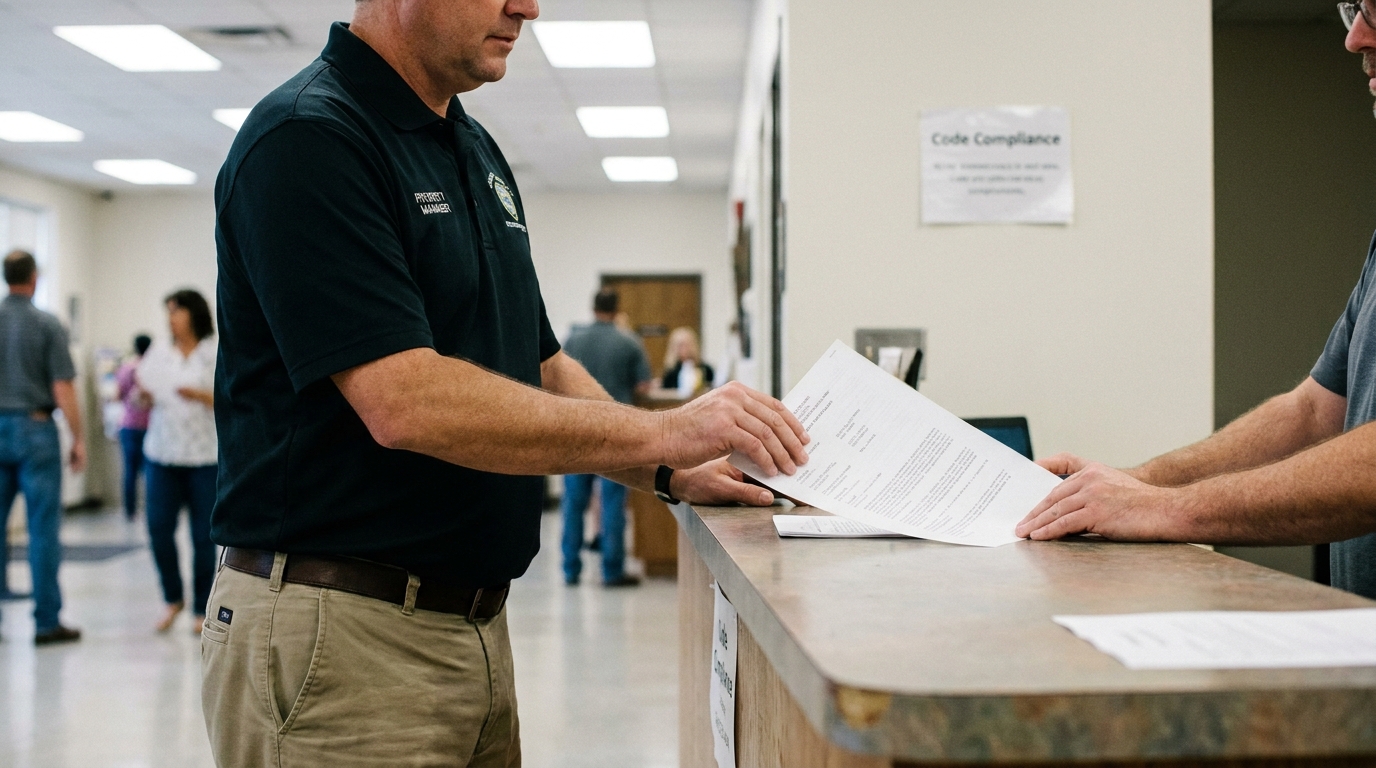
| Incident Report | Creates an official record with the property owner | Request one from management before leaving |
| Medical Records | Links the hazardous condition to your specific injuries | Seek medical attention the same day |
| Maintenance Logs | May show the owner knew about or neglected the hazard | Obtained through your attorney during litigation |
💡 Pro Tip: Ask the business to preserve any surveillance footage before you leave the property. Many systems overwrite recordings within days, and this footage can be the strongest piece of evidence in your case.
How Comparative Fault Can Affect Your Premises Liability Case in Florida
Florida follows a modified comparative fault system under Fla. Stat. §768.81(6) that can significantly impact your recovery. If you are found to be greater than 50 percent responsible for your injury, you are completely barred from recovering damages. If your fault is 50 percent or less, your damages are reduced proportionally. For example, if you ignored a clearly visible warning sign or entered a restricted area, a court may assign you significant fault. This rule does not apply to medical negligence claims under Chapter 766.
This underscores the importance of documenting the unsafe condition as it existed, independent of your conduct. Strong evidence showing the hazard was unmarked, concealed, or left unaddressed for an extended period will support your claim. Working with a premises liability lawyer in Florida can help you anticipate these defenses.
Filing Deadlines You Cannot Afford to Miss
In Florida, you generally have two years from the date of injury to file a premises liability lawsuit under Fla. Stat. §95.11(4)(a). Missing this deadline can permanently bar your claim. For actions involving design, planning, or construction defects on real property, Fla. Stat. §95.11(3)(c) sets a four-year statute of limitations and a seven-year statute of repose (reduced from ten years by SB 360, effective April 13, 2023). When the action involves a latent defect, time for the statute of limitations may run from when the defect is discovered or should have been discovered with the exercise of due diligence, but in any event the action must be commenced within seven years of the triggering event.
These deadlines make it essential to report the unsafe condition, seek medical attention, and consult a premises liability attorney promptly. Courts generally interpret tolling exceptions narrowly. You can review Florida’s statutes of limitations for specific provisions that may apply.
💡 Pro Tip: Even if you are unsure whether your injury warrants a legal claim, consult with an attorney well before the two-year deadline. Early legal guidance can help preserve evidence and protect filing rights you may not realize you have.
Frequently Asked Questions
1. How do I report an unsafe condition on someone else’s property in Florida?
Document the hazard with photos and videos, report it to the property owner or manager in writing, file an incident report if available, and seek medical attention for any injuries. If you are a residential tenant, Fla. Stat. §83.56(1) provides a formal written notice process giving your landlord 7 days to cure the noncompliance.
2. Can I still recover damages if I was partially at fault for my injury?
Under Florida’s modified comparative fault rule in Fla. Stat. §768.81(6), you may recover damages as long as you are not greater than 50 percent at fault. Your recovery will be reduced by your percentage of responsibility. If your fault exceeds 50 percent, you are barred from recovery.
3. How long do I have to file a premises liability lawsuit in Florida?
You generally have two years from the date of injury to file a negligence-based premises liability claim under Fla. Stat. §95.11(4)(a). Certain exceptions may apply in limited circumstances.
4. What if my landlord ignores my complaints about a dangerous condition?
If you are a residential tenant and your landlord fails to comply with Fla. Stat. §83.51, you may deliver written notice under Fla. Stat. §83.56(1) giving the landlord 7 days to cure. If the landlord still fails to act, you may have the right to terminate the rental agreement.
5. Does it matter that a property owner hired someone else to handle maintenance?
Generally, no. Under Florida law, the duty to maintain safe premises is a non-delegable duty, meaning the property owner remains ultimately responsible even if a third-party contractor was hired.
Protect Your Rights After a Property Injury in Florida
Reporting an unsafe condition on Florida property is about protecting your ability to seek fair compensation if that hazard caused you harm. From documenting the scene and filing written reports to understanding your legal status and applicable filing deadlines, every step matters. Florida law provides clear obligations for property owners and specific procedures for tenants, but navigating these rules after an injury can feel overwhelming.
You do not have to handle this alone. Attorney Big Al at 1-800-HURT-123 has extensive experience helping injured Floridians pursue premises liability claims. Call 1-800-487-8123 today or contact us online for a conversation about your case.
