
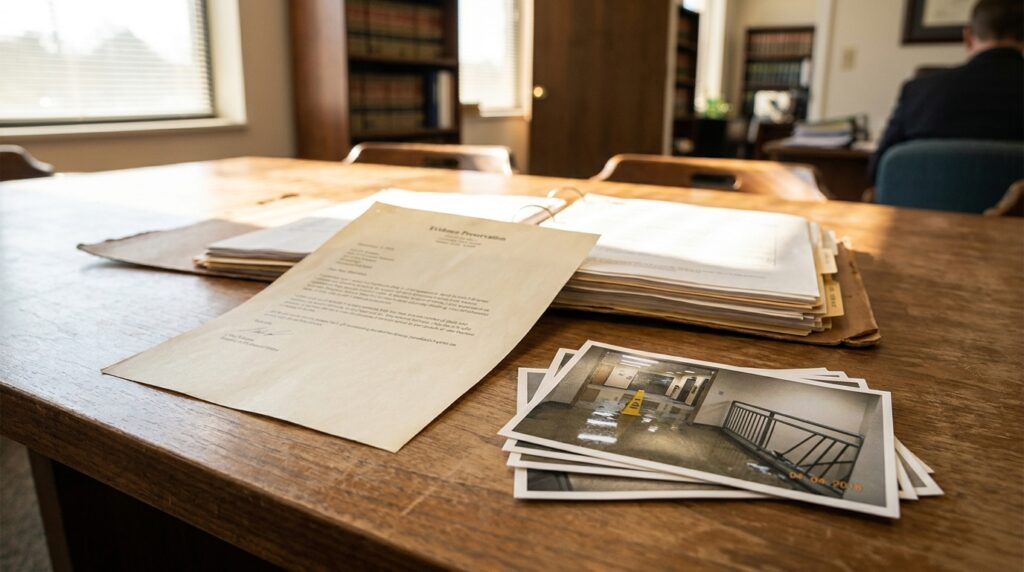
Understanding Spoliation Letters in Florida Premises Liability Cases
Key Takeaways: A spoliation letter is a formal demand requiring property owners to preserve critical evidence after an injury. In Florida, CCTV footage, maintenance logs, and incident reports can make or break a slip-and-fall claim. Sending this letter promptly establishes a legal duty to preserve evidence and may expose the opposing party to sanctions if destroyed. Florida law under § 768.0755 requires injured victims to prove a business had knowledge of a dangerous condition, making preserved evidence essential.
If you slipped, tripped, or fell on someone else’s property in Florida, the evidence proving what happened may already be disappearing. Surveillance footage gets overwritten, incident reports get misplaced, and cleaning logs vanish. A spoliation letter is a formal written demand that puts a property owner or business on legal notice to preserve all evidence related to your injury. Under Florida Statute § 768.0755(1), an injured person must prove the business had actual or constructive knowledge of the dangerous condition. Without preserved evidence, meeting that burden becomes significantly harder. That is why a spoliation letter is often one of the first steps a premises liability attorney in Florida will take after an accident.
If you were hurt on someone else’s property, Attorney Big Al at 1-800-HURT-123 is ready to help. Call 1-800-487-8123 or reach out online today.
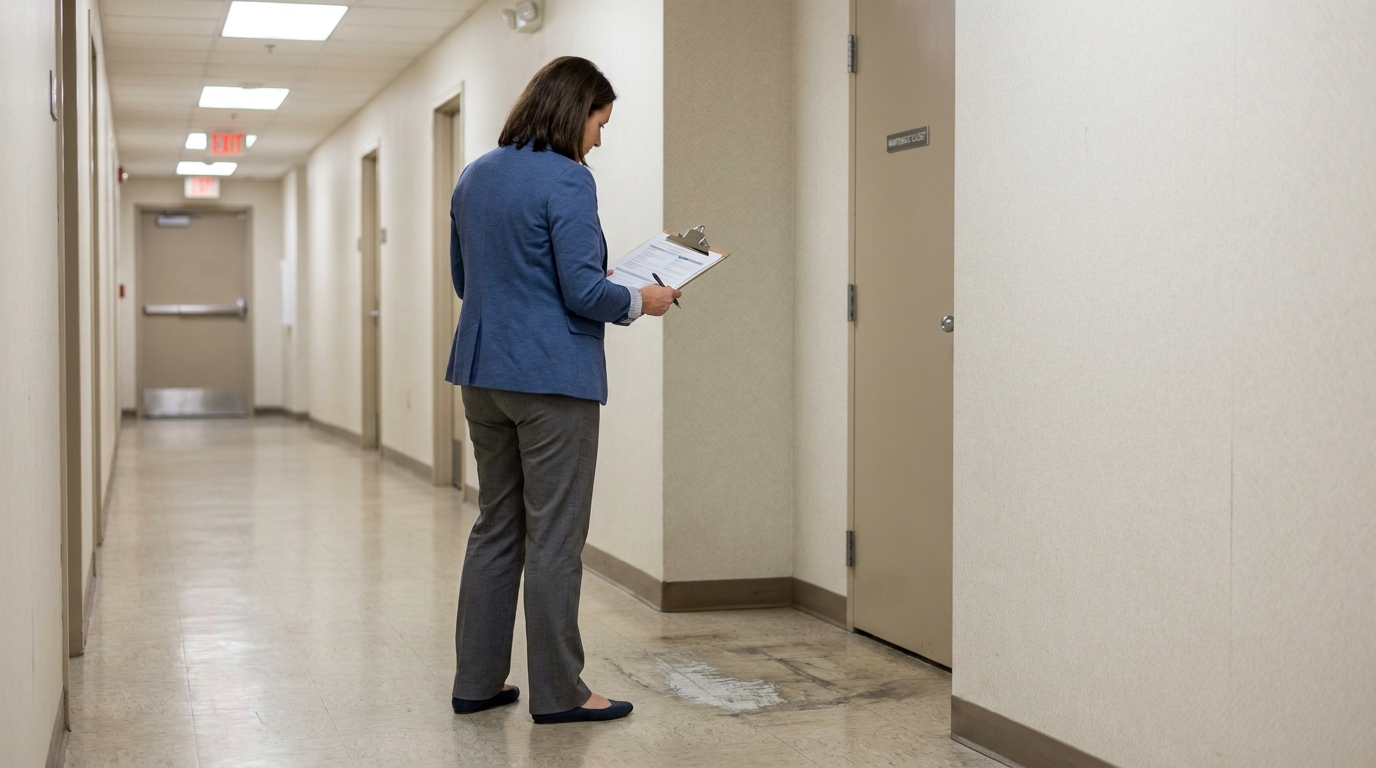
Why Evidence Preservation Matters in a Florida Slip-and-Fall Case
The strength of your premises liability claim depends on available evidence. Florida Statute § 768.0755(1) requires the injured person to show the business knew or should have known about the hazard. Constructive knowledge under § 768.0755(1)(a)-(b) can be proven by showing the dangerous condition existed long enough that ordinary care would have revealed it, or that it occurred with regularity. Surveillance video, cleaning logs, and inspection records establish these facts.
Florida courts recognize photographs and video as admissible evidence when properly authenticated. Under the Florida Evidence Code, photographs are admissible if a witness can testify the image fairly and accurately depicts the scene. This means photos and video of the accident scene carry real weight in court.
💡 Pro Tip: If injured on commercial property, photograph the hazard, surrounding area, your injuries, and any warning signs before leaving if physically able.
What Exactly Is Spoliation of Evidence?
Spoliation refers to the destruction, alteration, or loss of key evidence relevant to litigation. When a business overwrites security footage, discards incident reports, or fails to maintain cleaning logs after an accident, Florida courts take this seriously. Spoliation can benefit the non-spoliating party through sanctions, evidentiary presumptions, or even a separate cause of action.
How a Premise Liability Attorney in Florida Uses a Spoliation Letter
A spoliation letter serves as formal legal notice that specific evidence must be preserved immediately. Your attorney will typically send this letter to the property owner or business within days of your accident. The letter identifies the incident, describes evidence categories that must be retained, and warns of legal consequences for destruction. Evidence commonly demanded includes:
- CCTV and surveillance video footage from all cameras covering the accident area
- Incident or accident reports completed by employees or management
- Maintenance, cleaning, and inspection logs for the incident date and surrounding dates
- Photographs or video of the accident scene and hazardous condition
- Employee statements, witness contact information, and internal communications
- Compliance documents, sanitary certificates, and building inspection records
Florida law under § 92.21 permits certain property owners to introduce official sanitary certificates as defense evidence in lawsuits alleging injuries from unsanitary conditions. This confirms that premises-related records carry legal weight in court, supporting immediate preservation demands.
💡 Pro Tip: Send a spoliation letter as early as possible. Many commercial surveillance systems overwrite footage within 24 to 72 hours.
Establishing the Duty to Preserve
In Florida, a duty to preserve evidence can arise by contract, by statute, or by a properly served discovery request. There is generally no common-law duty for third parties to preserve evidence based solely on foreseeability of litigation. However, document production requests put parties on notice that documents should be preserved, establishing the duty regardless of subjective intent, as addressed in Figgie International, Inc. v. Alderman, 698 So. 2d 563, 567 (Fla. 3d DCA 1997).
This is why a spoliation letter matters before a lawsuit is filed. It creates a documented record that the business was on notice of both the incident and the need to retain evidence. For more guidance, review how to preserve evidence after a fall.
What Happens When Evidence Is Destroyed: Sanctions and Remedies
Florida courts have multiple tools to address spoliation that can dramatically shift your case’s outcome. Sanctions may include striking pleadings, entering a default on liability, excluding expert testimony, and imposing an evidentiary presumption. The specific remedy depends on whether destruction was intentional or negligent.
| Type of Spoliation Remedy | What It Means for Your Case |
|---|---|
| Adverse inference | The jury may presume the destroyed evidence would have supported your claim |
| Striking of pleadings | The court may remove some or all of the defendant’s defenses |
| Default on liability | The court may rule the defendant is liable without a trial on that issue |
| Exclusion of testimony | The court may prevent the defendant from presenting certain evidence |
| Separate cause of action | You may file an independent lawsuit against the party who destroyed evidence |
First-Party vs. Third-Party Spoliation Claims
Florida law distinguishes between first-party and third-party spoliation, each carrying different legal implications. The Florida Supreme Court in Martino v. Wal-Mart Stores, Inc., 908 So. 2d 342, 344 (Fla. 2005), eliminated independent causes of action for first-party spoliation. If the opposing party in your lawsuit destroys evidence, the trial court will address it through adverse evidentiary inferences and discovery sanctions.
Third-party spoliation, however, remains a recognized independent tort in Florida. Under Jost v. Lakeland Regional Medical Center, Inc., 844 So. 2d 656, 657 (Fla. 2d DCA 2003), a cause of action requires: (1) existence of a potential civil cause of action, (2) a legal or contractual duty to preserve relevant evidence, (3) destruction of that evidence, (4) significant impairment in proving the cause of action, (5) a causal relationship between the destruction and inability to prove the claim, and (6) damages.
💡 Pro Tip: If a non-party witness has relevant evidence like photos or video, your attorney should arrange for that person to bring the evidence to the office for copying and a signed affidavit.
Broader Legal Theories That Support Evidence Preservation
Because Florida Statute § 768.0755 does not eliminate all common-law duties of care owed by property owners, your attorney may pursue claims based on both statutory and common-law negligence theories. A spoliation letter should account for evidence relevant to both frameworks.
Once a lawsuit is formally filed, additional tools become available. Florida Rules of Civil Procedure 1.310, 1.320, and 1.351 provide discovery devices that allow attorneys to compel third-party evidence preservation. Rule 1.380 authorizes sanctions against parties who fail to comply. However, these mechanisms only apply after litigation begins, making the pre-suit spoliation letter critical.
💡 Pro Tip: Keep a personal copy of every piece of evidence you collect, including photographs, medical records, receipts, and correspondence.
How a Premise Liability Attorney in Florida Protects Your Evidence Before Filing Suit
Pre-litigation evidence preservation requires a proactive and strategic approach. Your attorney will send a spoliation letter to the property owner or business immediately after taking your case. For non-party witnesses who may hold relevant evidence, the recommended approach under Florida spoliation law is to have the witness bring the evidence to the attorney’s office for copying with a signed affidavit.
Your attorney may also document the scene independently, hire investigators, or retain forensic consultants to preserve conditions at the property.
💡 Pro Tip: If you suspect surveillance footage exists, tell your attorney immediately. Many businesses will not voluntarily preserve footage unless formally notified.
Frequently Asked Questions
1. How soon should a spoliation letter be sent after a Florida slip-and-fall accident?
A spoliation letter should be sent as quickly as possible, ideally within 24 to 48 hours. Surveillance systems commonly overwrite footage on short cycles, and incident reports may be discarded during routine operations.
2. Can I send a spoliation letter myself, or do I need an attorney?
While there is no legal requirement that an attorney send the letter, having a premise liability attorney in Florida draft and send it adds significant legal weight. An attorney will know exactly which evidence categories to demand and how to establish a clear duty to preserve.
3. What happens if the business ignores the spoliation letter?
If the business destroys or fails to preserve evidence after receiving a spoliation letter, the court may impose sanctions. These can range from adverse evidentiary presumptions to entering a default on liability. You may also pursue an independent tort claim for third-party spoliation in some circumstances.
4. Does a spoliation letter apply to CCTV footage specifically?
Yes, CCTV footage is one of the most important evidence categories in a spoliation letter. Surveillance video can show the hazardous condition, how long it existed, and whether employees walked past it without addressing it. Because this footage is often overwritten automatically, specifically demanding its preservation is critical.
5. What types of evidence should a spoliation letter cover beyond video footage?
A thorough spoliation letter should demand preservation of all potentially relevant evidence. This includes incident reports, maintenance and cleaning logs, employee schedules, inspection records, photographs, internal communications about the hazard, and any compliance or sanitary certificates.
Protecting Your Claim Starts With Preserving the Evidence
A spoliation letter is one of the most important early steps in any Florida premises liability case. It puts the property owner on notice, establishes a duty to preserve, and opens the door to sanctions if evidence is destroyed. Whether your case involves a slip-and-fall at a grocery store, a trip hazard at a hotel, or a dangerous condition at a restaurant, acting quickly to secure evidence can make the difference in proving your claim.
Do not let critical evidence disappear. Contact Attorney Big Al at 1-800-HURT-123 today by calling 1-800-487-8123 or requesting a free consultation online to discuss your Florida premises liability case.
