
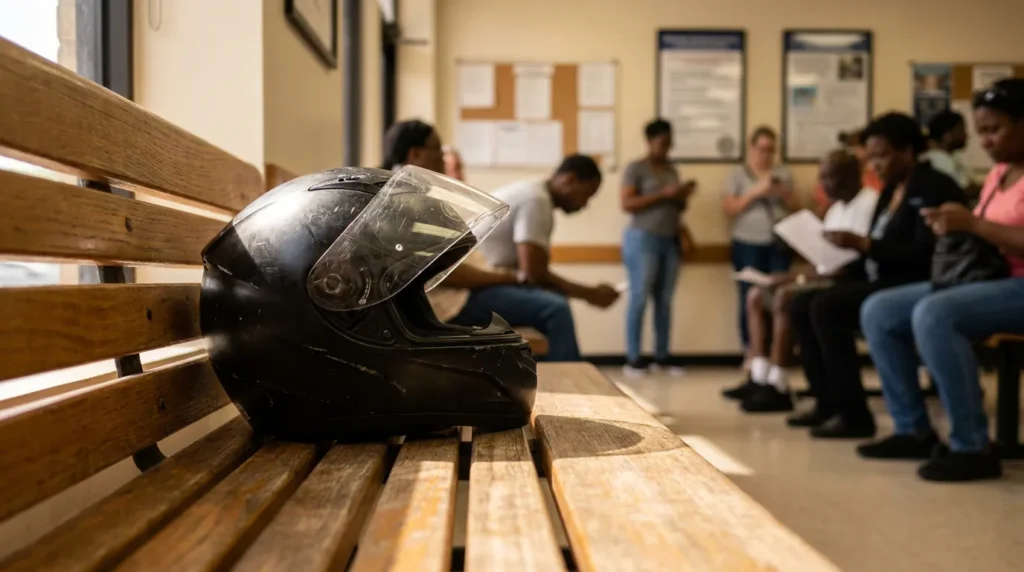
Florida’s Helmet Choice Comes With a Coverage Condition Most Riders Overlook
Key Takeaways: Florida allows riders over 21 to ride without a helmet only if covered by insurance providing at least $10,000 in medical benefits for motorcycle crash injuries under Fla. Stat. § 316.211(3)(b) (2011); riders 21 and under must wear helmets regardless of coverage. The $10,000 threshold mirrors Florida’s PIP benchmark, but motorcycles generally aren’t "motor vehicles" for PIP purposes under § 627.732, so riders typically need separate medical benefits coverage to qualify. The exemption applies only to headgear, not the eye-protection duty in § 316.211(2). Violations are noncriminal traffic infractions under § 316.211(7), though insurers may raise helmet non-use in comparative negligence arguments. Because $10,000 rarely covers serious injuries, identifying all available recovery sources matters. Outcomes depend on policy language, the other driver’s conduct, and the medical record.
Florida allows riders over 21 to ride without headgear only if covered by insurance providing at least $10,000 in medical benefits for motorcycle crash injuries. This conditional exemption under Fla. Stat. § 316.211(3)(b) (2011) sits alongside the general headgear mandate in § 316.211(1) requiring properly worn, securely fastened headgear complying with Federal Motorcycle Vehicle Safety Standard 218. Florida isn’t "helmet optional", it’s a state where exemption depends on age and qualifying coverage, and gaps in either create legal and financial problems after a collision.
If you were recently hurt in a South Florida crash and are unsure how the helmet statute affects your claim, Attorney Big Al at 1-800-HURT-123 is ready to listen. Call 1-800-487-8123 or contact us now to discuss your options.
How the Florida Motorcycle Helmet Exemption Insurance Requirement Actually Works
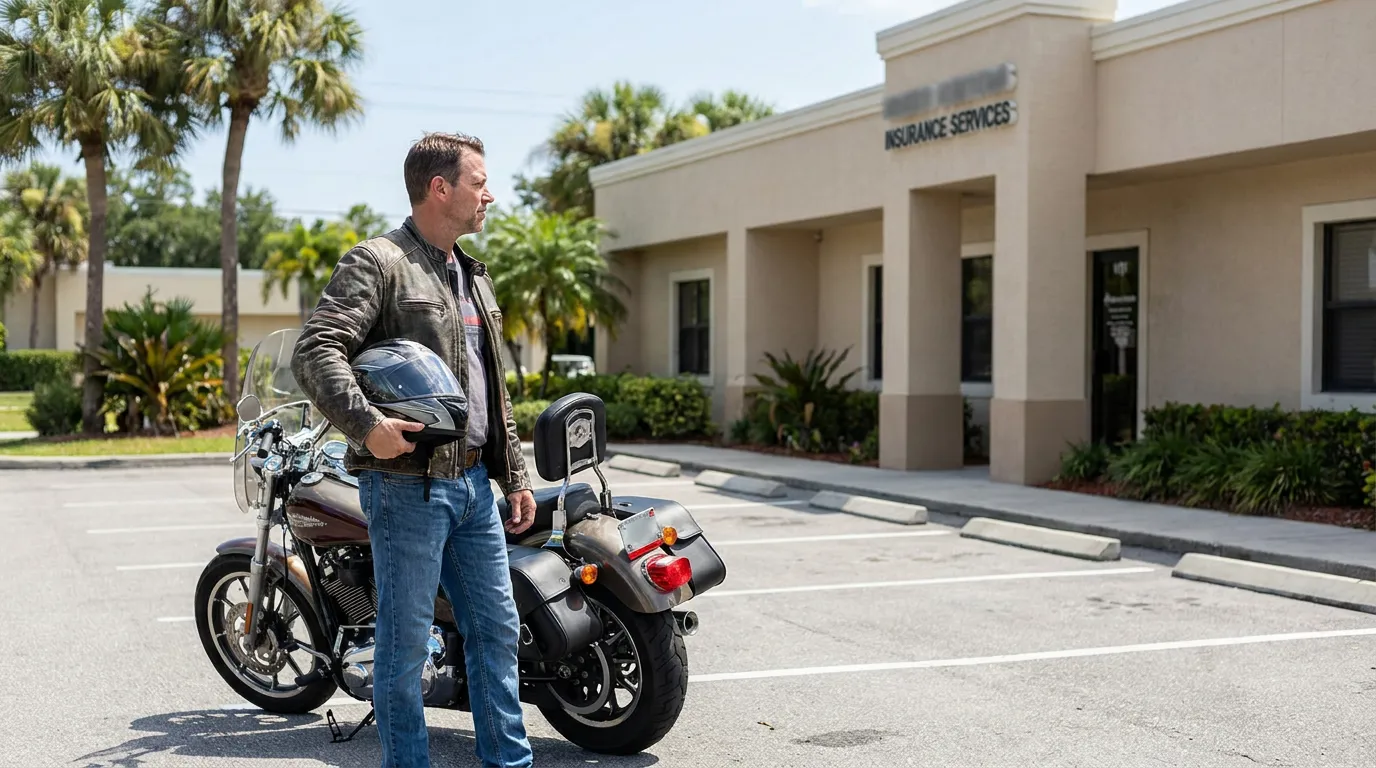
The exemption requires two conditions. Under Fla. Stat. § 316.211(3)(b) (2011), riders over 21 may operate without headgear if covered by insurance providing at least $10,000 in medical benefits for motorcycle crash injuries. The statute doesn’t require riders to carry physical proof of coverage.
Age isn’t a technicality. Riders 21 and under must wear helmets at all times when operating or riding motorcycles, regardless of insurance coverage. Fla. Stat. § 316.211(4) (2011) requires that persons under 16 years of age wear protective headgear when operating or riding a moped. Fla. Stat. § 316.211(6) (2011) separately requires that each motorcycle registered to a person under 21 years of age display a license plate that is unique in design and color.
Where the $10,000 Figure Comes From
The number mirrors Florida’s no-fault insurance benchmark. Fla. Stat. § 627.736(1) requires personal injury protection to a limit of $10,000 in medical and disability benefits and $5,000 in death benefits for bodily injury from motor vehicle use.
This creates a costly misunderstanding. Because motorcycles generally fall outside the "motor vehicle" definition in Fla. Stat. § 627.732, PIP typically doesn’t cover motorcycle operators, so riders often can’t rely on standard auto no-fault coverage to satisfy the helmet exemption. Qualifying usually requires separate medical benefits coverage for motorcycle operation. Our discussion of whether you need $10,000 insurance to ride helmet free in Florida addresses this in practical terms.
💡 Pro Tip: Ask your carrier to identify, in writing, the specific policy provision supplying medical benefits for motorcycle crash injuries. A declarations page listing auto PIP isn’t the same thing.
Statute 316.211 in Historical Context
Florida relaxed its universal helmet law through legislative amendment. The 2000 legislation introduced the medical-benefits exemption riders use today. The full language of statute 316.211 sets out the headgear rule, exemption, plate requirement, and penalty provision.
Eye Protection Is a Separate Duty the Exemption Does Not Waive
Meeting the medical benefits condition doesn’t relieve operators of the eye-protection requirement. Fla. Stat. § 316.211(2) (2011) requires operators to wear department-approved eye-protective devices. Riders sometimes assume qualifying for the helmet exemption clears every protective-equipment obligation, this assumption is incorrect.
These are independent statutory duties. One addresses headgear with a coverage-based exception. The other addresses eye protection with no comparable medical-benefits carve-out.
What Happens If a Rider Does Not Meet the Helmet Exemption Requirements
Violations aren’t treated as crimes. Fla. Stat. § 316.211(7) (2011) classifies violations as noncriminal traffic infractions, punishable as nonmoving violations under chapter 318.
The practical risk arises inside the injury claim. Insurers for at-fault drivers sometimes raise helmet non-use when arguing comparative fault or disputing injury extent. Florida courts have generally been reluctant to allow helmet non-use to reduce damages where riders were lawfully exempt, and admissibility depends on competent evidence linking helmet absence to specific injuries. Under Florida’s modified comparative negligence framework, a plaintiff’s conduct may reduce recovery and, after 2023 tort reform, may bar recovery if the plaintiff is found more than 50 percent at fault. Failure to wear a helmet doesn’t establish that another driver was free of negligence.
- Proof of negligence turns on the other driver’s conduct, failure to yield, unsafe lane changes, distraction, or impairment.
- Causation requires connecting the crash to specific injuries, where medical records and treating-physician documentation carry weight.
- Damages may include medical expenses, lost wages, diminished earning capacity, and non-economic harm, subject to proof.
- Medical benefits proof may become relevant if a carrier questions whether the rider qualified at the time of the crash.
Why $10,000 in Rider Medical Coverage Rarely Matches Real Injury Costs
The statutory threshold reflects legislative benchmarks, not realistic injury costs. The Florida Highway Safety and Motor Vehicles agency describes compulsory coverage including $10,000 property damage liability per crash and PIP limits of $10,000 per person per crash. Drivers at fault in bodily injury crashes may be required to demonstrate bodily injury liability coverage of $10,000 per person and $20,000 per crash. Review these figures on the state’s guidance for drivers involved in a crash.
A single helicopter transport, trauma admission, and orthopedic surgery can exhaust $10,000 quickly. Identifying every potentially available recovery source matters, including the at-fault driver’s liability coverage, uninsured or underinsured motorist coverage, and sometimes additional policies.
| Coverage Type | Florida Benchmark | Notes |
|---|---|---|
| Rider medical benefits for helmet exemption | At least $10,000 | Required for riders over 21 under § 316.211(3)(b) |
| PIP medical and disability benefits | $10,000 | § 627.736(1); generally does not cover motorcycle operators |
| Bodily injury liability in injury crashes | $10,000 per person / $20,000 per crash | May be required of drivers at fault in injury crashes |
| Property damage liability | $10,000 per crash | Compulsory coverage benchmark |
Licensing and Rider Duties That Sit Alongside Helmet Optional Florida Rules
The helmet exemption is one piece of broader legal obligations. Florida generally requires a motorcycle endorsement or motorcycle-only license under Fla. Stat. § 322.03(4), although autocycles as defined in Fla. Stat. § 316.003 may generally be operated without one. Riding without proper endorsement can complicate injury claims even when another driver caused the collision.
State safety officials treat helmet non-use as one of several high-risk behaviors. Florida’s motorcycle safety awareness resources describe unlicensed riding, impairment, speeding, and not using safety devices as behaviors frequently combining in serious crashes.
💡 Pro Tip: Photograph your riding gear and bike before leaving the scene if physically able. Documentation of protective equipment you were actually wearing can matter more than memory months later.
Practical Steps After a Crash When Helmet Status Is in Question
Focus first on medical care, then preserving the record. Prompt treatment supports both recovery and the causation element of claims, and treatment delays are commonly used to argue injuries came from something other than the collision. Keep every bill, imaging report, and discharge instruction.
Be cautious about recorded statements regarding helmet use before understanding the legal framework. Adjusters may frame questions inviting concessions about fault or injury severity. You’re generally not obligated to give recorded statements to another driver’s insurer, although your policy may impose cooperation duties, and a florida motorcycle helmet exemption insurance requirement lawyer can help you understand what information may need to be provided.
Deadlines Deserve Early Attention
Florida civil claims are subject to statutes of limitations, and missing them can end cases regardless of merits. Deadlines vary by claim type and accrual date, and Florida shortened limitations periods for many negligence actions accruing on or after March 24, 2023. Claims against government entities are governed by separate administrative notice requirements under Fla. Stat. § 768.28.
Exceptions such as tolling or delayed discovery may exist in limited circumstances, and courts generally interpret them narrowly. Early evaluation of applicable timelines is the safer course.
Frequently Asked Questions
1. Does the $10,000 medical benefits requirement apply to passengers as well as operators?
Fla. Stat. § 316.211(3)(b) (2011) applies to persons over 21 covered by qualifying policies. Whether specific passenger coverage satisfies the condition depends on policy language and facts.
2. Can my auto PIP coverage satisfy the Florida helmet exemption?
Generally, no. PIP under Fla. Stat. § 627.736(1) provides $10,000 in medical and disability benefits, but motorcycles generally fall outside the PIP motor vehicle definition, so coverage typically doesn’t reach riders injured on motorcycles. Separate rider medical coverage may be necessary.
3. Will riding without a helmet prevent me from recovering compensation?
Not automatically. Helmet non-use is classified as a noncriminal traffic infraction under Fla. Stat. § 316.211(7) (2011) rather than an automatic bar, and Florida courts have limited when such evidence may reduce damages, though insurers may still raise it in comparative negligence arguments.
4. Do I need to carry proof of medical benefits while riding?
The statute conditions exemption on being covered by a qualifying policy and doesn’t require carrying proof. Keeping documentation accessible may reduce disputes with law enforcement and insurers about whether coverage existed on the crash date.
5. Does the exemption change the eye-protection rule?
No. Fla. Stat. § 316.211(2) (2011) independently requires operators to wear department-approved eye-protective devices. The medical-benefits exemption addresses headgear only.
Understanding the Rule Before You Need It
Florida’s motorcycle helmet law begins with a mandate, not a choice. Riders over 21 may lawfully ride without headgear only when covered by a policy providing at least $10,000 in medical benefits for motorcycle crash injuries, and riders 21 and under must wear helmets regardless of coverage. Because PIP generally doesn’t cover motorcycle operators, many riders who believe they qualify may not, and $10,000 rarely covers serious crash costs. Every situation turns on policy language, the other driver’s conduct, and the medical record.
If a collision has left you facing medical bills and questions about how the helmet statute affects your rights, Attorney Big Al at 1-800-HURT-123 is available to help. Call 1-800-487-8123 or request your free consultation to get started today.
Disclaimer: This content is for informational purposes only and is not legal advice. Every case is unique, and results may vary. Consult an attorney about your specific circumstances.
