
Why Apartment Security Assessments Matter to Injured Florida Tenants
Key Takeaways: When a Florida apartment complex lets its CPTED assessment lapse, the owner generally forfeits the rebuttable presumption against liability granted by Fla. Stat. § 768.0706, reopening exposure to ordinary premises liability. To earn that shield, owners must maintain a professionally conducted CPTED assessment no more than three years old and substantially implement required measures like security cameras, lighting, deadbolts, and locks. Because the statute places the burden of proof on the owner, an expired assessment means the owner may be unable to demonstrate compliance, shifting the case back to standard duty, breach, causation, and damages analysis. Following Florida’s 2023 tort reform, current assessments matter more than ever, and documented gaps in security can support a negligent security claim. Injured tenants should preserve evidence quickly, as footage may be overwritten in 30 days.
If you were hurt during a crime at a Florida apartment complex, a lapsed CPTED assessment could be the key that unlocks your claim against the property owner. When a multifamily property lets its crime prevention assessment expire, it generally forfeits a powerful statutory shield, leaving the owner exposed to ordinary premises liability. For tenants injured by third-party criminal acts, that lost protection can mean the difference between a defended claim and a recoverable one.
Understanding how this works starts with Florida’s negligent security framework and the specific requirements property owners must satisfy to earn legal protection. Below, we break down what a CPTED assessment is, why letting it lapse matters, and what it means for your right to seek compensation.
If you or a loved one suffered harm because an apartment community failed to keep its premises reasonably safe, Attorney Big Al at 1-800-HURT-123 is ready to review your situation. Call 1-800-487-8123 today or reach our team online to discuss your options.
The Florida 768.0706 Negligent Security Presumption Explained
Florida law gives certain apartment owners a rebuttable presumption against liability when they follow specific security rules. Under Fla. Stat. § 768.0706, the owner or principal operator of a multifamily residential property which substantially implements required security measures has a presumption against liability for criminal acts committed by third parties who are not employees or agents of the owner. This protection applies to residential buildings such as apartments, townhouses, or condominiums consisting of at least five dwelling units on a parcel.
This presumption functions as a defensive shield, not a sword. Fla. Stat. § 768.0706(5) does not establish a private cause of action, meaning it exists to help owners defend claims rather than create new ones. When it collapses, the owner generally reverts to standard premises liability basics that Florida courts have applied for decades.
The broader statutory context comes from Chapter 768, which governs negligence in Florida. Fla. Stat. § 768.0701 addresses liability for criminal acts of third parties and directs that the trier of fact must consider the fault of all persons who contributed to the injury, including the person who committed the criminal act. You can review the full text of Florida Statute 768.0706 and its neighboring sections to see how these provisions fit together.
What a CPTED Assessment Requires
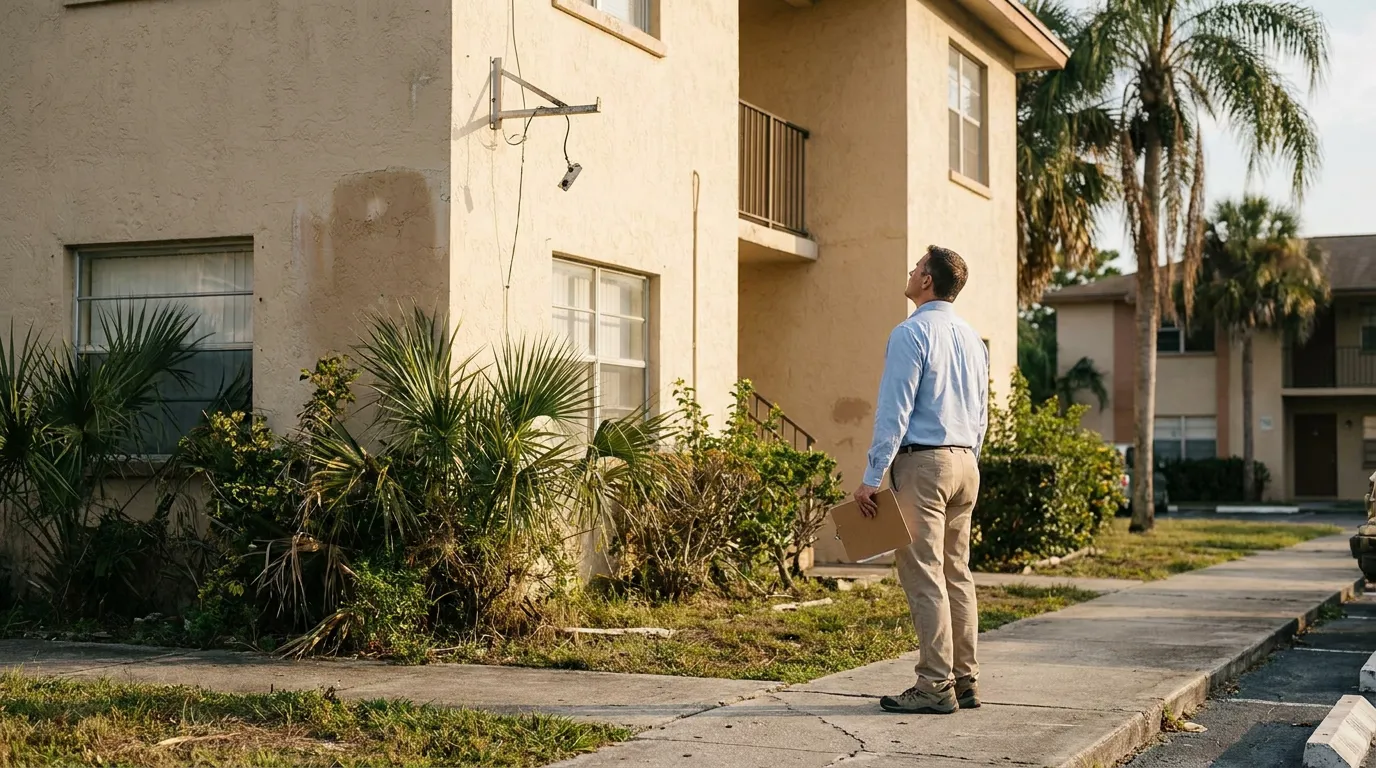
A CPTED assessment is a professional evaluation of a property’s crime prevention through environmental design. To qualify for the statutory presumption, Fla. Stat. § 768.0706(2)(b) requires that by January 1, 2025, the owner have a CPTED assessment no more than three years old completed for the property, and that they remain in substantial compliance with it. This three-year currency requirement is exactly why a lapsed assessment endangers the presumption.
The property owner cannot perform this assessment alone. The statute requires that the assessment be conducted by a law enforcement agency or a Florida Crime Prevention Through Environmental Design Practitioner designated by the Florida Crime Prevention Training Institute of the Department of Legal Affairs. This qualified-party rule underscores the compliance burden apartment operators face.
The statute also enumerates concrete physical security measures the property must substantially implement. Under Fla. Stat. § 768.0706(2)(a), required measures generally include:
- A security camera system at points of entry and exit that records and maintains retrievable footage for at least 30 days
- A parking lot lit at an average of at least 1.8 foot-candles from dusk until dawn
- Lighting in walkways, laundry rooms, common areas, and porches
- At least a one-inch deadbolt in each dwelling unit door
- Locking devices on each window and exterior sliding door
- Locked gates with key or fob access along pool fence areas, plus a peephole or door viewer on each unit door
Compliance does not stop with hardware and lighting. Fla. Stat. § 768.0706(2)(c) also requires proper crime deterrence and safety training for employees, which after January 1, 2025 must be provided within 60 days of hire and reviewed at least every three years. This ongoing obligation reinforces that CPTED assessment Florida compliance is not a one-time event.
How a Lapsed Assessment Reopens Apartment Liability Exposure in Florida
When the assessment lapses, the owner generally loses the ability to prove substantial implementation. The statute places the burden squarely on the property owner. Under Fla. Stat. § 768.0706(3), the burden of proof is on the owner to demonstrate that they have substantially implemented the security measures. An assessment older than three years no longer satisfies the statute, so the owner may be unable to carry that burden.
Losing the presumption does not automatically make an owner liable, but it changes the playing field. Once the presumption is lost, the injured person’s claim is generally analyzed under ordinary premises liability principles, which require proving duty, breach, causation, and damages. This is where documented gaps in lighting, cameras, or locks can support a negligent security Florida claim.
These changes reflect Florida’s 2023 tort reform. The framework in Fla. Stat. § 768.0701 was enacted through ch. 2023-15 (HB 837), which shifted the apportionment of fault in third-party criminal-act cases. That reform increased the importance of documented, current security assessments and the stakes for apartment liability exposure Florida tenants may encounter after a violent crime.
💡 Pro Tip: If you were injured during a crime at an apartment community, request the property’s incident reports, lighting maintenance logs, and camera footage as early as possible. Footage may be overwritten in as little as 30 days under the statutory retention standard.
Proving Breach After the Shield Falls
Proving a negligent security claim generally requires showing the owner knew or should have known of a foreseeable risk. Foreseeability often turns on prior crime in the area, prior complaints, and whether reasonable security measures were in place and maintained. Learning how to prove a business knew about a hazard in Florida can help you understand the evidence that matters.
Evidence preservation can make or break a case. Plaintiffs benefit from photographs of broken locks or dark walkways, witness statements, police reports, and medical records tying injuries to the incident. Because Florida applies a modified comparative-fault analysis that bars recovery for a plaintiff found to be more than 50% at fault, gathering thorough documentation early may help counter arguments that shift responsibility onto the victim.
A knowledgeable advocate can help evaluate whether the presumption applies. A seasoned negligent security attorney in Florida can request the CPTED assessment, examine whether it lapsed, and assess whether the enumerated measures were substantially implemented.
| Compliance Status | General Effect on Liability |
|---|---|
| Current CPTED assessment, measures implemented | Presumption against liability may apply |
| Assessment lapsed (over three years old) | Presumption generally forfeited; ordinary rules apply |
| Measures not substantially implemented | Burden of proof generally not met by owner |
Deadlines and Practical Limits Injured Tenants Should Know
Florida generally applies a civil statute of limitations to negligence claims, and missing it can bar recovery. Under current Florida law, many negligence actions accruing on or after March 24, 2023 must be filed within two years, and courts interpret exceptions such as tolling or the discovery rule narrowly.
Civil lawsuit deadlines are separate from any administrative or police reporting processes. Reporting a crime to law enforcement does not extend or replace the civil filing deadline. Confirming your specific deadline with counsel early is generally wise.
Frequently Asked Questions
1. What is a CPTED assessment and who can perform it?
A CPTED assessment evaluates a property’s crime prevention through environmental design. Under Fla. Stat. § 768.0706(2)(b), it must be performed by a law enforcement agency or a designated Florida CPTED Practitioner, and must be no more than three years old to support the presumption.
2. Does a lapsed assessment automatically make the apartment owner liable?
No. Losing the presumption means the claim is analyzed under ordinary premises liability rules, where the injured person must still prove duty, breach, causation, and damages. Liability depends on the specific facts.
3. Can I still sue if the apartment had cameras and lighting?
Possibly. Having some security measures does not necessarily satisfy the statute if they were not substantially implemented or if the assessment lapsed. The florida 768.0706 negligent security presumption requires the owner to prove substantial compliance.
4. How long do I have to file a negligent security claim in Florida?
For negligence claims accruing on or after March 24, 2023, Florida generally applies a two-year civil statute of limitations. Because deadlines can vary with the facts, you should confirm your specific timeframe with a Florida premises liability lawyer promptly.
5. What evidence helps prove multifamily property liability in Florida?
Photographs, incident reports, camera footage, witness statements, prior crime data, and medical records generally help. Because footage may be retained for only 30 days, acting quickly to preserve evidence is important.
Protecting Your Rights After an Apartment Crime
A lapsed CPTED assessment can strip an apartment owner of the protection Florida law offers, and that shift may strengthen an injured tenant’s claim. Because Fla. Stat. § 768.0706 places the burden on the owner to prove substantial implementation of current security measures, an expired assessment generally undermines that defense and returns the case to ordinary premises liability analysis. Every claim depends on its facts, and proving foreseeability, breach, and damages requires careful investigation.
If you or someone you love was injured during a crime at a Florida apartment community, do not wait to protect your rights. Contact Attorney Big Al at 1-800-HURT-123 for a review of your situation, call 1-800-487-8123, or request your consultation online to learn how the loss of presumption Florida law describes may affect your claim.
